
Results
-
£58.50
Incantation And Ritual - Brian Balmages
This fantastic work conjures images of an ancient tribal gathering. The opening's mysterious Incantation uses a soft, chant-like melody with slight intrusions by the percussion, foreshadowing the intense ritual to follow. As theopening builds, the driving beat of the ritual takes over with great fire. Percussion infuses this work with relentless energy as the piece draws to a powerful conclusion. Do not miss this one!
Estimated dispatch 7-14 working days
-
£45.95
An Irish Tale
Based on the folk song While History's Muse (subtitled Air: Paddy Whack), this delightful arrangement in 3/4 has all the characteristics of a lighthearted Irish dance. A tambourine and clarinet drone set the stage for the flute melody that is eventually passed throughout the ensemble. A key change to E= builds until the piece returns to the lighthearted style of the opening one last time. Great writing for young bands! (1:55)
Estimated dispatch 7-14 working days
-
£73.50
Sunchasers - Roland Barrett
Take your band above and beyond in pursuit of a fantastic vision with this new lively overture! The perfect description of a sunchaser, the piece pays homage to this common term used in Native American cultures. Rhythmic energy, a soaring melody, and a gorgeous lyrical section make this an excellent choice for festival or contest. Also consider dedicating a performance to your own sunchaser, whether it be an active member of the community, teacher, or administrator. (5:00)
Estimated dispatch 7-14 working days
-
£37.95
In Quiet Times - James Swearingen
This beautiful ballad offers plenty of opportunities for focusing on musicality with little concern for technical demands. The humble melody in the clarinets and horn is answered first by flutes then trumpets, before the glorious key change. As beautifully as it began, the piece fades back to a quiet time. Sure to work with virtually any instrumentation, and a truly musical experience! (2:00)
Estimated dispatch 7-14 working days
-
 £60.99
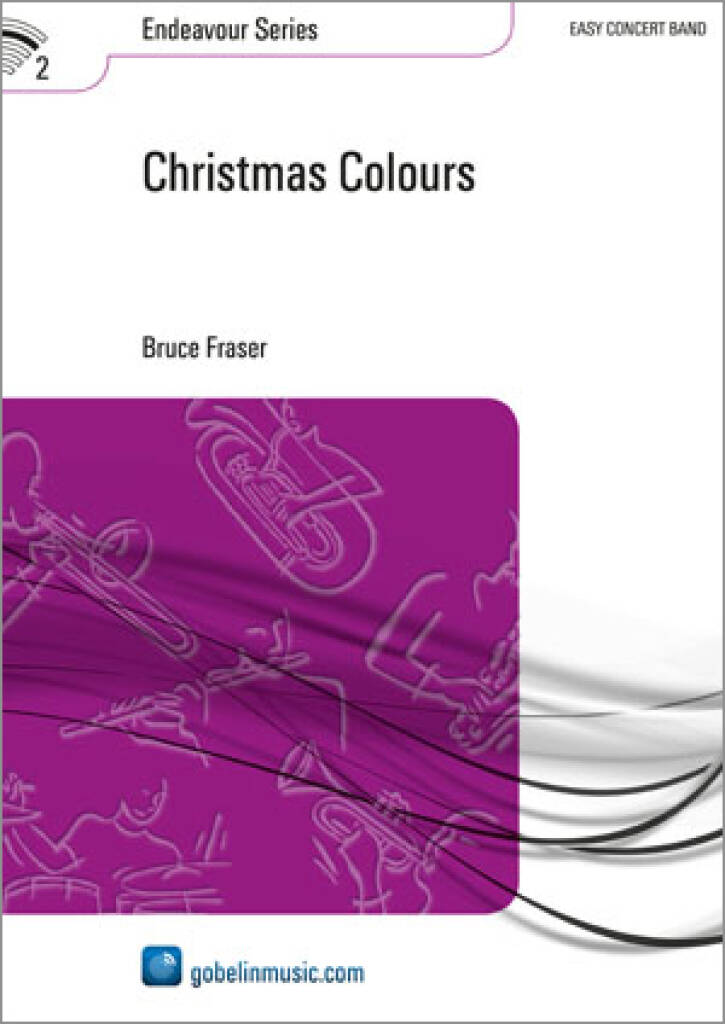
Christmas Colours - Bruce Fraser
'Christmas Colours' is a palette consisting of several Christmas songs. Bruce Fraser has mainly used the colours green (the colour of holly) and white (the colour of snow). This composition begins with the chiming of festive bells - if you listen well, however, you can already hear short fragments from 'The Holly and the Ivy', whose entire melody is finally played, alternated with 'The Sussex Carol'. After this, the pace slows down and the stately 'See amid the Winter Snow' sounds, but parts from 'Jingle Bells' and 'Silent Night' can also be heard. Then, after walking under 'The Holly and the Ivy' once again, the celebration of Christmas may begin!
Estimated dispatch 7-14 working days
-
£66.30
Fanfares in Remembrance - Peadar Townsend
Fanfares in Remembrance was commissioned by Nick Jarvis, Principal conductor of the Band of the Royal British Legion, Christchurch, Dorset, UK to be premiered during the Last Post Ceremony at the Menin Gate, Ypres, Belgium on May 27th, 2017. The work is a short reflection two World War One bugle calls, 'The General Salute' and 'Retreat' or 'Sunset' as it is also known. The significance and symbolism of bugle calls from this era are well known and they are still used in Barracks across the world. I have used sections of these famous British bugle calls on two trumpets either side of the band playing in two different musical keys. The band then plays an intermittent low drone like chord, again in a different musical key to the two trumpets. In my mind this opening depicts two buglers at dawn at either end of a misty field directly after a brutal slaughter. The two buglers are almost calling out for their missing comrades only to realise they are gone...... The work moves into a haunting oboe melody signifying loss. The oboe is joined by the full band in a tune of strength, solidarity, yet profound sadness. The work concludes with a recap of the opening idea; however, the two buglers are now united in musical key sounding 'The General Salute'. The music ends as the wind blows gently. The memories live on forever......
Estimated dispatch 7-14 working days
-
 £267.99
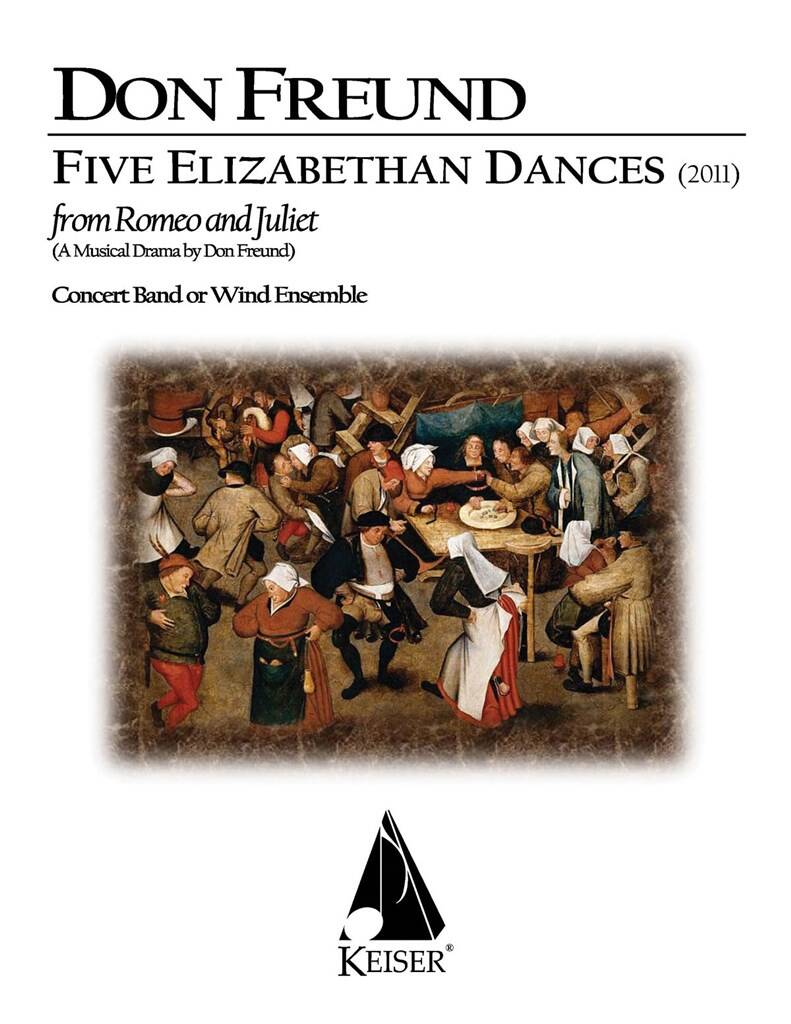
Five Elizabethan Dances from 'Romeo & Juliet' - Don Freund
Five Elizabethan Dances is drawn from the music that sets the scene and provides the accompaniment for the Ballroom Scene from Don Freund's Romeo and Juliet: A Shakespearean Music Drama for singing actors and piano. The style of the dances is freely drawn from dances found in the Fitzwilliam Virginal Book (music from ca. 1562 to 1612), spiced up with changing meters and chromatic twists of melody and harmony reflecting a more recent musical language. Each of the dances represents a pivotal scene-within-a-scene. Excludes part doubling: 2+1.2+EH(opt).3+EbCl+BCl+CltoCl(opt).2+Cbsn(opt): AATB Saxes: 3.4.3.2Euph.2 Tuba: Perc(5)
Estimated dispatch 7-14 working days
-
 £57.50
Millennium: A Reflection - John Higgins
Here is an accessible contemporary band work which reflects upon the 1,000 years of western musical culture, and explores the mysterious emotions of the changing Millennium. Recurring throughout the work is a plainsong melody written near the dawn of music notation deep in the middle ages. Sure to be an intriguing work to concert audiences and students, it also represents a refreshing choice for festival use.
Estimated dispatch 7-14 working days
-
 £53.50
Variants on an American Hymn - Michael Sweeney
Based on the familiar hymn Abide With Me, this unique composition develops variations based on fragments of the original melody. Elements of the hymn are skillfully incorporated into a variety of styles, from slow flowing phrases to lively and rhythmic themes, before the hymn is gloriously presented near the end of the piece.
Estimated dispatch 7-14 working days
-
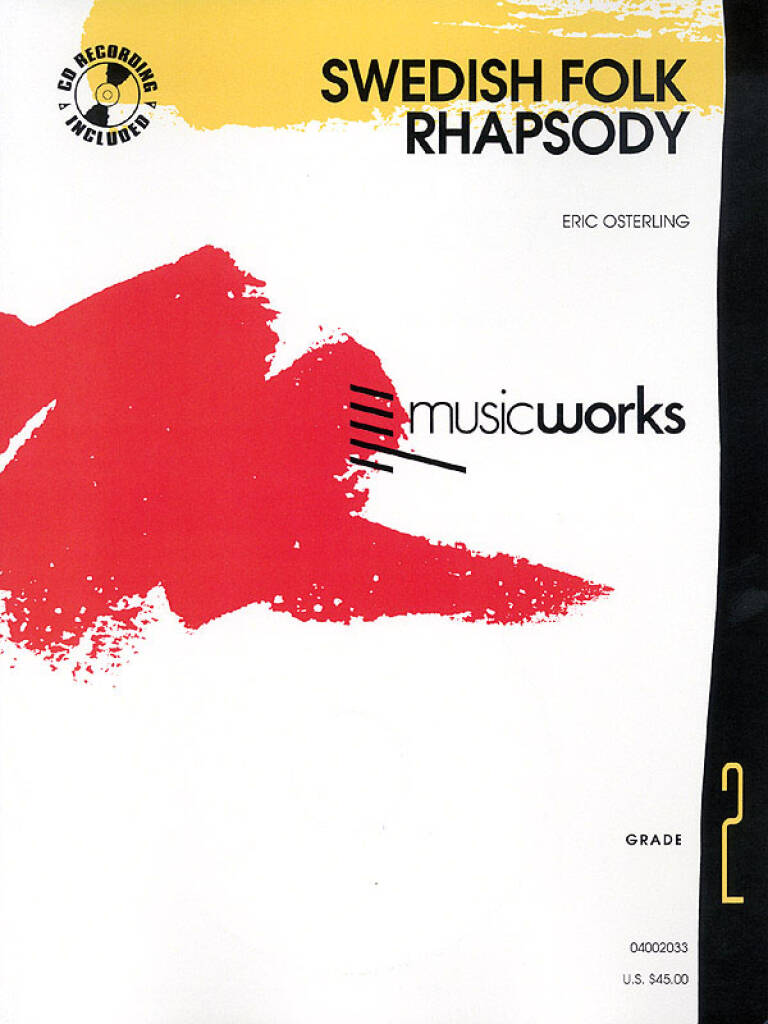 £69.99
Swedish Folk Rhapsody
Here's a marvelous arrangement featuring the engaging sounds of folk music from Sweden. It opens with a brief fanfare followed by In The Summer The Sun Shines So Clearly. After the lovely 3/4 melody Flowers Of Joy, Eric alternateswoodwind and brass choirs on the dignified O Varmland. The lively song My Love Like A Dainty Shepherdess is written in 3/4 for ease of reading, and the medley concludes with a majestic setting of The King. Well scored with plentyof variety.
Estimated dispatch 7-14 working days
 View Music