

Results
-
£137.95Sinfonietta No.1 (Concert Band - Score and Parts) - Sparke, Philip
Sinfonietta No.1 was commissioned by the Foundation of Friends of the Marine Band of the Royal Netherlands Navy. It was first performed by them in 'De Doelen', Rotterdam on the 13th November 1990 (in a joint concert with the Royal Marines Band from Great Britain) which celebrated the 325th anniversary of the Netherlands Marine Corps and coincided with the 45th anniversary of the band and the 175th anniversary of naval music in the Netherlands.The work is in three, linked movements:I: OvertureSeveral contrasting motivic ideas open the work, but none manage to develop into a theme of any sort. Eventually a short theme appears on clarinet, alto saxophone and horn but it is swept away by runs of triplets from the woodwinds. The theme returns, accompanied by the triplets from the woodwinds. The theme returns, accompanied by the triplets, and this leads to a return of the opening material to close the movement.II: AriaThe second movement opens with violent outbursts from the timpani until a simple, mournful tune is presented by flute and bassoon over a sparse accompaniment by the lower brass. Trumpets introduce a quicker, turbulent central section but this leads back to a brief repeat of the original tune, bringing the movement to a peaceful close.III. ScherzoThe final movement is a fast and furious scherzo which bursts into life with a flurry of notes. The vivacious main (woodwind) theme is first played by the flutes and then by the whole woodwind section. A cornet then takes centre stage with a fanfare-like theme which is then taken up by the brass. A bridge passage then leads to a version of this theme for full band. The original flute tune is then developed until the horns introduce a chorale tune which is taken up by saxes and then full band until the opening material reappears. The woodwind and brass themes are then combined and lead to a forceful version of the chorale which becomes more and more dissonant until the opening of the Overture returns to bring the work to a rousing finish.Recorded on QPRM134D THE KINGS GO FORTH, Central Band of the Royal Air Force
Estimated dispatch 7-14 working days
-
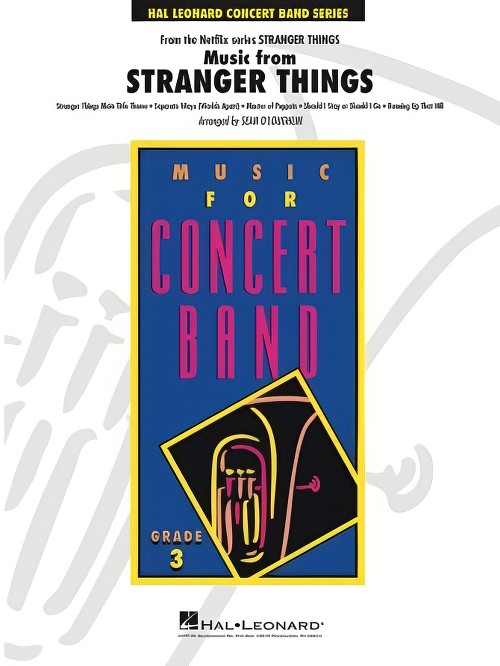
£27.95Sinfonietta No.1 (Concert Band - Score only) - Sparke, Philip
Sinfonietta No.1 was commissioned by the Foundation of Friends of the Marine Band of the Royal Netherlands Navy. It was first performed by them in 'De Doelen', Rotterdam on the 13th November 1990 (in a joint concert with the Royal Marines Band from Great Britain) which celebrated the 325th anniversary of the Netherlands Marine Corps and coincided with the 45th anniversary of the band and the 175th anniversary of naval music in the Netherlands.The work is in three, linked movements:I: OvertureSeveral contrasting motivic ideas open the work, but none manage to develop into a theme of any sort. Eventually a short theme appears on clarinet, alto saxophone and horn but it is swept away by runs of triplets from the woodwinds. The theme returns, accompanied by the triplets from the woodwinds. The theme returns, accompanied by the triplets, and this leads to a return of the opening material to close the movement.II: AriaThe second movement opens with violent outbursts from the timpani until a simple, mournful tune is presented by flute and bassoon over a sparse accompaniment by the lower brass. Trumpets introduce a quicker, turbulent central section but this leads back to a brief repeat of the original tune, bringing the movement to a peaceful close.III. ScherzoThe final movement is a fast and furious scherzo which bursts into life with a flurry of notes. The vivacious main (woodwind) theme is first played by the flutes and then by the whole woodwind section. A cornet then takes centre stage with a fanfare-like theme which is then taken up by the brass. A bridge passage then leads to a version of this theme for full band. The original flute tune is then developed until the horns introduce a chorale tune which is taken up by saxes and then full band until the opening material reappears. The woodwind and brass themes are then combined and lead to a forceful version of the chorale which becomes more and more dissonant until the opening of the Overture returns to bring the work to a rousing finish.Recorded on QPRM134D THE KINGS GO FORTH, Central Band of the Royal Air Force
Estimated dispatch 7-14 working days
-
£174.99Et in terra Pax (Concert Band - Score and Parts) - Van der Roost, Jan
This piece was commissioned by the Concert Band Vlamertinge and is a plea for peace: the title translates as Peace on Earth. This is expressed by means of the vocal contribution expected from the performers. In various places of the piece you can recognize, the words Et In Terra Pax, an appeal for peace, at first jumbled together but later more rhythmically structured, developing into synchronized massed voices. The work starts with a pentatonic theme based on the notes D, E, G, A and C (taken from 'ConCErtbAnD VlAmErtinGE' and the name of the conductor, NiCk VAnDEnDriessChe). A somewhat sad melody is developed during an orchestral climax which leads to the first explosion of sound (measure 62 onwards). Suddenly the opening measures are recaptured, albeit with a differently coloured sound: the words Et in Terra Pax bring the first movement to a close. A restless Allegro follows which abruptly stops and is replaced by a calming chorale-like passage. A narrator reads aloud the poem 'Sonnet' by the young poet Charles Hamilton Sorley, who was killed during World War I. This poem fittingly puts into words the cruelty and senselessness of war. After the expanded recapitulation of the allegro, the broad, almost infinite atmosphere of the beginning returns. Clarinet and English horn play the pentatonic opening theme once more, this time broadly, while the words Et in Terra Pax are repeated again and again by the rest of the ensemble. The composer has purposely avoided all forms of aggression and bombastic sounds regularly used in works about war. Fear of violence and destruction can be heard and felt during the allegro passages. The charged opening makes way in the end for hope: May peacefulness replace cruelty in everyday life, too.Duration: 13:45
Estimated dispatch 7-14 working days
-
£344.00T-Bone Concerto (Trombone Solo with Concert Band - Score and Parts) - De Meij, Johan
The T-Bone Concerto was Johan de Meij's first composition for solo instrument and symphonic band. It consists of three movements called respectively 'Rare', 'Medium' and 'Well Done'. In addition to the solo trombone, an important role has been allotted to a kind of chamber music ensemble within the band. This group introduces new thematic material and accompanies the soloist, thus creating a delightful transparant accompaniment. The ensemble consists of a double wind quintet (2 flutes, 2 oboes, 2 clarinets, 2 french horns and 2 bassoons) plus a cor anglais and a double bass. Parts I and II are written in the A-B-A form and allow the soloist to display both the technical and the lyrical characteristics of the instrument. Part III at first develops into a kind of neo-baroque style using the thematic material of the first and second movement, and finally leads to a triumphant finale and a virtuoso conclusion. Duration: 25.00
Estimated dispatch 7-14 working days
-
£111.00Well Done (Movement III from T-Bone Concerto) (Trombone Solo with Concert Band - Score and Parts) - De Meij, Johan
The T-Bone Concerto was Johan de Meij's first composition for solo instrument and symphonic band. It consists of three movements called respectively 'Rare', 'Medium' and 'Well Done'. In addition to the solo trombone, an important role has been allotted to a kind of chamber music ensemble within the band. This group introduces new thematic material and accompanies the soloist, thus creating a delightful transparant accompaniment. The ensemble consists of a double wind quintet (2 flutes, 2 oboes, 2 clarinets, 2 french horns and 2 bassoons) plus a cor anglais and a double bass. Parts I and II are written in the A-B-A form and allow the soloist to display both the technical and the lyrical characteristics of the instrument. Part III at first develops into a kind of neo-baroque style using the thematic material of the first and second movement, and finally leads to a triumphant finale and a virtuoso conclusion. Duration: 6.15
Estimated dispatch 7-14 working days
-
£111.00Medium (Movement II from T-Bone Concerto) (Trombone Solo with Concert Band - Score and Parts) - De Meij, Johan
The T-Bone Concerto was Johan de Meij's first composition for solo instrument and symphonic band. It consists of three movements called respectively 'Rare', 'Medium' and 'Well Done'. In addition to the solo trombone, an important role has been allotted to a kind of chamber music ensemble within the band. This group introduces new thematic material and accompanies the soloist, thus creating a delightful transparant accompaniment. The ensemble consists of a double wind quintet (2 flutes, 2 oboes, 2 clarinets, 2 french horns and 2 bassoons) plus a cor anglais and a double bass. Parts I and II are written in the A-B-A form and allow the soloist to display both the technical and the lyrical characteristics of the instrument. Part III at first develops into a kind of neo-baroque style using the thematic material of the first and second movement, and finally leads to a triumphant finale and a virtuoso conclusion. Duration: 8.30
Estimated dispatch 7-14 working days
-
£128.00Ratatouille Satirique (Concert Band - Score and Parts) - Satie, Erik - De Meij, Johan
Erik Satie, born in Honfleur in Normandy (France) in 1866 is undoubtedly one of the most striking personalities in the history of French music. He composed in various, often quite divergent, styles. Besides light-hearted, entertaining works he also wrote several serious compositions, among which the three ballets: Parade, Rel che and Les Aventures de Mercure. However his piano pieces, such as Trois Gymnopedies or Gnossiennes will remain his most popular compositions. Satie co-operated with almost all great artists of his time: Pablo Picasso, Jean Cocteau, Sergej Diaghilev and Georges Braque and the composers Darius Milhaud (Le Groupe des Six) and Claude Debussy. Johan de Meij made an orchestration of three short pieces by Erik Satie: I. Prelude (from: Jack in the Box) II. Reverie (from: Trois petites pieces montees) III. Marche: Le Piccadilly (1904) It was only after Satie's death in 1925 that the manuscript of the piano piece Jack in the Box was recovered. Satie himself thought he had lost the manuscript in a bus. When his flat in Arceuil was cleaned out, a small notebook was discovered behind his piano and it contained the manuscript which was assumed to be lost forever. The R?verie (De l'Enfance de Pantagruel) is an extract from Trois petites pieces montees, originally composed for small symphony orchestra. In this suite it is meant as a restful intermezzo. It is clear that, as with Milhaud (La Creation du Monde) and Debussy (Golliwogg's Cakewalk; Le Petit Negre), it is hard to deny obvious influences of jazz music in Erik Satie's compositions. Le Piccadilly, dating from 1904, displays a lot of similarities with the compositions of Scott Joplin. Duration: 7.00
Estimated dispatch 7-14 working days
-
£233.50Mosaici Bizantini (Concert Band - Score and Parts) - Cesarini, Franco
Three Byzantine mosaics, to be seen in churches in Venice and Palermo inspired Franco Cesarini to compose this work. He took the musical motives from Gregorian chants. The mosaics concerned depict the following extracts from "The Gospel According to St. Matthew".I. The Nativity: The Magi from the East: "Where is the new-born King of the Jews? For we have seen his star in far-off eastern lands and we have come to worship Him."II. The Temple of Jerusalem: And look! The curtain secluding the Holiest Place in the Temple was split apart from top to bottom: and the earth shook and rocks broke, and tombs opened and many godly men and women who had died, come back to life again.III. Angel of the Resurrection: An angel of the Lord come down from heaven drew near, rolled away the stone and sat upon it. His countenance was lightning and his attire white as snow.Duration: 19:45
Estimated dispatch 7-14 working days
-
£148.00Aladdin Suite (Concert Band - Score and Parts) - Nielsen, Carl - De Meij, Johan
The large creative output of the Danish composer Carl Nielsen (1865 - 1931) contains six symphonies, chamber music, vocal works and music for the theatre: two operas (Saul & David and Maskerade) and stage music for sixteen different plays. The stage music for Aladdin was written at the request of Johannes Nielsen, the director of the Royal Theatre in Copenhagen. This production was based on the drama Aladdin (1805) by the Danish author Adam Oehlenschlager. Already before the premiere at the Royal Theatre, Carl Nielsen had adapted some of the music for the concert hall: he conducted the first performance of six of the seven movements of the concert suite on February6th, 1919. Johan de Meij's transcription for symphonic band contains the following movements: I. Oriental Festival March; II. Aladdin's Dream / Dance of the Morning Mist; III. African Negro Dance
Estimated dispatch 7-14 working days
-
£128.00Aquarium (Concert Band - Score and Parts) - De Meij, Johan
The Suite Aquarium is Johan de Meij's third composition for symphonic band and features six tropical fishes, each of them represented by a motif, and surfacing as such in several guises. The composition consists of three movements of which the second and third merge uninterruptedly into each other. I) Allegretto grazioso (Neon Tetra, Electric Eel and Angelfish) II) Andante / Adagio (Sea Horse and Zebrafish) III) Finale: Allegro giocoso (Guppy & Co.) The Neon Tetra motif functions as a kind of 'Leitmotiv' and describes the beautifully coloured, frisky fish: A number of variants have been derived from this theme and will also appear in the other movements. The Electric Eel in fact is not represented by a motif, but by a rhythm based on the restless electric pulses made audible in some aquaria. The Angel fish is represented by elegant cluster chords. In the second movement the Sea Horse emerges out of the water vegetation and starts a dialogue with the Zebrafish, which is represented by one melodic phrase in unison, getting more and more threatening by added parallel fifths and octaves. Simultaneously with the Sea Horse motif the Neon Tetra theme emerges, this time in 3/4 time and in Eb minor. The third movement starts with only two instruments (trumpet and xylophone), but as it is often the case with Guppies their number rapidly increases. Piccolo and Alto Saxophone introduce the Guppy Theme followed by several instrumental combinations. Every theme from the first movement 'swims by' once more, after which the principal motif leads us to a brilliant ending.Duration: 9.00
Estimated dispatch 7-14 working days
