
Results
-
 £53.95
In My Garden (Concert Band - Score and Parts) - Vogel, Kirk
In My Garden is inspired by one family's struggle with an untimely death. The healing process was aided by the construction of a beautiful garden in their back yard with the inscription in stone as you enter saying: If I had a flower for every time I think of you, I could walk forever in my garden.Duration: 4.00
Estimated dispatch 7-14 working days
-
 £84.95
Perchance To Dream (Concert Band - Score and Parts) - Bourgeois, Derek
In 1969 I was teaching music at Cranleigh School in Surrey. I was asked to write a work for the orchestra and produced a four-movement piece entitled Concerto for School Orchestra. I have now reworked the music for wind band and re-titled it Perchance to Dream. the piece has a slow introduction followed by a loose sonata form movement in which the introductory material is reintroduced.
Estimated dispatch 7-14 working days
-
£16.95
Perchance To Dream (Concert Band - Score Only) - Bourgeois, Derek
In 1969 I was teaching music at Cranleigh School in Surrey. I was asked to write a work for the orchestra and produced a four-movement piece entitled Concerto for School Orchestra. I have now reworked the music for wind band and re-titled it Perchance to Dream. the piece has a slow introduction followed by a loose sonata form movement in which the introductory material is reintroduced.
Estimated dispatch 7-14 working days
-
 £79.95
Variations on 'Was Lebet' (Concert Band - Score and Parts) - Wainwright, Andrew
Variations on 'Was Lebet' is based on the German chorale of the same name, the first line of which translates as 'O worship the Lord in the beauty of holiness!' The opening fanfare figure in the Trumpets should be supported by bold, organ-like sostenuto chords in the lower band. Ensure that the fanfare in the Trumpets and Trombones from bars 25 to 28 is given equal articulation and volume in the antiphonal parts. After this majestic introductory section, the first of five contrasting variations is presented, although the tune is never realised in full form until the final variation, with fragments gradually being revealed as the piece progresses.Variation I is somewhat classical in approach, with its energy coming from a regular contrast between cantabile references to the theme, set against lively staccato figures. Ensuring a lightness of touch will be important here; the music should be poised and never sound frantic. As a result, careful attention should be paid to the tempo marking, being no quicker than 136 beats per minute. Snippets of the chorale come and go, with the last phrase of the hymn completing the movement. This final statement, at bar 95, should be an immediate change in tempo and a separate statement to the music that comes before.Variation II is plaintive in mood, giving the listener the chance to reflect on the following words, which form part of the second verse: 'Comfort thy sorrows and answer thy prayerfulness, Guiding thy steps as may best for thee be.' There is opportunity for rubato in this movement, at the discretion of the conductor.Variation III is somewhat quirky and volatile in nature, and takes its inspiration from the 3rd and 4th verses which describe the fearful times in life that we must entrust to the Lord. Driven by the Percussion section in particular, there are references here to Variation I with its chorale-like figures and hurtling scalic figures, and there is a feeling of a lack of resolution. A somewhat abrupt ending suggests that our sense of completeness in Christ is yet to be resolved. It is important that clarity and tempo are maintained in the bass line between sections L and M. Aim for consistency of line in the bass parts, particularly with the trade-offs between players here.There is a French romantic feel to the waltz in Variation IV, with the opportunity for various soloists to display their musicianship. A sense of ironic humour pervades throughout. The Clarinet and Bassoon duet from section U should be playful and display a lightness of touch, with that sense of style continued throughout the movement.Variation V is fugal in nature, with each section of the band being handed the theme at various points. Again it is important that a steady tempo is set at Y in order to maintain control. The sense of momentum gradually increases to a grandiose presentation of the full theme, beginning at section CC, affirming our completeness in the Lord, with the words of the first and last verses reiterated: O worship the Lord in the beauty of holiness! Bow down before him, his glory proclaim; With gold of obedience and incense of lowliness, Kneel and adore him, the Lord is his name.Duration: 11.45
Estimated dispatch 7-14 working days
-
 £15.95
Variations on 'Was Lebet' (Concert Band - Score only) - Wainwright, Andrew
Variations on 'Was Lebet' is based on the German chorale of the same name, the first line of which translates as 'O worship the Lord in the beauty of holiness!' The opening fanfare figure in the Trumpets should be supported by bold, organ-like sostenuto chords in the lower band. Ensure that the fanfare in the Trumpets and Trombones from bars 25 to 28 is given equal articulation and volume in the antiphonal parts. After this majestic introductory section, the first of five contrasting variations is presented, although the tune is never realised in full form until the final variation, with fragments gradually being revealed as the piece progresses.Variation I is somewhat classical in approach, with its energy coming from a regular contrast between cantabile references to the theme, set against lively staccato figures. Ensuring a lightness of touch will be important here; the music should be poised and never sound frantic. As a result, careful attention should be paid to the tempo marking, being no quicker than 136 beats per minute. Snippets of the chorale come and go, with the last phrase of the hymn completing the movement. This final statement, at bar 95, should be an immediate change in tempo and a separate statement to the music that comes before.Variation II is plaintive in mood, giving the listener the chance to reflect on the following words, which form part of the second verse: 'Comfort thy sorrows and answer thy prayerfulness, Guiding thy steps as may best for thee be.' There is opportunity for rubato in this movement, at the discretion of the conductor.Variation III is somewhat quirky and volatile in nature, and takes its inspiration from the 3rd and 4th verses which describe the fearful times in life that we must entrust to the Lord. Driven by the Percussion section in particular, there are references here to Variation I with its chorale-like figures and hurtling scalic figures, and there is a feeling of a lack of resolution. A somewhat abrupt ending suggests that our sense of completeness in Christ is yet to be resolved. It is important that clarity and tempo are maintained in the bass line between sections L and M. Aim for consistency of line in the bass parts, particularly with the trade-offs between players here.There is a French romantic feel to the waltz in Variation IV, with the opportunity for various soloists to display their musicianship. A sense of ironic humour pervades throughout. The Clarinet and Bassoon duet from section U should be playful and display a lightness of touch, with that sense of style continued throughout the movement.Variation V is fugal in nature, with each section of the band being handed the theme at various points. Again it is important that a steady tempo is set at Y in order to maintain control. The sense of momentum gradually increases to a grandiose presentation of the full theme, beginning at section CC, affirming our completeness in the Lord, with the words of the first and last verses reiterated: O worship the Lord in the beauty of holiness! Bow down before him, his glory proclaim; With gold of obedience and incense of lowliness, Kneel and adore him, the Lord is his name.Duration: 11.45
Estimated dispatch 7-14 working days
-
 £87.95
A Tamworth Tapestry (Concert Band - Score and Parts) - Wiffin, Rob
A Tamworth Tapestry was commissioned by the Tamworth Wind Band who gave the first performance in Fazeley, Tamworth, on 27 Apr 2024. In composing it I drew on aspects of Tamworth starting with a short malicious outburst to depict the warlike history of the town's Norman castle. From there the music moves into a slow-flowing minor key movement entitled River Tame. The Celtic derivation of the word Tame means dark and slow-moving. The suite ends with a saltarello - Tomsaete. The Tomsaete were an Anglo-Saxon tribe who lived in the valley of the River Tame and remained around Tamworth throughout the duration of the Kingdom of Mercia. There is also a play on words with the band's conductor - Tom Sears. I combined the saltarello with some allusions to various other Tamworth references including Kingsbury Water Park, Drayton Manor Theme Park, Tamworth Pigs and even a reference to the Robin Reliant!Duration: 6.15
Estimated dispatch 7-14 working days
-
£17.95
A Tamworth Tapestry (Concert Band - Score only) - Wiffin, Rob
A Tamworth Tapestry was commissioned by the Tamworth Wind Band who gave the first performance in Fazeley, Tamworth, on 27 Apr 2024. In composing it I drew on aspects of Tamworth starting with a short malicious outburst to depict the warlike history of the town's Norman castle. From there the music moves into a slow-flowing minor key movement entitled River Tame. The Celtic derivation of the word Tame means dark and slow-moving. The suite ends with a saltarello - Tomsaete. The Tomsaete were an Anglo-Saxon tribe who lived in the valley of the River Tame and remained around Tamworth throughout the duration of the Kingdom of Mercia. There is also a play on words with the band's conductor - Tom Sears. I combined the saltarello with some allusions to various other Tamworth references including Kingsbury Water Park, Drayton Manor Theme Park, Tamworth Pigs and even a reference to the Robin Reliant!Duration: 6.15
Estimated dispatch 7-14 working days
-
 £36.95
Sing Lullaby (Concert Band - Score and Parts) - Wiffin, Rob
Sing Lullaby, also known as The Infant King, is an arrangement of a Basque Carol. The words were translated into English by Sabine Baring-Gould (1834-1924) an Anglican priest and folk song collector. The melody was harmonized by the English organist and music editor Edgar Pettman (1866-1943) who included it with other Basque carols (also rendered by Sabine Baring-Gould) in The University Carol Book in 1922. I use a little of Pettman's harmony but also take a different look. I also set it in 3/4 time rather than Pettman's 6/8 (starting with an anacrusis) which allowed me more freedom of expression and a chance to use a few hemiolas in poignant moments. It is a beautiful, tender carol as befits a lullaby though not without a few suspensions which allude to the future trials of the Infant King described in Baring-Gould's words.- Rob WiffinDuration: 4.15
Estimated dispatch 7-14 working days
-
 £63.50
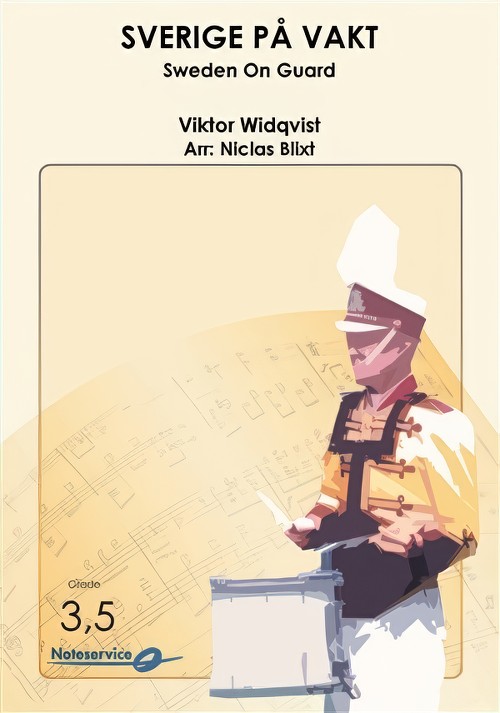
Sverige pa Vakt (Sweden on Guard) (Concert Band - Score and Parts) - Widqvist, Viktor - Blixt, Niclas
Sweden On Guard is part of Widkvist's earliest march production. It was composed around 1914 when he served in the engineering troops.It is worth noting that the march from the beginning was probably intended for a small sized brass band and was later rearranged for a full military band by the composer. When I searched in the Swedish War Archives many years ago, looking for more or less forgotten marches, this work, among others, appeared. I immediately became attached to the young Widkvist's catchy melodies and clear harmonic tonal language that express faith in the future and optimism.Sweden On Guard has never been published in print before, and the work of modernizing the setting without resorting to the elegance and resilience of the original has been a challenge.- Niclas BlixtDuration: 2.30
Estimated dispatch 7-14 working days
-
 £124.00
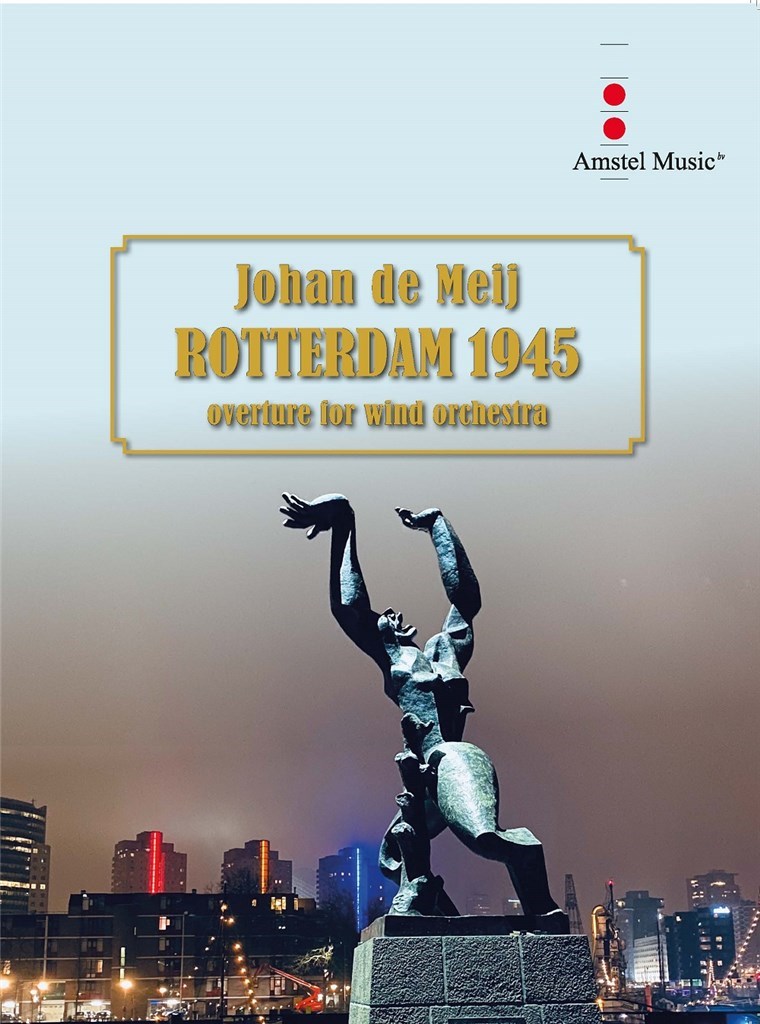
Rotterdam 1945 (Concert Band - Score and Parts) - De Meij, Johan
Rotterdam 1945 was written at the request of Maestro Arjan Tien, the chief conductor of the Marine Band of the Royal Netherlands Navy, to commemorate their 75th anniversary in 2020. 1945 also marked the end of World War II, the year that my home country Holland was liberated from Nazi Germany. My father was born in Rotterdam in 1910, so I have a special bond with this dynamic city. I have used the numbers 1-9-4-5 to create the main theme and translated it into a four-note motif: C - D'- F - G. - Johan de Meij. Duration: 7.30
Estimated dispatch 7-14 working days
 View Music