
Results
-
 £24.75
State of the Art (Concert Band - Score and Parts)
Playable with very small groups of almost any instrumentation. A great rock tune and extremely innovative concept with lots of uses in a non-traditional band situations.
Estimated dispatch 7-14 working days
-
 £49.50
The First Breath Of Spring
Adapted from one of his most outstanding symphonic works, this selection showcases the beautiful lyrical style of Ed Huckeby in a feature for solo instrument with band accompaniment. This outstanding piece provides a great opportunity to showcase one of your outstanding musicians on a beautifully sensitive selection which is sure to be a hit with both musicians and audiences.
Estimated dispatch 7-14 working days
-
£59.40
The Golden Dragon (Concert Band - Score and Parts)
A rip-snortin' galop that's as much fun to play as it is to listen to! This modern edition includes full score, F horn, and C flute and piccolo parts. A great circus favorite, this will show off your band like nothing else!
Estimated dispatch 7-14 working days
-
 £72.99
The Redwoods (Concert Band - Score and Parts) - Galante, Rossano
Here is a bold and adventurous overture that works great as a concert opener. Reminiscent of an epic film score, this original composition features dynamic brass fanfares, sweeping woodwind lines and a wealth of stylistic and emotional variety. Impressive writing for mature groups. (Grade 4) (4:25) 04:25
Estimated dispatch 7-14 working days
-
£79.20
The Siberian Skateboard (Concert Band - Score and Parts)
Audiences will love this exciting original patriotic piece for band and chorus. Most important, it will not take a great deal of rehearsal time. Very nice!
Estimated dispatch 7-14 working days
-
£39.60
When the Saints March Around the World (Concert Band - Score and Parts)
An inspiring composition that starts softly and builds steadily to an impressive climax. Reflective in nature, "A Hymn For Peace" will challenge your developing students while providing a program number which has great audience appeal. Will pay big dividends for your mid-level band.
Estimated dispatch 7-14 working days
-
 £87.50
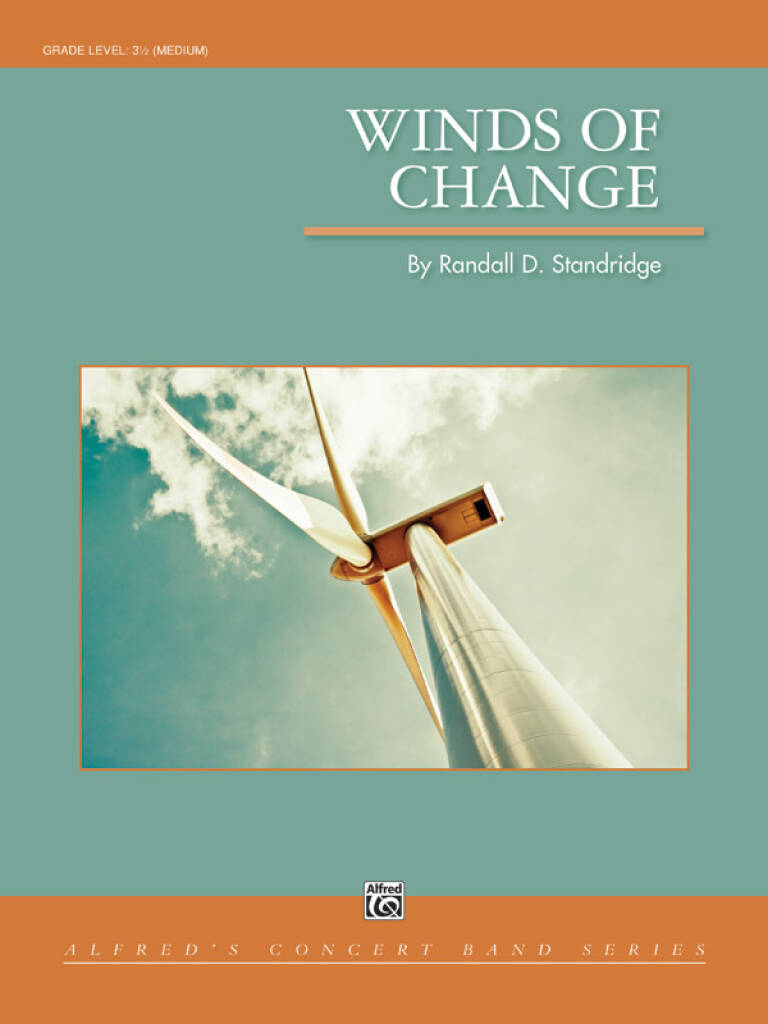
Winds of Change - Randall D. Standridge
In recent years, Oklahoma has seen a great increase in the development of wind energy. This development in sustainable energy sources and the winds that flow across the great state serve as the inspiration for this composition. The piece begins by depicting the great open spaces that stretch for miles across the Oklahoma landscape. Small gusts of wind (represented by scalar and arpeggiated passages in the mallets and woodwinds) dance across the landscape. The piece picks up pace as the wind races across the land, turning the turbines and charging towards the future. (5:30)
Estimated dispatch 7-14 working days
-
 £209.99
Machu Picchu - Satoshi Yagisawa
Commissioned for the Ensemble Liberte Wind Orchestra, Kawaguchi City, 30th Anniversary ConcertExplaining the significance of Machu Picchu begins with remembering the Incan empire at its zenith, and its tragic encounter with the Spanish conquistadors. The great 16th century empire that unified most of Andean South America had as its capital the golden city of Cuzco. Irresistible to Francisco Pizarro, while stripping the city of massive quantities of gold, in 1533 he also destroyed Cuzco's Sun Temple, shrine of the founding deity of the Incan civilization.While that act symbolized the end of the great empire, 378 years later an archeologist from Yale University, Hiram Bingham, rediscovered "Machu Picchu", a glorious mountaintop Incan city that had escaped the attention of the invaders. At the central high point of the city stands its most important shrine, the Intihuatana, or "hitching post of the sun", a column of stone rising from a block of granite the size of a grand piano, where a priest would "tie the sun to the stone" at winter solstice to insure its seasonal return. Finding the last remaining Sun Temple of a great city inspired the belief that perhaps the royal lineage stole away to this holy place during Pizarro's conquest.After considering these remarkable ideas I wished to musically describe that magnificent citadel and trace some of the mysteries sealed in Machu Picchu's past. Three principal ideas dominate the piece: 1) the shimmering golden city of Cuzco set in the dramatic scenery of the Andes, 2) the destructiveness of violent invasion, and 3) the re-emergence of Incan glory as the City in the Sky again reached for the sun.(Satoshi Yagisawa)
Estimated dispatch 7-14 working days
-
 £204.99
So Nata Per Te - Ferrer Ferran
So Nata Per Te -- or Naci para ti in Spanish -- translates as "I was born for you". This symphonic suite is inspired by Pepe Domingo, a great music enthusiast and lover of life who wanted to commemorate his long and happy marriage to his dear wife, Concha. He commissioned Ferrar Ferran to set to music the great bond of their partnership: the couple will be able to close their eyes and relive through the music their most precious memories one by one.So Nata Per Te is a suite of many contrasts. Its contemporary, modern flavours are entertaining while the colourful variations are exciting and fascinating. Audience members may recall happy memories in their ownlives listening to the delightful, famous tunes that appear throughout the work and, although somewhat different from the originals, they are easily recognisable.Ferrer Ferran dedicated this work to Pepe Domingo and his wife Concha not only for their great enthusiasm and passion for music, but also for their mutual love. So Nata Per Te was premiered on 27 February 2010 at the Auditorio Florida of Paiporta (Spain) by the Banda Primitiva de Paiporta, conducted by the composer.
Estimated dispatch 7-14 working days
-
£52.50
Horse and Buffalo - Mike Hannickel
Take your band to the great North American plains, to a post-Columbian Sioux village. A tone poem describing the life of a young Sioux, Horse and Buffalo is based upon actual Native American melodies. A lullaby, an honor song, and a courting song are the basis of this dynamic arrangement. Your young players will be especially intrigued by the energetic, meter-shifting honor song! Great possibilities for cross-curriculum work with Social Studies teachers. One of the most memorable pieces you'll perform this year!
Estimated dispatch 7-14 working days
 View Music