
Results
-
 £98.50
Rail Riffs - Brian Balmages
Close your program with this non-stop, energetic barnburner that combines elements of dance, jazz, and Latin grooves! As its title suggests,Rail Riffsfeels like one massive party on rails that is certain to bring down the house. Brian Balmages pours on the coal, making this one ride you will not want to end!
Estimated dispatch 7-14 working days
-
 £53.95
Fortune and Glory - Jack Wilds
Fortune and Gloryis an evocative, exciting piece that will transport your audience into a swashbuckling action movie. Jack Wilds fills the piece with twists, turns, and jump cuts, making the music feel like a soundtrack that will ignite your students' imaginations. Positively energetic and highly approachable!
Estimated dispatch 7-14 working days
-
 £79.50
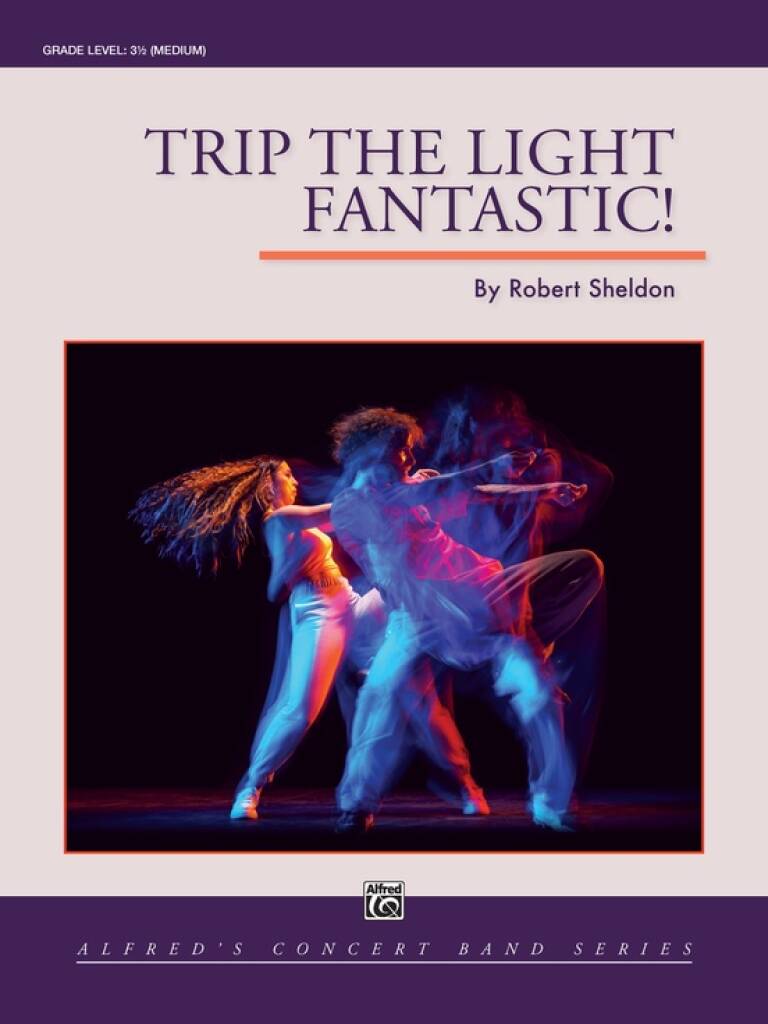
Trip the Light Fantastic! - Robert Sheldon
Trip the Light Fantastic!, By Robert Sheldon, is a tuneful and light-hearted piece that features syncopated rhythms and a touch of Lydian modality to enhance its playfulness. The title, borrowed from a poem by John Milton, means to dance nimbly and land lightly using fancy footwork which is most appropriate for a composition that also seems to dance nimbly and land lightly on the listener's ear.
Estimated dispatch 7-14 working days
-
 £129.99
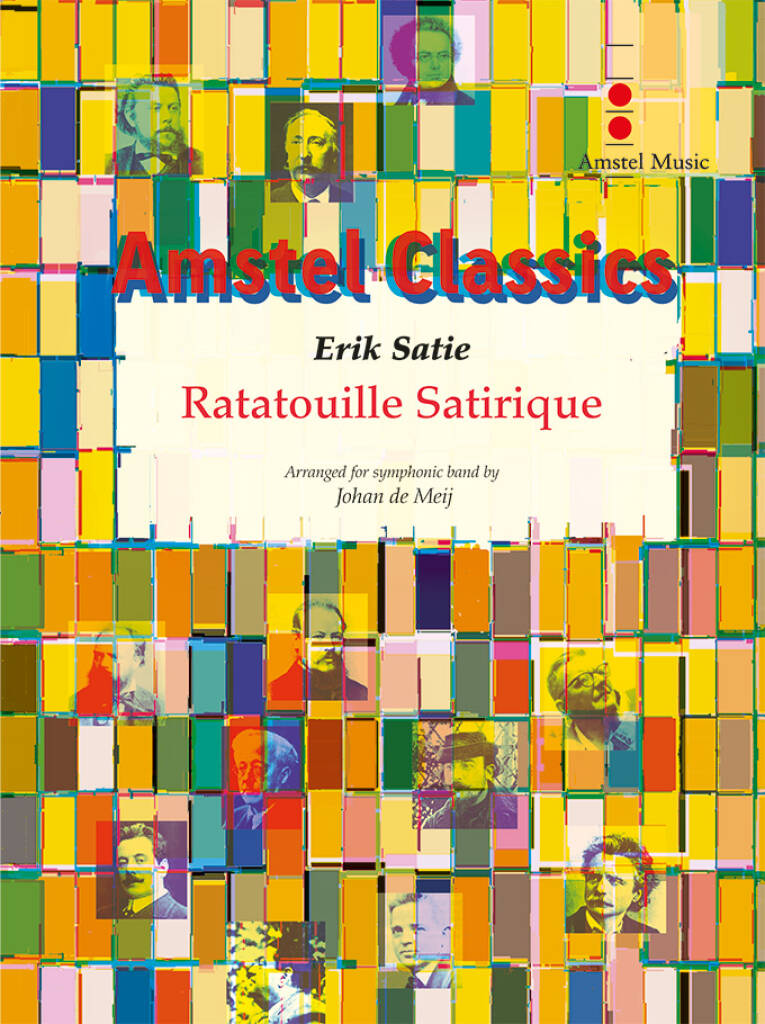
Ratatouille Satirique - Traditional
Erik Satie, born in Honfleur in Normandy (France) in 1866 is undoubtedly one of the most striking personalities in the history of French music. He composed in various, often quite divergent, styles. Besides light-hearted, entertaining works he also wrote several serious compositions, among which the three ballets: Parade, Rel che and Les Aventures de Mercure. However his piano pieces, such as Trois Gymnopdies or Gnossiennes will remain his most popular compositions. Satie co-operated with almost all great artists of his time: Pablo Picasso, Jean Cocteau, Sergej Diaghilev and Georges Braque and the composers Darius Milhaud (Le Groupe des Six) and Claude Debussy. Johan deMeij made an orchestration of three short pieces by Erik Satie: I. Prlude (from: Jack in the Box) II. Rverie (from: Trois petites pices montes) III. Marche: Le Piccadilly (1904) It was only after Satie's death in 1925 that the manuscript of the piano piece Jack in the Box was recovered. Satie himself thought he had lost the manuscript in a bus. When his flat in Arceuil was cleaned out, a small notebook was discovered behind his piano and it contained the manuscript which was assumed to be lost forever. The Rverie (De l'Enfance de Pantagruel) is an extract from Trois petites pices montes, originally composed for small symphony orchestra. In this suite it is meant as a restful intermezzo. It is clear that, as with Milhaud (La Cration du Monde) and Debussy (Golliwogg's Cakewalk; Le Petit Ngre), it is hard to deny obvious influences of jazz music in Erik Satie's compositions. Le Piccadilly, dating from 1904, displays a lot of similarities with the compositions of Scott Joplin.
Estimated dispatch 7-14 working days
-
 £249.99
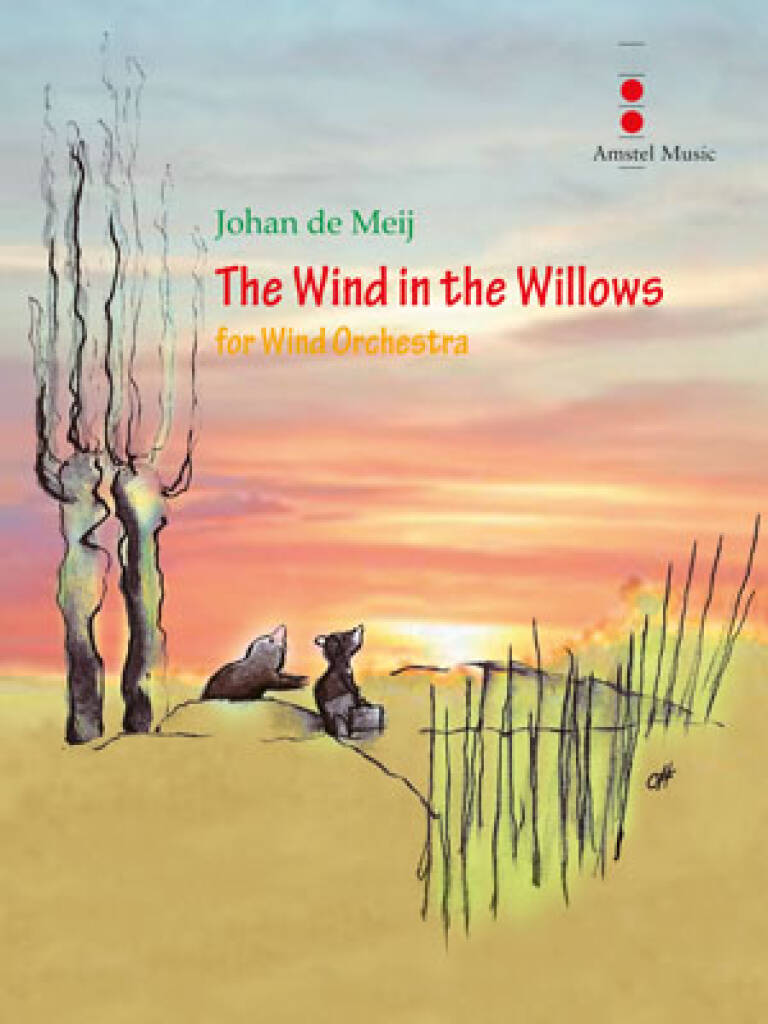
The Wind in the Willows - Johan de Meij
"A book for those who keep the spirit of youth alive in them; of life, sunshine, running water, woodlands, dusty roads, winter firesides" said author Kenneth Grahame (1859-1932) about his children's book The Wind in the Willows. Initially, he wrote the stories about Ratty, Mole, Badger and Toad to read to his visually handicapped son Alistair, but after the publication in book form in 1908, it became a worldwide success. It was later also turned into a film and a television series. What appealed ti the composer most is the friendly, very cosy atmosphere that Grahame has managed to create with his optimistic narrative style full of high spirits, an atmosphere that reminds thecomposer of his own carefree youth. It was therefore a great pleasure to set this book to music! The four movements successively describe:I) The River- The river, which flows through the habitat of the animals like a lifeline, regularly is the scene of pleasant boat trips and picnics. The animals lead their untroubled lives here. The four-tone main motif [A-C-D-C] is extensively presented by the brass section, and returns in the following movements as a countermelody. II) Ratty and Mole -The bright, energetic Rat and the melancholy doubter Mole are inseparable friends and have many adventures. Their opposite characters are illustrated by separate musical themes. III) Mister Toad - The wilful, haughty Mister Toad is indeed a unique case: time after time, he runs into tricky situations, and with his indomitable passion for fast - preferably stolen - cars he causes quite a lot of damage...IV) The Return of UlyssesAfter Toad Hall, the majestic residence of Mister Toad, is recovered from the weasels and stoats of the Wild Wood, who had captured the estate in a cowardly way, our friends get ready for a banquet. They celebrate the victory with a triumphant parade, and so both the book and the music conclude with a happy ending.
Estimated dispatch 7-14 working days
-
 £191.99
Sunrise at Angel's Gate - Philip Sparke
This piece depicts the refined beauty of the Grand Canyon at sunrise and sunset. These are the best times to view the Canyon with the sun low in the sky casting shadows that give depth and form to the vast panorama. Angel's Gate is one of the many named rock formations in the canyon. The composer has tried to depict the sights and sounds of dawn, birdsong in the early morning sky and the gradual revelation of the Canyon itself as sunlight reaches into its rocky depths.Towards the end of the piece, to the sound of a tolling bell, we are however reminded of the dangers that the beauty of the Grand Canyon so cleverly hides.
Estimated dispatch 7-14 working days
-
 £168.50
The Four Noble Truths - Philip Sparke
The Four Noble Truths are the most basic expression of the teaching of Buddha and therefore still form the guidelines for Buddhists to this day. The four truths are Dukkha, which describes times of major stress in our lives - birth, aging, desire and death; Samudaya which describes those parts of our life that induce stress, feeling, craving, desire; Nirodha which tells us how to eliminate those aspects of our lives which induce stress and Magga which describes the eight didciplines which can help us eliminate the origins of stress from our lives. It can be seen from these over-simplified definitions, that the Four Noble Truths fall into two pairs, the first two describingthe origins of stress and the second two describing how we can reduce stress. To reflect this, the four movements of this work are also combined into two pairs - two quick movements and two slow movements. A fascinating work from this great English composer.
Estimated dispatch 7-14 working days
-
 £74.99
La Caracol - Philip Sparke
Flamenco is a style of music, usually played on the guitar to accompany dancing and singing, that has its home in Andalusia in southern Spain. It has its roots in the years of Moorish rule of the region (711-1492) although the modern flamenco style dates only from the 18th century. La Caracola (which is the Spanish name for the triton sea shell) is an annual festival of flamenco that takes place around the region's capital, Seville, annually in May. This piece does not contain any traditional flamenco melodies but does capture wonderfully the colour, passion and energy of this seductive music in a 'must-have' work for Beginner Bands.
Estimated dispatch 7-14 working days
-
 £194.99
Euphonium Concerto II - Philip Sparke
The original concept for this work was a suite of short movements, each with its own character, but by the time the first movement was complete it was clear that a conventional three-movement format was going to work out better. The opening movement contains much syncopation and is almost rag-like in style. The slower second movement explores the unsurpassable ability of the euphonium to play lyrically, with a theme that is later taken up by the band whilst the soloist weaves a filigree descant. This leads straight into the third movement, which is almost bebop in style and shows off the jazzier capabilities of the euphonium. The concerto was composed for the virtuoso soloist,Steven Mead. A version for euphonium and piano is also available.
Estimated dispatch 7-14 working days
-
 £141.99
Valerius Variations - Philip Sparke
Dutch composer, artist and poet Adriaen Valerius is mostly remembered today for his collection of 79 songs for voice and lute or cittern, published posthumously in 1626. Philip Sparke has taken one melody from this collection that tells of the War of Independence with Spain. The beautiful slow melody is followed by a series of lively variations to form an extremely entertaining piece that will bring great joy to all who perform and listen to it.
Estimated dispatch 7-14 working days
 View Music