
Results
-
 £72.99
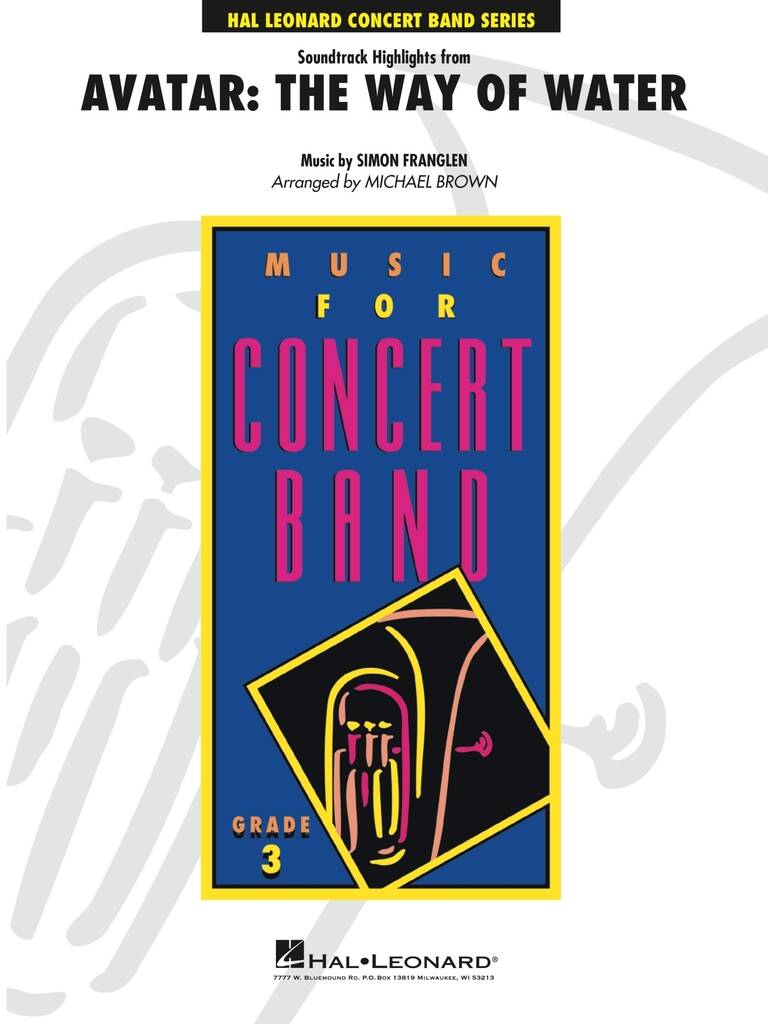
Soundtrack Highlights from Avatar:The Way of Water - Simon Franglen
The stunning follow-up to the original Avatar movie certainly did not disappoint! Featured in this well-crafted medley are sweeping new themes, dramatic action moments, and the distinctive chord progression that helps tie the soundtrack together.
Estimated dispatch 7-14 working days
-
 £87.99
Steps - Thomas Doss
This short concert piece with a minimalist character, describes human footsteps that can be heard from an adjacent room and seem to increase in number. The anonymous acoustic observation conveys images of strange people in an increasingly hectic scene. The short middle section reveals a sudden silence and gives rise to a feeling of loneliness. But soon the footsteps from the beginning can be heard again and the anonymous hustle and bustle starts anew.
Estimated dispatch 7-14 working days
-
 £74.00
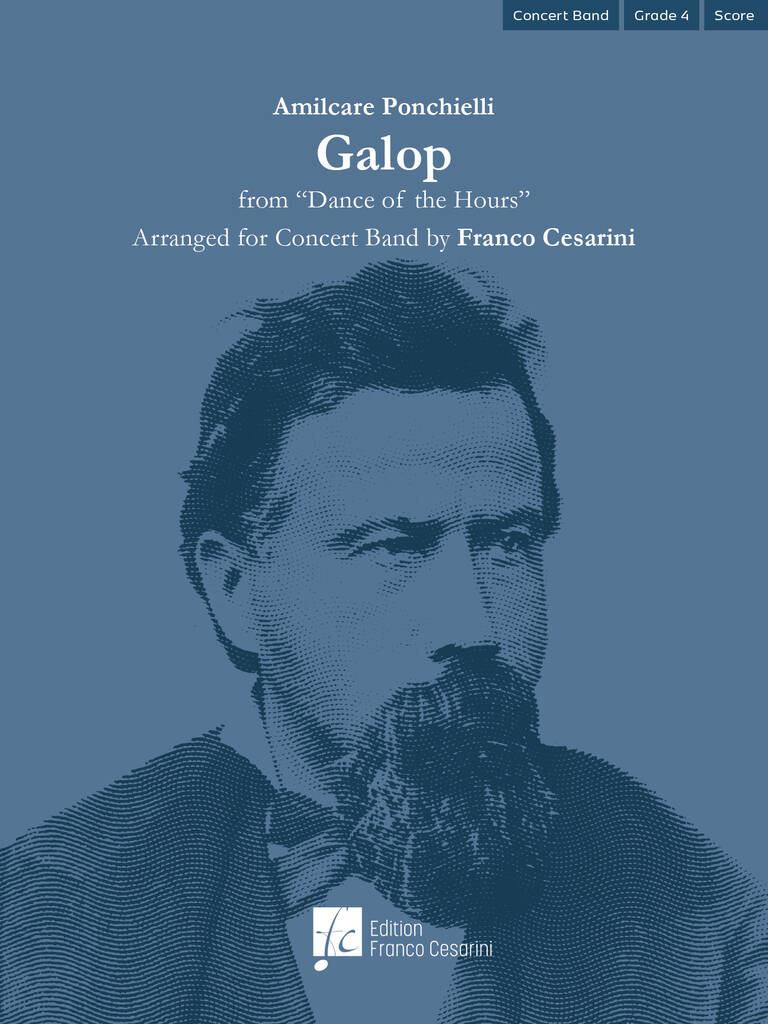
Galop - Amilcare Ponchielli
La Gioconda, with a libretto by Arrigo Boito, is the most successful theatrical work by Amilcare Ponchielli (1844-1886). In this work there are two dance pieces: the Furlana at the conclusion of the 1st act and the Danza delle ore in the 3rd act. The Dance of the Hours has a precise choreographic outline: it is a masked ball which includes the "hours" of dawn, day, evening and night successively, and ends with a wild finale of galop. The latter is a sort of fast polka, in binary rhythm and unbridled pace. A French variant of it is the can-can. The finale in galop time of the Dance of the Hours recalls certain playful dances by the composer Jacques Offenbach, such as the famous Can-can that concludes the overture of the operetta Orphe au enfers.
Estimated dispatch 7-14 working days
-
 £74.00
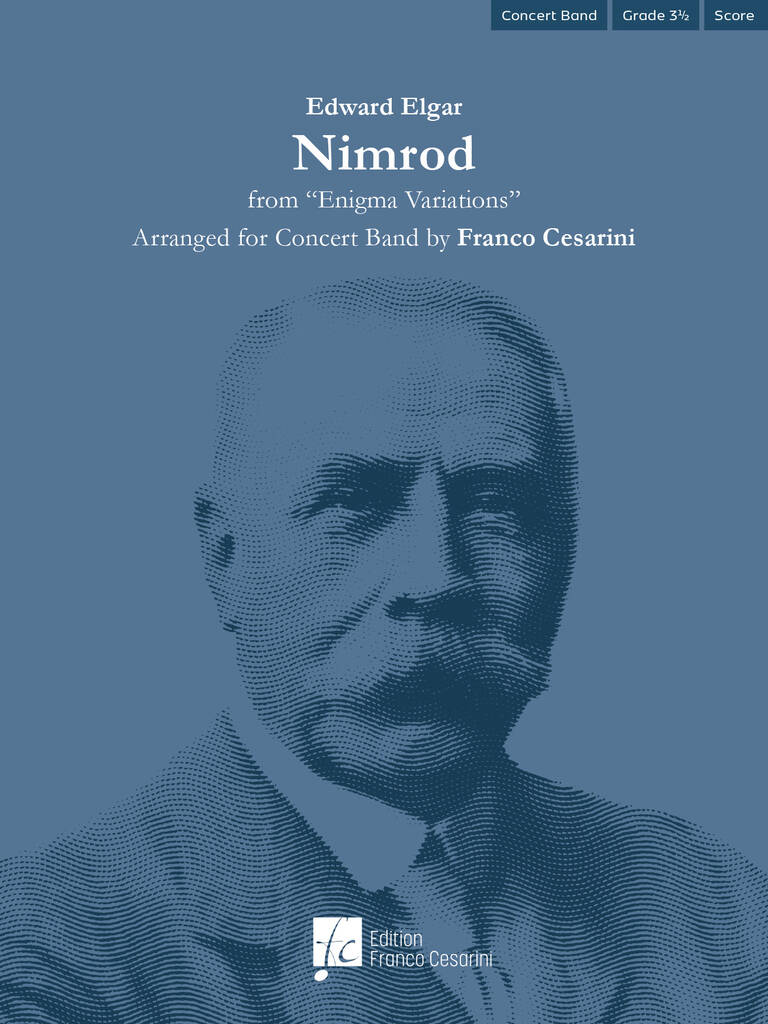
Nimrod - Edward Elgar
Nimrod is the name given to the ninth and best-known variation inEdward Elgar's Enigma Variations, an orchestral work of 14 variations on an original theme composed between 1898 and 1899. Each variation is also a portrait of one of 14 members of Elgar's family and circle of friends. A celebrated work, Nimrod is a portrait of Augustus Johannes Jaeger, who in addition to being his best friend was also Elgar's editor.The variations all represent a series of portraits and as such are entitled with a name or initials that identify the person. Biblically, Nimrod is a great hunter of the Old Testament, thus representing his muse through a play on words: Jger in German means 'hunter'. The melody appears to represent a nocturnal stroll during which the two discuss Ludwig van Beethoven's slow movements; the first eight bars, in fact, recall the beginning of the second movement of the Pathtique Piano Sonata.An arrangement of classical music signed by Franco Cesarini which stands out for its skilful and careful instrumentation.
Estimated dispatch 7-14 working days
-
 £70.00
Tamm - Franco Cesarini
Tamm was commissioned to Franco Cesarini by the Musical Association of Tamm, a charming city in the Land of Baden-Wrttemberg (Germany) for elevation to city status in 2022. Tamm is a march with a traditional structure, with lively melodies and festive sounds that fully reflect the joyful and important occasion for which it was composed.Tamm is available in card size format.
Estimated dispatch 7-14 working days
-
 £95.99
5 Tantum Ergo - Anton Bruckner
Anton Bruckner (b. 4.9.1824, Ansfelden, d. 11.10.1896, Vienna) didn't have it easy. Throughout his life, the Austrian composer was plagued by self-doubt. Anton Bruckner came from a simple, rural background. After the death of his father, he was accepted as a choirboy at the monastery of Sankt Florian in 1837. After several years as a school assistant and his own organ and piano studies, he first worked as organist in St. Florian, then from 1855 as cathedral organist in Linz. Introduced to music theory and instrumentation by Simon Sechter and Otto Kitzler, he discovered Richard Wagner as an artistic role model, whom he admired throughout his life and also visited several times in Bayreuth.In 1868 Anton Bruckner became professor of basso continuo, counterpoint and organ at the Vienna Conservatory; ten years later court organist; and in 1891 finally honorary doctor of the University of Vienna. He was considered an important organ virtuoso of his era, but had to wait a long time for recognition as a composer. It was not until Symphony No.7 in E major, composed between 1881 and 1883, with the famous Adagio written under the effects of Wagner's death, that he achieved the recognition he had hoped for, even if he was reluctant to accept it given his inclination towards scepticism and self-criticism.Anton Bruckner was a loner who did not want to follow a particular school or doctrine. He composed numerous sacred vocal works, such as his three masses, the Missa Solemnis in B flat minor (1854), the Te Deum (1881-84) and numerous motets. As a symphonic composer, he wrote a total of nine symphonies and many symphonic studies from 1863 onwards, tending to revise completed versions several times over. Bruckner's orchestral works were long considered unplayable, but in fact were merely exceptionally bold for the tonal language of their time, uniting traditions from Beethoven through Wagner to folk music, on the threshold between late Romanticism and Modernism.Hymns for four-part mixed choir a cappella (1846, St. Florian)No. 1 in E flat major (WAB 41/3): Quite SlowNo. 2 in C major (WAB 41/4): AndanteNo. 3 in B flat major (WAB 41/1): SlowNo. 4 in A flat major (WAB 41/2): SlowHymn for five-part (2 S, A, T, B) mixed choir and organNo. 5 in D major: SolemnlyThey are simple works, completely subordinate to their liturgical use, which nevertheless already show numerous characteristics of personal expression. These small pieces were able to stand up to the harsh scrutiny of the mature master: in 1888, Bruckner subjected them to a revision in which he made only minor corrections.
Estimated dispatch 7-14 working days
-
 £204.00
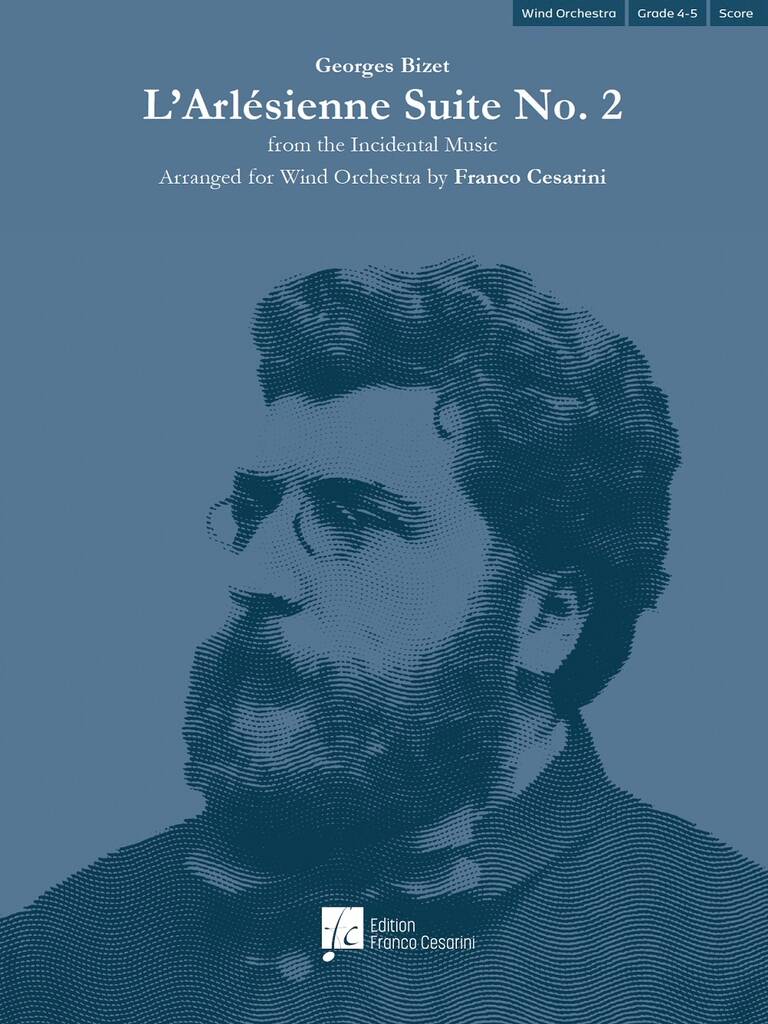
L'Arlesienne Suite No. 2 - Georges Bizet
The arrangement for wind orchestra of Georges Bizet's L'Arlsienne Suite No. 2 by Franco Cesarini came about after the composer had long sought a version of the work that would satisfy him.Franco Cesarini remains completely faithful to the original version by revealing and highlighting each section and all the facets of the wind orchestra.The premiere of L'Arlsienne Suite No. 2 was held in Lugano on 27 March 2022, during the Spring Concert of the Civica Filarmonica conducted by Franco Cesarini.
Estimated dispatch 7-14 working days
-
 £75.99
Colors of Unity - Thomas Doss
Located in the heart of Europe, this Euroregion unites the three provinces of Tyrol, South Tyrol and Trentino into a prosperous and successful union. People, points of view, interests and opportunities are to be joined together here in a harmonious future. For this part of Europe, our fanfare will be a signal that can be heard from far and wide.
Estimated dispatch 7-14 working days
-
 £66.00
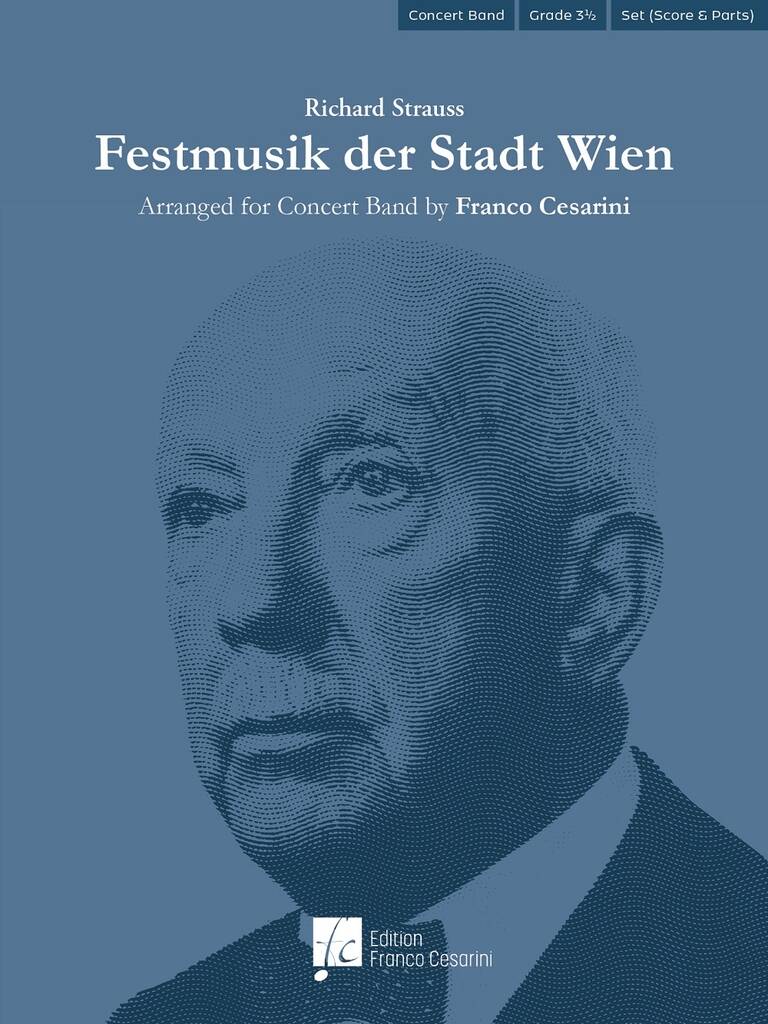
Festmusik der Stadt Wien - Richard Strauss
Richard Strauss' Wiener Fanfare, the shorter version ofFestmusik der Stadt Wien - a piece originally written for ten trumpets, seven trombones, two tubas, and timpani - was the basis ofthis arrangement for concert band by Franco Cesarini. Strauss completed the "Festmusik" on 14 January 1943 after having previously received the "Beethoven Prize" in 1942. He dedicated the piece to the City Council of Vienna as a sign of his gratitude. Strauss conducted the premiere of this work in the Festival Hall of Vienna City Town Hallon 9th April 1943.An arrangement that highlights the characteristics of Franco Cesarini's writing.
Estimated dispatch 7-14 working days
-
 £244.00
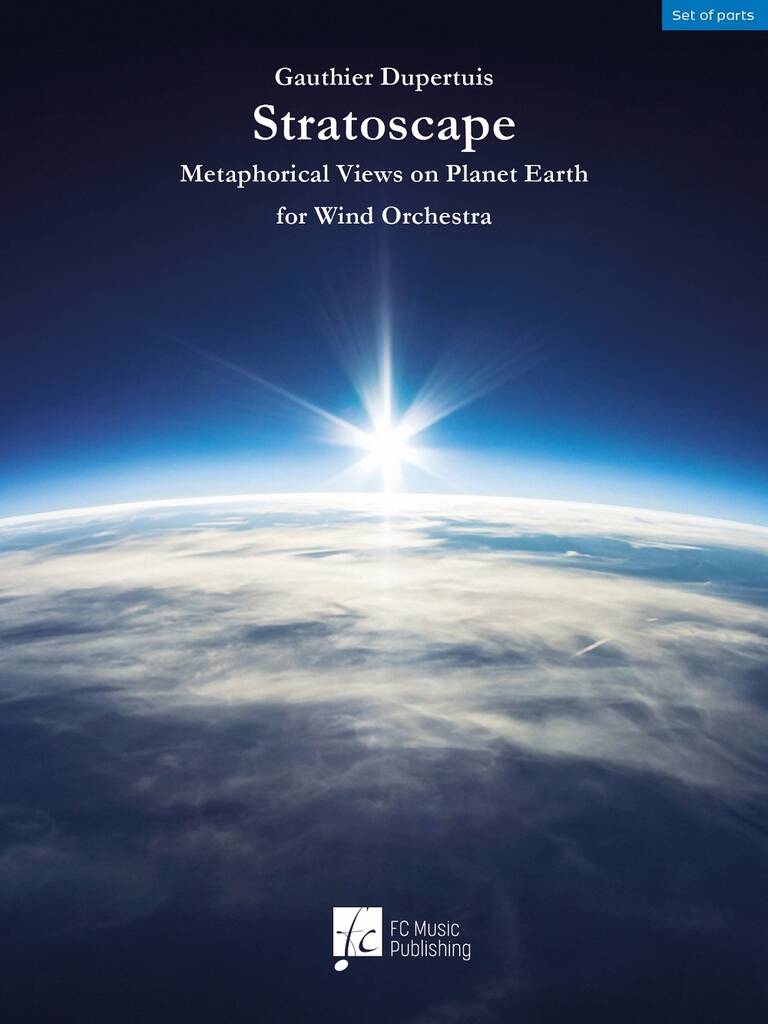
Stratoscape - Gauthier Dupertuis
Stratoscape, by Swiss composer Gauthier Dupertuis, is a colorful and contrasting work for wind orchestra, depicting the view of our earth as seen from the stratosphere. This voyage into the sky is pictural, but also metaphorical, as it is also about distancing from our world. br>The work is divided into five sections:I Ignition!, II Broadness & The Big Blue, III Stars Shining from Down to Above, IV Destructive Forces, V One and Only HomeFive contrasting movements, starting with Ignition in which Gauthier Dupertuis tries to musically convey the majesty of our planet seeing if from the atmosphere, ending with One and Only Hope, as the title say, a message of hope. In between three movements that depict the broadness of the landscapes of our planet (second movement), the fragility of our earth at night with only the stars shining (third movement). But also sheer reality in the fourth movement when the composer translates into music the damage caused to our planet by us human beings. Stratoscape: a fantastic view of Planet Earth!
Estimated dispatch 7-14 working days
 View Music