
Results
-
 £57.50
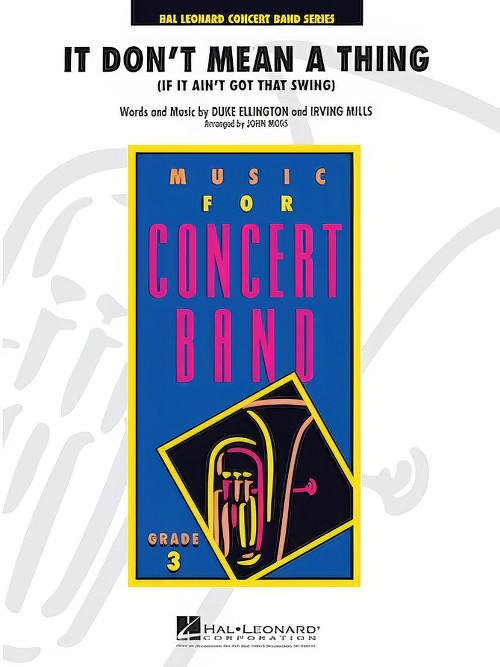
IT DON'T MEAN A THING (If It Ain't Got That Swing) (Young Band) - Ellington & Mills - Moss, John
Do-wat, do-wat, do-wat, do-wat... the signature riff from Duke Ellington's jazz standard is a great audience pleaser. Easy and fun to play, you can program this great entertainment spot anywhere
Estimated dispatch 7-14 working days
-
 £54.95
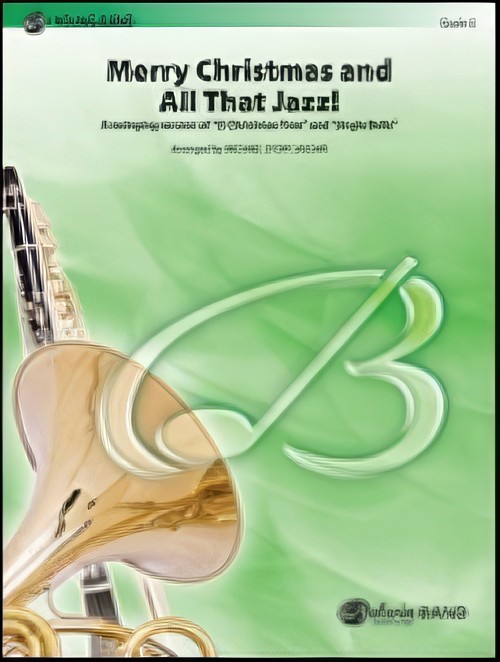
MERRY CHRISTMAS, AND ALL THAT JAZZ! (Young Band) - Story, Michael
This jazz-tinged salute gives us reason to sit up and take notice as the traditional gets a bit of a hip flavouring. Cool! (duration 2:39)
Estimated dispatch 7-14 working days
-
 £84.60
TAKE THAT LOOK OFF YOUR FACE (Easy Concert Band) - Lloyd Webber, Andrew - Woodfield, Ray
Grade: Easy/Medium
Estimated dispatch 7-14 working days
-
 £108.10
THEY CAN'T TAKE THAT AWAY FROM ME (Easy Concert Band) - Gershwin, George - Naulais, Jerome
Great Arrangement. American Grade 2. Duration: 3:11
Estimated dispatch 7-14 working days
-
 £274.99
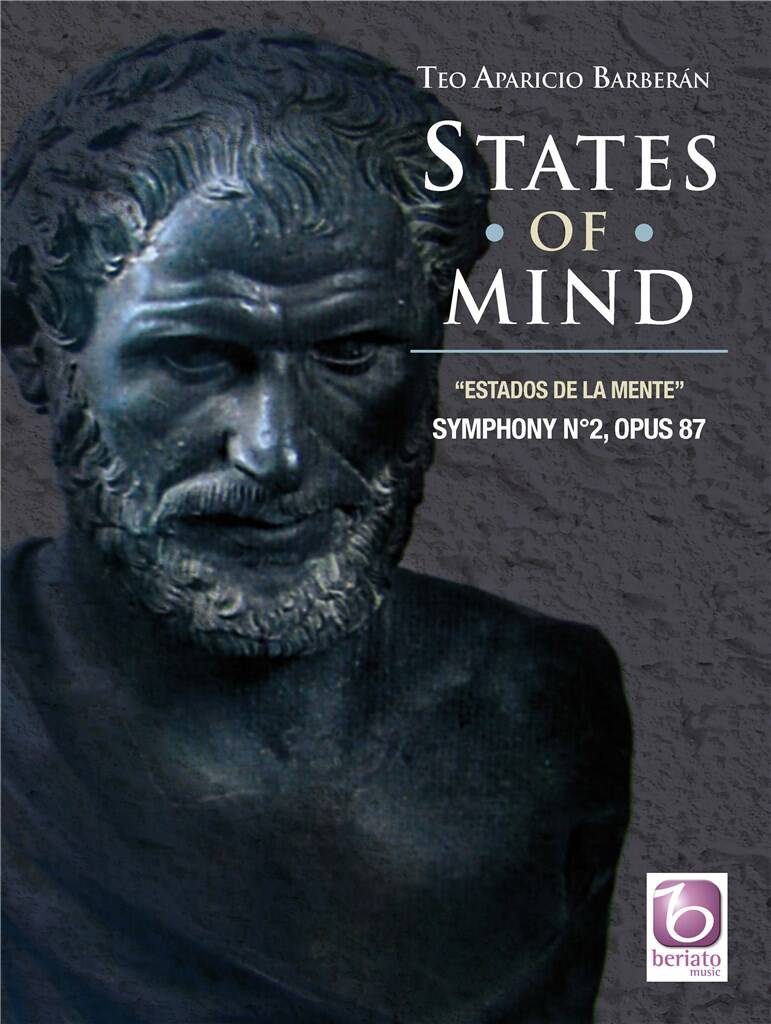
Symphony No. 2: States Of Mind, Opus 87 - Teo Aparicio-Barberán
I- Logos (reason)II- Pathos (emotion)III- Ethos (credibility)The ancient Greeks believed that music shaped the character of man. In Egyptian temples, music was an essential part of the magical rites to alter the course of nature or to treat illness.And today we know that sound can actually alter matter. The secret of music lies in harmony and mathematics, as many great musicians and experts have always known.One of the most important qualities of music is that it enables the listener to focushis attention inwards instead of on what is around him. It is indisputable that music can inspire emotion. Music leads us into a universe of emotions that are difficult to put into words. In short, music reaches into corners of our soul and thoughtsthat words cannot reach and makes it possible to more clearly describe these different States of mind.The composer of this symphony also believes that each "musical argument" must be constructed so that it will induce the desired reaction in thelistener.Music: more than wordsIn recent times, most orchestral symphonies have been based on a story, a text or something similar so that their composition must be structured accordingly.The intention of this work by Teo Aparicio-Barbern is quitedifferent. The composer describes the three elements of the argument as the only formal structure of the work. Since certain philosophers in world history were able to subdivide grammatical argument, why shouldnt that also be possible for the musicalargument?Since ancient times the power of the spoken word has captivated mankind. How can an argument move people and mobilise the masses? Where does the power of words come from today? The answer lays not so much in what people say but in how theysay it.Rhetoric is one of the oldest humanist disciplines in Western civilisation. Aristotle, in the 4th century BC, called it the art of persuasion. Indeed, the terms rhetoric and persuasion are mutually interchangeable.More than 2000 years agoAristotle structured his rhetoric according to the following three elements: the logos, the pathos and the ethos.Logos (words, reason) is the reasoning that gives freedom to the structure of the text by expressing what one wishes to say usingspecialist terms. With logos we create arguments to receive public approval and to defend our ideas.Pathos, the second element, refers to the effective use of public psychology. Pathos can be considered as the capacity to induce the desired emotionalresponse in the public, by creating an emotional connection with the public so that they accept our message.The third element, ethos (credibility), refers to the character of the speaker and is perhaps the most important of the three elements.Aristotle based his concept of ethos upon his belief that truth and justice will always have the upper hand over anger. He believed that what was true and good was easier to prove and was more persuasive.This second orchestral symphony from thecomposer from Enguera follows these three parameters of the argument according to Aristotle. Each movement tries to summon a different state of mind in the listener so that the message itself can be better understood and appreciated. Apart from thesethree general concepts the music is only structured, as Claude Debussy would say, in a "formative way".The first movement, logos, is based on a scherzo melody that undergoes various changes in rhythm and harmony. The arguments are presented by meansof conventional techniques of composition. The second movement, pathos, is characterised by suggestions of sound. It is subdivided into two large parts. The first part is based on a five seven sequence with five sounds that are repeated in differentenvironments, structures and dynamics. The second part, which is largely tonal, brings out more directly the emotional overtones that each argument must have. The third movement, ethos, is a faithful rendition of the composers personality. In thislast part, clear rhythmic sequences stand out, there are large dynamic contrasts and lots of tone variation. In addition, and this is quite in keeping with the composers earlier work, the harmony in States of Mind is handled in a manner that is bothoriginal and efficient, as a result of which Aparicio-Barberns message is well understood by the listener.This second symphony by Teo Aparicio-Barbern is devoted to "my dear Henrie Adams, a guiding light in this eternally dark musical world. Thankyou for everything."
Estimated dispatch 7-14 working days
-
£264.99
Diferencias on an Old Spanish Song - Yasuhide Ito
I am immensely happy that my Gloriosa, symphonic poem for band (1990), has been performed by so many bands in the last thirty years.During this period, the growth of the internet has made it much easier to access information.When I composed Gloriosa, I only had limited information about the period when Christianity and Western music was first introduced to Japan, and had to rely a lot on my imagination.However, nowadays, it is easy to obtain various source materials and to read interesting studies on the music of the past.In recent years, the music of Luis de Narvez (born ca.1500 - died between 1555-1560), Spanish composer and vihuela player, has become increasingly known, and several CDs of his music are now available.Narvez composed the earliest-known set of diferencias, a forerunner of the variation form. One of his works is Seys diferencias sobre el himno "O gloriosa domina" [Six diferencias on the hymn "O gloriosa domina"] (1538), based on the Spanish Marian hymn, and it was this melody I used in the first movement of my Gloriosa.Western music has been my musical roots since childhood, and throughout my career as a composer, it has continued to fascinate me. One could say that this has provided the inspiration for Diferencias on an Old Spanish Song, my own take on the diferencias form.Actually, such music from the early sixteenth century could sound fresh to our modern ears. So I decided to quote the melody from Narvez's Sey diferencias at the beginning and end of the piece, in order that people can get the feel for the period.The main section (bars 42-390) is formed of 13 diferencias, similar to the first movement of the Gloriosa.In the middle section, which begins after the eighth diferencia(from bar 187), one should be totally absorbed in the tranquility and the beauty of the music. Although it's in the style of a sarabande, it should be taken slower and played as pianissimo as possible.This is followed by folk-style dance music. (As only standard percussion instruments are used, try to be creative with tonal colours and sense of rhythm).The structure of the work is simple, but be aware of the connection between the sections when constructing the whole.Also, think about the tonality. Overall, the work is in F minor. The main section is basically in D minor, but from bar 102, it modulates to A flat minor and G minor, and then in the middle section it suddenly switches to A flat major (which is the furthest key from D minor, and the relative major of F minor). From bar 219, it modulates to F minor and then to C minor, then back to F minor by way of A minor.N.B. The Oboe II part can be substituted by the English Horn (as indicated in the parts). One can choose according to the player's skills or preference.Recent new compositions for wind band are often full of rhythm, dynamism, and tonal colour, and compositional techniques and orchestration have also evolved greatly. Yet on the other hand, they tend to feature fewer melodic or expressive elements. Since this work is the test piece for WMC Kerkrade 2022, I had to think about what "tests" or "challenges" to set, and I decided to compose something that doesn't involve a lot of technical display, but requires beautiful sounds and harmonies, and above all, musical expressivity. I didn't put many expression markings in the score, because I wanted the performers to think about how best to express this music. If it is played merely as notated, it's not going to sound very interesting.Christianity was introduced to Japan in the mid-16th century, but it was subsequently banned and Japan entered a period of national isolation, which meant that there was hardly any international exchange for two hundred years. As a result, the Christian hymns that were introduced prior to the isolation became almost unrecognizable over the centuries. This was the theme I explored in my Gloriosa thirty years ago.Now, in 2021, the whole world has been forced to "isolate" due to the Covid-19 pandemic. In such times, it seems pertinent that I've written a work using this melody again. I sincerely hope that people will be able to gather in Kerkrade in 2022.(English Translation:Nahoko Gotoh)
Estimated dispatch 7-14 working days
-
 £211.80
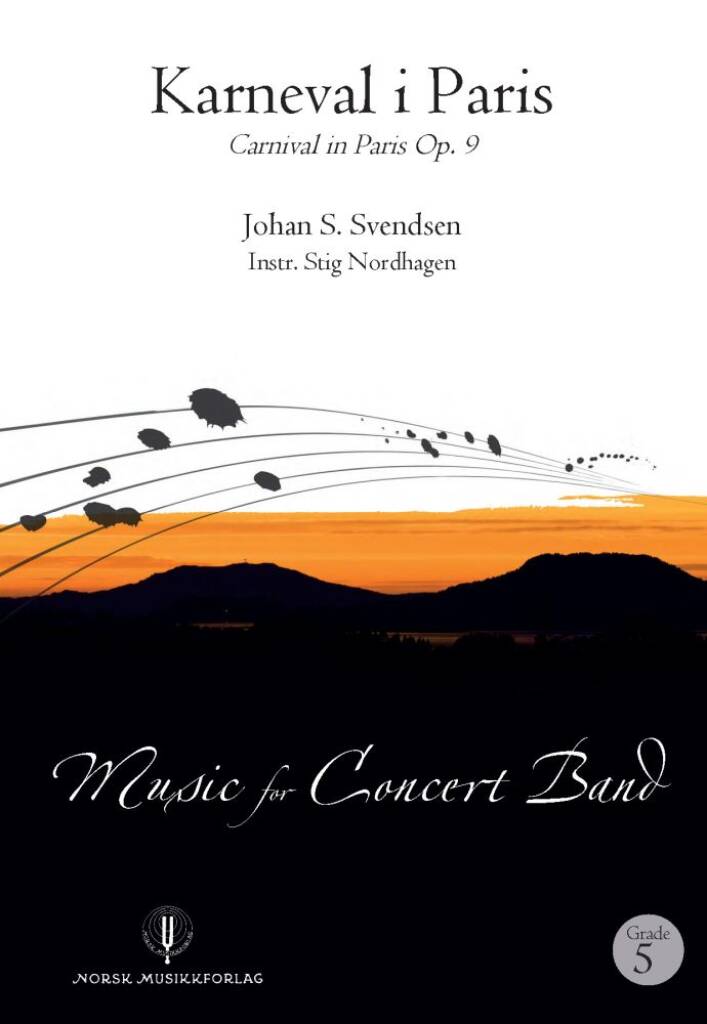
Karneval i Paris - Johan S. Svendsen
Johan Svendsen (1840-1911) composed "Carnival in Paris" in 1872, inspired by the energy and vibrancy of the Parisian carnival celebrations. The piece showcases a variety of moods and orchestral colours, ranging from jubilant and playful sections to more lyrical and elegant passages. It is a lively and colourful work that reflects Svendsen's skill in orchestration and his ability to capture vivid, festive atmospheres in music. In "Carnival in Paris", his Nordic musical roots meet the cosmopolitan influences he encountered while living and working in major European cities. The work has become one of Svendsen's most popular and is frequently performed in concert halls and festivals. About My Transcriptions for Wind Bands Ever since I started playing the clarinet at 8 or 9 years old in the school band "Blveisene" in my hometown of Gjvik, playing transcriptions of orchestral music has been a natural part of the repertoire. In regional bands, Norway's National Youth Band, and during my 10 years in a Military band, I played many such transcriptions. These transcriptions often included handwritten parts, masterfully crafted by colleagues in a time when music notation software didn't exist. Similarly, the scores were often incomplete, typically featuring just a solo clarinet part and condensed score in Bb. The transcriptions also contained parts for instruments like the Eb cornet and multiple tenor horns, but no saxophones, which made them less suitable for modern wind bands. The rise of many skilled Concert Bands and the increasing demands for scores and accessibility made me realize that someone needed to preserve this tradition. The reason I've transcribed these works is to ensure that you can play or conduct a repertoire that I believe has a rightful place in Norwegian Wind Band tradition. These transcriptions are my contribution to preserving some of the unique works in Norwegian music literature. Creating a transcription is a complex task, and I believe the score of "Carnival in Paris" is one of the most intricate I've undertaken. The first part of the process involves entering the entire orchestral score into music notation software. This is time-consuming and requires meticulous work. The next step is to check several editions to see if there are any discrepancies. Mistakes are often found in orchestral material, which can lead to further errors in the transcription. After that, I listen to many different recordings while following along with the score, paying attention to how different conductors emphasize balance and timbre. Gradually, I begin to note down passages I believe will work well for wind bands. One particular challenge in this piece is that the woodwinds and strings operate in the same register. In the original, the tonal difference between the strings and winds helps to clarify the individual musical lines. In the transcription, I've tried to address this by separating the lines, for example through octave adjustments, and highlighting them without compromising other aspects. I've also used some mallet percussion to broaden the tonal palette. There are countless decisions to be made to create a product that will hopefully allow future generations of wind band musicians to play this repertoire. - Stig Nordhagen -
Estimated dispatch 7-14 working days
-
 £57.50
Pop! - Tawnie Olson
Inspired by the ever-popular snack, Pop! is a grade 3 band piece by composer Tawnie Olson that imitates the sounds popping popcorn beginning with that first, single kernel to the exploding sounds of an overflowing pot. Through the use of imitation, additive processes, playful articulation, and the development of tune fragments, Olson crafted a piece that is relatable and great fun to play. Pop! also has an aleatoric passage that gives young performers the opportunity to co-compose by improvising sounds that suggest of pop of popcorn in the making. BandQuest, an exciting series of new music and accompanying curricula for band, is a program published by the American Composers Forum. The series was started as a response to feedback from music educators that there is a pressing need for new, fresh band music. The heart of this program is new works written by a diverse group of leading American composers who have created challenging pieces that are a true departure from standard middle school repertoire. Every BandQuest project includes a residency component in which the composer works collaboratively with a middle school as they create their new piece. Many BandQuest pieces are accompanied by an interdisciplinary curriculum designed to assist students as they learn the music and to integrate each piece with non-music studies. Visit www.bandquest.org to learn more about this innovative series, and email [email protected] to request a free downloadable audio catalog.
Estimated dispatch 7-14 working days
-
 £264.99
Panoptikum - Thomas Doss
Armin Schaer commissioned this work in his search for a new piece for the tuba. More specifically, he wanted a work that showed off the versatility of this splendid instrument, written in a musical style that is both fresh and modern, while not banishing the orchestra to a simple supporting role. Taking all these specifications into account, Thomas Doss created a work that allows stylistic leaps and is fun, exciting, romantic, and virtuosic, but does not lose sight of the thread that connects the opening measures to the very last.Armin Schaer describes his Panoptikum as follows:Panoptikum is a show of appreciation for my beautiful home and community at LakeConstance, an eventful life, the people that have enriched this life, and a fascinating instrument: the tuba. This work musically embodies the many different moods found around theBodensee - cheerfulness and melancholy, departures and longing, calm and agitation. The roles of the soloist and the orchestra were consciously crafted in a way that does not follow the usual conventions of the genre. The work should spark emotions, address broad segments of listeners, and persuade them of the tuba's ability to be a solo instrument as well as the richness symphonic wind ensembles have to offer. I hope this work enriches the lives of all the soloists and orchestras that cross its path, as well as everyone in the audience who gets to partake!
Estimated dispatch 7-14 working days
-
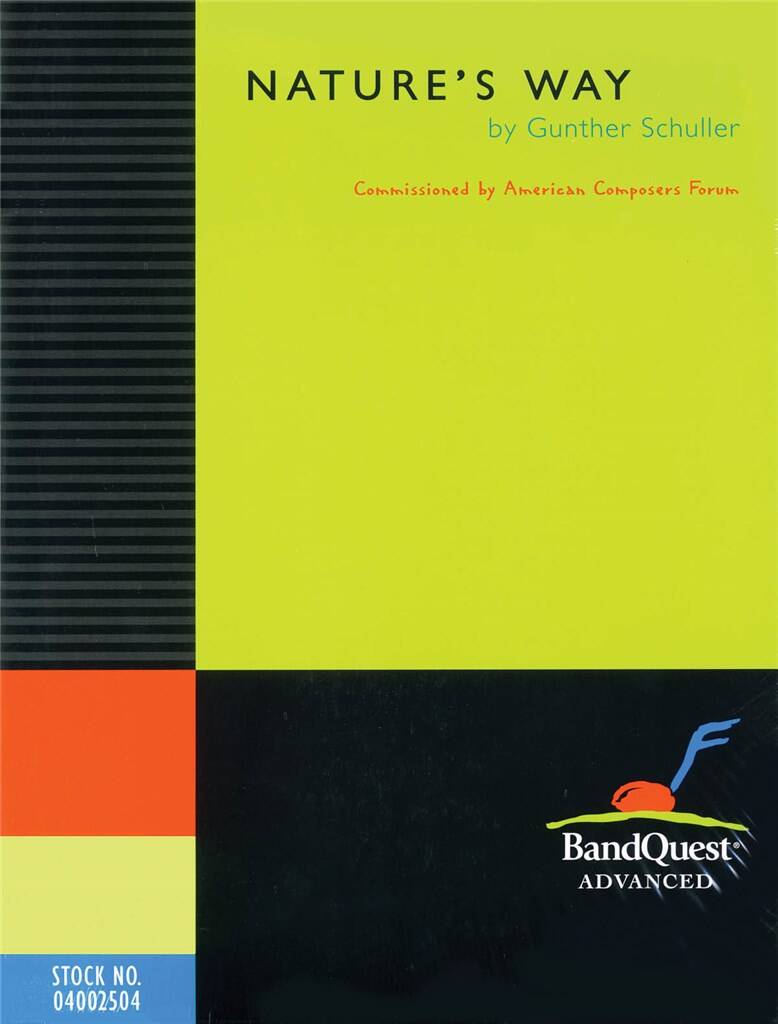 £72.99
Nature's Way - Gunther Schuller
From the composer: Nature's Way for intermediate level band was commissioned by BandQuest, a project initiated by the American Composers Forum. Their mission is for major composers of national reputation to write works of high quality that take into consideration the (still comparatively limited) levels of musical development--both technical and conceptual--typical of such ensembles. I eagerly accepted the commission and the challenges implied thereby--that is, to reign in my creative imagination to some extent and limit the technical/conceptual demands to a more moderate level than is to be found in my previous compositions for band. Nonetheless, since the process of rehearsing, studying and performing a work created specifically for the school student market is--and must be, in my view--primarily educational, it was very clear to me that my work would (and should) challenge the players at least to their top levels, and even a little beyond that. Thus Nature's Way in no way represents a compromise of my personal style, nor my long held concepts of form, continuity, texture, and instrumentation. I have known for a long time that young, inquisitive minds are eager to learn from new experiences, from previously never encountered challenges, that is to say, to be pushed--gently--to rise above their present levels of achievement. That's what education is all about. BandQuest, an exciting series of new music and accompanying curricula for band, is a program published by the American Composers Forum. The series was started as a response to feedback from music educators that there is a pressing need for new, fresh band music. The heart of this program is new works written by a diverse group of leading American composers who have created challenging pieces that are a true departure from standard middle school repertoire. Every BandQuest project includes a residency component in which the composer works collaboratively with a middle school as they create their new piece. Many BandQuest pieces are accompanied by an interdisciplinary curriculum designed to assist students as they learn the music and to integrate each piece with non-music studies. Visit www.bandquest.org to learn more about this innovative series, and email [email protected] to request a free downloadable audio catalog.
Estimated dispatch 7-14 working days
 View Music