
Results
-
 £50.50
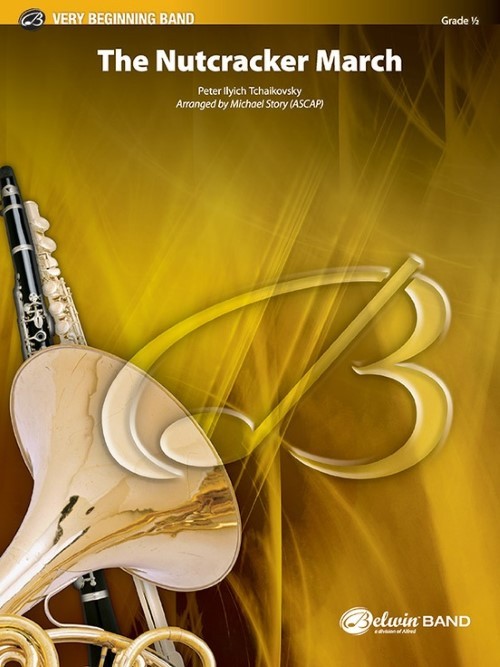
The Nutcracker March (Concert Band - Score and Parts) - Tchaikovsky, Peter Ilyich - Story, Michael
Michael Story has expertly scored this Tchaikovsky classic march for your beginners. You can be sure the original intent of this masterpiece is retained for the musical pleasure of your students and audiences alike. Classy and classic, this arrangement is sure to fill your performance needs with style.Duration: 1.30
Estimated dispatch 7-14 working days
-
 £44.50
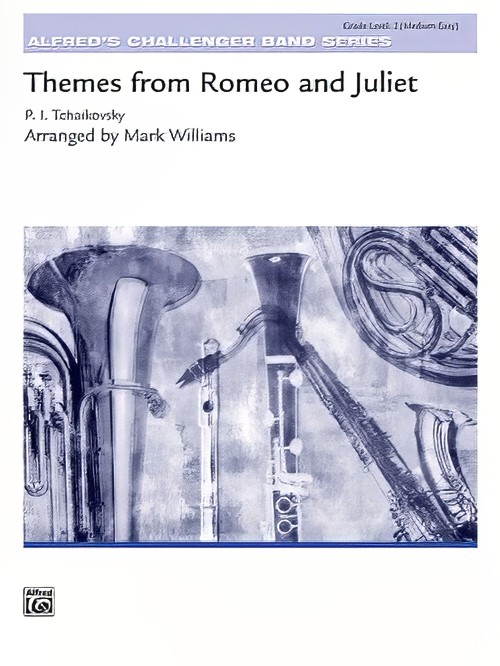
Romeo and Juliet, Themes from (Concert Band - Score and Parts) - Tchaikovsky, Peter Ilyich - Williams, Mark
Inspired by William Shakespeare's classic play Romeo and Juliet, Peter Ilyich Tchaikovsky composed an orchestral masterwork of sublime beauty and power. This arrangement by Mark Williams makes this music finally available to younger bands. The famous melodies and rich harmonies will have strong appeal to students and audiences, and provide a great tool for the teaching of chromatics and the musical style of the Romantic period. Highly recommended for concerts and contests. Duration: 3.30
Estimated dispatch 7-14 working days
-
 £55.50
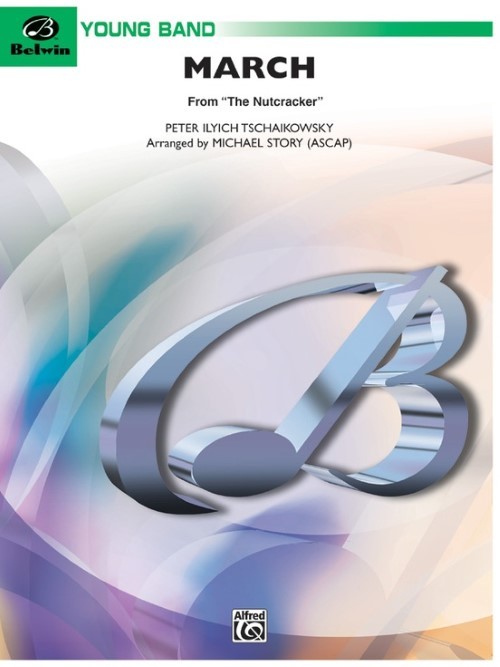
March (from The Nutcracker) (Concert Band - Score and Parts) - Tchaikovsky, Peter Ilyich - Story, Michael
The Tchaikovsky ballet, The Nutcracker, has in one way or another found its way into the lives of just about everyone. From the dance stage to the concert hall (where the orchestral suite is heard), to radio, television and motion pictures, it lives on and on. The March is one of the most identifiable segments of this monumental work. Audience recognition is immediate, and their acceptance will completely satisfy your young musicians. Duration: 2.10
Estimated dispatch 7-14 working days
-
 £109.99
Finale (from Symphony No.2, Little Russian) (Concert Band - Score and Parts) - Tchaikovsky, Peter Ilyich - Curnow, James
Throughout the years, composers have found inspiration for their works in simple folk melodies. Tchaikovsky loved Russian folk music all his life. Whilst composing his 2nd symphony, he was inspired by farmers' songs that fascinated him during a stay in Kamenka (near Kiev). He composed this symphony in 1872/73 and used the melody from the song The Stork as the main theme for the Finale. James Curnow's transcription of this 19th century masterpiece allows you to bring your contest or concert performance to a fitting Finale.Duration: 10.15
Estimated dispatch 7-14 working days
-
 £53.50
1812 Overture, Themes from (Concert Band - Score and Parts) - Tchaikovsky, Peter Ilyich - Vinson, Johnnie
Here is an excellent adaptation for younger bands of this famous overture by Tchaikovsky. The arrangement opens with the slow chorale-like theme which is found at the beginning of the original overture. From there, the piece builds to the familiar dymanic fast theme and powerful conclusion.
Estimated dispatch 7-14 working days
-
 £19.95
1812 Overture (Concert Band - Score and Parts) - Tchaikovsky, Peter Ilyich
March Card size parts. This concert overture, written in 1880 by Russian composer Pyotr Ilyich Tchaikovsky to commemorate the successful Russian defence against Napoleon's invading Grande Arm?e in 1812, is now available in convenient marchcard size for your concert band.
Estimated dispatch 7-14 working days
-
 £54.95
FANTASY ON THEMES FROM TCHAIKOVSKY (Young Band) - Erickson, Frank
Tchaikovsky's musical progress was based upon impulse, rather than upon intellectual conviction. It was his sincere response to emotional impulse and the freedom with which he ranged over almost every field of musical creation which made him as great as he was. Frank Erickson passed away before he could provide rehearsal suggestions for this piece. This was one of his final numbers.
Estimated dispatch 7-14 working days
-
 £134.00
TRIUMPHS OF TCHAIKOVSKY (Advanced Concert Band) - Richards, Scott
Duration: 9:00
Estimated dispatch 7-14 working days
-
 £60.99
Slavonic Rock March
According to his teachers, Pyotr Ilyich Tchaikovsky (1840-1893), was not particularly gifted. His special talents were acknowledged only in 1865 when he had been working for the Ministry of Finances for some years. In 1866 he was appointed teacher at the Conservatory and applied himself to composing. His oeuvre is fairly extensive and many of his compositions receive a high ranking on the international list of classical music, including his six symphonies, solo concertos (violin concerto and piano concertos), ballets (The Nut Cracker, Swan Lake), and his overtures (1812 and Romeo and Juliette). In 1893 Tchaikovsky died of Cholera after drinking a glass of infectedwater. His Slavonic March is a popular concert piece for symphonic orchestra that is still frequently performed in concert halls. David Well arranged the theme and created a contemporary march in rock style. Tchaikovsky once said to an unsatisfied teacher: 'I will be a great composer within 10 years time.'
Estimated dispatch 7-14 working days
-
 £229.99
Extreme Make-Over - Johan de Meij
Extreme Make-Over was inspired by a theme from the second movement of Tchaikovsky?s String Quartet No.1 (Andante Cantabile). It consists of a number of musical metamorphoses on the theme and includes several excerpts from Tchaikovsky?s Fourth and Sixth Symphonies and Romeo and Juliet. The most unconventional element of the work is instrumentation for ten tuned bottles to be played by members of the cornet section. This gives the piece an Indonesian Gamelan effect. Why not give your players something to get their teeth into with this impressive major new work.
Estimated dispatch 7-14 working days
 View Music