
Results
-
 £100.00
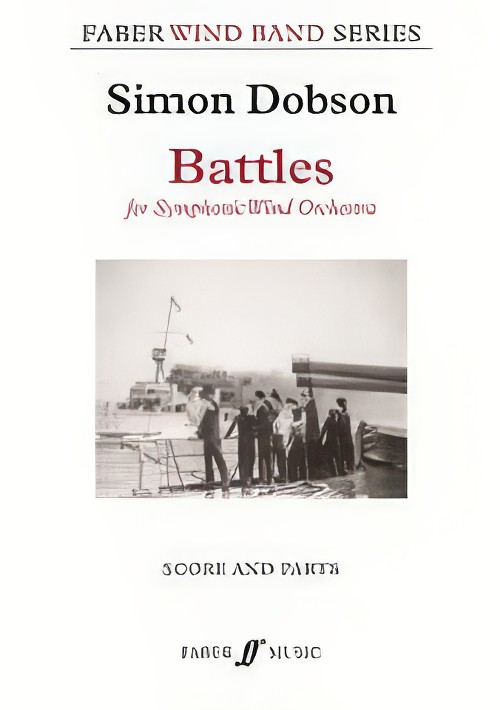
Battles (Concert Band - Score and Parts) - Dobson, Simon
Battles was written for the restoration of the epic 1927 silent film The Battles of Coronel and Falkland Islands, and was commissioned by the British Film Institute (BFI) in 2013. The work presents eight contrasting scenes as a continuous sequence: War, Introduction of Admiral von Spee, German Banquet, Building Steam/Preparing, Islanders, Call to Arms, Great Battle at Sea and Victory. The original score was written for a small chamber orchestra, symphonic brass and a substantial batterie of tuned and untuned percussion. Battles has been edited for symphonic wind orchestra with percussion and harp. Composer Simon Dobson says of his colourful score, "I wanted to keep things simple and clear, so there is a British theme, a fanfare march idea, often heard on trumpet, and a German naval theme, which is a more angular motif." Duration: 13.00
Estimated dispatch 7-14 working days
-
 £59.99
Firefly (Concert Band - Score and Parts) - Dobson, Simon
Firefly was composed by award-winning composer Simon Dobson (b.1981) to provide an entertaining up-tempo concert work for community and youth bands. Composed in funk-rock style, and is based on the groove beat with which it opens. Dobson says, "Firefly was written as a break from my more serious music and as a 'hat tip' to the various types of beat orientated music I listen to." It was first performed by Oslofjord Brass in Norway and in its wind version by Harmonie Shostakovich, Switzerland. Duration: 5-6 minutes.
Estimated dispatch 7-14 working days
-
 £76.99
The Bells of Christmas (Concert Band - Score and Parts) - Fahnholz, Simon
"The idea behind this song is to remind everyone, for all those who have forgotten, how colourful and exciting Christmas was during their childhood. Christmas is a magical time and, after all, no matter how old we are, we are all still children at heart." These words were written by Chris de Burgh about his 2009 hit, The Bells of Christmas, inspired by Dickens' A Christmas Carol. Simon Fahnholz has now made an excellent version of this Christmas hit for concert band.Duration: 2:45
Estimated dispatch 7-14 working days
-
 £118.99
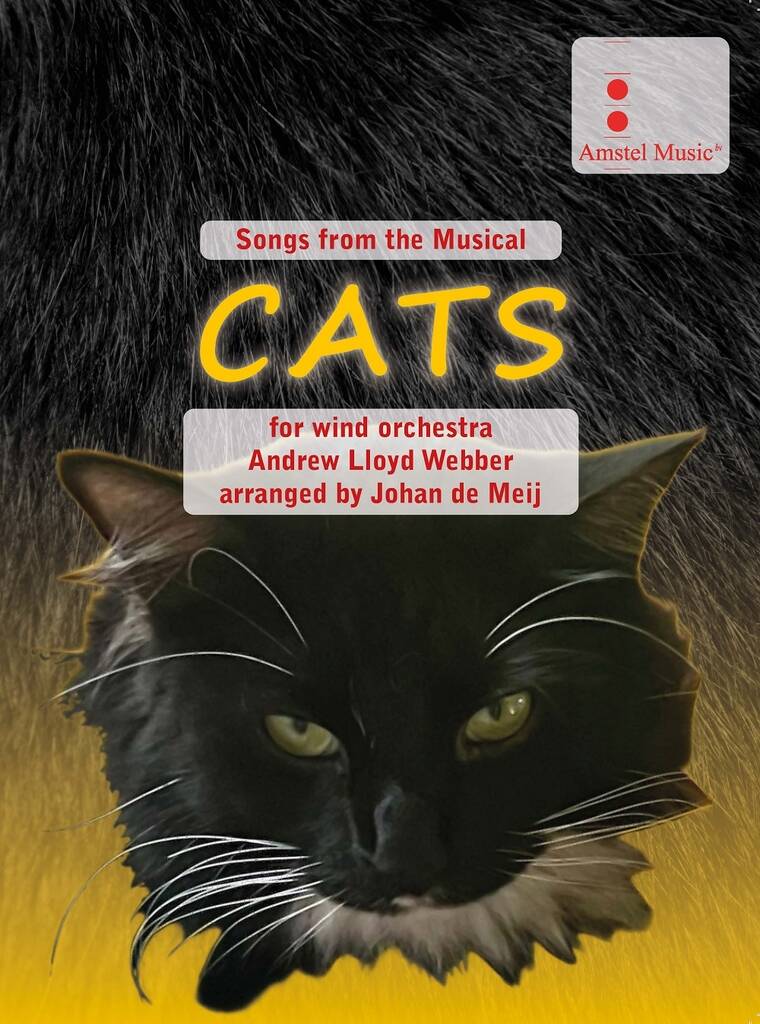
Cats - Andrew Lloyd Webber
The Musical CATS, with music by Andrew Lloyd Webber is based on the 1939 poetry collection Old Possum's Book of Practical Cats by T. S. Eliot. It became Lloyd Webber's third great success, after the musicals Jesus Christ Superstar and Evita. He began setting Eliot's poems to music in 1977, and the compositions were first presented as a song cycle in 1980. Producer Cameron Mackintosh then recruited director Trevor Nunn and choreographer Gillian Lynne to turn the songs into a complete musical. CATS became one of the longest-running shows in West End and Broadway history. It received its world premiere at the New London Theatre in 1981, where it played for 21 record-breaking years and almost 9,000 performances. The following year, CATS opened at New York's Winter Garden Theatre, its home for the next 18 years, garnering seven 1983 Tony Awards, including Best Musical. The show returned to Broadway in 2016, where it had a successful pre-tour run at the Neil Simon Theatre. CATS has been presented in over 30 countries, translated into 16 languages, and seen by more than 73 million people worldwide. Lloyd Webber's magnificent musical score includes the poignant hit song Memory, which has been recorded by over 150 artists, from Barbra Streisand to Liberace to Barry Manilow. It took 7,486 chandelier crashes for Lloyd Webber's The Phantom of the Opera to take over from CATS as the longest-running show in Broadway history in January 2006.
Estimated dispatch 7-14 working days
-
 £53.50
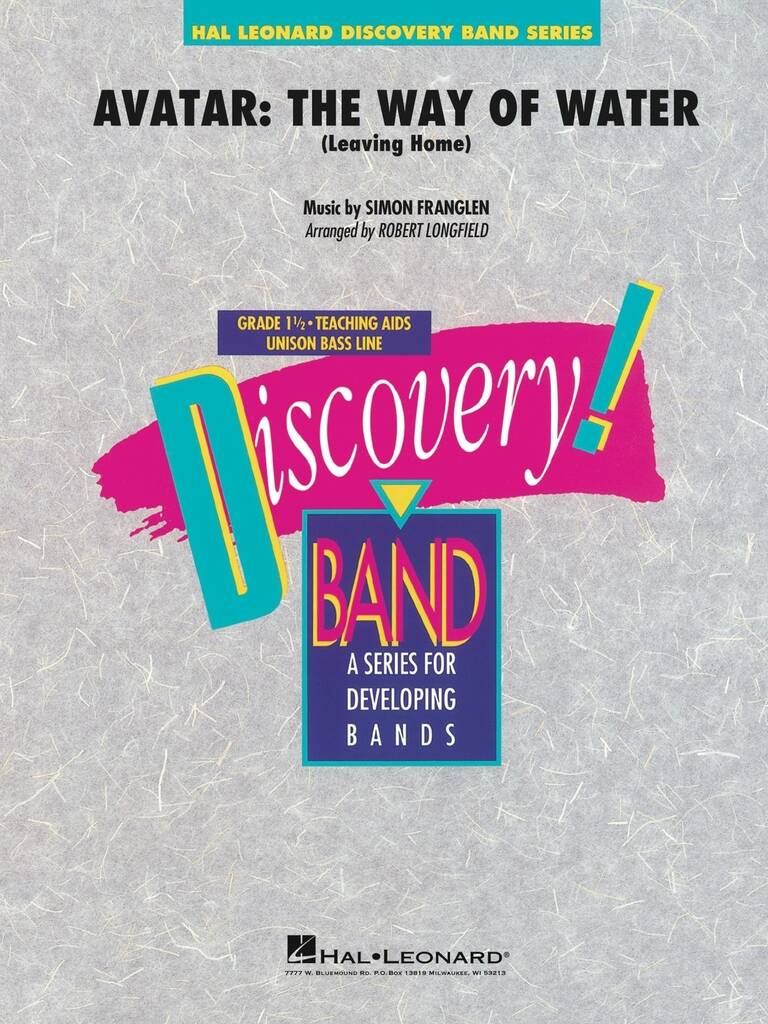
Avatar: The Way of Water - Simon Franglen
Carefully and skillfully arranged for 2nd year players, here is the bold and dramatic main theme from the movie Avatar: The Way of Water.
Estimated dispatch 7-14 working days
-
 £123.20
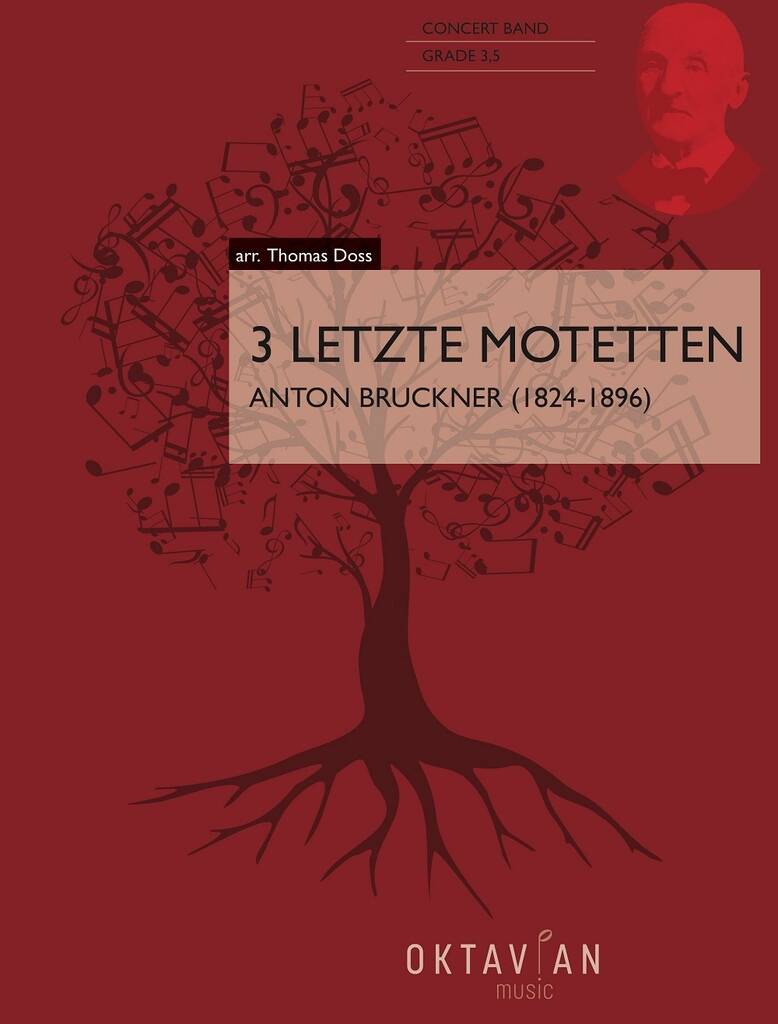
3 Letzte Motetten - Anton Bruckner
Anton Bruckner (b. 4.9.1824, Ansfelden, d. 11.10.1896, Vienna) didn't have it easy. Throughout his life, the Austrian composer was plagued by self-doubt. Anton Bruckner came from a simple, rural background. After the death of his father, he was accepted as a choirboy at the monastery of Sankt Florian in 1837. After several years as a school assistant and his own organ and piano studies, he first worked as organist in St. Florian, then from 1855 as cathedral organist in Linz. Introduced to music theory and instrumentation by Simon Sechter and Otto Kitzler, he discovered Richard Wagner as an artistic role model, whom he admired throughout his life and also visited several times in Bayreuth.In 1868 Anton Bruckner became professor of basso continuo, counterpoint and organ at the Vienna Conservatory; ten years later court organist; and in 1891 finally honorary doctor of the University of Vienna. He was considered an important organ virtuoso of his era, but had to wait a long time for recognition as a composer. It was not until Symphony No.7 in E major, composed between 1881 and 1883, with the famous Adagio written under the effects of Wagner's death, that he achieved the recognition he had hoped for, even if he was reluctant to accept it given his inclination towards scepticism and self-criticism.Anton Bruckner was a loner who did not want to follow a particular school or doctrine. He composed numerous sacred vocal works, such as his three masses, the Missa Solemnis in B flat minor (1854), the Te Deum (1881-84) and numerous motets. As a symphonic composer, he wrote a total of nine symphonies and many symphonic studies from 1863 onwards, tending to revise completed versions several times over. Bruckner's orchestral works were long considered unplayable, but in fact were merely exceptionally bold for the tonal language of their time, uniting traditions from Beethoven through Wagner to folk music, on the threshold between late Romanticism and Modernism.Anton Bruckner composed about 40 motets during his lifetime, the earliest a setting of Pange lingua around 1835, and the last, Vexilla regis, in 1892.Thomas Doss has compiled some of these motets in this volume for symphonic wind orchestra.These motets show many characteristics of personal expression, especially Bruckner's colourful harmony in the earlier works, which is in places aligned with Franz Schubert (changes between major and minor; and movements in thirds). Later works are characterised by many components which, in addition to the expanded stature of the movements, include above all a sense of the instrumentation as an outward phenomenon and the harmony as a compositional feature that works more internally. Some aspects of Bruckner's work are the result of his long period of study, which familiarised him not only with the tradition of his craft, but also gave him insights into the "modernity" of his time in such composers as Wagner, Liszt and Berlioz.From this developed his personal standpoint, which always pursues the connection between the old and the new.
Estimated dispatch 7-14 working days
-
 £72.99
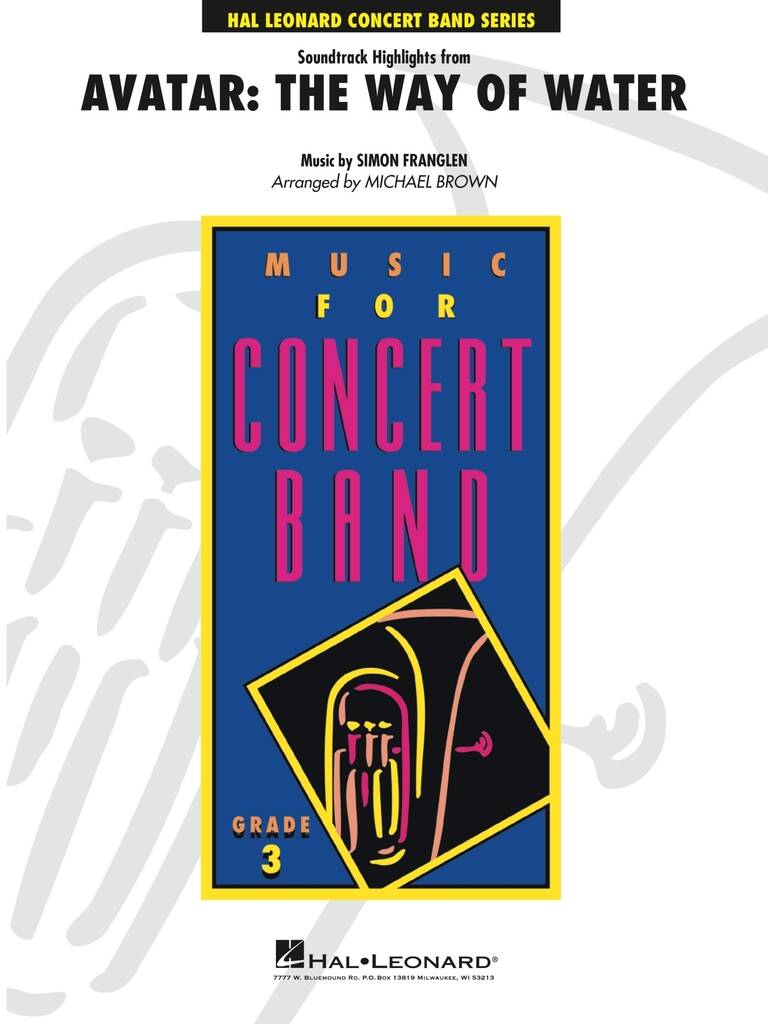
Soundtrack Highlights from Avatar:The Way of Water - Simon Franglen
The stunning follow-up to the original Avatar movie certainly did not disappoint! Featured in this well-crafted medley are sweeping new themes, dramatic action moments, and the distinctive chord progression that helps tie the soundtrack together.
Estimated dispatch 7-14 working days
-
 £256.00
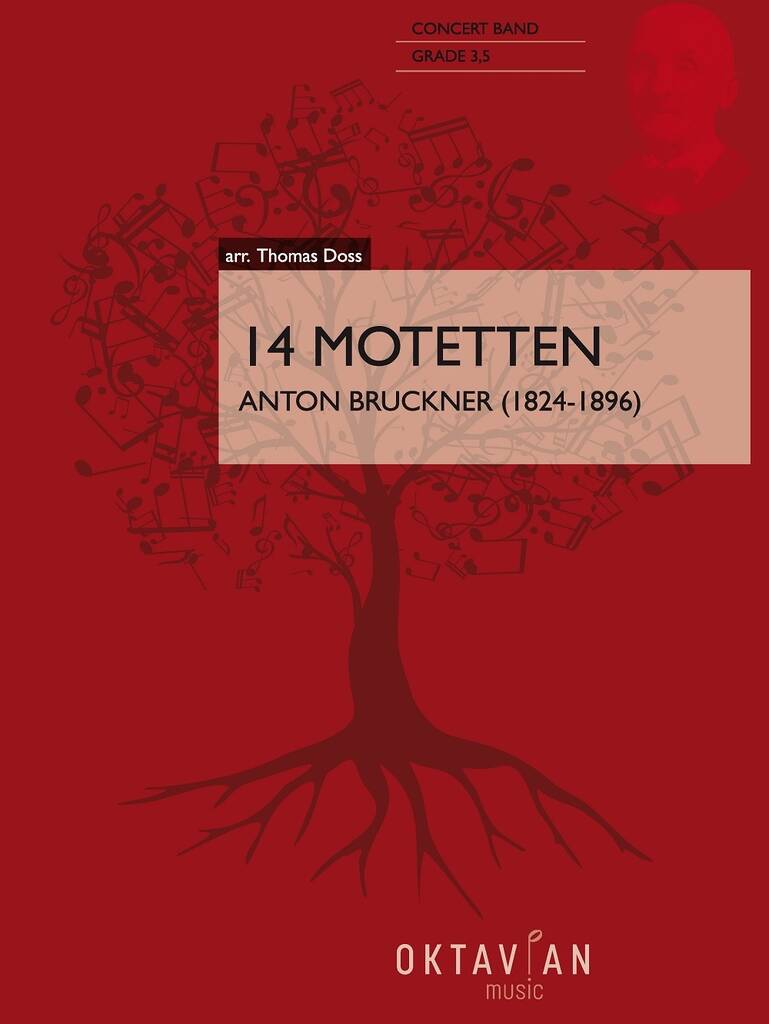
14 Motetten - Anton Bruckner
Anton Bruckner (b. 4.9.1824, Ansfelden, d. 11.10.1896, Vienna) didn't have it easy. Throughout his life, the Austrian composer was plagued by self-doubt. Anton Bruckner came from a simple, rural background. After the death of his father, he was accepted as a choirboy at the monastery of Sankt Florian in 1837. After several years as a school assistant and his own organ and piano studies, he first worked as organist in St. Florian, then from 1855 as cathedral organist in Linz. Introduced to music theory and instrumentation by Simon Sechter and Otto Kitzler, he discovered Richard Wagner as an artistic role model, whom he admired throughout his life and also visited several times in Bayreuth.In 1868 Anton Bruckner became professor of basso continuo, counterpoint and organ at the Vienna Conservatory; ten years later court organist; and in 1891 finally honorary doctor of the University of Vienna. He was considered an important organ virtuoso of his era, but had to wait a long time for recognition as a composer. It was not until Symphony No.7 in E major, composed between 1881 and 1883, with the famous Adagio written under the effects of Wagner's death, that he achieved the recognition he had hoped for, even if he was reluctant to accept it given his inclination towards scepticism and self-criticism.Anton Bruckner was a loner who did not want to follow a particular school or doctrine. He composed numerous sacred vocal works, such as his three masses, the Missa Solemnis in B flat minor (1854), the Te Deum (1881-84) and numerous motets. As a symphonic composer, he wrote a total of nine symphonies and many symphonic studies from 1863 onwards, tending to revise completed versions several times over. Bruckner's orchestral works were long considered unplayable, but in fact were merely exceptionally bold for the tonal language of their time, uniting traditions from Beethoven through Wagner to folk music, on the threshold between late Romanticism and Modernism.Anton Bruckner composed about 40 motets during his lifetime, the earliest a setting of Pange lingua around 1835, and the last, Vexilla regis, in 1892.Thomas Doss has compiled some of these motets in this volume for symphonic wind orchestra.These motets show many characteristics of personal expression, especially Bruckner's colourful harmony in the earlier works, which is in places aligned with Franz Schubert (changes between major and minor; and movements in thirds). Later works are characterised by many components which, in addition to the expanded stature of the movements, include above all a sense of the instrumentation as an outward phenomenon and the harmony as a compositional feature that works more internally. Some aspects of Bruckner's work are the result of his long period of study, which familiarised him not only with the tradition of his craft, but also gave him insights into the "modernity" of his time in such composers as Wagner, Liszt and Berlioz.From this developed his personal standpoint, which always pursues the connection between the old and the new.
Estimated dispatch 7-14 working days
-
 £95.99
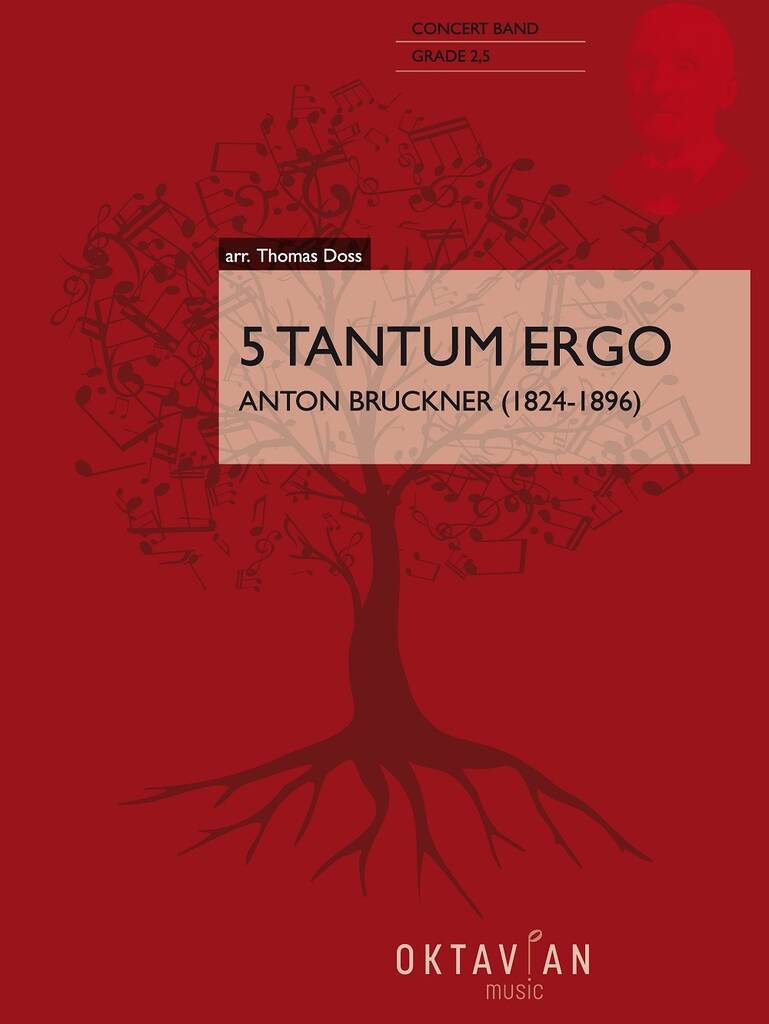
5 Tantum Ergo - Anton Bruckner
Anton Bruckner (b. 4.9.1824, Ansfelden, d. 11.10.1896, Vienna) didn't have it easy. Throughout his life, the Austrian composer was plagued by self-doubt. Anton Bruckner came from a simple, rural background. After the death of his father, he was accepted as a choirboy at the monastery of Sankt Florian in 1837. After several years as a school assistant and his own organ and piano studies, he first worked as organist in St. Florian, then from 1855 as cathedral organist in Linz. Introduced to music theory and instrumentation by Simon Sechter and Otto Kitzler, he discovered Richard Wagner as an artistic role model, whom he admired throughout his life and also visited several times in Bayreuth.In 1868 Anton Bruckner became professor of basso continuo, counterpoint and organ at the Vienna Conservatory; ten years later court organist; and in 1891 finally honorary doctor of the University of Vienna. He was considered an important organ virtuoso of his era, but had to wait a long time for recognition as a composer. It was not until Symphony No.7 in E major, composed between 1881 and 1883, with the famous Adagio written under the effects of Wagner's death, that he achieved the recognition he had hoped for, even if he was reluctant to accept it given his inclination towards scepticism and self-criticism.Anton Bruckner was a loner who did not want to follow a particular school or doctrine. He composed numerous sacred vocal works, such as his three masses, the Missa Solemnis in B flat minor (1854), the Te Deum (1881-84) and numerous motets. As a symphonic composer, he wrote a total of nine symphonies and many symphonic studies from 1863 onwards, tending to revise completed versions several times over. Bruckner's orchestral works were long considered unplayable, but in fact were merely exceptionally bold for the tonal language of their time, uniting traditions from Beethoven through Wagner to folk music, on the threshold between late Romanticism and Modernism.Hymns for four-part mixed choir a cappella (1846, St. Florian)No. 1 in E flat major (WAB 41/3): Quite SlowNo. 2 in C major (WAB 41/4): AndanteNo. 3 in B flat major (WAB 41/1): SlowNo. 4 in A flat major (WAB 41/2): SlowHymn for five-part (2 S, A, T, B) mixed choir and organNo. 5 in D major: SolemnlyThey are simple works, completely subordinate to their liturgical use, which nevertheless already show numerous characteristics of personal expression. These small pieces were able to stand up to the harsh scrutiny of the mature master: in 1888, Bruckner subjected them to a revision in which he made only minor corrections.
Estimated dispatch 7-14 working days
-
 £109.99
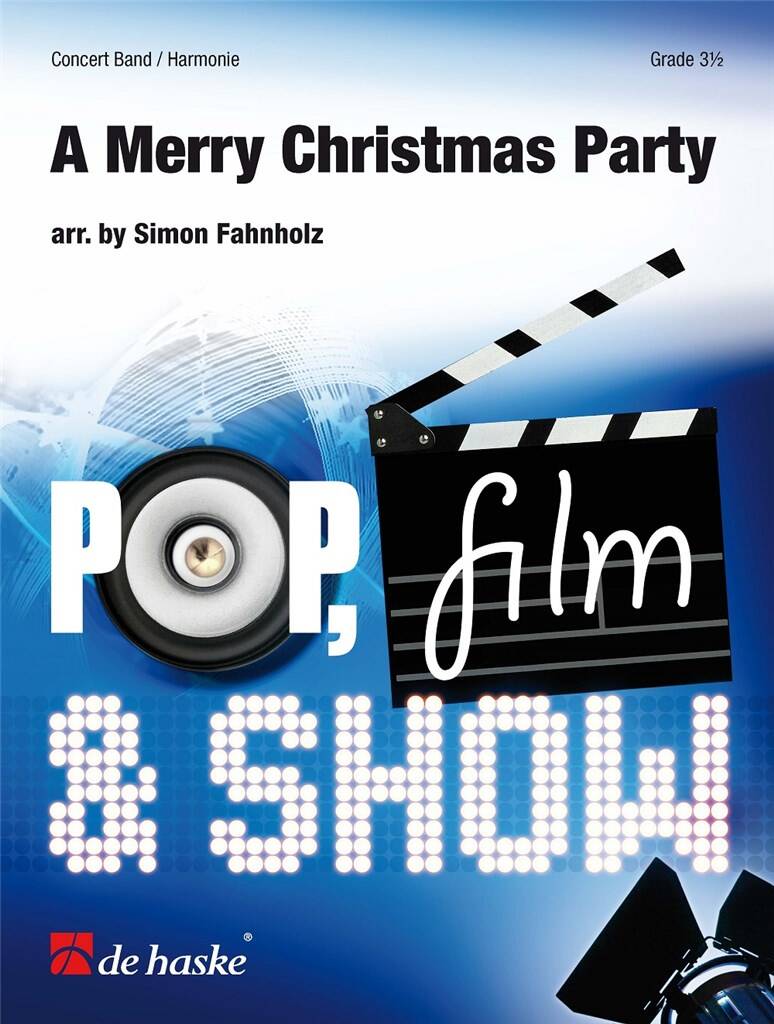
A Merry Christmas Party
When Christmas is coming, a nice medley should always be in your programme. This accessible medley by Simon Fahnholz includes 'All I Want for Christmas Is You', 'Christmas Time', 'Feliz Navidad' and 'Thank God It's Christmas'. A nice alternative to the usual Christmas anthems!
Estimated dispatch 7-14 working days
 View Music