
Results
-
 £104.50
Echoes of the Morning Trumpet - John Prescott
Echoes of the Morning Trumpet is based on a hymn tune entitled Morning Trumpet by B.F. White that was first published in The Sacred Harp Hymn Book of 1844, a book that was originally printed in shaped notes. The Sacred Harp style of singing is characterized by stark chords with plenty of open fifths and equal participation by all performers who sit and stand in blocks, by section, facing the leader in the middle. This piece features a trumpet solo in the opening, accompanied by the singing of the members of the ensemble. Various treatments of the hymn that highlight the ensemble colors follow before the magnificent close.
Estimated dispatch 7-14 working days
-
£202.99
Nazca Lines - Satoshi Yagisawa
The Nazca lines are a series of geoglyphs located in the Nazca Desert, a high arid plateau that stretches more than 80 km (50 miles) between the towns of Nazca and Palpa on the Pampas de Jumana in Peru.The glyphs are believed to have been created by the Nazca culture between 200 BC and AD 700. They include hundreds of individual figures, ranging in complexity from simple lines to stylized hummingbirds, spiders, monkeys, etc... The creators of the lines and why they were made are unknown. Though many theories exist, such as sun calendars or alien guidance, one by Maria Reiche, German-born mathematician and archaeologist, suggesting that "Ancient people drew geoglyphs of constellations that are most related to water" fascinated me the most.The renderings are explained as part of a practice involving the worship of deities associated with the availability of water, and thus the fertility of crops. The lines were interpreted primarily as sacred paths leading to points of worship and the figures were of sacred animals and objects to invoke their aid. Also, a massive, exactly symmetric arrow more than 50 km long was discovered when NASA launched its Landsat imagery. This geoglyph can only be seen from space. Was this also created by ancient people?(Satoshi Yagisawa)
Estimated dispatch 7-14 working days
-
 £53.95
Beach Spring
Originating from The Sacred Harp songbook, the folk-like pentatonic melody of Beach Spring has inspired numerous hymns since 1844. Now expertly arranged for beginning band, this setting captures the song's timeless spirit. It is the perfect vehicle for students to gain experience performing beautiful music in 3/4 meter, with varied musical textures, dynamics, and articulations. (2:00)
Estimated dispatch 7-14 working days
-
 £84.99
Via Sacra - Filip Ceunen
This wonderful concert work takes us on a journey through time to the Roman Empire. The composer was inspired by the famous Via Sacra, once the main road through ancient Rome between the Colosseum and the Capitolium. Along the route were several important temples and sanctuaries - hence the name, meaning Sacred Street. Full of atmosphere, this dynamic work has something to offer for all sections of the band, so that playing fun is guaranteed. And of course, it is great to listen to as well!
Estimated dispatch 7-14 working days
-
 £123.20
3 Letzte Motetten - Anton Bruckner
Anton Bruckner (b. 4.9.1824, Ansfelden, d. 11.10.1896, Vienna) didn't have it easy. Throughout his life, the Austrian composer was plagued by self-doubt. Anton Bruckner came from a simple, rural background. After the death of his father, he was accepted as a choirboy at the monastery of Sankt Florian in 1837. After several years as a school assistant and his own organ and piano studies, he first worked as organist in St. Florian, then from 1855 as cathedral organist in Linz. Introduced to music theory and instrumentation by Simon Sechter and Otto Kitzler, he discovered Richard Wagner as an artistic role model, whom he admired throughout his life and also visited several times in Bayreuth.In 1868 Anton Bruckner became professor of basso continuo, counterpoint and organ at the Vienna Conservatory; ten years later court organist; and in 1891 finally honorary doctor of the University of Vienna. He was considered an important organ virtuoso of his era, but had to wait a long time for recognition as a composer. It was not until Symphony No.7 in E major, composed between 1881 and 1883, with the famous Adagio written under the effects of Wagner's death, that he achieved the recognition he had hoped for, even if he was reluctant to accept it given his inclination towards scepticism and self-criticism.Anton Bruckner was a loner who did not want to follow a particular school or doctrine. He composed numerous sacred vocal works, such as his three masses, the Missa Solemnis in B flat minor (1854), the Te Deum (1881-84) and numerous motets. As a symphonic composer, he wrote a total of nine symphonies and many symphonic studies from 1863 onwards, tending to revise completed versions several times over. Bruckner's orchestral works were long considered unplayable, but in fact were merely exceptionally bold for the tonal language of their time, uniting traditions from Beethoven through Wagner to folk music, on the threshold between late Romanticism and Modernism.Anton Bruckner composed about 40 motets during his lifetime, the earliest a setting of Pange lingua around 1835, and the last, Vexilla regis, in 1892.Thomas Doss has compiled some of these motets in this volume for symphonic wind orchestra.These motets show many characteristics of personal expression, especially Bruckner's colourful harmony in the earlier works, which is in places aligned with Franz Schubert (changes between major and minor; and movements in thirds). Later works are characterised by many components which, in addition to the expanded stature of the movements, include above all a sense of the instrumentation as an outward phenomenon and the harmony as a compositional feature that works more internally. Some aspects of Bruckner's work are the result of his long period of study, which familiarised him not only with the tradition of his craft, but also gave him insights into the "modernity" of his time in such composers as Wagner, Liszt and Berlioz.From this developed his personal standpoint, which always pursues the connection between the old and the new.
Estimated dispatch 7-14 working days
-
 £256.00
14 Motetten - Anton Bruckner
Anton Bruckner (b. 4.9.1824, Ansfelden, d. 11.10.1896, Vienna) didn't have it easy. Throughout his life, the Austrian composer was plagued by self-doubt. Anton Bruckner came from a simple, rural background. After the death of his father, he was accepted as a choirboy at the monastery of Sankt Florian in 1837. After several years as a school assistant and his own organ and piano studies, he first worked as organist in St. Florian, then from 1855 as cathedral organist in Linz. Introduced to music theory and instrumentation by Simon Sechter and Otto Kitzler, he discovered Richard Wagner as an artistic role model, whom he admired throughout his life and also visited several times in Bayreuth.In 1868 Anton Bruckner became professor of basso continuo, counterpoint and organ at the Vienna Conservatory; ten years later court organist; and in 1891 finally honorary doctor of the University of Vienna. He was considered an important organ virtuoso of his era, but had to wait a long time for recognition as a composer. It was not until Symphony No.7 in E major, composed between 1881 and 1883, with the famous Adagio written under the effects of Wagner's death, that he achieved the recognition he had hoped for, even if he was reluctant to accept it given his inclination towards scepticism and self-criticism.Anton Bruckner was a loner who did not want to follow a particular school or doctrine. He composed numerous sacred vocal works, such as his three masses, the Missa Solemnis in B flat minor (1854), the Te Deum (1881-84) and numerous motets. As a symphonic composer, he wrote a total of nine symphonies and many symphonic studies from 1863 onwards, tending to revise completed versions several times over. Bruckner's orchestral works were long considered unplayable, but in fact were merely exceptionally bold for the tonal language of their time, uniting traditions from Beethoven through Wagner to folk music, on the threshold between late Romanticism and Modernism.Anton Bruckner composed about 40 motets during his lifetime, the earliest a setting of Pange lingua around 1835, and the last, Vexilla regis, in 1892.Thomas Doss has compiled some of these motets in this volume for symphonic wind orchestra.These motets show many characteristics of personal expression, especially Bruckner's colourful harmony in the earlier works, which is in places aligned with Franz Schubert (changes between major and minor; and movements in thirds). Later works are characterised by many components which, in addition to the expanded stature of the movements, include above all a sense of the instrumentation as an outward phenomenon and the harmony as a compositional feature that works more internally. Some aspects of Bruckner's work are the result of his long period of study, which familiarised him not only with the tradition of his craft, but also gave him insights into the "modernity" of his time in such composers as Wagner, Liszt and Berlioz.From this developed his personal standpoint, which always pursues the connection between the old and the new.
Estimated dispatch 7-14 working days
-
 £95.99
5 Tantum Ergo - Anton Bruckner
Anton Bruckner (b. 4.9.1824, Ansfelden, d. 11.10.1896, Vienna) didn't have it easy. Throughout his life, the Austrian composer was plagued by self-doubt. Anton Bruckner came from a simple, rural background. After the death of his father, he was accepted as a choirboy at the monastery of Sankt Florian in 1837. After several years as a school assistant and his own organ and piano studies, he first worked as organist in St. Florian, then from 1855 as cathedral organist in Linz. Introduced to music theory and instrumentation by Simon Sechter and Otto Kitzler, he discovered Richard Wagner as an artistic role model, whom he admired throughout his life and also visited several times in Bayreuth.In 1868 Anton Bruckner became professor of basso continuo, counterpoint and organ at the Vienna Conservatory; ten years later court organist; and in 1891 finally honorary doctor of the University of Vienna. He was considered an important organ virtuoso of his era, but had to wait a long time for recognition as a composer. It was not until Symphony No.7 in E major, composed between 1881 and 1883, with the famous Adagio written under the effects of Wagner's death, that he achieved the recognition he had hoped for, even if he was reluctant to accept it given his inclination towards scepticism and self-criticism.Anton Bruckner was a loner who did not want to follow a particular school or doctrine. He composed numerous sacred vocal works, such as his three masses, the Missa Solemnis in B flat minor (1854), the Te Deum (1881-84) and numerous motets. As a symphonic composer, he wrote a total of nine symphonies and many symphonic studies from 1863 onwards, tending to revise completed versions several times over. Bruckner's orchestral works were long considered unplayable, but in fact were merely exceptionally bold for the tonal language of their time, uniting traditions from Beethoven through Wagner to folk music, on the threshold between late Romanticism and Modernism.Hymns for four-part mixed choir a cappella (1846, St. Florian)No. 1 in E flat major (WAB 41/3): Quite SlowNo. 2 in C major (WAB 41/4): AndanteNo. 3 in B flat major (WAB 41/1): SlowNo. 4 in A flat major (WAB 41/2): SlowHymn for five-part (2 S, A, T, B) mixed choir and organNo. 5 in D major: SolemnlyThey are simple works, completely subordinate to their liturgical use, which nevertheless already show numerous characteristics of personal expression. These small pieces were able to stand up to the harsh scrutiny of the mature master: in 1888, Bruckner subjected them to a revision in which he made only minor corrections.
Estimated dispatch 7-14 working days
-
 £139.99
Papyrus - Thomas Doss
The history of paper ranges over more than five thousand years: likely starting around 3500 BC in old Egypt with the use of papyrus. The oldest findings of written paper date from 2700 BC. In China, the first production of paper took place in the year 105 AD. The Arabs acquired their knowledge of the art of making paper around 750 AD, thanks to Chinese prisoners of war. Around the same time, the Celtic Ogham script was created in Ireland and carved into stones or trees. In Europe, the first paper mill was not put into operation until the 12th century! No matter how different the production methods and its historical use, paper was always a way to pass on wisdom, art and knowledge. Even today, in the age of digitalisation, paper still has a somewhat 'sacred' image. With Papyrus, Thomas Doss has written a wonderful composition in which the history of paper is reflected, and listeners can very much hear the various periods of this history represented throughout the piece.
Estimated dispatch 7-14 working days
-
 £137.99
Eldorado - Thierry Deleruyelle
The myth of El Dorado ("the golden one") stems from the story of a powerful chief who used to cover himself with gold dust before bathing in a sacred lake where he threw precious objects as offerings to the gods. The myth was soon relayed to the Spanish conquistadors and inspired many expeditions, although the invaders didn't bring back nearly as much gold as they expected, if any at all. Eldorado is a mysterious and dynamic work that illustrates the myth of the golden man and the European expeditions that followed. With a touch of exotic influences, the music is varied and rich. This piece was commissioned by the French Cultural Association Lille 3000 as part of theirEldorado-themed festival in 2019.
Estimated dispatch 7-14 working days
-
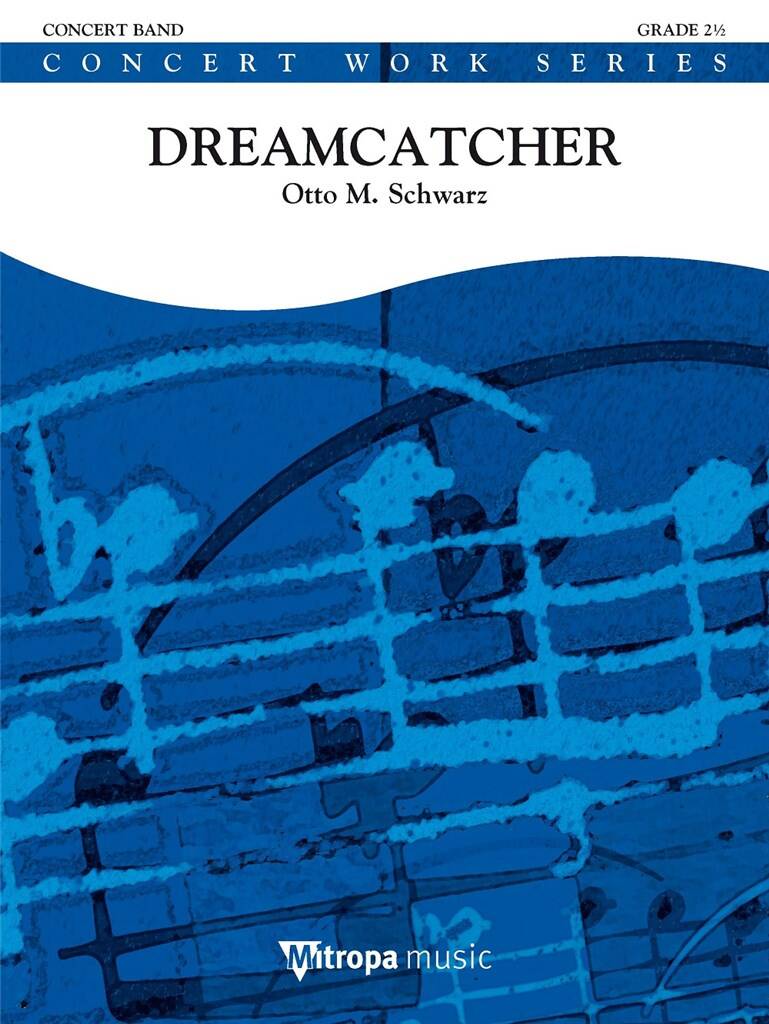 £104.99
Dreamcatcher - Otto M. Schwarz
Once upon a time in North America, there lived a mother and her small daughter who were part of a community of Ojibwa people. The girl suffered from severe nightmares. The mother sought help from 'Spider Woman' also known as 'Asibikaashi', who protected people by weaving a magical web. This 'dreamcatcher', decorated with sacred feathers, only let good dreams through, and the bad dreams were burnt by the morning sunbeams. During this fascinating programme work, one can follow the story meticulously, making it a true phantasmal concert experience!
Estimated dispatch 7-14 working days
 View Music