
Results
-
 £263.95
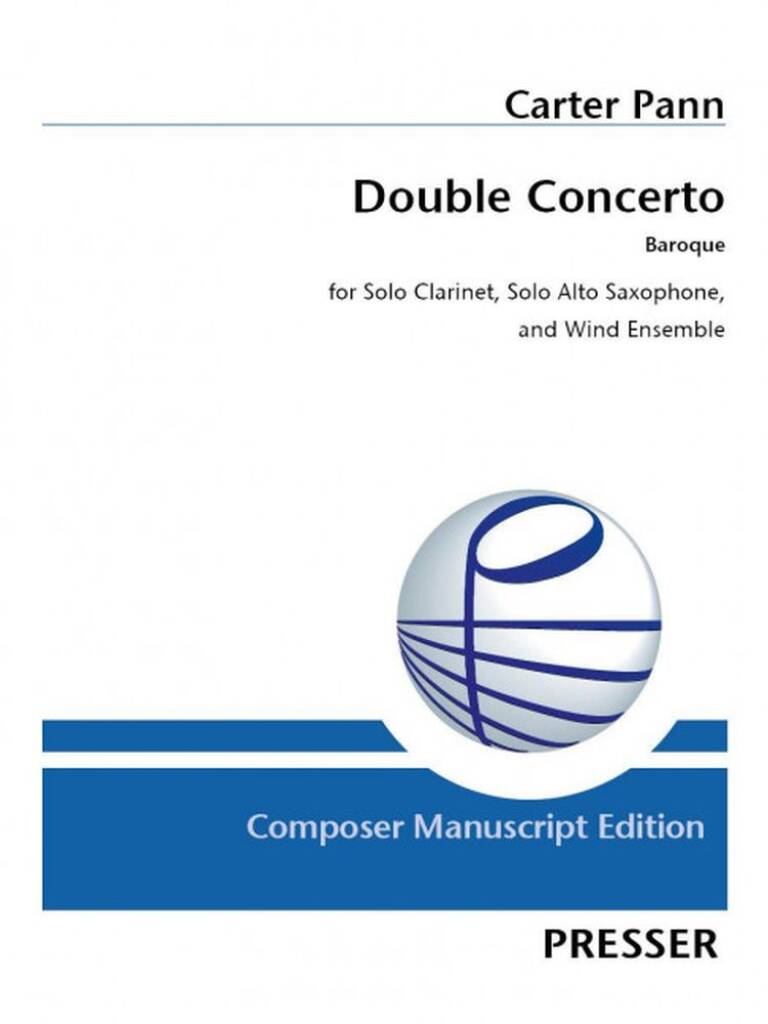
Double Concerto - Carter Pann
In a musical style strongly influenced by (and occasionally parodying) American popular music, the subtitle "Baroque" may seem a puzzle at first. It is also the key to Pann's approach in composing for multiple wind soloists and ensemble. With Bach's Brandenburgs in the rear-view mirror, Pann has created a glorious hybrid of inspirations with intricate counterpoint, cadenzas, beautiful slow textures, and wild rides, creating a 16-minute, fast-slow-fast concerto grosso. The published piano reduction is fully practical for live performance. Also available for clarinet and saxophone with piano (114-41972).
Estimated dispatch 7-14 working days
-
 £121.00
Variations On A Revolutionary Hymn - Claude T. Smith
Commissioned and premiered in 1987 by the U.S. Army Field Band, this was Claude T. Smiths last completed work, written to commemorate the 200th anniversary of the U.S. Constitution. Based on the hymn tune Resignation (How Firm a Foundation), this is a mature work by the celebrated American bandmaster, displaying the technical capabilities of each section of the wind band. A bold concert statement and a fitting commentary on the founding fathers whose faith and determination launched the great American Experiment.
Estimated dispatch 7-14 working days
-
 £441.60
Symphony 2: The Odyssey - Alex Poelman
Rental Music"Sing in me muses. Tell them the story of that man, who wandered for years".These are the first lines of Homer's most famous epos, the Odyssey, and the first lyrics of the choir in Alex Poelman's second symphony. This symphony for concert band and choir consists of three movements, each fifteen minutes long. It depicts passages from Odysseus' most famous adventures like the encounter with the one-eyed giant and the beautiful Sirens.
Estimated dispatch 7-14 working days
-
 £33.10
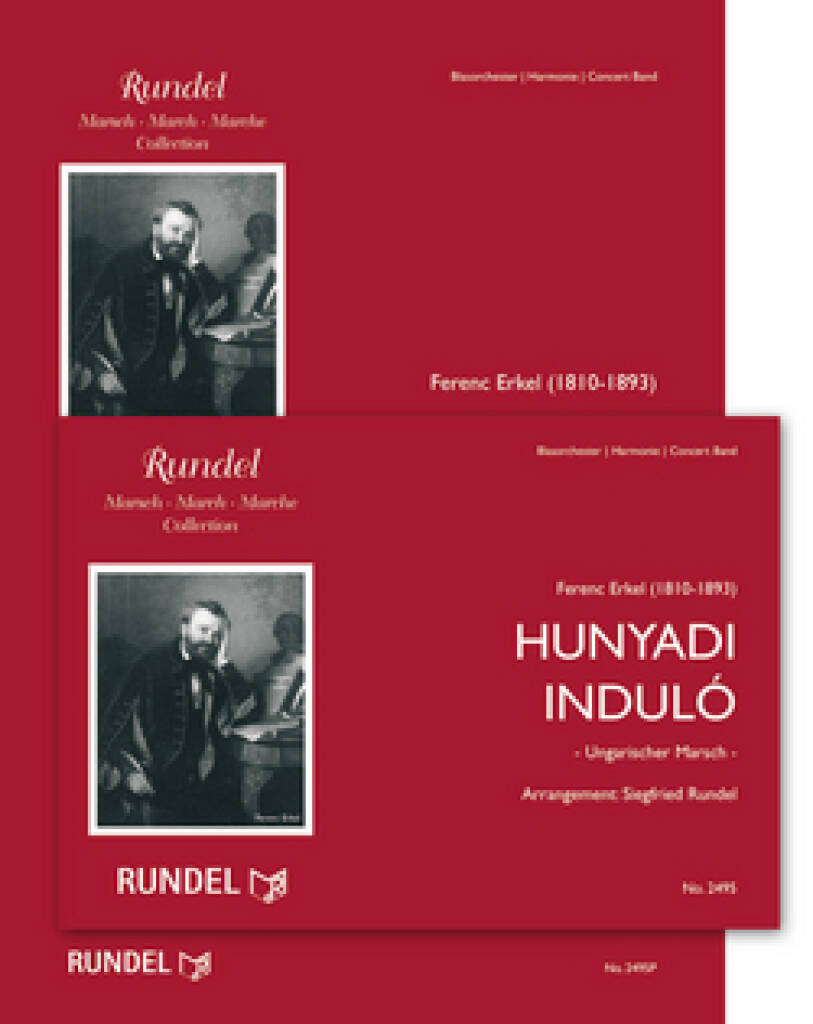
Hunyadi Indul - Ferenc Erkel
The first performance of the opera "Hunyadi Lszl" by Ferenc Erkel (1810-1893) at the National Theater in Pest took place in times that foreboded the revolt of 1848. The rise of this stage work to Hungary's national opera and its ensuing immediate great success probably is due to the plot itself and the atmosphere prevailing in the country at that time. The great flute virtuoso and composer Franz Doppler (1821-1883) asked "Erkel to grant permission to write a march on the basis of motifs from this opera for my citizen's guards band, which he explicitly consented to ..." From the days of the revolution against Habsburg until today the "Hunyadi indul" ("March on Motifs of theOpera 'Hunyadi'") has remained to be popular throughout and therefore may rightly be addressed as a Hungarian national march.
Estimated dispatch 7-14 working days
-
£149.40
Andante - Theme from 6th Symphony "Pathetique" - Pyotr Ilyich Tchaikovsky
The 6th symphony is probably Tchaikovsky`s most important work. It was played for first time just a few days before the composer's death in 1893.This Andante-theme is taken from the first movement of the symphony.For the conductor:Play cue-notes when neccesary for balance. Incalzando means "a little faster".
Estimated dispatch 7-14 working days
-
£205.30
Norwegian Musical Medley - Ludt
This medley consist of four well-known Norwegian songs originally written for musicals or movies in the 1960's and 70's.
Estimated dispatch 7-14 working days
-
£54.99
A Bonny Curl - Chadwick
This publication is a reprint of a manuscript arrangement prepared for The George W. Stewart's Boston Band. Please view the music sample included on this page to ensure your satisfaction with the legibility of the manuscript parts.The included score is a reproduction of the piano/vocal score from the standard published edition. No full conductor score is published for this work.The arranger's musical judgment has governed the instrumentation employed. Please note the instrumentation page on the attached music sample.If you have any questions prior to placing your order, please contact us at [email protected].
Estimated dispatch 7-14 working days
-
£61.50
Ave Maria - Luigi Cherubini
This publication is a reprint of a manuscript arrangement prepared for George W. Stewart's Boston Band. This piece is a handwritten manuscript. Please view the music sample included on this page to ensure your satisfaction with the legibility of the manuscript parts.The arranger's musical judgment has governed the instrumentation employed. Please note the instrumentation page on the attached music sample.If you have any questions prior to placing your order, please contact us at [email protected].
Estimated dispatch 7-14 working days
-
£54.99
A May Morning - Luigi Denza
This publication is a reprint of a manuscript arrangement prepared for George W. Stewart's Boston Band. Please view the music sample included on this page to ensure your satisfaction with the legibility of the manuscript parts.The arranger's musical judgment has governed the instrumentation employed. Please note the instrumentation page on the attached music sample.If you have any questions prior to placing your order, please contact us at [email protected].
Estimated dispatch 7-14 working days
-
£60.50
Ave Maria - Luigi Luzzi
This publication is a reprint of a manuscript arrangement prepared for George W. Stewart's Boston Band. Please view the music sample included on this page to ensure your satisfaction with the legibility of the manuscript parts.The included score is a reproduction of the piano/vocal score from the standard published edition. No full conductor score is published for this work.The arranger's musical judgment has governed the instrumentation employed. Please note the instrumentation page on the attached music sample.If you have any questions prior to placing your order, please contact us at [email protected].
Estimated dispatch 7-14 working days
 View Music