
Results
-
 £72.99
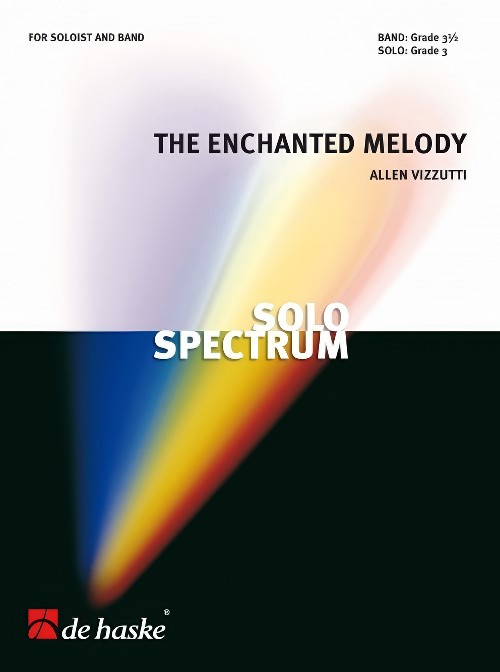
The Enchanted Melody (Flexible Solo with Concert Band - Score and Parts) - Vizzutti, Allen
Solo parts available in C, Bb, Eb and F.The Enchanted Melody was written for young instrumental soloists. It is carefully orchestrated with beauty and colour in mind. All of the parts are important and fun to play. The piece is designed to offer varied musical elements on which ensembles can work to attain higher skill levels without being overly technical or difficult. The solo part will offer some challenge without advanced demands regarding range, technique or endurance. The flowing melody lines and beautiful harmonies will be most pleasing and bring a smile.
Estimated dispatch 7-14 working days
-
 £175.00
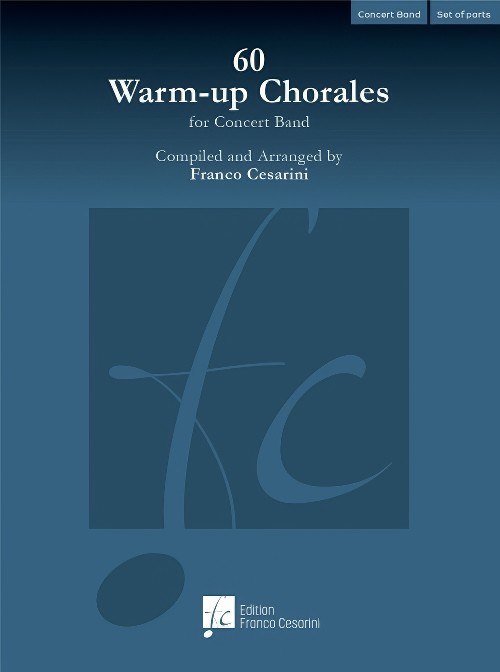
60 Warm-Up Chorales (Concert Band - Score and Parts) - Cesarini, Franco
During his experience as a band conductor and teacher of wind orchestra conducting at university, Franco Cesarini has dealt with the topic of warm-ups very frequently. Throughout these long years of conducting he has had the opportunity to try many existing methods, evaluating their advantages and disadvantages. After a long time, he has decided to compile a collection of chorales for warm-ups, which are organised according to the criteria that he considers most effective. While working on his60 Warm-up Chorales for Concert Band, Franco Cesarini has always borne in mind that amateur musicians play for pleasure. He feels that it is extremely important that they have satisfaction at every moment of the rehearsal and not to start the rehearsal with needless "punishing" exercises. Nobody is really motivated to start playing with scales, long notes, or tricky rhythmical exercises. There is often a distinguished absentee in band rehearsals, namely music itself! Although this publication does not foresee a specific tempo for the chorales, they should often be performed rather slowly but without dragging. Dynamics are not indicated, so that the conductor has the opportunity to draw the attention of the musicians to his gestures and to make them react according to his indications. Timpani and bell parts have been added with the aim of not leaving the percussionists completely inactive during the warm-up phase, but can also be omitted. The chorales are written in four parts (SATB) and are also playable in smaller groups. The four voices can be played in different combinations of woodwinds or brass quartets or in mixed combinations. The collection includes ten chorales for the following keys: D flat major, A flat major, E flat major, B flat major, F major and C major. With his 60 Warm-up Chorales Franco Cesarini would like to convey the message to play the chorales in a musical way, thus raising the musicians' awareness of phrasing, the right interpretation of cadences, rubato and agogic. Above all, never do anything without putting the musical aspect in the foreground. 60 Warm-up Chorales for Concert Band: A perfect collection to warm-up and improve tuning of a concert band!
Estimated dispatch 7-14 working days
-
 £53.95
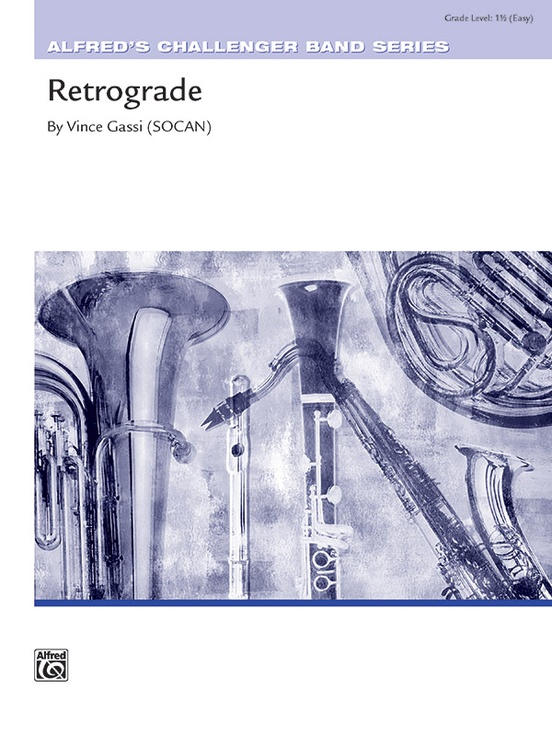
Retrograde (Concert Band - Score and Parts) - Gassi, Vince
Add one part catchy rhythm, two parts tuneful theme, a pinch of cilantro mixed with slow-simmered sweet onions and... oh sorry, wrong recipe. At any rate, not only is this piece fun to play, but your students will also love the additional challenge of discovering as many retrograde pitches and rhythms as possible, both in their own part and between parts. We don't even know how many there are! It's even more fun than Where's Waldo. Now get cookin', with Vince Gassi's Retrograde! Duration: 2.45
Estimated dispatch 7-14 working days
-
 £46.00
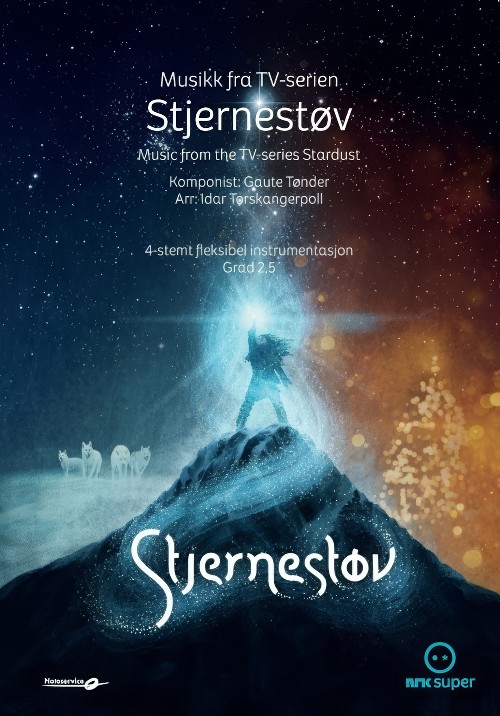
Stjernestov (Stardust) (Flexible Ensemble - Score and Parts) - Tonder, Gaute - Torskangerpoll, Idar
This arrangement includes five themes from the TV-series Stardust produced for Norwegian Broadcasting Corporation in 2020. The themes describes characters and scenes in the series. You may let some players out in some parts of the arrangements to make these parts solo features. The arrangement may be played as a whole or partly as small independent songs. The five themes in the arrangement are: Vignett; Nordstjerna; Jos tema; Sangen fra Nord; Nar dagen sover. Duration: 7.30
Estimated dispatch 7-14 working days
-
 £75.00
Gabriel's Message (Concert Band with Optional Choir - Score and Parts) - Noble & Willcocks
Gabriel's Message is the familiar story of Mary: Most highly favoured lady, for known a Mother thou shalt be, all generations laud and honour thee. This a cappella setting by David Willcocks is based on three or four linear parts, which have been interchangeably used to enhance this compatible arrangement for band. In addition to performing it as written, the conductor may choose a variety of family-oriented parts complete within themselves to further vary the presentation. This arrangement represents one in the Series of Band Arrangements compatible with David Willcocks' Carols for Choirs.
Estimated dispatch 7-14 working days
-
 £45.00
Chasing the Future (Concert Band - Score and Parts) - McBride, Jonathan
Chasing The Future opens with a soft, yet stirring, ostinato that builds into an anthem of inspiration and hope. Interweaving melodies and countermelodies give this work a mature sound, while individual parts are written to be easily accessible for young players. Ample percussion parts add intensity, while a more delicate middle section provides the opportunity to develop legato playing. Captivating and exciting, "Chasing The Future" is an excellent opener or closer for your next concert! Duration: 1.45
Estimated dispatch 7-14 working days
-
 £75.00
Christ is the Morning Star (Concert Band with Optional Choir - Score and Parts) - Rutter, John - Noble, Paul
Christ is the morning star is sheer beauty in its simplicity and message. Whether performing this arrangement with or without a chorus, the beauty remains. The choral part is included in the score as reference, but is not included in the set. Choral parts may be purchased through Oxford University Press or their affiliates. The arrangement is written so that it is playable without a chorus. This piece brings John Rutter's music to everyone because it is technically not demanding. There are sufficient doubling of parts so that even the smallest ensemble can experience the music and bring its lovely essence to an appreciative audience.
Estimated dispatch 7-14 working days
-
 £495.00
English Dance Suite (Concert Band - Score and Parts) - Gardner, John - Noble, Paul
Original Scoring. Arranged for the modern Concert/Wind Band, scored for three trumpets, reasonable doubling of parts where the original musical effect is not altered so that players can have a more responsible and enjoyable experience, more legible parts with less doubling on one staff, etc. The piece is offered either as a complete suite of seven movements, and also as seven individual movements which may be purchased independently. The English Dance Suite was originally composed by John Gardner for Wind Band, and has been re-set for the modern Concert Band instrumentation. Both the original version, edited and type-set by Paul Noble, and this arrangement are first editions now available for purchase to bands around the world. The set of seven Renaissance dances depict John Gardner's love of Scottish music, the Renaissance heritage, and some of his own mischievous approach to music. The first movement, Chacony on a Golden Theme, reminiscent of the Allegro movement of Purcell's Golden Sonata, is much used as a vehicle for variation on a repeated short harmonic progression, often involving a fairly short repetitive bass-line which offered a compositional outline for variation, decoration, figuration and melodic invention. In this it closely resembles the passacaglia. The Alman originated in the 16th century as a duple metere dance of moderate tempo, already considered very old, with a characteristic double-knocking upbeat of one or occasionally three sixteenth notes. It appears to have derived from a German dance but no identifiable dance and no German dance instructions from this era survive. The Hornpipe, usually in 3/2 dance rhythm, is an Irish, Scottish and English dance. It is done in hard shoes, which are used to help keep track of how the dancer keeps in time. There are two variations of the hornpipe dance: fast and slow. Usually, more experienced dancers will do the slow hornpipe but younger dancers will start out with the fast hornpipe and then switch in later years. The Corranto is a 16th-century court dance characterized by short advances and retreats, in quick triple time. The Volta (Italian: the turn or turning) is an anglicised name from the later Renaissance. Its main figure consisted of a turn and lift in a sort of closed position. The Pavan is a slow processional dance common in Europe during the 16th century. The Reel, indigenous to Scotland, consists largely of quaver (eighth note) movement with an accent on the first and third beats of the bar.
Estimated dispatch 7-14 working days
-
 £125.00
English Dance Suite - I. Chacony on a Golden Theme (Concert Band - Score and Parts) - Gardner, John - Noble, Paul
Arranged for the modern Concert/Wind Band, scored for three trumpets, reasonable doubling of parts where the original musical effect is not altered so that players can have a more responsible and enjoyable experience, more legible parts with less doubling on one staff, etc. The piece is offered either as a complete suite of seven movements, and also as seven individual movements which may be purchased independently. The English Dance Suite was originally composed by John Gardner for Wind Band, and has been re-set for the modern Concert Band instrumentation. Both the original version, edited and type-set by Paul Noble, and this arrangement are first editions now available for purchase to bands around the world. The set of seven Renaissance dances depict John Gardner's love of Scottish music, the Renaissance heritage, and some of his own mischievous approach to music. The first movement, Chacony on a Golden Theme, reminiscent of the Allegro movement of Purcell's Golden Sonata, is much used as a vehicle for variation on a repeated short harmonic progression, often involving a fairly short repetitive bass-line which offered a compositional outline for variation, decoration, figuration and melodic invention. In this it closely resembles the passacaglia. The Alman originated in the 16th century as a duple metere dance of moderate tempo, already considered very old, with a characteristic double-knocking upbeat of one or occasionally three sixteenth notes. It appears to have derived from a German dance but no identifiable dance and no German dance instructions from this era survive. The Hornpipe, usually in 3/2 dance rhythm, is an Irish, Scottish and English dance. It is done in hard shoes, which are used to help keep track of how the dancer keeps in time. There are two variations of the hornpipe dance: fast and slow. Usually, more experienced dancers will do the slow hornpipe but younger dancers will start out with the fast hornpipe and then switch in later years. The Corranto is a 16th-century court dance characterized by short advances and retreats, in quick triple time. The Volta (Italian: the turn or turning) is an anglicised name from the later Renaissance. Its main figure consisted of a turn and lift in a sort of closed position. The Pavan is a slow processional dance common in Europe during the 16th century. The Reel, indigenous to Scotland, consists largely of quaver (eighth note) movement with an accent on the first and third beats of the bar.
Estimated dispatch 7-14 working days
-
 £75.00
English Dance Suite - II. Alman (Concert Band - Score and Parts) - Gardner, John - Noble, Paul
Arranged for the modern Concert/Wind Band, scored for three trumpets, reasonable doubling of parts where the original musical effect is not altered so that players can have a more responsible and enjoyable experience, more legible parts with less doubling on one staff, etc. The piece is offered either as a complete suite of seven movements, and also as seven individual movements which may be purchased independently. The English Dance Suite was originally composed by John Gardner for Wind Band, and has been re-set for the modern Concert Band instrumentation. Both the original version, edited and type-set by Paul Noble, and this arrangement are first editions now available for purchase to bands around the world. The set of seven Renaissance dances depict John Gardner's love of Scottish music, the Renaissance heritage, and some of his own mischievous approach to music. The first movement, Chacony on a Golden Theme, reminiscent of the Allegro movement of Purcell's Golden Sonata, is much used as a vehicle for variation on a repeated short harmonic progression, often involving a fairly short repetitive bass-line which offered a compositional outline for variation, decoration, figuration and melodic invention. In this it closely resembles the passacaglia. The Alman originated in the 16th century as a duple metere dance of moderate tempo, already considered very old, with a characteristic double-knocking upbeat of one or occasionally three sixteenth notes. It appears to have derived from a German dance but no identifiable dance and no German dance instructions from this era survive. The Hornpipe, usually in 3/2 dance rhythm, is an Irish, Scottish and English dance. It is done in hard shoes, which are used to help keep track of how the dancer keeps in time. There are two variations of the hornpipe dance: fast and slow. Usually, more experienced dancers will do the slow hornpipe but younger dancers will start out with the fast hornpipe and then switch in later years. The Corranto is a 16th-century court dance characterized by short advances and retreats, in quick triple time. The Volta (Italian: the turn or turning) is an anglicised name from the later Renaissance. Its main figure consisted of a turn and lift in a sort of closed position. The Pavan is a slow processional dance common in Europe during the 16th century. The Reel, indigenous to Scotland, consists largely of quaver (eighth note) movement with an accent on the first and third beats of the bar.
Estimated dispatch 7-14 working days
 View Music