
Results
-
 £116.40
Bound Sketches - Rolf Hoogenberg
I Prelude (start)II Landscape ( measure 17)III Crowded and Urbanization (measure 68)In case of lack of time or potential technical problems, it is possible to skip the third part. One can make a straight jump from measure 65 to measure 109.In 'Bound Sketches' the composer links two musical sketches Waterland by means of the theme of the prelude.Rolf Hoogenberg was born at Middenmeer (Province of Northern Holland) in The Netherlands in 1984. At nine he started studying the trombone with Wim de Vreugd at the Waterland music school. Since September 2001 he has been studying trombone and wind band conducting at the Amsterdam Conservatory of Music.For the 1998/1999 Musical Olympics he composed a work for Fanfare band, called 'Townscape' about Purmerend, the small town where he lives. With this composition he did not only win those Musical Olympics, but was also warded the NIB (Dutch Wind Music Institute) Prize for the best wind band composition of that season. The composer Johan de Meij handed him the prize during the ABCO concert on 12 December 1999.'Bound Sketches' was commissioned by the Waterland Music Festival for its 50th anniversary. By means of this commission, the festival foundation hopes to stimulate wind band music in the Waterland area.
Estimated dispatch 7-14 working days
-
 £86.70
The Silken Ladder - Gioachino Rossini
The opera or 'farsa comica' in one act 'La Scala di Seta' (The Silken Ladder) by Gioacchino Rossini (1792-1868) was first performed at the 'San Mois' theatre in Venice on 9 May 1812. It is the story of the beautiful Giulia whose guardian wants her to marry a rich young man. However, Giulia is already married to a young man who climbs every night into her room by means of a silken ladder. In the splendid overture of this opera Rossini gave an important part to the wind ensemble. This classic of the early 19th century repertoire has been most skilfully and enthusiastically arranged for wind band by Lorenzo della Fonte.
Estimated dispatch 7-14 working days
-
 £87.00
Holy Night in the Mountains Silence
Christmas in the Alps enchants people because of the very special atmosphere with a combination of attentive silence and the blue shining moonlight. At Christmas time, one can often hear in the distance a small group of wind players performing some old traditional carols in front of one or other little chapel in the mountains. This Christmas Carol medley by Willi Mrz reminds us of that tradition. He has arranged tunes from ancient Bavarian and Austrian Christmas Carols and shepherd songs. The religious 'Andachtsjodler' is still sung at Christmas time in the churches of Bavaria and Tyrol.
Estimated dispatch 7-14 working days
-
 £61.00
Bone Pastor-Guter Hirte - Franz Krenn
Music: Franz Krenn, Text: Ferry Krauss, Arrangement: Franz WatzFranz Krenn (1816 - 1897) was an organist, a conductor and later also teacher at the Conservatory of music of the 'Gesellschaft der Musikfreunde' in Vienna. The Graduale is part of the Roman Catholic liturgy: the vocal soloist sings a psalm or part of a psalm and the audience answers by singing the chorus 'Responsorium' (a kind of answer). The pastoral text is clearly related to the Christmas story. Krenn has written this piece for one male voice, choir and string accompaniment. This version can be performed with singers and orchestra, without singing or with a mixed instrumentation. The solo male voice can also be performed by a tenor instrument. The four-part score for mixed choir has been arranged for wind ensemble (at least a quartet). The original score for strings has been arranged for large wind orchestra, but thanks to the cue notes the piece can also be performed by smaller ensembles in a most satisfactory way. The numerous instrumentation possibilities are clearly indicated in the instrumentation list and range from a wind quartet to a full band. The percussion parts are 'ad libitum'.
Estimated dispatch 7-14 working days
-
 £61.00
Transeamus usque ad Bethlehem - Franz Schneider
The original piece was written by Franz Schneider (1737- 1812), organist and musical director at the Benedictine abbey of Melk on the Danube, for choir, string quartet, two trumpets and timpani. This arrangement can be performed with choir and band, without choir or by a mixed ensemble or band. Instead of using the complete choir, one can also only use the first choir part solo with accompaniment of the quartet parts. Therefore, the four part mixed choir score has alternatively been arranged for multipart wind ensemble (from a quartet).The original string parts have been arranged for symphonic band. Thanks to the cue notes, the passages intended for large band can also be performed by smaller ensembles in a most satisfactory way. The various instrumentation possibilities are clearly indicated in the instrumentation lists of the wind quartet and orchestra. The complete percussion part is totally 'ad libitum'.
Estimated dispatch 7-14 working days
-
 £90.30
Halewijn - Gerard Boedijn
The medieval song Halewijn tells the fascinating story about a murderer of women who is finally killed himself. This subject is set to music by Gerard Boedijn in his symphonic poem ' Halewijn '. This work, with a very programmatic character, was considered as one of the highlights in his oeuvre by Boedijn. Molenaar Edition offers, more than seventy years after the appearance of the composition, a completely revised version by Eric Swiggers.
Estimated dispatch 7-14 working days
-
 £130.20
Omaira - Carlos Pellicer
On November 13th 1985 the town of Armero in Columbia was literally swept away. It was bombarded by an avalanche of mud and stones set off by the melting of glaciers caused by the soon-to-erupt Volcano Nevado del Ruiz. This composition is dedicated to then 13 year old, Omaira Sanchez, one of the more than 23,000 victims of this disaster.Download the solo part: Trombone solo part
Estimated dispatch 7-14 working days
-
 £193.20
Pictures Of A Village - Harrie Janssen
In six parts, an image of life in Zwartsluis is painted on the basis of architecture, nature and human activity throughout the centuries. The composition "Pictures of a Village" consists of two different versions: one with and one without the Percussion Group. When the work is performed without Percussion Group, the 3rd movement "Peat Cutters" is omitted and the doubling of the orchestral parts by the Percussion Group in the 6th movement "Olde Maten" is omitted.
Estimated dispatch 7-14 working days
-
 £92.00
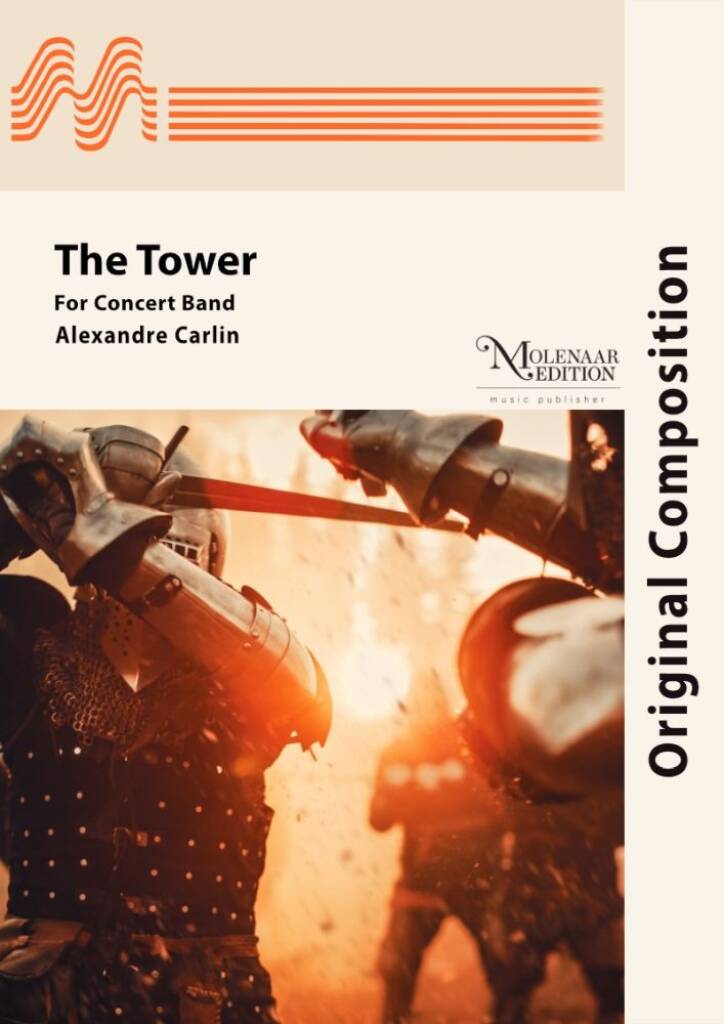
The Tower - Alexandre Carlin
The Tower was commisioned by the concert band of Auneau (France), for their 190th anniversary. The composer was inspired by a medieval tower standing in the city and decided to transcribe in music the life in the middle ages, the gregorian chant of the monks, a village festival, the building of the tower, step by step, and then the evocation of the battle of Auneau, one of the famous religious battles of the middle ages in France. The work ends with the regained calm, and the monks singing their gregorian chant at the end of the day.
Estimated dispatch 7-14 working days
-
 £138.00
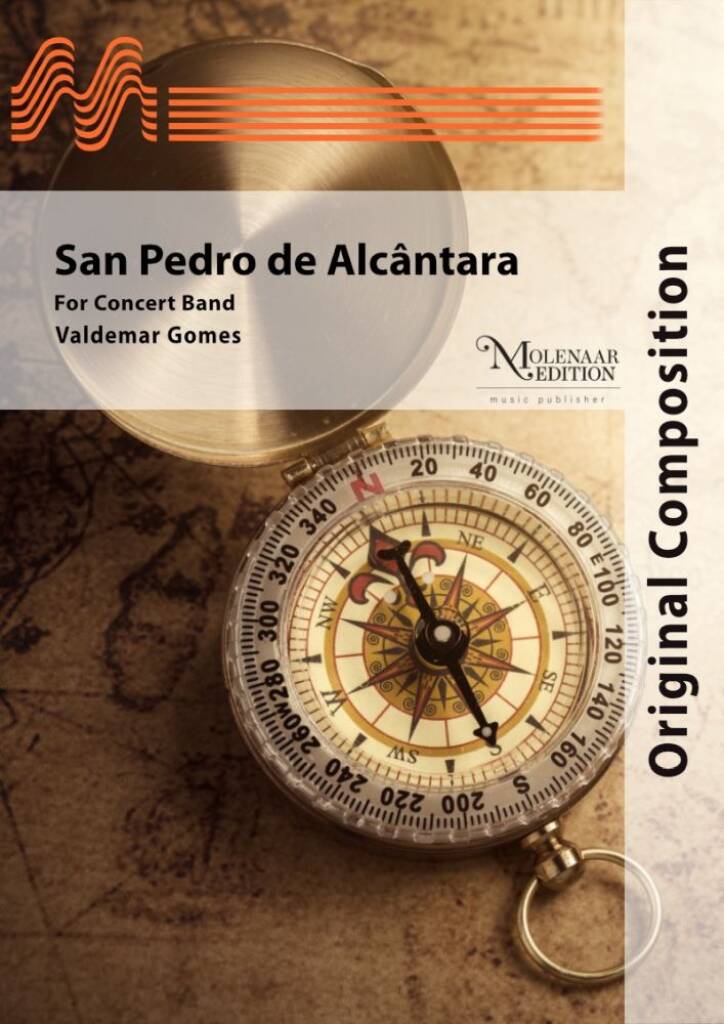
San Pedro de Alcntara - Valdemar Gomes
The Spanish war galleon with 64 cannons, built in Cuba between 1770 and 1771 for an English shipowner in the service of the King of Spain left Peru for Cadiz in 1784 with a huge cargo of copper, gold, silver and other valuables on board. There were also more than 400 people on board, including passengers, crew and Inca prisoners after a revolt. The Atlantic crossing went smoothly, passing Portugal to take advantage of favourable winds. The shipwreck off Peniche was the result of human error, apparently due to French maps with dramatic errors in the position of the islands of Berlengas and neighbouring islets. On 2 February 1786, the sea was calm and the night clear, but they hit the rock formation Papoa and the hull immediately broke in two. The bottom sank quickly, while the deck remained afloat for some time. 128 people lost their lives, including many Indians who were trapped in the basement. This shipwreck is considered one of the most important in maritime history.What the composer wants to convey, and what can be felt as one listens, is first of all the sound of power, of hope, of the glory of conquest, of the splendour of wealth. This is followed by the perception of the maritime environment, the harmony with the softness of the ocean, the gliding of the hull in the foam of the sea on sunny, blue days. But along with this tranquillity, you soon hear a rhythmic chain that makes you feel a representation of the hustle and bustle, of the busy crew, of the hard work of a sailor, of the desperation of an exotic people imprisoned in a dark, damp cellar. A distinct rhythm that reminds us of the "salero" of Andalusia, with its Arab influences and its people, the soothing of the resignation of others who are forced to submit. Then we clearly hear a crescendo that makes us imagine the agony of the collision that precedes the shipwreck. The breaking of the hull, the water flooding everything, the despair, the clash of bodies on the rocks, the tragedy to come. Before the "grand finale", in which the return of musical softness reminds us that the story is over. The supremacy of nature over human greed. The waves, though gentle, sweep the wreckage, the lives and the treasures of the New World to the bottom of the sea.
Estimated dispatch 7-14 working days
 View Music