
Results
-
 £57.50
Brother Bear, Highlights from (Concert Band - Score and Parts) - Collins, Phil - Murtha, Paul
Disney's animated film Brother Bear has all the right ingredients for a memorable entertainment event. From a touching story, to delightful characters, plus the marvellous music of Phil Collins, this is destined to become a classic. This enjoyable medley includes the hit single Look Through My Eyes as well as No Way Out (Theme from Brother Bear), On My Way and Transformation.
Estimated dispatch 7-14 working days
-
 £93.10
Impressions from a Journey (Concert Band - Score and Parts) - Stahli, Urs
I'm in the mountains... in Switzerland - in the Valais - on the Riederalp. I'm enjoying the view of the surrounding mountain peaks on this late summer afternoon.A alphorn plays a melody. The echo comes back once, twice, no, three times from the mountain slopes! It's getting dark. The melody of the evening blessing from Humperdinck's Hansel and Gretel comes to mind. It is night.A new day begins! I make my way to Riederfurka, to Villa Cassel. There I am greeted by the sound of the orchestra. I enjoyed the music and my lunch. In the afternoon, the musicians invited me to a dance. As waltzing is not really my thing, I walk on to the Riederhorn. There I enjoy the wonderful view! I am happy!- Urs SthliDuration: 8.00
Estimated dispatch 7-14 working days
-
 £77.50
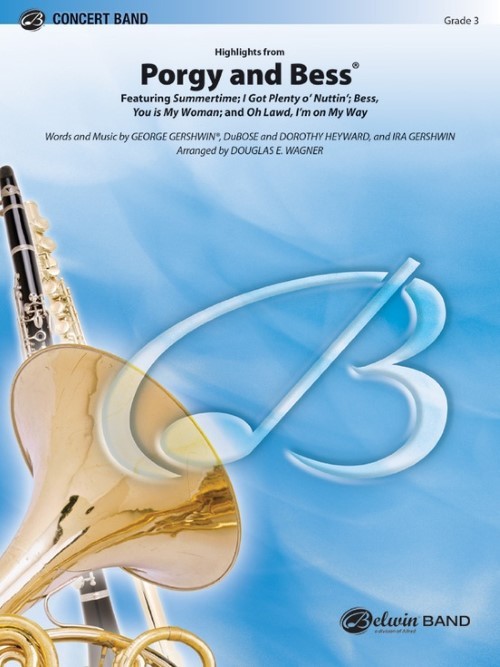
Porgy and Bess, Highlights from (Concert Band with Optional Choir - Score and Parts) - Wagner, Douglas E.
From its first performances in 1935 to its return to the Broadway stage in 2012, the American folk opera Porgy and Bess has endured as a national musical treasure, acclaimed by critics and enjoyed by audiences worldwide. This medley for concert band (with optional choir) includes four popular classics from the score, arranged in the order they appear in the opera: Summertime; I Got Plenty O' Nuttin'; Bess, You Is My Woman; Oh Lawd, I'm On My Way. With or without the optional choir parts, this arrangement is a winner!Duration: 5:15
Estimated dispatch 7-14 working days
-
 £137.99
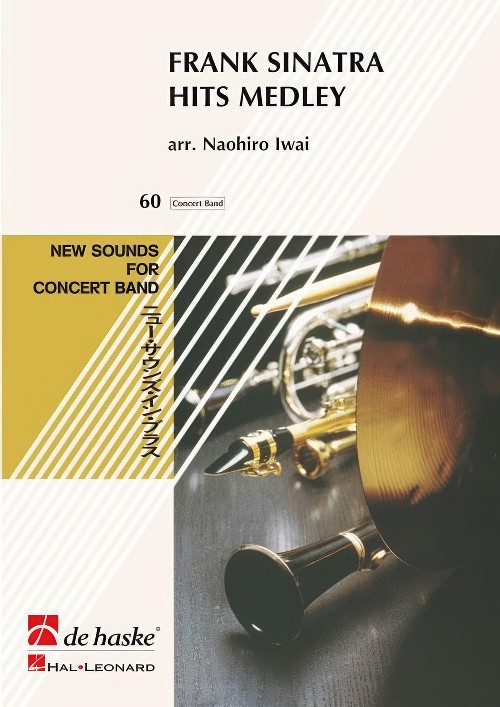
Frank Sinatra Hits Medley (Concert Band - Score and Parts) - Iwai, Naohiro
Cheek To Cheek, I Get A Kick Out Of You, Everybody Loves Somebody, I've Got You Under My Skin and My Way together form the Frank Sinatra Hits Medley. Frank Sinatra's songs are timeless classics and this arrangement will undoubtedly bring great pleasure to all your audience.Duration: 9.00
Estimated dispatch 7-14 working days
-
 £2.25
£2.25PORGY AND BESS, Highlights from (SAB Choir) - Gershwin, George - Wagner, Douglas E.
This classic Gershwin musical score has been given a fine, dramatic choral treatment in this stunning medley, celebrating the show's return to Broadway late in 2011. Optional Concert Band accompaniment is available. Approximately 5:00. Includes: Summertime; I Got Plenty O' Nuttin'; Bess, You Is My Woman; Oh Lawd, I'm on My Way.
Estimated dispatch 7-14 working days
-
 £2.25
£2.25PORGY AND BESS, Highlights from (SATB Choir) - Gershwin, George - Wagner, Douglas E.
This classic Gershwin musical score has been given a fine, dramatic choral treatment in this stunning medley, celebrating the show's return to Broadway late in 2011. Optional Concert Band accompaniment is available. Approximately 5:00. Includes: Summertime; I Got Plenty O' Nuttin'; Bess, You Is My Woman; Oh Lawd, I'm on My Way.
Estimated dispatch 7-14 working days
-
 £70.50
Best of the West! (Concert Band - Score and Parts) - Story, Michael
A rollicking medley of four popular, contrasting western movie themes including: "I'm On My Way" (from Paint Your Wagon), "The Good, the Bad, and the Ugly," "Blazing Saddles," and "The Magnificent Seven." It just can't get any better. So grab your popcorn, Gitty up! Ride 'em cowboy!Duration: 4.00
Estimated dispatch 7-14 working days
-
 £60.99
Hootenanny (Folk Festival for Band) (Concert Band - Score and Parts) - Walters, Harold
Here is a whimsical look at some of America's favourite folk songs. The slow tempo in the beginning includes Frankie And Johnny, Lonesome Road, and John Henry. With a change to a faster tempo, various sections of the band are featured with Chicken Reel, Michael, Row The Boat, and Arkansas Traveler. I'm On My Way and Down By The Riverside finish out this exhuberant medley in rousing style.
Estimated dispatch 7-14 working days
-
 £79.50
Frank Sinatra Highlights (Concert Band - Score and Parts) - Woodfield, Ray
This work is for Concert Bands with a reduced number of playersIncludes: Strangers in the Night; Chicago; Somethin' Stupid; My Way
Estimated dispatch 7-14 working days
-
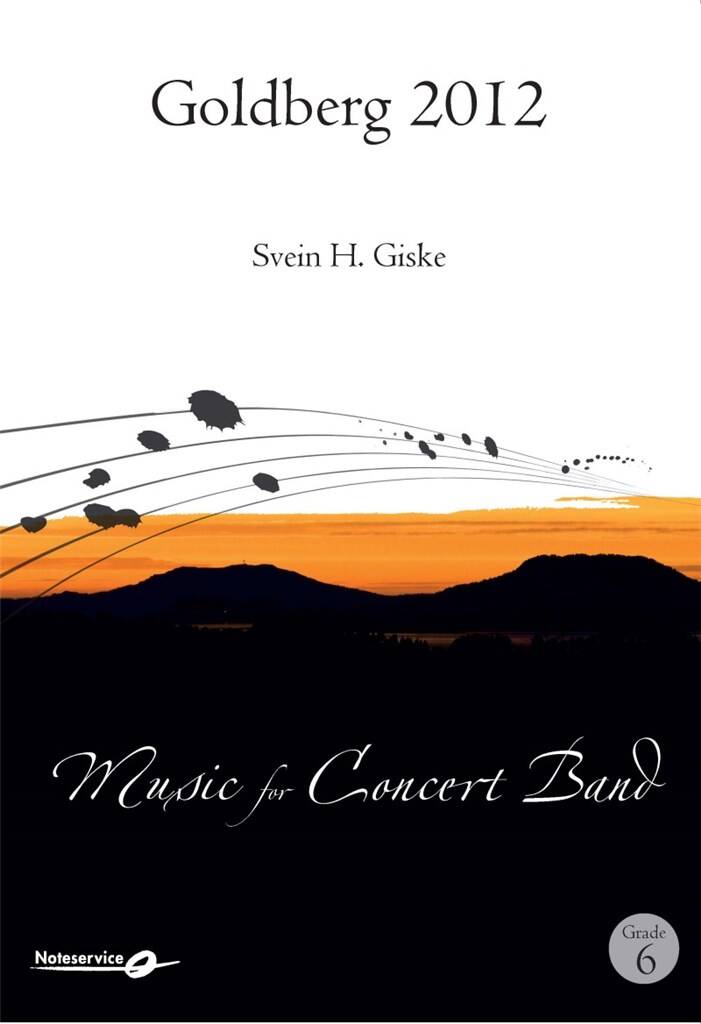 £435.40
Goldberg 2012 - Svein H. Giske
The first time I heard Bach's Goldberg Variations was in the movie Silence of the lambs, in the early 1990s. I noticed the beautiful background music in one of the scenes, but at that time I didn't know what it was. A few years later, when I was studiying at the Grieg Academy, I got to know the entire piece. For me, this is a piece of music which I can listen to countless times. I think it sounds as fresh today as it did more than 15 years ago and it never ceases to inspire me. Both Bach's composition and Glenn Gould's famous 1955 recording (which was the first one I heard) still makes a great impression on me. Before Gould recorded it at age 22, it wasn't a highly ranked piece amongst pianists and Bach was by many viewed as a bit old-fashioned. The young Canadian turned all this around. He managed to portray Bach in a reformed way, producing fine nuances in phrasing and making the many layers in Bach's music more transparent than anyone before him. Thus he plunged both himself and Bach (back) onto the international music scene. When The Norwegian Band Federation (NMF) asked me to write the test piece for NM in 2012, it was only natural for me to use the Goldberg Variations as a starting point and inspiration for my work. Since I was a teenager at NMF's summer courses in the mid eighties I've always listened to many different styles of music. Growing up in Sunnmre with the Brazz Brothers as teachers and mentors, jazz-, pop/rock- and folk music were early on a natural part of my musical background. I also have my classical education from the Grieg Academy on trumpet. As the title of my piece implies, I've wanted to bring Bach to the present and put his music into various modern musical landscapes. I think you can bring about a special kind of energy when music from different genres are mixed and I've tried to do this by mixing Bach with artists and musical styles from the present. In Goldberg 2012, the music is often constructed by several layers, which in a way are living parallel musical lives. They are seemingly moving or floating freely, almost unaware of each other, but bound together by the same basic pulse. The rythms, however, are often notated on a different rythmic subdivision level than the usual 8th- or 16th note levels. By doing this, I hope to achieve transparent sounds that rythmically are perceived as more free and detached from each other. In large sections of the piece, pop/jazz is fusioned with elements from Bach. I guess you could have this little scene as a synopsis for the piece: picture a group of musicians meeting: some are classical performers, some are jazz. They start to improvise together, each in their own voice or musical dialect and I'm sort of in the middle, trying to write down what they are playing. This is what I feel much of Goldberg 2012 is about. The foundation of the piece, in addition to Bach and references from pop/jazz music, lies also in my own material. This material, basically two chords, is heard in it's purest form in the 1st movement. I use these chords to create scales, new chords and different motifs which contribute to blend together the different moods of the piece. It has not been my intention to copy Bach's form (theme and 30 variations), but rather to use the bits and pieces that I like the most as an inspiration for my own variations. The 1st movement, Aria 2, is for my 3rd son, Olav, who was born on the 21st of April 2011, and the 5th movement, From long ago, is dedicated to the memory of my father, Svein J. Giske, who passed away on the 6th of June 2011. -Svein H. Giske, January 2012-
Estimated dispatch 7-14 working days
 View Music