
Results
-
 £76.99
Lugano - Franco Cesarini
Lugano is an exciting concert march that Franco Cesarini composed for the Civica Filarmonica di Lugano, which Cesarini has been conducting since 1998. The idyllic location of the Ticinese city and the happy disposition of its citizens provided Cesarini with more than enough inspiration, and this is reflected in Lugano's uplifting themes.
Estimated dispatch 7-14 working days
-
£69.99
Francesca - Lorenzo Bocci
All of us, sooner or later, find a person to love and with whom we want to spend the rest of our life. Lorenzo Bocci has met Francesca. This simple and brilliant march, which reflects Francesca's personality, always happy and cheerful, is dedicated to her.A truly joyous march.
Estimated dispatch 7-14 working days
-
 £76.99
The Logical Song
The Logical Song was written by the lead singer of the famous British pop band Supertramp - a song about a happy, carefree child growing up to become a cynical adult. It was one of the group's biggest worldwide hits. Andr Waignein's arrangement will be a big hit with all Supertramp fans and may well attract many new fans!
Estimated dispatch 7-14 working days
-
 £139.99
The Bridge on the Border - Otto M. Schwarz
The Bridge on the Border is a European bridge connecting the German city of Kehl to the French city of Strasbourg. This piece tells the passionate story of German and French lovers who meet at the bridge on the eve of war. Fortunately, this story has a happy ending, with enemies becoming friends, no longer separated by the river between them!
Estimated dispatch 7-14 working days
-
 £102.99
All the Best - Otto M. Schwarz
All the Best is a happy, upbeat piece by Otto M. Schwarz. He has already composed several pieces in this genre, including Fire & Ice, Last Call, and Funky Brass, and is constantly looking for ways to adapt new and interesting sounds and rhythms for concert band. All the Best will be a huge success with musicians and audiences alike, whether as a congratulatory piece, a concert-opener or as a rousing encore at the end of your concert.
Estimated dispatch 7-14 working days
-
 £139.99
Firework - Thomas Doss
Firework is a composition commissioned by Musikkapellen Energie-AG and Magistratskapelle Stadt Linz.This sparkling work shows that from time to time Thomas Doss is happy to produce music of sheer entertainment.Fireworks are always joyful and festive. Whether big or small, we all love watching fireworks. In this piece of music, the audience experiences not so much a visual feast as a spectacle in sound--a star-burst of colourful melody and rhythm that guarantees high spirits and a good mood.
Estimated dispatch 7-14 working days
-
 £104.99
Bert Kaempfert Classics - Bert Kaempfert
Bert Kaempfert, who was born in Hamburg, was undoubtedly one of the great German bandleaders and enjoyed considerable international success. Gilbert Tinner, also an experienced bandleader, has arranged the characteristic Bert Kaempfert sound in a medley from the numbers A Swingin' Safari, Happy Trumpeter, Wunderland bei Nacht and Dankeschn.
Estimated dispatch 7-14 working days
-
 £84.99
Fantasy on a Hebrew Folk Song - Gerald Oswald
If there's one Hebrew folk song that's known the world over, it's Hava Nagila. The title translated means 'let us be happy'. The melody of this festive song - often sung at Jewish weddings - comes originally from a Romanian folk song. This rousing arrangement is sure to get your audience tapping their toes or singing along!
Estimated dispatch 7-14 working days
-
 £249.99
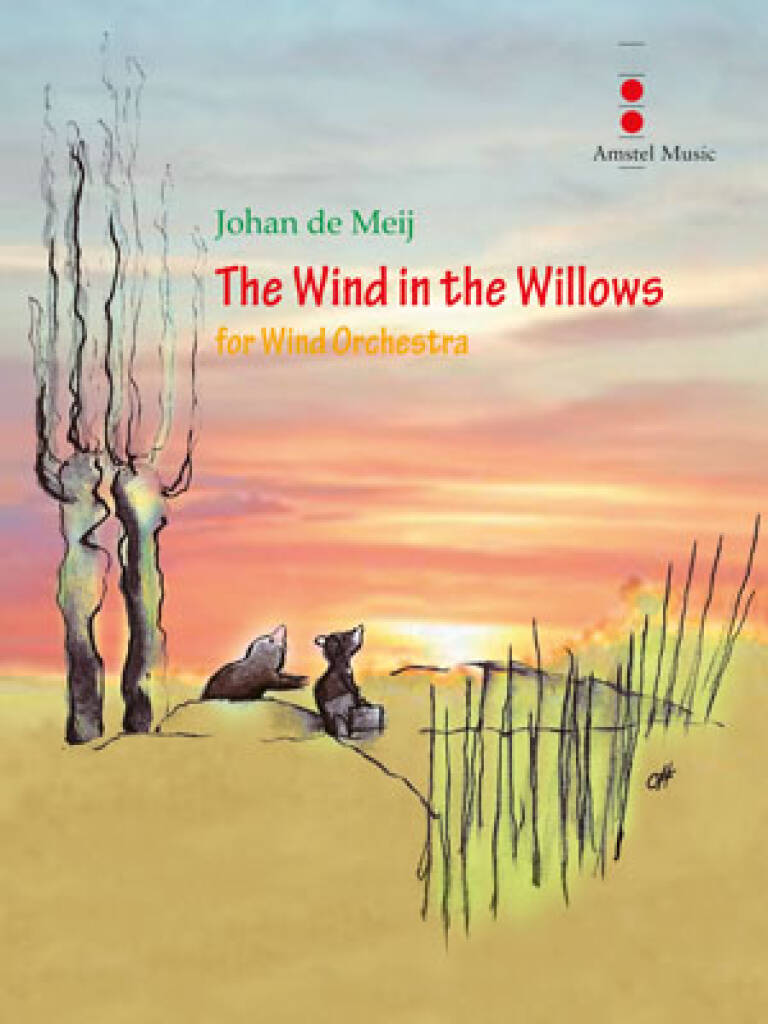
The Wind in the Willows - Johan de Meij
"A book for those who keep the spirit of youth alive in them; of life, sunshine, running water, woodlands, dusty roads, winter firesides" said author Kenneth Grahame (1859-1932) about his children's book The Wind in the Willows. Initially, he wrote the stories about Ratty, Mole, Badger and Toad to read to his visually handicapped son Alistair, but after the publication in book form in 1908, it became a worldwide success. It was later also turned into a film and a television series. What appealed ti the composer most is the friendly, very cosy atmosphere that Grahame has managed to create with his optimistic narrative style full of high spirits, an atmosphere that reminds thecomposer of his own carefree youth. It was therefore a great pleasure to set this book to music! The four movements successively describe:I) The River- The river, which flows through the habitat of the animals like a lifeline, regularly is the scene of pleasant boat trips and picnics. The animals lead their untroubled lives here. The four-tone main motif [A-C-D-C] is extensively presented by the brass section, and returns in the following movements as a countermelody. II) Ratty and Mole -The bright, energetic Rat and the melancholy doubter Mole are inseparable friends and have many adventures. Their opposite characters are illustrated by separate musical themes. III) Mister Toad - The wilful, haughty Mister Toad is indeed a unique case: time after time, he runs into tricky situations, and with his indomitable passion for fast - preferably stolen - cars he causes quite a lot of damage...IV) The Return of UlyssesAfter Toad Hall, the majestic residence of Mister Toad, is recovered from the weasels and stoats of the Wild Wood, who had captured the estate in a cowardly way, our friends get ready for a banquet. They celebrate the victory with a triumphant parade, and so both the book and the music conclude with a happy ending.
Estimated dispatch 7-14 working days
-
 £168.50
Harlequin - Philip Sparke
Harlequin was commissioned by, and is dedicated to, euphonium virtuoso David Childs. The piece takes as its inspiration the happy and sad masks which symbolise the Commedia dell?Arte (which features Harlequin as one of its main characters) and comprises two movements, a slow modal ballad followed by a frenetic faster movement. A fantastic showpiece for euphonium and band.
Estimated dispatch 7-14 working days
 View Music