
Results
-
 £102.99
A Reunion in Love Wind Band Set (Score & Parts)
A beautiful ballad by the talented German composer Andreas Ludwig Schulte. In the romantic A Reunion in Love a leading role for the trombone player. Een prachtige ballade van de veelbelovende en getalenteerde Duitse componist Andreas Ludwig Schulte. In het romantische Reunion in Love is een hoofdrol weggelegd voor de trombonist(e). 04:45
Estimated dispatch 7-14 working days
-
£76.99
Allein Gott in der Hh' sei Ehr (Concert Band - Score and Parts)
Jacob de Haan begins his arrangement of the well-known hymn Allein Gott in der H?h' sei Ehr (All Glory Be to God on High) with a quotation from his own Missa Katharina, a mass for choir, soprano, and band. To this melody he sets the Latin text from the last part of the Gloria. The chorale is then heard after an interlude and can, at the director's discretion, be accompanied by the choir singing in either German or English. A perfect work for church concerts. 0:03:20
Estimated dispatch 7-14 working days
-
 £84.99
Als die alte Mutter (Soprano Solo with Concert Band - Score and Parts) - Dvorak, Antonin - Takahashi, Tohru
Als die alte Mutter (Songs My Mother Taught Me) is the fourth of Antonn Dvorak's Gypsy Songs (Opus 55), a cycle he composed in the year 1880. This moving song was written to a German poem by Adolf Heyduk, and in the course of time, it has been performed and recorded by great singers like Nellie Melba, Joan Sutherland and Rene Fleming. The appealing melody is known to a large public. In this edition, two versions have been combined: an instrumental adaptation of the song, and an adaptation for soprano with a concert band accompaniment - both made by Tohru Takahashi.Duration: 2:00
Estimated dispatch 7-14 working days
-
 £13.95
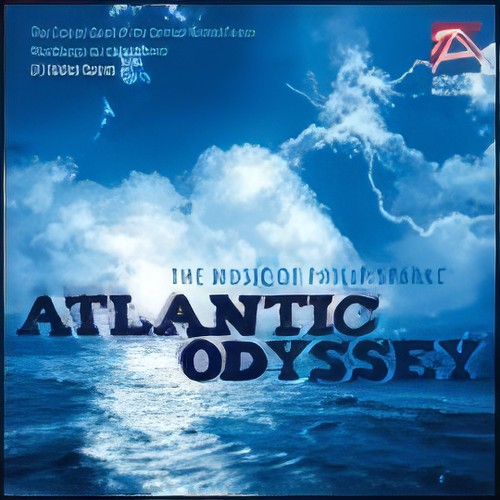
ATLANTIC ODYSSEY (The Music of Philip Sparke) (Wind Band CD)
Concert Band of the German Armed Forces conducted by Walter Ratzek. Includes: Birthday Fanfare; Blazon; Overture for a Great City; Flowerdale; Exultation; Centennial Salute; A Winter's Tale; Second City Ceremony; Concertino Classico; Hail the Dragon!; Atlantic Odyssey
Estimated dispatch 7-14 working days
-
£104.99
Bert Kaempfert Classics (Concert Band - Score and Parts)
Bert Kaempfert, who was born in Hamburg, was undoubtedly one of the great German bandleaders and enjoyed considerable international success. Gilbert Tinner, also an experienced bandleader, has arranged the characteristic Bert Kaempfert sound in a medley from the numbers A Swingin' Safari, Happy Trumpeter, Wunderland bei Nacht and Dankesch?n. 06:50
Estimated dispatch 7-14 working days
-
£149.99
Colditz Castle Wind Band Set (Score & Parts)
Written as a commission by the Stichting de Inrichting foundation of Wijk bij Duurstede (the Netherlands), Rob Goorhuis Requiem voor de mens (Requiem for Man) on lyrics by Andr? van Zwieten was composed in the year 2001. This work for choir and wind-band greatly impressed the audience, whilst its composer remained obsessed by its war theme. When he subsequently heard that the Rundfunk Blasorchester from the German town of Leipzig -a place not far from Colditz - was to dedicate a CD to his work, Rob Goorhuis got the idea to process some of the themes from his Requiem for Man into an instrumental composition about the famous Colditz castle. a place still bearing the scars of war. From 1933 to 1934, the castle was a Schutzhaftlager. During the Second World War, it was used as a prison for senior officers. From this prison, many escapes were undertaken, which even resulted in the castle being nicknamed The Escape School. In the seventies, a television-series about this period made the castle very well-known with the public at large.The despondent tone of the opening theme underscores the sadness caused by wars and violence. Nevertheless the works ending is hopeful and triumphant. Peace is celebrated, but with the hope for a lasting peace sadly remaining a topical issue to the present moment. 09:30
Estimated dispatch 7-14 working days
-
£104.99
Crime Time (Concert Band - Score and Parts)
Tatort (Scene of the Crime), Derrick and Ein Fall f?r zwei (A Case for Two) are three classic crime series on German television. Two of the themes, are from the pen of Klaus Doldinger and the third theme, Derrick was written by Les Humphries, an Englishman, who had great success with the Les Humphries Singers. In Crime Scene Stefan Schwalgin has faithfully adapted the original sound of the melodies to produce a thrilling medley. 06:25
Estimated dispatch 7-14 working days
-
£60.99
Dolce Vita (Concert Band - Score and Parts)
The old German fishing village of Hartheim is situated on the river plain of the Rhine between the mountain Kaiserstuhl and the countryside Markgr?flerland. Its inhabitants enjoy life, and they know how to celebrate and have a good time. Wim Laseroms has captured the relaxed atmosphere of the village in this cheerful march. Dolce Vita is an expression of thanks to the band's most loyal fans for their support in the past, and it expresses how music can have a positive effect on the quality of life in a village. 03:00
Estimated dispatch 7-14 working days
-
£118.99
Donna Diana Wind Band Set (Score & Parts)
Emil Nikolaus V. Reznicek was born on May 4,1860. Though he was originally destined for ajudicial career, his nature (that of a true musician)soon pointed him in the direction of music. As anorchestral conductor and a highly regarded musicteacher he made his mark in a number of cities,including Mannheim and Berlin. As a composer hesprang to fame with his opera Donna Diana(1894), a lasting success which placed him in theforefront of German composers. The overture toDonna Diana is unique in its freshness and sunnycheerfulness. Wil van der Beek, who has alreadywritten many arrangements of classical pieces forwind band, has maintained the spirit of theoriginal composition. 0:05:30
Estimated dispatch 7-14 working days
-
£69.99
Graf Zeppelin (Concert Band - Score and Parts)
Carl Teike (1864-1922) is one of the greatest composers of march music, being especially remembered for his traditional marches Alte Kameraden (Old Companions) and Graf Zeppelin. Both marches are well known throughout the world and thanks to their beautiful and catchy melodies they are often still performed. The march Graf Zeppelin is a tribute to Ferdinand Graf von Zeppelin, the famous German constructor of airships, who was a contemporary of Teike. Wolfgang W?ssner has arranged this march for symphonic wind band in a modern march style without losing its traditional character. 03:20
Estimated dispatch 7-14 working days
 View Music