
Results
-
 £119.60
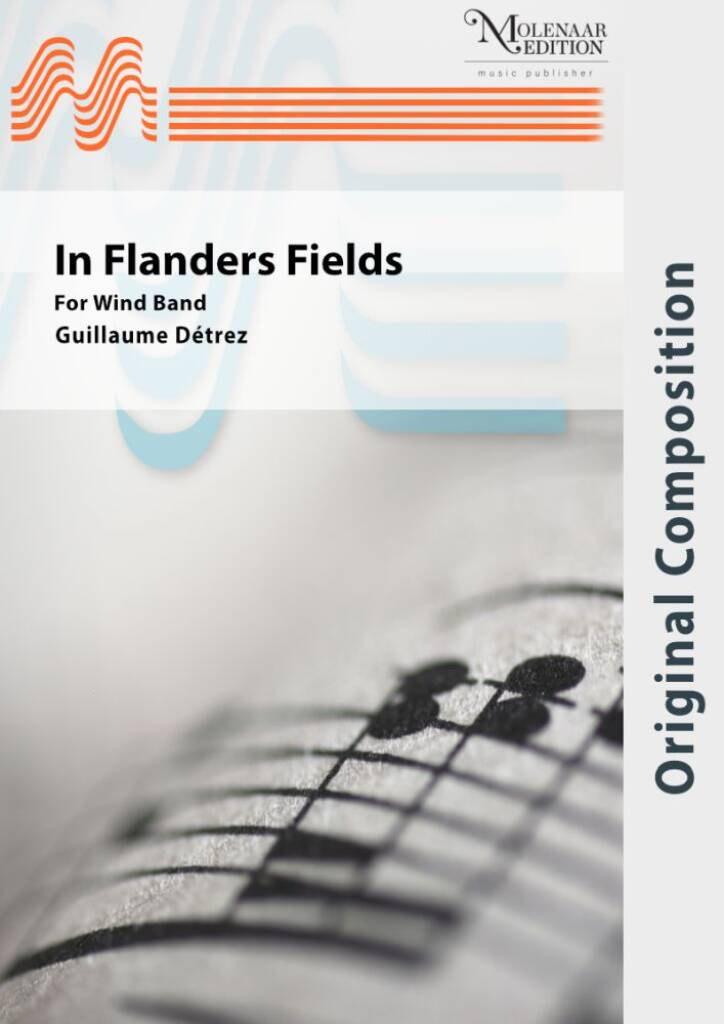
In Flanders Fields - Guillaume Détrez
"In Flanders Fields" is a play recounting the Battle of Vimy Ridge (France) which took place from April 9 to 12, 1917. The introduction refers to the thousands of graves found at the site of Notre-Dame de Lorette. Then begins the episode of preparation and fierce battle. Thanks to the Canadian Expeditionary Force that came as reinforcements, the battle was won and the site secured at 6 a.m. (brass choir accompanied by 6 bells). The title of this work also refers to a poem by John Mac Rae located at the entrance to the memorial museum."In Flanders Fields"By Col. John McCrae,In Flanders Fields The poppies blowBetween the crosses row on rowThat mark our place; and in the skyThe larks, still bravely singing, flyScarce heard amid the guns below.We are the dead, short days agoWe lived, felt dawn, saw sunset glow,Loved and were loved and now we lieIn Flanders Fields.Take up our quarrel with the foeTo you, from failing hands, we throwThe torch, be yours to hold it high.If ye break faith with us, who dieWe shall not sleep, though poppies growIn Flanders Fields
Estimated dispatch 7-14 working days
-
 £64.95
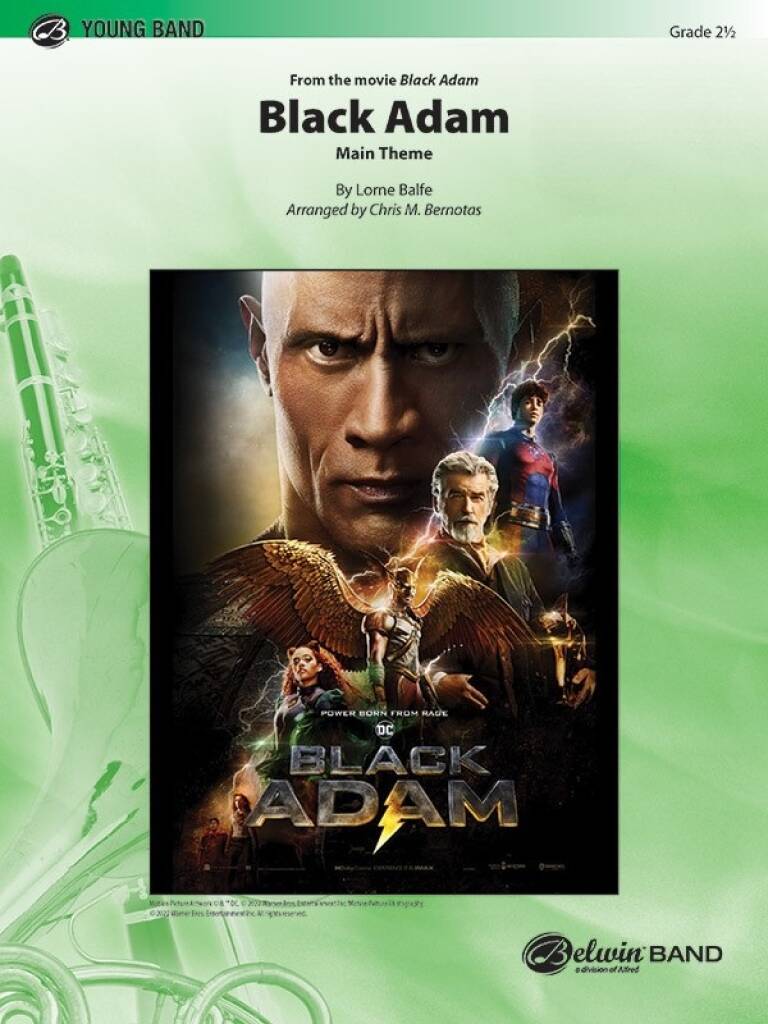
Black Adam - Lorne Balfe
The powerful theme from the action-packed DC Superhero adventure Black Adam comes to life in this fantastic arrangement by Chris M. Bernotas. The epic theme is dark and bold, and all sections of the concert band have engaging and exciting parts. The original score by Lorne Balfe is brilliant. This arrangement will be a hit at your next concert.
Estimated dispatch 7-14 working days
-
 £11.80
Suzuki Cello School, Volume 2: Cello Book
Teach cello with the popular . The Suzuki Method of Talent Education is based on Shinichi Suzuki's view that every child is born with ability, and that people are the product of their environment. According to Shinichi Suzuki, a world-renowned violinist and teacher, the greatest joy an adult can know comes from developing a child's potential so he/she can express all that is harmonious and best in human beings. Students are taught using the "mother-tongue" approach. Each series of books for a particular instrument in the Suzuki Method is considered a Suzuki music school, such as the Suzuki Cello School. Suzuki lessons are generally given in a private studio setting with additional group lessons. The student listens to the recordings and works with their Suzuki cello teacher to develop their potential as a musician and as a person. This Suzuki Book is integral for Suzuki cello lessons. Titles: Long, Long Ago (T. H. Bayly) * May Time, Komm Lieber Mai (Longing for Spring) from , K. 96 (W. A. Mozart) * Minuet No. 1, Minuett III from , BWV 822 (J. S. Bach) * Minuet No. 3, Minuet in C, BWV Anh. II (J. S. Bach) * Chorus from (G. F. Handel) * Hunters' Chorus from 3rd Act of the Opera (C. M. von Weber) * Musette in G, Gavotte II or the Musette from , BWV 808 (J. S. Bach) * March in G (J. S. Bach) * Theme from (N. Paganini) * Tonalization: The Moon over the Ruined Castle (R. Taki) * The Two Grenadiers, Die Beiden Grenadier, Op. 49, No. 1 for Voice and Piano (R. Schumann) * Gavotte (F. J. Gossec) * Bourre from , HHA IV/18, No. 8-EZ (G. F. Handel). This title is available in MakeMusic Cloud. For a complete list of the most recent printings by AMPV number, go to alfred.com/suzuki. The International editions include an updated title page that designates the book as the International Edition. A Federation Festivals 2020-2024 selection.
Estimated dispatch 3-5 working days
-
 £79.95
Variations on 'Was Lebet' (Concert Band - Score and Parts) - Wainwright, Andrew
Variations on 'Was Lebet' is based on the German chorale of the same name, the first line of which translates as 'O worship the Lord in the beauty of holiness!' The opening fanfare figure in the Trumpets should be supported by bold, organ-like sostenuto chords in the lower band. Ensure that the fanfare in the Trumpets and Trombones from bars 25 to 28 is given equal articulation and volume in the antiphonal parts. After this majestic introductory section, the first of five contrasting variations is presented, although the tune is never realised in full form until the final variation, with fragments gradually being revealed as the piece progresses.Variation I is somewhat classical in approach, with its energy coming from a regular contrast between cantabile references to the theme, set against lively staccato figures. Ensuring a lightness of touch will be important here; the music should be poised and never sound frantic. As a result, careful attention should be paid to the tempo marking, being no quicker than 136 beats per minute. Snippets of the chorale come and go, with the last phrase of the hymn completing the movement. This final statement, at bar 95, should be an immediate change in tempo and a separate statement to the music that comes before.Variation II is plaintive in mood, giving the listener the chance to reflect on the following words, which form part of the second verse: 'Comfort thy sorrows and answer thy prayerfulness, Guiding thy steps as may best for thee be.' There is opportunity for rubato in this movement, at the discretion of the conductor.Variation III is somewhat quirky and volatile in nature, and takes its inspiration from the 3rd and 4th verses which describe the fearful times in life that we must entrust to the Lord. Driven by the Percussion section in particular, there are references here to Variation I with its chorale-like figures and hurtling scalic figures, and there is a feeling of a lack of resolution. A somewhat abrupt ending suggests that our sense of completeness in Christ is yet to be resolved. It is important that clarity and tempo are maintained in the bass line between sections L and M. Aim for consistency of line in the bass parts, particularly with the trade-offs between players here.There is a French romantic feel to the waltz in Variation IV, with the opportunity for various soloists to display their musicianship. A sense of ironic humour pervades throughout. The Clarinet and Bassoon duet from section U should be playful and display a lightness of touch, with that sense of style continued throughout the movement.Variation V is fugal in nature, with each section of the band being handed the theme at various points. Again it is important that a steady tempo is set at Y in order to maintain control. The sense of momentum gradually increases to a grandiose presentation of the full theme, beginning at section CC, affirming our completeness in the Lord, with the words of the first and last verses reiterated: O worship the Lord in the beauty of holiness! Bow down before him, his glory proclaim; With gold of obedience and incense of lowliness, Kneel and adore him, the Lord is his name.Duration: 11.45
Estimated dispatch 7-14 working days
-
 £15.95
Variations on 'Was Lebet' (Concert Band - Score only) - Wainwright, Andrew
Variations on 'Was Lebet' is based on the German chorale of the same name, the first line of which translates as 'O worship the Lord in the beauty of holiness!' The opening fanfare figure in the Trumpets should be supported by bold, organ-like sostenuto chords in the lower band. Ensure that the fanfare in the Trumpets and Trombones from bars 25 to 28 is given equal articulation and volume in the antiphonal parts. After this majestic introductory section, the first of five contrasting variations is presented, although the tune is never realised in full form until the final variation, with fragments gradually being revealed as the piece progresses.Variation I is somewhat classical in approach, with its energy coming from a regular contrast between cantabile references to the theme, set against lively staccato figures. Ensuring a lightness of touch will be important here; the music should be poised and never sound frantic. As a result, careful attention should be paid to the tempo marking, being no quicker than 136 beats per minute. Snippets of the chorale come and go, with the last phrase of the hymn completing the movement. This final statement, at bar 95, should be an immediate change in tempo and a separate statement to the music that comes before.Variation II is plaintive in mood, giving the listener the chance to reflect on the following words, which form part of the second verse: 'Comfort thy sorrows and answer thy prayerfulness, Guiding thy steps as may best for thee be.' There is opportunity for rubato in this movement, at the discretion of the conductor.Variation III is somewhat quirky and volatile in nature, and takes its inspiration from the 3rd and 4th verses which describe the fearful times in life that we must entrust to the Lord. Driven by the Percussion section in particular, there are references here to Variation I with its chorale-like figures and hurtling scalic figures, and there is a feeling of a lack of resolution. A somewhat abrupt ending suggests that our sense of completeness in Christ is yet to be resolved. It is important that clarity and tempo are maintained in the bass line between sections L and M. Aim for consistency of line in the bass parts, particularly with the trade-offs between players here.There is a French romantic feel to the waltz in Variation IV, with the opportunity for various soloists to display their musicianship. A sense of ironic humour pervades throughout. The Clarinet and Bassoon duet from section U should be playful and display a lightness of touch, with that sense of style continued throughout the movement.Variation V is fugal in nature, with each section of the band being handed the theme at various points. Again it is important that a steady tempo is set at Y in order to maintain control. The sense of momentum gradually increases to a grandiose presentation of the full theme, beginning at section CC, affirming our completeness in the Lord, with the words of the first and last verses reiterated: O worship the Lord in the beauty of holiness! Bow down before him, his glory proclaim; With gold of obedience and incense of lowliness, Kneel and adore him, the Lord is his name.Duration: 11.45
Estimated dispatch 7-14 working days
-
 £17.95
Golden Peak (Concert Band Double CD)
Includes:Disc 1:Grande Fanfare (Thomas Doss)Seatbelts Fastened! (Jan Van der Roost)Centenary 2019 (Jan de Haan)Castrum Alemorum (Jacon de Haan)Valentin's Chorale (Thomas Doss)Festive Overture (Satoshi Yagisawa)A Sevenoaks Suite (Philip Sparke)Golden Peaks (Thierry Deleruyelle)The Air Race (Otto M. Schwarz)Stepstones (Jan Van der Roost)Disc 2:March Prelude: Alnwick Town (Philip Sparke)Out of Space (Thomas Doss)The Temple Musician (Jan de Haan)Rhapsody in Blue (George Gershwin arr. Paul Murtha)Georgia on my Mind (arr. Peter Kleine Schaars)The Lion King (arr. Michael Brown)Con Te Partiro (arr. Eric J. Hovi)The Longest Time (arr. Gerald Oswald)Hula Hoop (Marc Jeanbourquin)Highlights from Toy Story 4 (arr. Johnnie Vinson)Senorita (arr. Timothy Graves)High Hopes (arr. Matt Conaway)Old Town Road (arr. Paul Murtha)Highlights from Rocketman (arr. Johnnie Vinson)Easy Lover (arr. Marc Jeanbourquin)Tom Jones in Concert (arr. Gilbert Tinner)Ellington! (arr. Stephen Bulla)
Estimated dispatch 7-14 working days
-
 £75.00
Salute to Television (Concert Band - Score and Parts) - Strommen, Carl
This jam-packed medley containing the gems of television themes from yesteryear. Including themes from Masterpiece Theatre, M*A*S*H, The Alfred Hitchcock Show, The Late Show, The Late, Late Show, The Flintstones, and Bonanza, this is one yabba-dabba-delicious medley!Duration: 7.30
Estimated dispatch 7-14 working days
-
 £46.90
Milngavie (Flexible Ensemble - Score and Parts) - Rankley, Matthew
8 Part Flexible Ensemble and PercussionA Scottish Impression. Milngavie is a small village in Scotland, located 10 kilometres from Glasgow. Attractions there include the West Highland Way, Milngavie Castle, Prescott Bridge and the James M. Gale Memorial. The village also has a railway station.Duration: 2.15
Estimated dispatch 7-14 working days
-
 £141.99
Goodnight Moon (Vocal Solo (Soprano) with Concert Band - Score and Parts) - Brown & Whitacre - Mosenbichler-Bryant, Verena
Note from the Composer: "Over the past few years I must have read Goodnight Moon to my son a thousand times - maybe more. Somewhere around reading number 500, I began hearing little musical fragments as I read, and over time those fragments began to blossom into a simple, sweet lullaby. I knew it was a long shot, but I asked my manager, Claire Long, to contact HarperCollins and see if they would allow the text to be set to music. To my surprise and delight they agreed - the first time they had ever allowed Goodnight Moon to be used in such a way. I composed the piece relatively quickly, originally setting the text for harp, string orchestra, and my son's mother, soprano Hila Plitmann. I later arranged Goodnight Moon for SATB choir and piano. More recently, my dear friend Verena M?senbichler-Bryant arranged the piece for wind ensemble and soloist. The melody of Goodnight Moon will forever make me think of those quiet nights, reading my son to sleep." - Eric Whitacre
Estimated dispatch 7-14 working days
-
 £69.95
Scaff (Concert Band - Score and Parts) - Wheeler, Alastair
This clarinet sonata was composed in 1894 for clarinetist Richard M?hlfeld. This was an interesting time in Brahms' life as he vowed he would retire from composing in 1890 but after he heard a performance of the Weber clarinet concerto no. 1 and the Mozart clarinet quintet he so admired the soloist that he felt he should come out of retirement and compose 2 clarinet sonatas for him. These were completed in 1894 and first performed in a private concert in September of that year. These 2 sonatas were the last chamber pieces he composed before his death.
Estimated dispatch 7-14 working days
 View Music