
Results
-
 £64.50
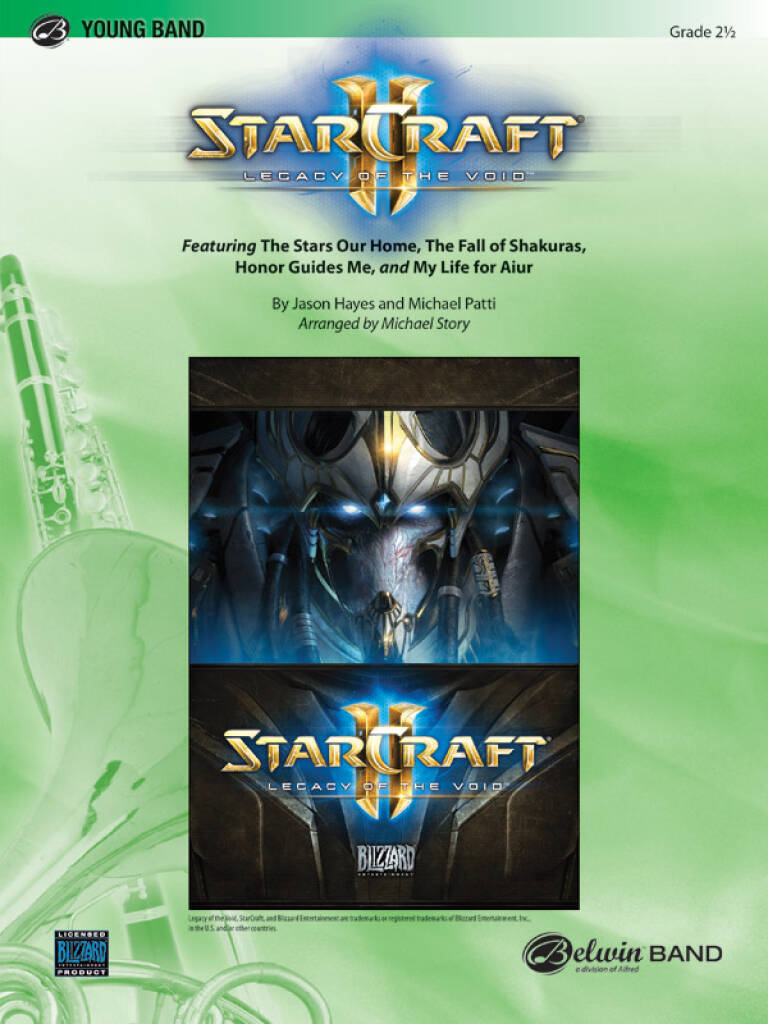
Starcraft Ii Legacy Of The Void - M. Hayes
This stunning musical collage of tunes from the wildly popular video game, Starcraft II: Legacy of the Void, was composed by Jason Hayes and Mike Patti. Themes include "The Stars Our Home," "The Fall of Shakuras," "Honor Guides Me," and " My Life for Aiur." Vividly contrasting styles combine to embrace the cherished themes and are masterfully interwoven into this through-played medley. (4:30)
Estimated dispatch 7-14 working days
-
 £84.99
Rondo Barocco - Otto M. Schwarz
The Baroque is a period of frills and ornaments, wether in architecture, painting or music. An easy melody passes through a variety of arrangements. From brass quintet and different tutti parts, all the sections are in action. Fortified by a drum set and an (optional) electric bass, the piece is given a modern touch and becomes more acceptable to the audience. A follow-up to "Rondo Romantica", this piece was composed in December 1997.
Estimated dispatch 7-14 working days
-
£118.99
Asteroid - Otto M. Schwarz
Asteroids and comets have played an important role throughout the history of life on earth. It is quite probable that the dinosaurs have been exterminated by an asteroid's impact in the Gulf of Mexico. Huge tidal waves and fire storms wiped out all life. This is the year 2067 according to the Christian calendar. A collision has just taken place in the asteroid belt between Mars and Jupiter and caused an asteroid to enter the earth's power of gravitation. It is instoppably approaching the blue planet. As its peoples have been fighting each other continuously, they missed the building of a global defence system against dangers coming from space. A scanner records the asteroid andimmediately sends a message to the President of the Anglo-American Union. The probability that the asteroid will hit the earth is judged 50% by the experts. Plans are made to shoot the celestial body with rockets live with hydrogen bombs or laser guns in order to throw it off its track, but they fail. The asteroid's size seems to threaten the existence of mankind. Those in the know stare at the night sky in bewilderment. But for the time being, there is still peace on earth....
Estimated dispatch 7-14 working days
-
 £64.99
A Hymn for Band - Hugh M. Stuart
This gem from 1985 has steadily become one of the classic repertoire pieces for young bands. Even though it is heavily cross-cued making it suitable for smaller bands, this beautiful work is rich in melodic content, variedscoring, and marvelous counterlines and harmonies. An effective performance vehicle that also teaches legato style and musical sensitivity. Dur: 4:00 (Grade 3)
Estimated dispatch 7-14 working days
-
 £47.50
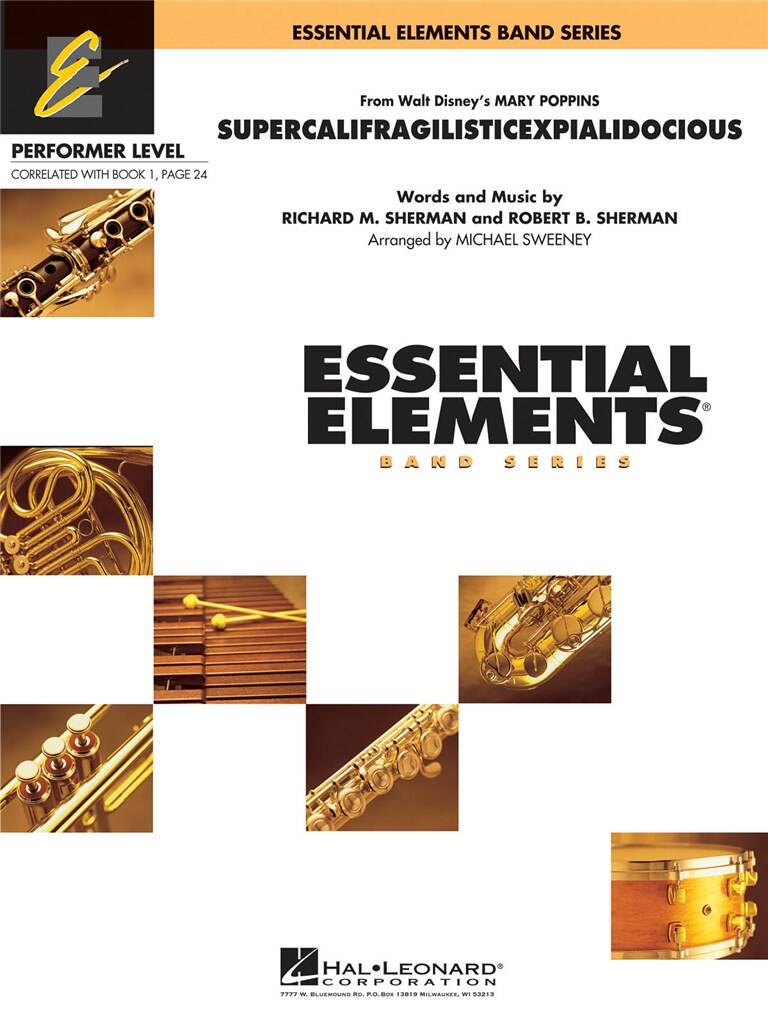
Supercalifragilisticexpialidocious - Richard M. Sherman
Performer Level (correlates with Book 1, p. 24) Every concert needs a little fun! One of the best-known songs from the Disney classic Mary Poppins, Michael has cleverly arranged this tune by passing the melody around to everysection, plus using a few short percussion feature spots.
Estimated dispatch 7-14 working days
-
 £104.99
Man in the Ice (Concert Band - Score and Parts) - Schwarz, Otto M.
This programmatic piece of music is one of the best-selling works from Otto M. Schwarz. There was a very high demand for a lower grade version to enable young and small bands to perform this epic piece. On September 19th, 1991, a mummified corpse of a man was found at the Similaun glacier in the ?tzt?ler Alps. The glacier unveiled an early man after 5300 years, with all of his personal belongings. His clothes and weapons were fairly well preserved and provide us today with a deeper insight into that period. Austrian nature filmmaker Kurt M?ndel reconstructed the life of this man and made a film, which Otto M. Schwarz used as an opportunity to write a work for symphonic wind band and musically resurrect the "Man in the Ice- ?tzi".
Estimated dispatch 7-14 working days
-
 £210.80
The Pied Piper of Hamelin (Concert Band - Score and Parts) - Schwarz, Otto M.
Stories, sagas and legends--who among us don't know them? Always delivered with a tinge of brutality, these cautionary tales are a legacy of moral education from times past: inquisitive children alone in the forest are generally eaten by a witch; the 'Soup-Kasper' of Hoffmann's Struwwelpeter dies from starvation rather than eating his soup; anyone letting in strangers usually gets devoured; anyone who plays with matches gets burned; and thumb-suckers get their thumbs cut off. The list of unfortunate demises is almost endless.In the tale of The Pied Piper of Hamelin, parents lose their children through greed, ridicule, scorn and a failure to appreciate art. There is still a street in the town of Hamelin in which neither drumming nor playing has not been allowed since 130 children disappeared into a mountain, never to be seen again. This composition by Otto M. Schwarz opens with exactly this scene, taking us back to the year 1284. As in many towns at the time, Hamelin in Germany suffered with hygiene problems--rats and mice began to multiply rapidly, and the town was overrun with the plague. There appeared a man dressed in colourful clothes who promised the locals to free them from this burden. They agreed and settled on a fee. Then the man pulled out a pipe and began to play. When the rats and mice heard this, they followed him. He led the animals into the Weser River, where they all drowned. Back in town, the people refused to pay him. They didn't recognise this man's skills and knowledge and were only prepared to pay for simple labour. A pact with the devil was made, which led to the Pied Piper leaving the town in a furious rage. One Sunday, when many people were at church, he returned, took out his flute and began to play. The town's children were so enchanted by his playing that they followed him. He led them out of the town and disappeared with them forever into a mountain forever. Of all the children, only two survived--however one was mute, and one was blind. In the street from which the children left Hamelin, music may no longer be played in memory of this event. The work may be performed in two different versions: 1. Purely instrumental (without narrator)--the GPs (pauses) must be kept short 2. With narrator--he speaks in the GPs but not during the music.Duration: 14.15
Estimated dispatch 7-14 working days
-
 £100.80
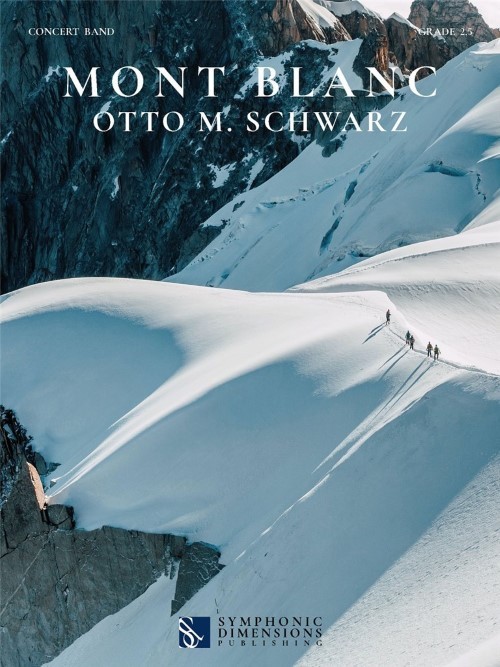
Mont Blanc (Concert Band - Score and Parts) - Schwarz, Otto M.
With its height of 4,808 meters, Mont-Blanc is called the roof of Europe. The highest mountains on our planet have been insurmountable for a long time. Only in the past 250 years have those giants been mounted. Crystal-hunter Jacques Balmat and Michel-Gabriel Paccard, a doctor, were the first to climb Mont-Blanc, in 1786. Many paths lead to Mont-Blanc's peak: the regular ascent goes through the magnificent voie royale of Saint-Gervais-les- Bains, which was opened in August 1855 by the Englishmen Hudson, Kennedy, and Smythe. Today's most common route to climb up, starting from Saint-Gervais via Aiguille du Gouter (3,863m), Dome du Gouter (4,304m), and Arete des Bosses (4,547m), was first used in 1861. Otto M. Schwarz composed this work inspired by the roof of Europe with its luminous and huge glaciers. Early in the morning, mountain-climbers set off to the peak; they witness the sunrise, and experience the hazards that the journey up to the summit brings along. A snowstorm and falling rocks at Arete des Bosses aggravate their journey. A sudden change of weather, however, enables them to reach the top after a strenuous ascent. This piece invites you to an imaginary journey from Saint-Gervais-les-Bains via the voie royale to the top of Mont-Blanc.Duration: 6.45
Estimated dispatch 7-14 working days
-
 £53.95
Liftoff (Concert Band - Score and Parts) - Bernotas, Chris M.
Sucessful launches and landings from the SpaceX program have proven to be inspirational in reigniting the excitement of human travel to space. Lift Off by Chris M. Bernotas is a thrilling overture that will launch the imagination of your students. With melodic opportunities for all students, this piece will engage your young band from start to finish. Duration: 2.15
Estimated dispatch 7-14 working days
-
 £84.99
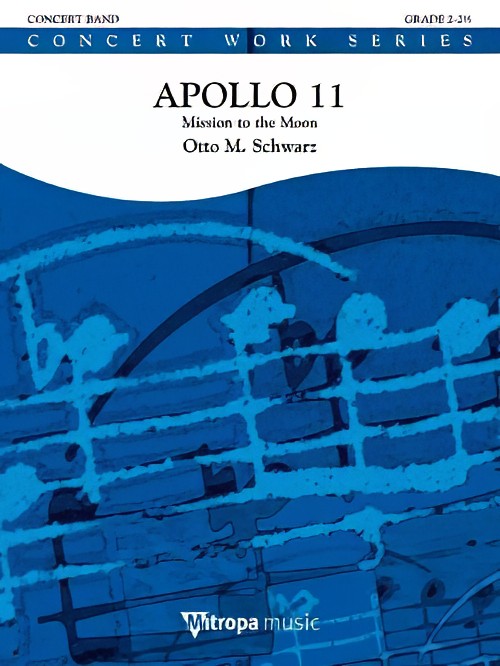
Apollo 11 (Concert Band - Score and Parts) - Schwarz, Otto M.
Who doesn't know the iconic words "That's one small step for man, one giant leap for mankind", spoken by the famous astronaut Neil Armstrong - the man that took the first step on the moon. This inspiring work from Otto M. Schwarz lets you re-experience this event step by step, starting from the countdown until the actual landing on the moon. A stunning musical flashback to the historical event of 1969, which will make you feel as if you are in the space shuttle Apollo 11 yourself!
Estimated dispatch 7-14 working days
 View Music