
Results
-
 £124.95
SWORD AND THE CROWN, The (Prestige Concert Band - Score and Parts) - Gregson, Edward
In 1988 I was commissioned by the Royal Shakespeare Company to write the music for The Plantagenets trilogy, directed by Adrian Noble in Stratford-upon-Avon. These plays take us from the death of Henry V to the death of Richard III. Later, in 1991, I wrote the music for Henry IV parts 1 and 2, again in Stratford. All of these plays are concerned with the struggle for power (the crown) through the use of force (the sword) and they portray one of the most turbulent periods in the history of the British monarchy.This work quickly became established in the mainstream repertoire and has received performances worldwide as well as five commercial recordings and many broadcasts. In 2002 I was approached by the Parc and Dare Band regarding their summer festival and commissioned to do a version for brass band. This was given its first performance in Treorchy Hall by the combined bands of Black Dyke and Parc and Dare conducted by Nicholas Childs.When the Royal Air Force Music Services commissioned me to write a work especially for their British tour in 1991 I immediately thought of turning to this music and transforming some of it into a three-movement suite for symphonic band.The first movement opens with a brief fanfare for two antiphonal trumpets (off-stage), but this only acts as a preface to a Requiem aeternam (the death of Henry V) before changing mood to the English army on the march to France; this subsides into a French victory march, but the English army music returns in counterpoint. Finally, a brief reminder of the Requiem music leads to the triumphal music for Richard Plantagenet, Duke of York, father of Edward IV and Richard III (the opening fanfare transformed).The second movement takes music from the Welsh Court in Henry IV (part 1) which is tranquil in mood; distant fanfares foreboding battles to come are heard, but the folktune is heard three times in different variations and the movement ends as it began with alto flute and gentle percussion.The final movement starts with two sets of antiphonally placed timpani, drums and tam-tam, portraying the 'war machine' and savagery of battle. Trumpet fanfares and horn calls herald an heroic battle theme which, by the end of the movement, transforms itself into a triumphant hymn for Henry IV's defeat of the rebellious forces.- Edward GregsonPerformance time 13'54"Recorded on QPRM117D FESTIVAL OF MUSIC 1991, Massed Bands of the Royal Air ForceRecorded on QPRM120D THE SWORD AND THE CROWN, Central Band of the Royal Air Force'Finale' recorded on QPRM142D FESTIVAL OF MUSIC 2002, Massed Bands of the Royal Air Force)
Estimated dispatch 7-14 working days
-
 £84.99
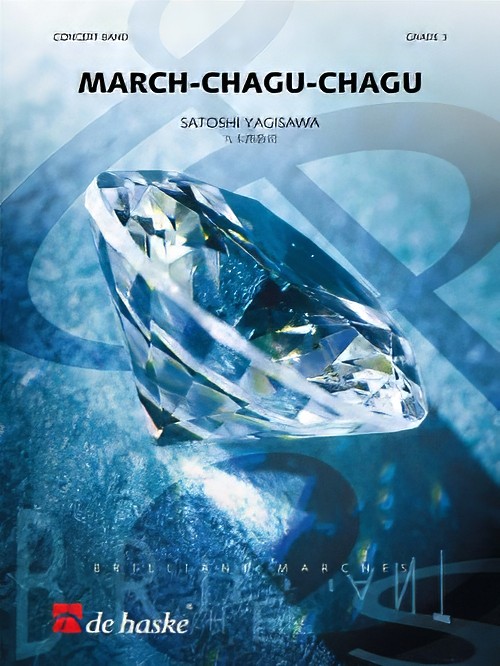
March-Chagu-Chagu (Concert Band - Score and Parts) - Yagisawa, Satoshi
This work was composed as ceremonial music, as part of a march medley for the participants' entry for the 71st National Sports Festival and the 16th National Disabled Personnel Sports Festival, held in Iwate Prefecture in 2016. The European premiere of this piece took place in December of that year, the composer guest conducting the Young Musicians from Fribourg, Switzerland. This work, fusing Japanese folk song with march music, will have wide appeal, like the sister work March-Bou-Shu. Duration: 3.00
Estimated dispatch 7-14 working days
-
 £144.99
Festa Paesana Wind Band Set (Score & Parts)
Lunteren, a village on the Veluwe (a wooded region in the Netherlands), sets the scene annually for a village festival dominated by folklore. Festa Paesana (Italian for village festival) is set to music by several folkloric sketches. The theme in Festa Paesana is partly based on a Dutch anthem (Wien Neerlands bloed); when other lyrics are used it is also known as the Lunteren anthem.The work begins with a festive introduction, completed by chimes and drums, in which pieces of the Lunteren anthem are heard. The music then transitions to represent a horse auction. We hear horses run their first rounds in the auction ring while being whipped. The following theme is partly based on the anthem. The tension of the traditional auction is amplified by an ever-increasing cadence, reaching its climax when the word ?Sold!? is shouted. The night ends with a majestic variation on the Lunteren anthem.The next morning, when the tower clock hits seven times, the village is awaked by the reveille of the heralds. In a fugatic version of the anthem, we can hear the village slowly come to life. This evolves with the chiming of all towers in the village; the celebration can begin. Carriages drawn by horses rumble through the village and thus, it is easy to hear when a horse hesitates or runs amuck. A traditional folk dance group then dances a whirling waltz while the audience shares their pleasure. Musicians march along the scene and take over the waltz theme in their march. Until deep in the night, the musicians are still heard playing in the streets. Meanwhile, we hear the anthem theme being played in a choral variation (in minor). The first time it is played quietly, as a preparation for Sunday. Then it is played in a celebrating way, enabling the devout village residents to remember the past pleasant celebration with satisfaction. 0:08:10
Estimated dispatch 7-14 working days
-
 £49.50
The Entertainer (Concert Band - Score and Parts)
A great concert march from the composer of "Pride & Glory March", "Field of Victory March" and countless other young band favorites. Written in the traditional march style, "March Atlantis" provides the director with a terrific vehicle for teaching the concert march style while providing the band with an outstanding program piece or festival warmup march. Highly Recommended!
Estimated dispatch 7-14 working days
-
 £164.95
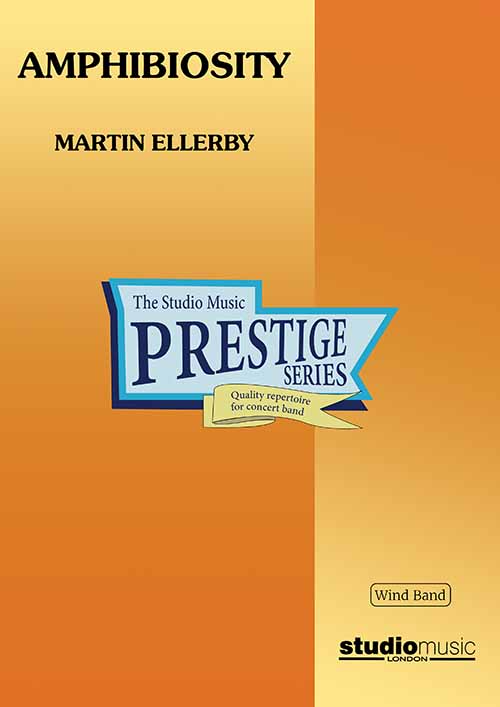
Amphibiosity (Concert Band - Score and Parts) - Ellerby, Martin
Amphibiosity was commissioned by the Royal Marines Band Service with funds made available by the Royal Navy and Royal Marines Charities for the 2014 Mountbatten Festival of Music held at the Royal Albert Hall in London.The work was written in celebration of the 350th Anniversary of the Royal Marines Corps and utilises many familiar tunes associated with them. Although the piece is cast in one continuous movement it falls into an introductions, ten sections and a coda.The Introduction sets the tone with the Amphibiosity mofif - a call to attention, it is of serious intent. During the course of the work it returns as a point of reference. The first section makes use of The Globe and Laurel (Original Regimental Slow March of the Royal Marines, the tune (Early One Morning) making an apt appearance, it has been played in the minor and like much of the quotational material in the piece is of a referenced nature being symbolic in meaning. However it soon turns to the major to provide a less sombre aspect to the introduction proper. There follows an interlude, the Amphibiosity motif returning rather like a ritornello to give cohesion to the structure and act as a point of change.Section two presents Sarie Marais (Regimental March Past of the Royal Marine Commandoes), the first half of the tune used as a fugal subject (placed in the minor) and as such providing the impression of a building up of activity. The ensuing third section is light-hearted commencing with an original hornpipe leading into the fourth section, Seascape, representing the fleet at sea. Another interlude follows, the Amphibiosity motif reappearing as a woodwind fanfare making way for the fifth section. Anticipation, serious matters lie ahead, there is trouble in the papers, the Corps will be placed on standby.Section six is subtitled Preparation, all hands-on deck, time to get set: A Life on the Ocean Wave (Regimental March of the Royal Marines) is alluded to. On reaching section seven, Assault, the landing goes ahead. Within this section there is an internal interlude reflecting on things past: other men have been in this position before. It is a taut and trying situation, training must pay off!Section eight is named Victory, but not gung-ho, and here the Seascape music is revisited. The penultimate ninth section is called Rememberances, although all made it this time, it was not always the case in times past and the Naval Hymn (Eternal Father) provides a moment of tribute to the fallen of previous generations.The Finale (section ten) delivers By Land and Sea (Slow March of the Royal Marines) in a bright and positive orchestration, the mood being celebratory. In a brief Code, the Amphibiosity motif makes a last triumphant appearance.Duration: 10.30
Estimated dispatch 7-14 working days
-
 £32.95
Amphibiosity (Concert Band - Score only) - Ellerby, Martin
Amphibiosity was commissioned by the Royal Marines Band Service with funds made available by the Royal Navy and Royal Marines Charities for the 2014 Mountbatten Festival of Music held at the Royal Albert Hall in London.The work was written in celebration of the 350th Anniversary of the Royal Marines Corps and utilises many familiar tunes associated with them. Although the piece is cast in one continuous movement it falls into an introductions, ten sections and a coda.The Introduction sets the tone with the Amphibiosity mofif - a call to attention, it is of serious intent. During the course of the work it returns as a point of reference. The first section makes use of The Globe and Laurel (Original Regimental Slow March of the Royal Marines, the tune (Early One Morning) making an apt appearance, it has been played in the minor and like much of the quotational material in the piece is of a referenced nature being symbolic in meaning. However it soon turns to the major to provide a less sombre aspect to the introduction proper. There follows an interlude, the Amphibiosity motif returning rather like a ritornello to give cohesion to the structure and act as a point of change.Section two presents Sarie Marais (Regimental March Past of the Royal Marine Commandoes), the first half of the tune used as a fugal subject (placed in the minor) and as such providing the impression of a building up of activity. The ensuing third section is light-hearted commencing with an original hornpipe leading into the fourth section, Seascape, representing the fleet at sea. Another interlude follows, the Amphibiosity motif reappearing as a woodwind fanfare making way for the fifth section. Anticipation, serious matters lie ahead, there is trouble in the papers, the Corps will be placed on standby.Section six is subtitled Preparation, all hands-on deck, time to get set: A Life on the Ocean Wave (Regimental March of the Royal Marines) is alluded to. On reaching section seven, Assault, the landing goes ahead. Within this section there is an internal interlude reflecting on things past: other men have been in this position before. It is a taut and trying situation, training must pay off!Section eight is named Victory, but not gung-ho, and here the Seascape music is revisited. The penultimate ninth section is called Rememberances, although all made it this time, it was not always the case in times past and the Naval Hymn (Eternal Father) provides a moment of tribute to the fallen of previous generations.The Finale (section ten) delivers By Land and Sea (Slow March of the Royal Marines) in a bright and positive orchestration, the mood being celebratory. In a brief Code, the Amphibiosity motif makes a last triumphant appearance.Duration: 10.30
Estimated dispatch 7-14 working days
-
 £30.00
BEGINNING BAND BOOK No.3 (Score inc. CD) - Edmondson & McGinty
An affordable collection of concert repertoire for beginning bands; great sight reading material for more advanced bands! Features include: Grade 1 concert band music; Playable with only 1 flute, 2 clarinets, 1 alto saxophone, 2 cornets/trumpets and percussion, up to full instrumentation; Full, complete sound, even without bass clef instruments. The bass clef part in octaves is optional; Both clarinet parts stay below the break; Optional F Horn and Tenor Saxophone parts are written in their best ranges; Bell part for teaching melodic percussion. Contents: Aztec Sunrise; Cambridge Overture; Clarinet Caravan; Foxwood Overture; Kensington March; Magna Carta March; March of the Sentinels; Mystic Legend; Name Those Tunes; Overture in Bb; Stony Creek March; Tatum Square Festival; Those Wonderful Woodwinds; Tyrannosaurus Rocks; Windhaven Celebration.
Estimated dispatch 7-14 working days
-
 £48.00
Kitty Hawk (Concert Band - Score and Parts) - Huckeby, Ed
Named for the famous "first flight" of the Wright Brothers, this lively march will have your students at the edge of their seats performing at their very best! Simple and straightforward rhythmically, this selection provides a wonderful opportunity for teaching march style and phrasing. With limited ranges and difficulty, Kitty Hawk March is a great choice for the spring concert or festival performance of your first or second year group. Highly recommended as an educational tool with great musical value and audience appeal.Duration: 1.15
Estimated dispatch 7-14 working days
-
 £30.00
BEGINNING BAND BOOK No.4 (Score inc. CD) - Edmondson & McGinty
An affordable collection of concert repertoire for beginning bands; great sight reading material for more advanced bands! Features include: Grade 1 concert band music; Playable with only 1 flute, 2 clarinets, 1 alto saxophone, 2 cornets/trumpets and percussion, up to full instrumentation; Full, complete sound, even without bass clef instruments. The bass clef part in octaves is optional; Both clarinet parts stay below the break; Optional F Horn and Tenor Saxophone parts are written in their best ranges; Bell part for teaching melodic percussion. Contents: Air and Caprice; American Folk Trilogy; Anthem and March; Celebration for Winds; Chatterbox; Concerto for Sleigh Bells and Band; Instant Christmas Concert; Knock on Wood; Liberty March; Madrigal for Band; March for a Festival; The Mohawk Trail; Overture in F; Those Intrepid Trumpets; Variations on a Children's Song.
Estimated dispatch 7-14 working days
-
£43.56
Excitation (Concert Band - Score and Parts)
The march is historically the cornerstone of the concert band repertoire. The introduction of the march style is a key ingredient in teaching music through the concert band. Noted composer Rob Grice give us "Excitation March" written specifically for the beginning band and playable near the end of the first year of study. Suitable for concert and festival performance, this is a wonderful teaching tool for beginning bands everywhere.
Estimated dispatch 7-14 working days
 View Music