
Results
-
 £72.00
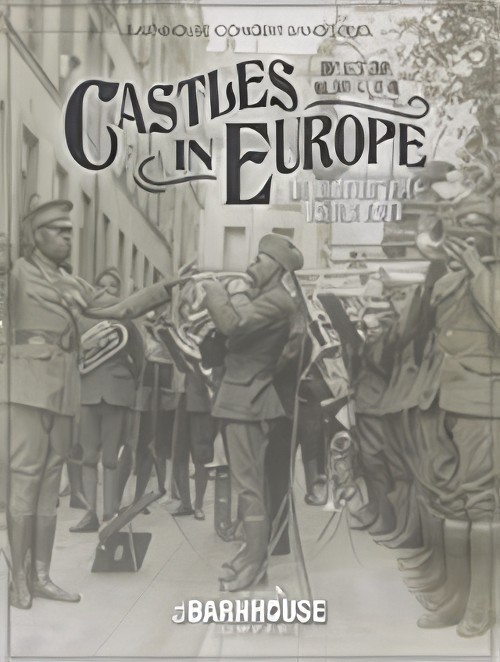
Castles in Europe (Concert Band - Score and Parts) - Europe, James Reese - Wilson, Chandler L.
Composer James Reese Europe, one of the most famous African-American musicians of his day, was called the Martin Luther King of music by pianist Eubie Blake. The first African-American bandmaster in the United States Army, Europe gained great popularity as a dance band leader, a military band leader, recording artist, and a composer of merit. Known in New York music circles, and also for touring Europe with his National Guard band, Europe is remembered today for composing several works, including Castles in Europe with the subtitle, The Innovation Trot - Ragtime March. This delightful work is arranged for today's concert band by Chandler L. Wilson. An enjoyable ragtime work from an American composer to be remembered!Duration: 2.00
Estimated dispatch 7-14 working days
-
 £94.99
O Christmas Tree
The tradition of the Christmas tree in Western Europe dates back to a time long before any Christianization had taken place. During the severely cold winter nights, so it was believed, evil spirits tried to 'kill' nature. Needle-leaved trees were the only ones which kept their green colour throughout the year, and therefore became symbols of immortality. These 'living' trees, said to be the work of benign spirits, were brought into people's houses to ward off evil, life-threatening powers. In the 14th century people first started to decorate Christmas trees. It was a pagan custom, originated by the inhabitants of Alsace. This custom was taken over by the Church inthe course of the 15th and 16th century. At first the decoration consisted mainly of edibles, such as apples and wafers, but later small presents were added. Legend has it that the reformer Martin Luther was the first person to decorate a Christmas tree with candles. The flickering candle flames were meant to create the image of a starry sky in which Christ's apparition could be recognized. The German organ-player Ernst Anschtz from Leipzig was the first person to notate the song 'O Tannenbaum', the melody being a well-known folk song. Next to 'Stille Nacht' 'O Tannenbaum' is the most famous German Christmas song, now known throughout the world. In the United States of America the melody of 'O Tannenbaum' has even been used in four States (among which the State of Maryland) for their State song. In David Well's arrangement the song is first heard as many of us know it. After this introduction, however, it is transformed into a solid rock version, and the beat has been changed. In the second part the familiar three-four time is back, but here the rhythm is different from the original. After the richly ornamented rock beat the basic theme can be heard once again and the composition is concluded in a festive manner.
Estimated dispatch 7-14 working days
-
 £113.30
Moderate Dances - Angelo Sormani
This piece is a tribute to dance music, especially passionate, intense and meditative dance music. "Moderate Dances" is divided into three movements: a "Tango", a "Slow Waltz" and a "Bossa Nova". Each movement and each dance has its own particular characteristics but, when combined, these different rhythmic beats and times give the piece a feeling of completeness and uniformity. The Tango started to flourish in the suburbs of Buenos Aires in around 1880. There is still some doubt as to its origins, which may be Cuban (Habanera) but are probably African. It was most popular in Argentina and Brazil: here the male protagonist was originally the "gaucho" with his inseparable guitar, later to be replaced by the proud, elegant "compadre". By around 1910 the Tango had spread to Italy and France. New clubs opened, where the upper classes could watch and dance the Tango. Here the dance also underwent some rapid transformations. The exaggerated and extravagant gestures and body movements disappeared. Slow, gliding steps replaced the old rotational movements. The women's red ankle-boots and the partners "staring into each other's eyes" accentuated the erotic nature and sensuality of this dance. So much so that, in 1913, the German government banned soldiers from dancing the Tango. Those who broke the law were immediately discharged from the army. From a strictly musical perspective, the basic instruments were a flute, a harp (the diatonic harp typically played by the Indians of Paraguay) and a violin, or flute, guitar and violin or even clarinet, guitar and violin. These instruments were easy to transport, ideal for playing at parties, in the streets and in courtyards. The musicians played by ear, frequently improvising: there were no scores, no records, which is the main reason why it is impossible to trace the Tango back to its exact origins. However, the Tango's evolution (and growing popularity) was once again fostered by its fundamental ability to absorb "other" cultures, languages and sounds. And it was the arrival of the "bandoneon" (an accordion-like instrument that was invented in Germany and brought to Rio de la Plata by some immigrant), which replaced the flute, that marked the beginning of the Tango's huge success outside Argentina. A number of talented composers, above all the great Astor Piazzola (1921-1992), transformed the bandoneon from a simple accompanying instrument to a solo instrument that was to become the distinguishing feature of the 20th century Tango. The Slow Waltz originated from the Waltz, the typical dance of the Bavarian and Tyrolese peasants in the 1700s. It was composers like Johann Strauss, father and son, who carried the Waltz to its zenith in the 1800s, creating the sensual and melancholy yet joyful and charming dance we are all familiar with. When the Waltz first became popular in Germany, the members of respectable society were shocked at the closeness of the dancing partners, who had always previously danced apart. The main difference between the Waltz and Slow Waltz is that the latter has a slower, more expressive rhythm: the men wear tails and the women wear ball gowns decorated with beads and feathers and couples dance in graceful rotational movements. "Bossa Nova" is the title of the last movement in the piece. Jobim, the great Brazilian musician, described this musical genre as a combination of modern Jazz and Samba. Bossa Nova means "new wave". This was the name of the artistic and musical movement that evolved in Brazil in the late Fifties and was extremely popular throughout the Sixties. The songs are usually about love or social matters, drawing inspiration from the slums of Rio De Janeiro and the lives of their inhabitants. Bossa Nova, with its original compositions and the artistic talent of its musicians, also became hugely popular in the United States and Europe, and top Jazz musicians (Ella Fitzgerald, Stan Getz, Bob Cooper, Charlie Bird, Sonny Rollins, Dexter Gordon, Dizzy Gillespie) started to include Bossa in their repertoires.
Estimated dispatch 7-14 working days
-
 £146.30
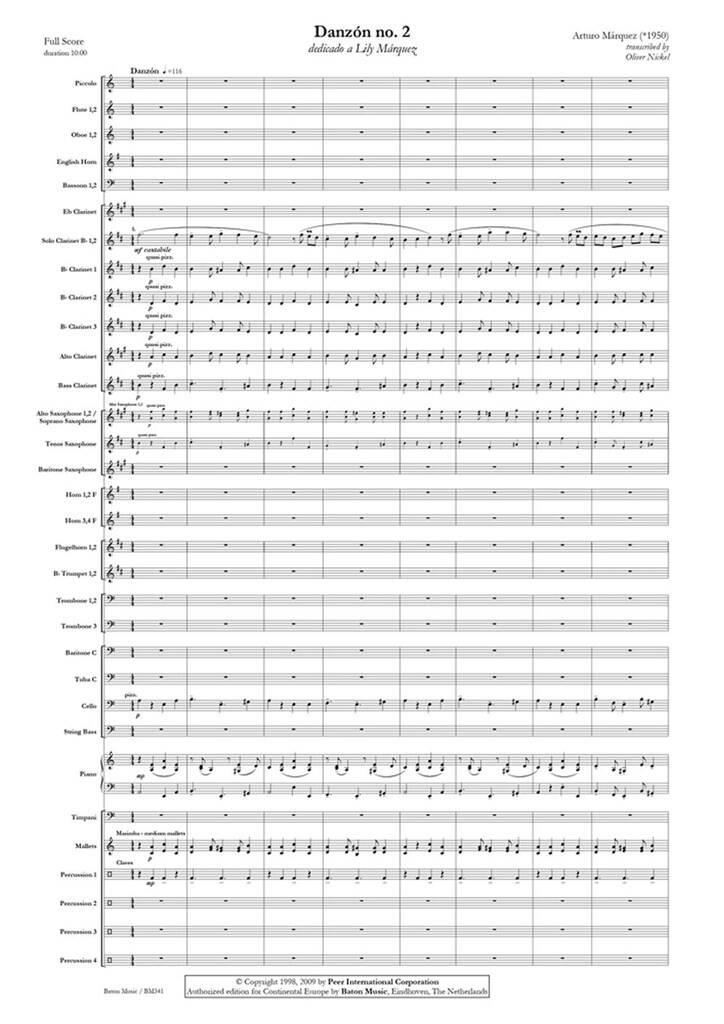
Danzn No. 2 - Arturo Márquez
Danzn no. 2 by the Mexican composer Arturo Mrquez was included on the program of the Simn Bolvar Youth Orchestra of Venuzuela conducted by Gustavo Dudamel on their 2007 tour of Europe and the United States. As a result of the strong public response to the orchestra's performance of the piece, Danzn no. 2 has established itself as one of the signature pieces performed by the orchestra. It has also opened the door for the discovery of other pieces by the composer that are increasingly being performed throughout the world and extensively in Latin America. The arrangement for Symphonic Windorchestra is made by Oliver Nickel.
Estimated dispatch 7-14 working days
-
 £75.00
It Came Upon the Midnight Clear (Concert Band with Optional Choir - Score and Parts) - Noble & Willcocks
It Came Upon the Midnight Clear (1849), sometimes rendered as It Came Upon a Midnight Clear, is a poem and Christmas carol written by Edmund Sears, pastor of the Unitarian Church in Wayland, Massachusetts. Writing during a period of personal melancholy, and with news of revolution in Europe and the United States' war with Mexico fresh in his mind, Sears portrayed the world as dark, full of sin and strife, and not hearing the Christmas message. In Commonwealth countries, the tune called Noel, which was adapted from an English melody in 1874 by Arthur Sullivan, is the usual accompaniment. This tune also appears as an alternative in The Hymnal 1982, the hymnal of the United States Episcopal Church. This arrangement represents one in the Series of Band Arrangements compatible with David Willcocks' Carols for Choirs.
Estimated dispatch 7-14 working days
-
 £49.95
Tu Ungane (Let's Join Together) (Concert Band - Score and Parts) - Watson, Scott
Tu Ungane (Swahili, pronounced TOO une-GAH-nay) means "Let's join together" and refers both to musicians coming together to play as well as African and Western styles merging musically. Western musical styles such as Gospel, Blues, and Jazz owe much to African influence. African music has been influenced by the West as well, fusing British military and brass band music, along with the hymns and songs of missionaries from Europe and the United States, with tribal folk elements. Tu Ungane explores his musical cross-pollination incorporating the Tanzanian folk song "Asali Ya Nyuki" ("Honey of Bees") and original musical material in the style of the British-African fusion.Duration: 2.00
Estimated dispatch 7-14 working days
-
 £50.50
Haven't Met You Yet (Concert Band - Score and Parts)
Haven't Met You Yet is the first single by Canadian jazz singer Michael Buble from his 2009 album, Crazy Love. Since its debut, it has soared the charts in the United States, Europe, Canada, and Australia. Bring the fresh, pop sounds of contemporary crooner Michael Buble to your ensemble with Haven't Met You Yet.Duration: 2.30
Estimated dispatch 7-14 working days
-
 £94.99
O Christmas Tree (Concert Band - Score and Parts) - Well, David
The tradition of the Christmas tree in Western Europe dates back to a time long before any Christianization had taken place. During the severely cold winter nights, so it was believed, evil spirits tried to 'kill' nature. Needle-leaved trees were the only ones which kept their green colour throughout the year, and therefore became symbols of immortality. These 'living' trees, said to be the work of benign spirits, were brought into people's houses to ward off evil, life-threatening powers. In the 14th century people first started to decorate Christmas trees. It was a pagan custom, originated by the inhabitants of Alsace. This custom was taken over by the Church in the course of the 15th and 16th century. At first the decoration consisted mainly of edibles, such as apples and wafers, but later small presents were added. Legend has it that the reformer Martin Luther was the first person to decorate a Christmas tree with candles. The flickering candle flames were meant to create the image of a starry sky in which Christ's apparition could be recognized. The German organ-player Ernst Anschutz from Leipzig was the first person to notate the song 'O Tannenbaum', the melody being a well-known folk song. Next to 'Stille Nacht' 'O Tannenbaum' is the most famous German Christmas song, now known throughout the world. In the United States of America the melody of 'O Tannenbaum' has even been used in four States (among which the State of Maryland) for their State song. In David Well's arrangement the song is first heard as many of us know it. After this introduction, however, it is transformed into a solid rock version, and the beat has been changed. In the second part the familiar three-four time is back, but here the rhythm is different from the original. After the richly ornamented rock beat the basic theme can be heard once again and the composition is concluded in a festive manner.Duration: 3:15
Estimated dispatch 7-14 working days
-
 £10.95
DEEP RIVER (Programme Concert Band Extra Score) - Geldard, Bill
Extra Score. Deep River was first published in 1875 and was made popular by a small choir from Fisk University in Nashville, Tennessee, who performed across the United States and Europe. For this arrangement, Bill Geldard draws on his vast experience in the world of Big Bands and this brings back memories of the 20's and 30's style, particularly the likes of Duke Ellington and Count Basie. Duration 4:56
Estimated dispatch 7-14 working days
-
£54.95
DEEP RIVER (Programme Concert Band) - Geldard, Bill
Deep River was first published in 1875 and was made popular by a small choir from Fisk University in Nashville, Tennessee, who performed across the United States and Europe. For this arrangement, Bill Geldard draws on his vast experience in the world of Big Bands and this brings back memories of the 20's and 30's style, particularly the likes of Duke Ellington and Count Basie.
Estimated dispatch 7-14 working days
 View Music