
Results
-
 £129.99
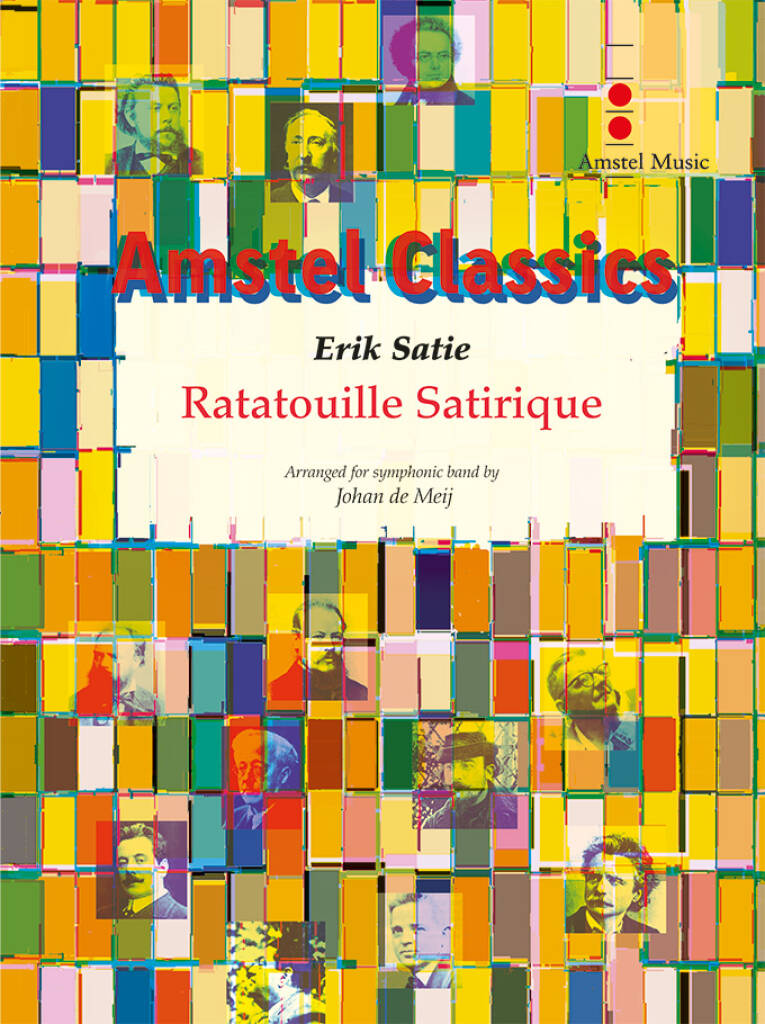
Ratatouille Satirique
Erik Satie, born in Honfleur in Normandy (France) in 1866 is undoubtedly one of the most striking personalities in the history of French music. He composed in various, often quite divergent, styles. Besides light-hearted, entertaining works he also wrote several serious compositions, among which the three ballets: Parade, Rel che and Les Aventures de Mercure. However his piano pieces, such as Trois Gymnopdies or Gnossiennes will remain his most popular compositions. Satie co-operated with almost all great artists of his time: Pablo Picasso, Jean Cocteau, Sergej Diaghilev and Georges Braque and the composers Darius Milhaud (Le Groupe des Six) and Claude Debussy. Johan deMeij made an orchestration of three short pieces by Erik Satie: I. Prlude (from: Jack in the Box) II. Rverie (from: Trois petites pices montes) III. Marche: Le Piccadilly (1904) It was only after Satie's death in 1925 that the manuscript of the piano piece Jack in the Box was recovered. Satie himself thought he had lost the manuscript in a bus. When his flat in Arceuil was cleaned out, a small notebook was discovered behind his piano and it contained the manuscript which was assumed to be lost forever. The Rverie (De l'Enfance de Pantagruel) is an extract from Trois petites pices montes, originally composed for small symphony orchestra. In this suite it is meant as a restful intermezzo. It is clear that, as with Milhaud (La Cration du Monde) and Debussy (Golliwogg's Cakewalk; Le Petit Ngre), it is hard to deny obvious influences of jazz music in Erik Satie's compositions. Le Piccadilly, dating from 1904, displays a lot of similarities with the compositions of Scott Joplin.
Estimated dispatch 7-14 working days
-
£69.00
Alegria - Cirque du Soleil
Estimated dispatch 7-14 working days
-
£115.60
Marche pour la crmonie des Turcs - Jean-Baptiste Lully
Jean-Baptiste Lully (1632-1687) moved from Italy to Paris and started as a kitchen boy. Alongside he also composed music and was a dancer and actor. He soon became leader of the court orchestra, and wrote music for the parties at the court. At aconcert in 1687 he hit his foot with his conductor pole, got gangrene in the wound and died three months later. Lully is the first known composer of French baroque operas and had great influence on the development of the European music towards theend of the 1600s. Turkish march is used in the 1991 movie "All the mornings of the world" (Tous les matins du monde) starring Grard Depardieu. The action takes place in France in seventeenthcentury where we follow the relationship between the violplayer Marin Marais and his mentor Sainte Colombe.
Estimated dispatch 7-14 working days
-
£144.99
Variations On A French Folksong - Franco Cesarini
The variation form is one of the oldest and most fundamental forms of musical technique. Franco Cesarini has chosen the well known French folk melody, Sur le pont d'Avignon as the basis for this piece. The piece begins with a short introduction followed by the exposition and ten lively and contrasting variations. The final reminder of the main theme also included references to the famous French nursery songs J'ai du bon tabac and Alouette, which bring the work to an expressive and brilliant close.
Estimated dispatch 7-14 working days
-
 £104.99
Famous German Christmas Songs
Most of the German carols that are still popular today date from the period between the 17th and the early 19th centuries. Thus, only very few modern musical approaches to these songs can be found. Stefan Schwalgin has taken the opportunity to give five well-known German Christmas melodies a new sound in this colourful modern arrangement. Contains: Silent Night, Ihr Kinderlein kommet, Zu Bethlehem geboren, Alle Jahre wieder and O du frhliche. At a little bit of German Christmas spirit with this beautiful medley.
Estimated dispatch 7-14 working days
-
 £102.99
Variations on an Austrian Folksong - Gerald Oswald
Hot off the press! Composer Gerald Oswald bases this new work on an old Austrian folksong, O du lieber Augustin! The Augustin in questions is a ballad singer and an ad lib poet who apparently wrote this folksong about himself. His grim sense of humour and his attitude towards life, that humour can get you through anything, are readily apparent in this new piece. Gerald Oswald's Variations on an Austrian Folk Song received top honours at the 2010 Austrian Composition Contest.
Estimated dispatch 7-14 working days
-
 £129.99
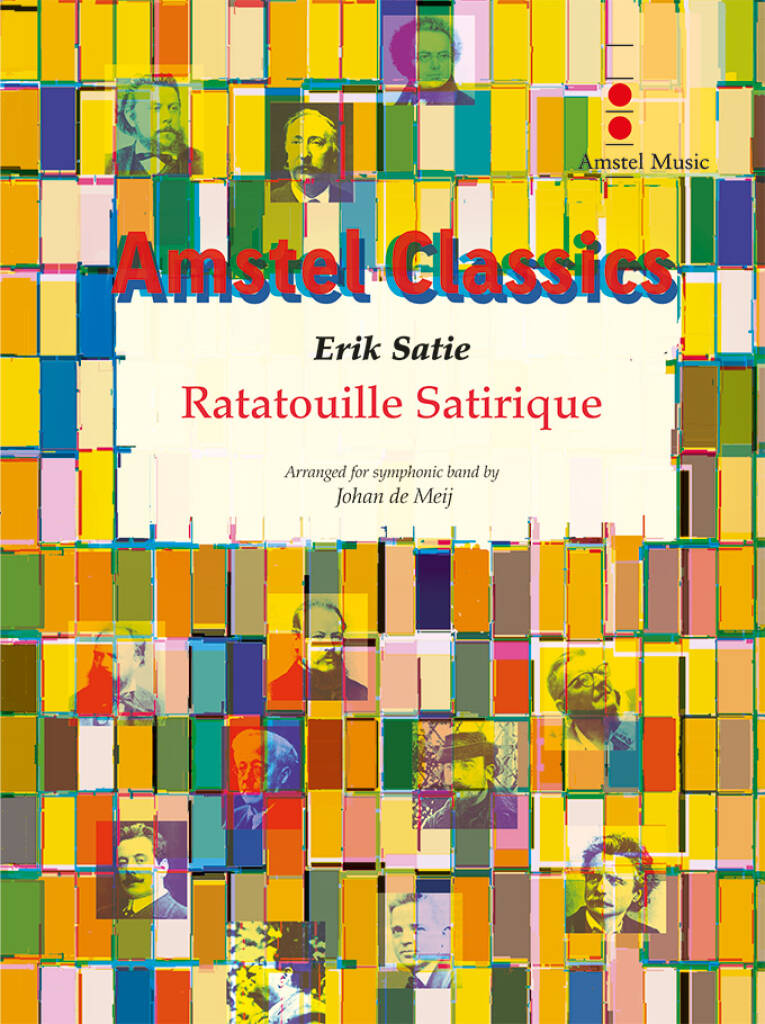
Ratatouille Satirique - Traditional
Erik Satie, born in Honfleur in Normandy (France) in 1866 is undoubtedly one of the most striking personalities in the history of French music. He composed in various, often quite divergent, styles. Besides light-hearted, entertaining works he also wrote several serious compositions, among which the three ballets: Parade, Rel che and Les Aventures de Mercure. However his piano pieces, such as Trois Gymnopdies or Gnossiennes will remain his most popular compositions. Satie co-operated with almost all great artists of his time: Pablo Picasso, Jean Cocteau, Sergej Diaghilev and Georges Braque and the composers Darius Milhaud (Le Groupe des Six) and Claude Debussy. Johan deMeij made an orchestration of three short pieces by Erik Satie: I. Prlude (from: Jack in the Box) II. Rverie (from: Trois petites pices montes) III. Marche: Le Piccadilly (1904) It was only after Satie's death in 1925 that the manuscript of the piano piece Jack in the Box was recovered. Satie himself thought he had lost the manuscript in a bus. When his flat in Arceuil was cleaned out, a small notebook was discovered behind his piano and it contained the manuscript which was assumed to be lost forever. The Rverie (De l'Enfance de Pantagruel) is an extract from Trois petites pices montes, originally composed for small symphony orchestra. In this suite it is meant as a restful intermezzo. It is clear that, as with Milhaud (La Cration du Monde) and Debussy (Golliwogg's Cakewalk; Le Petit Ngre), it is hard to deny obvious influences of jazz music in Erik Satie's compositions. Le Piccadilly, dating from 1904, displays a lot of similarities with the compositions of Scott Joplin.
Estimated dispatch 7-14 working days
-
 £102.99
Michel Sardou
This medley consists of the finest songs by Michel Partout, being "La bataille", "Une fille aux yeux clairs" and "Les lacs du Connemara".
Estimated dispatch 7-14 working days
-
£202.99
Ponyo on a Cliff by the Sea - Joe Hisaishi
The sound track ofPonyo on a Cliff by the Seaincludes a number of famous and familiar melodies as parody. I arranged it to exaggerate the fun-ness. "Deep Sea Ranch" from the film's beginning is reminiscent of Ravel's Lever du jour (Daphnis et Chlo); "Flight of Ponyo" with Wagner'sRide of the Valkyries, and "Mother of the Sea" with Jean Paul Martini'sPlaisir d'amour. The arrangement is enjoyable for movie fans as well as classic music fans. The main themePonyo on the Cliff by the Seaconcludes in lively march style. Harp can be omitted as needed and is written at medium grade level for school band. (Yo Goto)
Estimated dispatch 7-14 working days
-
 £264.99
Pome Montagnard - Jan Van der Roost
Jan Van der Roost received the commission for this work from the 'Orchestre d'Harmonie du Val d'Aoste' and dedicated the composition to Lino Blanchod, the conductor of the orchestra. The first performance was on 26th January 1997 by the orchestra itself and under the direction of the composer. This extensive symphonic poem depicts the atmosphere and history of the autonomous French speaking region 'Val d'Aoste' in northern Italy, and is meant as a musical homage to the historical figure Cathrine de Challant.The opening of this piece describes the rugged nature of this region dominated by Mont Blanc, the roof of Europe. A brief, combative passage conjures up the numerous warsfought here through the ages, later expanding into a surprising 'Renaissance Dance' with an original and fitting recorder quartet. A broad, lyrical theme portrays the love that has always played an important role here. After recapturing several of the earlier themes, the piece closes with the renaissance dance, this time played by the brass. A spectacular finale brings this symphonic poem to a close.
Estimated dispatch 7-14 working days
 View Music