
Results
-
 £141.99
Shaker Heights Fantasy (Concert Band - Score and Parts) - Sparke, Philip
The Shakers were a sect who, in the 18th Century, sailed out from England to America. Right into the late 19th Century, the numerous songs of this community were handed down orally, until they were written down in various volumes of song collections. Philip Sparkes fantasy for wind band is based on a selection of these beautiful, captivatingly simple songs.Duration: 9:30
Estimated dispatch 7-14 working days
-
 £79.95
Variations on 'Was Lebet' (Concert Band - Score and Parts) - Wainwright, Andrew
Variations on 'Was Lebet' is based on the German chorale of the same name, the first line of which translates as 'O worship the Lord in the beauty of holiness!' The opening fanfare figure in the Trumpets should be supported by bold, organ-like sostenuto chords in the lower band. Ensure that the fanfare in the Trumpets and Trombones from bars 25 to 28 is given equal articulation and volume in the antiphonal parts. After this majestic introductory section, the first of five contrasting variations is presented, although the tune is never realised in full form until the final variation, with fragments gradually being revealed as the piece progresses.Variation I is somewhat classical in approach, with its energy coming from a regular contrast between cantabile references to the theme, set against lively staccato figures. Ensuring a lightness of touch will be important here; the music should be poised and never sound frantic. As a result, careful attention should be paid to the tempo marking, being no quicker than 136 beats per minute. Snippets of the chorale come and go, with the last phrase of the hymn completing the movement. This final statement, at bar 95, should be an immediate change in tempo and a separate statement to the music that comes before.Variation II is plaintive in mood, giving the listener the chance to reflect on the following words, which form part of the second verse: 'Comfort thy sorrows and answer thy prayerfulness, Guiding thy steps as may best for thee be.' There is opportunity for rubato in this movement, at the discretion of the conductor.Variation III is somewhat quirky and volatile in nature, and takes its inspiration from the 3rd and 4th verses which describe the fearful times in life that we must entrust to the Lord. Driven by the Percussion section in particular, there are references here to Variation I with its chorale-like figures and hurtling scalic figures, and there is a feeling of a lack of resolution. A somewhat abrupt ending suggests that our sense of completeness in Christ is yet to be resolved. It is important that clarity and tempo are maintained in the bass line between sections L and M. Aim for consistency of line in the bass parts, particularly with the trade-offs between players here.There is a French romantic feel to the waltz in Variation IV, with the opportunity for various soloists to display their musicianship. A sense of ironic humour pervades throughout. The Clarinet and Bassoon duet from section U should be playful and display a lightness of touch, with that sense of style continued throughout the movement.Variation V is fugal in nature, with each section of the band being handed the theme at various points. Again it is important that a steady tempo is set at Y in order to maintain control. The sense of momentum gradually increases to a grandiose presentation of the full theme, beginning at section CC, affirming our completeness in the Lord, with the words of the first and last verses reiterated: O worship the Lord in the beauty of holiness! Bow down before him, his glory proclaim; With gold of obedience and incense of lowliness, Kneel and adore him, the Lord is his name.Duration: 11.45
Estimated dispatch 7-14 working days
-
 £15.95
Variations on 'Was Lebet' (Concert Band - Score only) - Wainwright, Andrew
Variations on 'Was Lebet' is based on the German chorale of the same name, the first line of which translates as 'O worship the Lord in the beauty of holiness!' The opening fanfare figure in the Trumpets should be supported by bold, organ-like sostenuto chords in the lower band. Ensure that the fanfare in the Trumpets and Trombones from bars 25 to 28 is given equal articulation and volume in the antiphonal parts. After this majestic introductory section, the first of five contrasting variations is presented, although the tune is never realised in full form until the final variation, with fragments gradually being revealed as the piece progresses.Variation I is somewhat classical in approach, with its energy coming from a regular contrast between cantabile references to the theme, set against lively staccato figures. Ensuring a lightness of touch will be important here; the music should be poised and never sound frantic. As a result, careful attention should be paid to the tempo marking, being no quicker than 136 beats per minute. Snippets of the chorale come and go, with the last phrase of the hymn completing the movement. This final statement, at bar 95, should be an immediate change in tempo and a separate statement to the music that comes before.Variation II is plaintive in mood, giving the listener the chance to reflect on the following words, which form part of the second verse: 'Comfort thy sorrows and answer thy prayerfulness, Guiding thy steps as may best for thee be.' There is opportunity for rubato in this movement, at the discretion of the conductor.Variation III is somewhat quirky and volatile in nature, and takes its inspiration from the 3rd and 4th verses which describe the fearful times in life that we must entrust to the Lord. Driven by the Percussion section in particular, there are references here to Variation I with its chorale-like figures and hurtling scalic figures, and there is a feeling of a lack of resolution. A somewhat abrupt ending suggests that our sense of completeness in Christ is yet to be resolved. It is important that clarity and tempo are maintained in the bass line between sections L and M. Aim for consistency of line in the bass parts, particularly with the trade-offs between players here.There is a French romantic feel to the waltz in Variation IV, with the opportunity for various soloists to display their musicianship. A sense of ironic humour pervades throughout. The Clarinet and Bassoon duet from section U should be playful and display a lightness of touch, with that sense of style continued throughout the movement.Variation V is fugal in nature, with each section of the band being handed the theme at various points. Again it is important that a steady tempo is set at Y in order to maintain control. The sense of momentum gradually increases to a grandiose presentation of the full theme, beginning at section CC, affirming our completeness in the Lord, with the words of the first and last verses reiterated: O worship the Lord in the beauty of holiness! Bow down before him, his glory proclaim; With gold of obedience and incense of lowliness, Kneel and adore him, the Lord is his name.Duration: 11.45
Estimated dispatch 7-14 working days
-
 £205.70
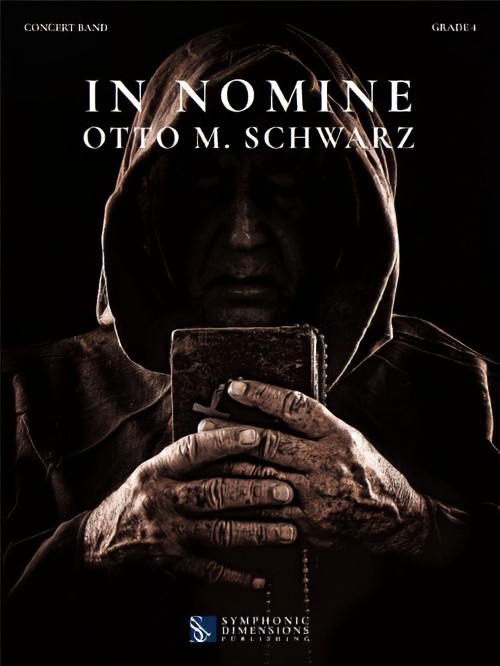
In Nomine (Concert Band - Score and Parts) - Schwarz, Otto M.
How often has something been justified by, declared to be, or blessed as 'in the name of' some cause or other? How can it be that opposing armies and the use of weapons are ever 'in the name of...'? This is a common thread in the history of different faiths. Good was created but evil was committed and all 'in the name of...' This thread is also found in the history of the Premonstratensian Abbey at Wadgassen. The abbey was built in the 12th century on unfertile, desolate moorland, which later evolved into the most powerful religious community in the Saarland. The history of the abbey records quite astounding achievements under the motto desertum florebit quasi lilium ('the desert will bloom like a lily'); but also the harsh treatment of delinquents. The order had its own school, in which children were taught the seven liberal arts (which included music as well as geography and astronomy), but the poor were left to starve outside the abbey walls and were only allowed to eat from the members' leftovers on feast days. The medieval witch trials demanded their pound of flesh, and one group that fell victim were ecstatic dancers who moved wildly to music, which was interpreted as the devil's work. The result: a show trial that sentenced the dancers to death by fire. All in the name of... The year is 1789: Abbot Bordier is in the tenth year of his command. He does not yet know that he is to be the last abbot of an almost 700-year tradition. Not far from the abbey is the French border, which has long been making itself felt with the sound of gunfire, and the brothers continue to keep a nervous eye on it. The first portents of the French Revolution loom, but no one wants to believe it, that is, until the French pound the door down, storm the abbey and come right into the brothers' chambers. In a blind fury, all the pipes of the abbey organ are torn out, icons beheaded with swords and brothers beaten death while numerous buildings are set on fire. The abbey church is in flames. A frantic and desperate escape begins. Abbot Bordier and a handful of brothers make their getaway via the River Saar, adjacent to the abbey, to the neighbouring village of Bous. They survive, but their life, the Premonstratensian abbey, is destroyed. While they flee towards Prague and the sanctuary of the Strahov Monastery, the abbey at Wadgassen is razed to the ground and becomes a stone quarry. The desert blooms once more, however. A few short decades later, a glasswork arises from the foundations of the abbey. As peace returns to the region, it brings jobs and a new vision for its people.Duration: 11.15
Estimated dispatch 7-14 working days
-
 £191.30
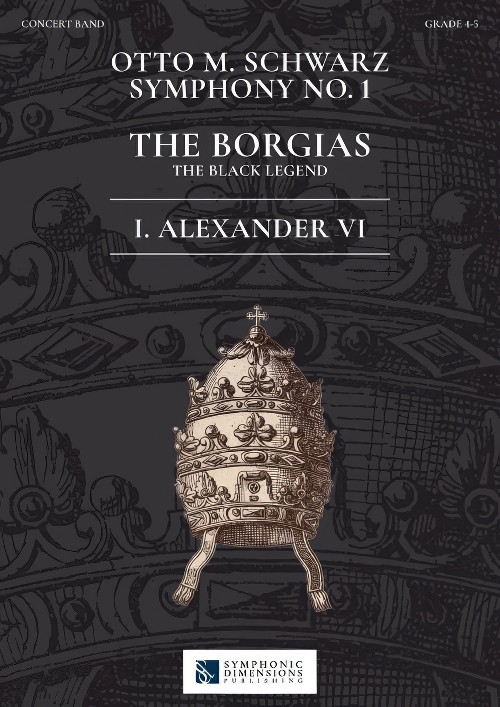
Alexander VI (Movement I from Symphony No.1, The Borgias) (Concert Band - Score and Parts) - Schwarz, Otto M.
The Borgia family is the subject of a so-called black legend, a pejorative term that has been used since the Middle Ages to refer to Spain and Spaniards. The Borgias' black legend is one of corruption, abuse of power, orgies, sex and murder. These rumours spread especially during the reign of Pope Alexander VI, a member of the family. Alexander was even referred to as the Antichrist. According to eyewitnesses, when he died Satan prowled the death chamber and a black dog, an envoy of the Devil, ran up and down the aisles of the Vatican. The brutal rule of Pope Alexander and his family led to a kind of demonization of the Borgia family. But it is precisely the lack of scruples, the brewing of poisons, the incest and various cruelties that continue to hold a certain fascination for us.Alexander VI: Rodrigo Borgia was born in 1431 near Valencia. He studied law in Bologna and, through his uncle Pope Calixtus III, he rose through the church hierarchy. As vice-chancellor of the Holy Roman Catholic church, he became one of the richest men in Europe. As a cardinal he fathered four children who he later legitimised when he became pope. His election to the papacy was funded by the sale of offices, extortion and bribes of all kinds. Through an alliance with Ascanio Sforza he was elected pope on August 11 1492 and named himself from then on Alexander VI, an allusion to Alexander the Great.Duration: 9.30
Estimated dispatch 7-14 working days
-
 £421.99
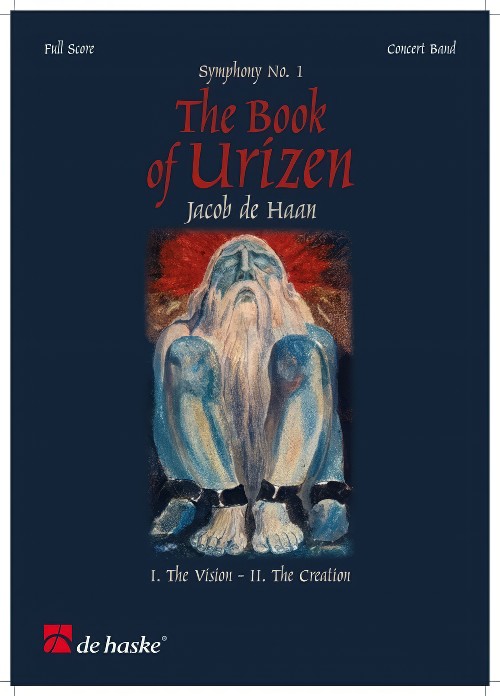
The Book of Urizen (Movements I: The Vision and II: The Creation) (Soprano, Narrator and Concert Band - Score and Parts) - De Haan, Jacob
The Book of Urizen is a work for concert band, solo soprano, and a male narrator in which sound collages of religious expressions are used. The piece is inspired by the compelling visionary poem of the same name (which the poet illustrated himself) by the Englishman William Blake (1757-1827), who occupies a unique position in western literature and the visual arts. He was not just a poet and a writer, but he was also a graphic artist, a painter, an illustrator, a spiritualist, a religious visionary, and a mystic philosopher. For the performance of this work, a professional sound system, including two microphones and a CD player, is needed. The three sound collages are three separate tracks on the enclosed CD and can be played easily at the right moment.The Book of Urizen bears resemblance to Genesis and Exodus, of which the contents form the basis of the Christian, Jewish, and Islamic faith. Blake adhered to the principle that all religions are in fact one, and that deities reside in human beings. In The Book of Urizen this is represented in "The Net of Religion," which is spanned over the earth by Urizen. The sound collages, compiled by Jacob de Haan in the studio, find their origin in Jerusalem, the Holy City, where the afore-mentioned faiths come together.In the first movement of this composition, The Vision, Urizen prepares his vision of the world, and he presents this to the "Eternals." His vision is rejected, and Urizen locks himself up in his own abstract world. When he does emerge again, he is confronted with rage by the gathered Eternals. Urizen flees the wrath of the Eternals, "the flames of eternal fury," and enwombs himself in his own world. When the Eternals see Urizen in his "stony sleep," they wonder if this is death. The blacksmith Los is torn by grief because of the isolation of Urizen. It brings him to rouse his fires, prepare his forge, and to give Urizen's world concrete form.In the second movement, The Creation, Urizen's world, but also man, woman, and child are created. Los is horrified with the appearance of Urizen's body. He mourns and pities Urizen, and from his blood a female form comes into being, with the name Enitharmon. The Eternals, fearful of the female form, decide to erect a tent to obstruct their view to eternity. Enitharmon and Los beget a son, called Orc. Los baptizes him as a child of the "fallen world." Orc is fed at Enitharmon's breast, which makes a girdle of jealousy restrict Los' chest. He takes the child to the top of the mountain and chains him down. The cries of Orc awaken Urizen, who explores his world creating instruments of scientific measurement to do so. Los encircles the face of Enitharmon from the sight of Urizen and Orc. She then populates the earth by giving birth to an enormous race.The Web, the third movement of The Book of Urizen, is available in a separate set.
Estimated dispatch 7-14 working days
-
 £164.95
Euphonium Concerto (Concert Band - Score and Parts) - Ellerby, Martin
This Euphonium Concerto was written between late 1994 and early 1995 in response to a commission from Steven Mead to whom the work is dedicated. It is cast in four movements and lasts a little over 22 mins:I. Fantasy: After the briefest of introductions, the solo euphonium enters with the key melodic phrase of the movement in a fast 'Tempo I'. This idea is developed up to the point where a slower 'Tempo II' breaks the argument - here the mood is reflective but it is only to be a brief interruption as 'Tempo I' returns very quickly. The opening material is then subjected to further transformation with 'Tempo II' making occasional returns en route, the distances between the contrasting tempi becoming ever closer, and the movement closes in a rather soft though definite manner.II. Capriccio: This relatively short presto movement forms a bridge between the first movement and the work's slow movement. The majority of the band parts are bright and muted with the percussion players enhancing the texture with contributions from xylophone, glockenspiel and vibraphone. Again the initial solo euphonium phrase provides the basis for almost all the movement's material. This is extremely virtuosic for the soloist and band alike and makes great play of the rhythmic possibilities of combining simple and compound music either in close proximity or together.III. Rhapsody (for Luis): A Lento movement, sitting between two different but essentially rapid ones, this provides the work's emotional core exploiting the soloist's cantabile qualities in an almost seamless fashion. Again, as will all the work's movements, the initial idea paves the way for subsequent development, eventually culminating in a passionate climax; thereafter it winds down with an affectionate backward glance towards the close of the the slow movement of the Euphonium Concerto of Joseph Horovitz, whose mark had been made indelibly on the euphonium repertoire. This movement is dedicated to Luis Maldonado who set the full score of the brass version before his untimely death.IV. Diversions: The work's variation finale is cast in 3/4 throughout though the barline is often a guideline and was seen by the composer as a challenge of metrical restraint! There is an obvious jazz feel to this movement (both rhythmically and harmonically) with a swaggering ritornello theme first announced by the solo euphonium. Thereafter follows a series of interludes and 'adjusted' returns of the main theme. A lyrical idea is allowed to enter but the underlying momentum is ever present. The band also contributes to the interludes and eventually the tempo increases towards a 'wild' and absolute conclusion.Duration: 22.30Recorded on QPRM143D Dreamscapes, Royal Northern College of Music Wind Orchestra
Estimated dispatch 7-14 working days
-
£32.95
Euphonium Concerto (Concert Band - Score only) - Ellerby, Martin
This Euphonium Concerto was written between late 1994 and early 1995 in response to a commission from Steven Mead to whom the work is dedicated. It is cast in four movements and lasts a little over 22 mins:I. Fantasy: After the briefest of introductions, the solo euphonium enters with the key melodic phrase of the movement in a fast 'Tempo I'. This idea is developed up to the point where a slower 'Tempo II' breaks the argument - here the mood is reflective but it is only to be a brief interruption as 'Tempo I' returns very quickly. The opening material is then subjected to further transformation with 'Tempo II' making occasional returns en route, the distances between the contrasting tempi becoming ever closer, and the movement closes in a rather soft though definite manner.II. Capriccio: This relatively short presto movement forms a bridge between the first movement and the work's slow movement. The majority of the band parts are bright and muted with the percussion players enhancing the texture with contributions from xylophone, glockenspiel and vibraphone. Again the initial solo euphonium phrase provides the basis for almost all the movement's material. This is extremely virtuosic for the soloist and band alike and makes great play of the rhythmic possibilities of combining simple and compound music either in close proximity or together.III. Rhapsody (for Luis): A Lento movement, sitting between two different but essentially rapid ones, this provides the work's emotional core exploiting the soloist's cantabile qualities in an almost seamless fashion. Again, as will all the work's movements, the initial idea paves the way for subsequent development, eventually culminating in a passionate climax; thereafter it winds down with an affectionate backward glance towards the close of the the slow movement of the Euphonium Concerto of Joseph Horovitz, whose mark had been made indelibly on the euphonium repertoire. This movement is dedicated to Luis Maldonado who set the full score of the brass version before his untimely death.IV. Diversions: The work's variation finale is cast in 3/4 throughout though the barline is often a guideline and was seen by the composer as a challenge of metrical restraint! There is an obvious jazz feel to this movement (both rhythmically and harmonically) with a swaggering ritornello theme first announced by the solo euphonium. Thereafter follows a series of interludes and 'adjusted' returns of the main theme. A lyrical idea is allowed to enter but the underlying momentum is ever present. The band also contributes to the interludes and eventually the tempo increases towards a 'wild' and absolute conclusion.Duration: 22.30Recorded on QPRM143D Dreamscapes, Royal Northern College of Music Wind Orchestra
Estimated dispatch 7-14 working days
-
 £137.99
Theme Park Fun! Wind Band Set (Score & Parts)
In Theme Park Fun! your orchestra pays a visit to an amusement park. During your visit, you will experience some spectacular rides and attractions this theme park offers. The uniqueness of Theme Park Fun! is the interplay between music and (moving) images. Animations and illustrations support the visual composition.Part 1: The Entrance & Parade [with animation]The opening of the park is a fact. A day full of fun and pleasure awaits! You and the other visitors will be confronted with all the rides, attractions and adventures the theme park has to offer. Which ride shall we do first?! There is so much to do and experience on this day in the park! A parade of colorful floats and park figures is passing by.Let the fun begin!Part 2: The Haunted House [with animation]The only ride in the park that is not related to fun, is the Haunted House. Here visitors will be challenged to visit a house full of ghosts, creepy figures and other ominous things. The clock strikes twelve, there is no turning back. Ghosts are whispering, yelling, screaming... Fortunately it is almost one oclock, so we can leave this creepy place quickly.Part 3: The Swinging Galleon [with illustrations]What a huge pirate ship! Each time you swing back and forth, you will feel that weird feeling in your stomach. When you are thrown completely into the top you will have a fantastic view over the park, but you can not enjoy it for long. Before you know the ship swings back the other way.Part 4: The Fairy Tale Ride [with illustrations]After all those exciting and spectacular rides and attractions, it is time for a peaceful tour in The Fairy Tale Ride. Surrounded by a fairytale setting, you will discover fable figures, talking animals and colorful designs. Such a beauty and tranquility. Having had this experience, we are ready again for the big rides in the park!Part 5: The Bumper Cars [with illustrations]Now its time to crawl behind the wheel of the Bumper Cars! Shall we all chase the conductor?! Before you know you are hit by another visitor or you will bump against someone else. In this tough ride you can prove yourself as a real driver, or perhaps as a really bad one.Part 6: The Roller Coaster [with illustrations]The largest, fastest and scariest ride in the park ... we should definitely do the Roller Coaster! All together in the train, the over-the-shoulder restraints are lowering... be ready to ride. The train leaves the station and is heading for the big lift hill. It will be very scary when the train reaches the top and the train will be plunged down the first drop! Loops, corkscrews and other spectacular coaster elements will follow... Before you know it, the ride of your life is over. Shall we ride it again?!Part 7: Leaving the Park [with animation]Unfortunately everything comes to an end. This day in the theme park is over, but we have a lot new experiences to talk about! The memories of all the funny and spectacular rides will come up when we walk through the park to the exit. Just one look over the shoulder, the amusement park figures are waving at us. Hopefully we will come back again soon! 14:30
Estimated dispatch 7-14 working days
-
 £242.50
Labyrinth for Symphonic Band (Concert Band - Score and Parts) - Aagaard-Nilsen, Torstein
I wrote Labyrinth to celebrate the 450th anniversary for the city of Fredrikstad. The Danish king Fredrik II agreed to establish a new town further down the river Glomma, to make it easier to defend from the Swedes. The piece is a network of quotations mixed with my own pitch material. My versions of the quoted melodies are not authentic, and sometimes hard to recognize. However, the different quotations give the music an aura of tonality. For example, a dance tune composed by the Flemish composer Mattheus Le Maistre (1505-1577). The melody also occurs in the first danish book of hymns written after the reformation. Since Norway for 400 years was a part of Denmark and everybody had to write and read Danish, they used much of the same music, too. I also use regular Danish hymn tunes and quote from a religious folk song from the area around Fredrikstad. The military signals I use are authentic (for example, The Old Danish March), and I am very sure they were used in the Old Town (the fortress) of Fredrikstad. The drums quote from The Downfall of Paris. This could have been heard played by professional soldiers hired by the Swedes from Scotland. This edition is a revised version made in 2020. - Torstein Aagaard-Nilsen. Duration: 23.00
Estimated dispatch 7-14 working days
 View Music