
Results
-
 £87.95
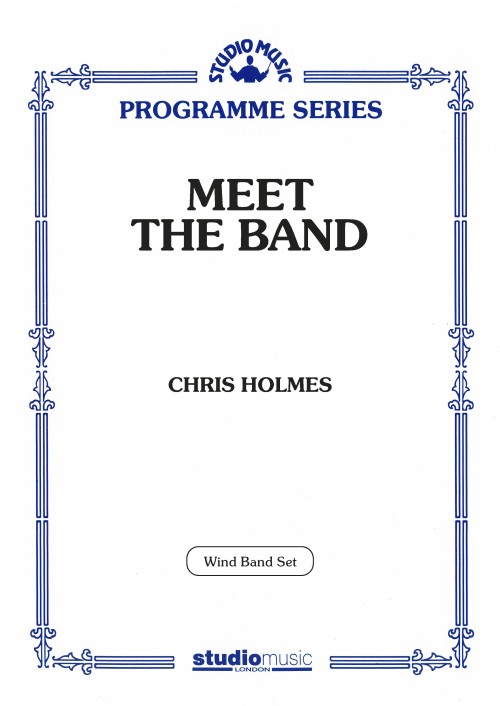
Meet the Band (Concert Band - Score and Parts) - Holmes, Chris
Meet the Band was composed in August 2023 and is written to showcase and contrast, in varying styles, the sound and textures of the different instrument groups in a Concert Band.It was first performed in April 2024 by Salisbury Concert Band, conducted by the composer.Includes:The High WoodwindsThe Low Woodwinds and SaxophonesHorns, Trumpets and Tenor TrombonesLow Brass and Percussion (and Finale)
Estimated dispatch 7-14 working days
-
 £84.99
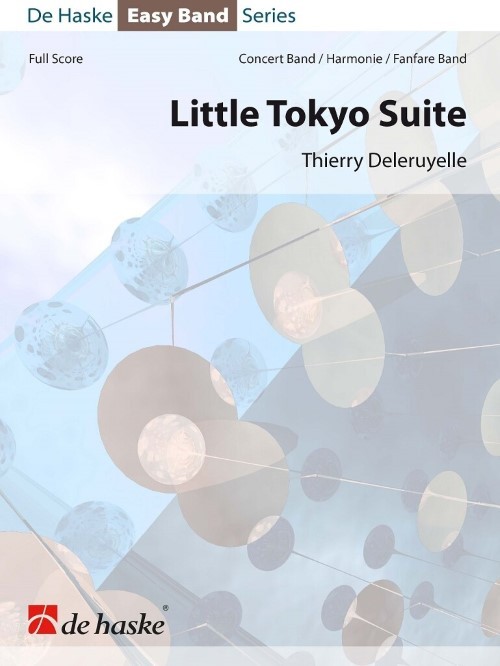
Little Tokyo Suite (Concert Band - Score and Parts) - Deleruyelle, Thierry
Little Tokyo Suite is a work in three movements for wind ensemble, with a flexible 10-part orchestration suitable for concert band or fanfare band. It portrays the "Japantowns" established by Japanese emigrants around the world. They are often called "Little Tokyo", in reference to the capital of Japan. The three movements each focus on a region with such a Japanese community. This suite is dedicated to the concert band of the conservatory of the 12th arrondissement of Paris, whose conductor is a lover of Japanese culture, and to Mochizuki Junior High School, Saku City (Nagano, Japan).Duration: 7.15
Estimated dispatch 7-14 working days
-
 £150.00
Keys To Success: Sonority and Technique (Concert Band - Score and Parts)
A significant addition to your concert band folders, "Keys To Success" is a daily approach to developing stellar sonority and technique with your ensemble. Combining traditional long tone and technique exercises/studies with original chorales, this is a rich resource that has been proven in the classroom over many years. Detailed teaching notes to the conductor are included providing invaluable information beyond most band technique books. Directors are encouraged to listen to the publisher-provided demonstration recording featuring a high school band who has used Keys To Success for years in the development of their ensembles from grades 9-12. A cost effective and teaching-focused resource for all concert bands! Duration: 15.30
Estimated dispatch 7-14 working days
-
 £46.50
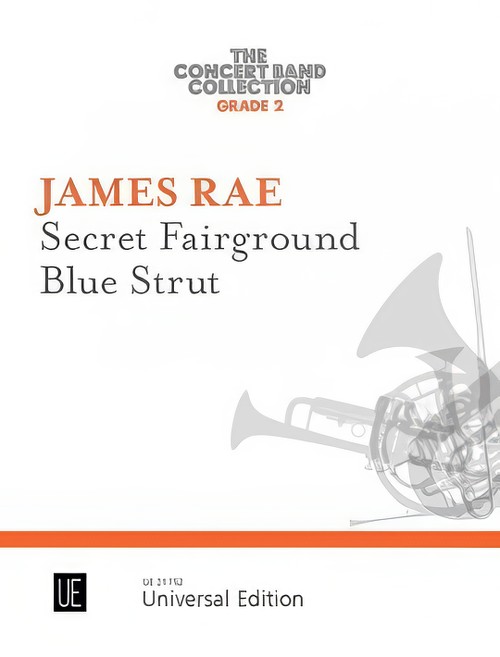
Secret Fairground & Blue Strut (Concert Band - Score and Parts) - Rae, James
James Rae is the man who put fun into woodwind and brass teaching. His many compositions, especially in the jazz and blues idioms, have often featured on examination syllabuses. Recent years have seen his publications of easy flexible ensembles for younger players and now he turns his attention to the wind band. In this series "The Concert Band Collection", he has written exciting new pieces for the standard concert band line up. Attention is given to each instrument so that the technical and musical requirements do not exceed UK Grade 2.5. An optional piano part will provide "stuffing" and moral support for the young players who will quickly enjoy James' catchy and imaginative music. Each volume contains two titles. This one includes the haunting and nostalgic waltz "Secret Fairground" and a dynamic masterpiece called "Blue Strut".
Estimated dispatch 7-14 working days
-
 £44.95
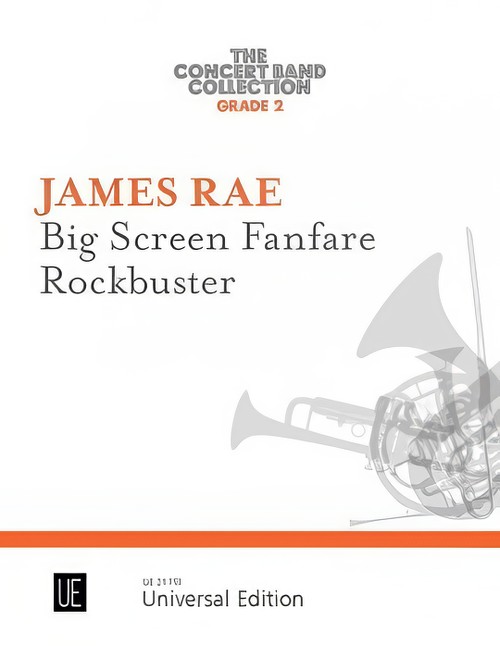
Big Screen Fanfare & Rockbuster (Concert Band - Score and Parts) - Rae, James
James Rae is the man who put fun into woodwind and brass teaching. His many compositions, especially in the jazz and blues idioms, have often featured on examination syllabuses. Recent years have seen his publications of easy flexible ensembles for younger players and now he turns his attention to the wind band. In this series "The Concert Band Collection", he has written exciting new pieces for the standard concert band line up. Attention is given to each instrument so that the technical and musical requirements do not exceed UK Grade 2.5. An optional piano part will provide "stuffing" and moral support for the young players who will quickly enjoy James' catchy and imaginative music. Each volume contains two titles. This one includes "Big Screen Fanfare", a fanfare in the style of a Hollywood movie theme and the cool "Rockbuster".
Estimated dispatch 7-14 working days
-
 £495.00
English Dance Suite (Concert Band - Score and Parts) - Gardner, John - Noble, Paul
Original Scoring. Arranged for the modern Concert/Wind Band, scored for three trumpets, reasonable doubling of parts where the original musical effect is not altered so that players can have a more responsible and enjoyable experience, more legible parts with less doubling on one staff, etc. The piece is offered either as a complete suite of seven movements, and also as seven individual movements which may be purchased independently. The English Dance Suite was originally composed by John Gardner for Wind Band, and has been re-set for the modern Concert Band instrumentation. Both the original version, edited and type-set by Paul Noble, and this arrangement are first editions now available for purchase to bands around the world. The set of seven Renaissance dances depict John Gardner's love of Scottish music, the Renaissance heritage, and some of his own mischievous approach to music. The first movement, Chacony on a Golden Theme, reminiscent of the Allegro movement of Purcell's Golden Sonata, is much used as a vehicle for variation on a repeated short harmonic progression, often involving a fairly short repetitive bass-line which offered a compositional outline for variation, decoration, figuration and melodic invention. In this it closely resembles the passacaglia. The Alman originated in the 16th century as a duple metere dance of moderate tempo, already considered very old, with a characteristic double-knocking upbeat of one or occasionally three sixteenth notes. It appears to have derived from a German dance but no identifiable dance and no German dance instructions from this era survive. The Hornpipe, usually in 3/2 dance rhythm, is an Irish, Scottish and English dance. It is done in hard shoes, which are used to help keep track of how the dancer keeps in time. There are two variations of the hornpipe dance: fast and slow. Usually, more experienced dancers will do the slow hornpipe but younger dancers will start out with the fast hornpipe and then switch in later years. The Corranto is a 16th-century court dance characterized by short advances and retreats, in quick triple time. The Volta (Italian: the turn or turning) is an anglicised name from the later Renaissance. Its main figure consisted of a turn and lift in a sort of closed position. The Pavan is a slow processional dance common in Europe during the 16th century. The Reel, indigenous to Scotland, consists largely of quaver (eighth note) movement with an accent on the first and third beats of the bar.
Estimated dispatch 7-14 working days
-
 £125.00
English Dance Suite - I. Chacony on a Golden Theme (Concert Band - Score and Parts) - Gardner, John - Noble, Paul
Arranged for the modern Concert/Wind Band, scored for three trumpets, reasonable doubling of parts where the original musical effect is not altered so that players can have a more responsible and enjoyable experience, more legible parts with less doubling on one staff, etc. The piece is offered either as a complete suite of seven movements, and also as seven individual movements which may be purchased independently. The English Dance Suite was originally composed by John Gardner for Wind Band, and has been re-set for the modern Concert Band instrumentation. Both the original version, edited and type-set by Paul Noble, and this arrangement are first editions now available for purchase to bands around the world. The set of seven Renaissance dances depict John Gardner's love of Scottish music, the Renaissance heritage, and some of his own mischievous approach to music. The first movement, Chacony on a Golden Theme, reminiscent of the Allegro movement of Purcell's Golden Sonata, is much used as a vehicle for variation on a repeated short harmonic progression, often involving a fairly short repetitive bass-line which offered a compositional outline for variation, decoration, figuration and melodic invention. In this it closely resembles the passacaglia. The Alman originated in the 16th century as a duple metere dance of moderate tempo, already considered very old, with a characteristic double-knocking upbeat of one or occasionally three sixteenth notes. It appears to have derived from a German dance but no identifiable dance and no German dance instructions from this era survive. The Hornpipe, usually in 3/2 dance rhythm, is an Irish, Scottish and English dance. It is done in hard shoes, which are used to help keep track of how the dancer keeps in time. There are two variations of the hornpipe dance: fast and slow. Usually, more experienced dancers will do the slow hornpipe but younger dancers will start out with the fast hornpipe and then switch in later years. The Corranto is a 16th-century court dance characterized by short advances and retreats, in quick triple time. The Volta (Italian: the turn or turning) is an anglicised name from the later Renaissance. Its main figure consisted of a turn and lift in a sort of closed position. The Pavan is a slow processional dance common in Europe during the 16th century. The Reel, indigenous to Scotland, consists largely of quaver (eighth note) movement with an accent on the first and third beats of the bar.
Estimated dispatch 7-14 working days
-
 £75.00
English Dance Suite - II. Alman (Concert Band - Score and Parts) - Gardner, John - Noble, Paul
Arranged for the modern Concert/Wind Band, scored for three trumpets, reasonable doubling of parts where the original musical effect is not altered so that players can have a more responsible and enjoyable experience, more legible parts with less doubling on one staff, etc. The piece is offered either as a complete suite of seven movements, and also as seven individual movements which may be purchased independently. The English Dance Suite was originally composed by John Gardner for Wind Band, and has been re-set for the modern Concert Band instrumentation. Both the original version, edited and type-set by Paul Noble, and this arrangement are first editions now available for purchase to bands around the world. The set of seven Renaissance dances depict John Gardner's love of Scottish music, the Renaissance heritage, and some of his own mischievous approach to music. The first movement, Chacony on a Golden Theme, reminiscent of the Allegro movement of Purcell's Golden Sonata, is much used as a vehicle for variation on a repeated short harmonic progression, often involving a fairly short repetitive bass-line which offered a compositional outline for variation, decoration, figuration and melodic invention. In this it closely resembles the passacaglia. The Alman originated in the 16th century as a duple metere dance of moderate tempo, already considered very old, with a characteristic double-knocking upbeat of one or occasionally three sixteenth notes. It appears to have derived from a German dance but no identifiable dance and no German dance instructions from this era survive. The Hornpipe, usually in 3/2 dance rhythm, is an Irish, Scottish and English dance. It is done in hard shoes, which are used to help keep track of how the dancer keeps in time. There are two variations of the hornpipe dance: fast and slow. Usually, more experienced dancers will do the slow hornpipe but younger dancers will start out with the fast hornpipe and then switch in later years. The Corranto is a 16th-century court dance characterized by short advances and retreats, in quick triple time. The Volta (Italian: the turn or turning) is an anglicised name from the later Renaissance. Its main figure consisted of a turn and lift in a sort of closed position. The Pavan is a slow processional dance common in Europe during the 16th century. The Reel, indigenous to Scotland, consists largely of quaver (eighth note) movement with an accent on the first and third beats of the bar.
Estimated dispatch 7-14 working days
-
 £110.00
English Dance Suite - III. Hornpipe (Concert Band - Score and Parts) - Gardner, John - Noble, Paul
Arranged for the modern Concert/Wind Band, scored for three trumpets, reasonable doubling of parts where the original musical effect is not altered so that players can have a more responsible and enjoyable experience, more legible parts with less doubling on one staff, etc. The piece is offered either as a complete suite of seven movements, and also as seven individual movements which may be purchased independently. The English Dance Suite was originally composed by John Gardner for Wind Band, and has been re-set for the modern Concert Band instrumentation. Both the original version, edited and type-set by Paul Noble, and this arrangement are first editions now available for purchase to bands around the world. The set of seven Renaissance dances depict John Gardner's love of Scottish music, the Renaissance heritage, and some of his own mischievous approach to music. The first movement, Chacony on a Golden Theme, reminiscent of the Allegro movement of Purcell's Golden Sonata, is much used as a vehicle for variation on a repeated short harmonic progression, often involving a fairly short repetitive bass-line which offered a compositional outline for variation, decoration, figuration and melodic invention. In this it closely resembles the passacaglia. The Alman originated in the 16th century as a duple metere dance of moderate tempo, already considered very old, with a characteristic double-knocking upbeat of one or occasionally three sixteenth notes. It appears to have derived from a German dance but no identifiable dance and no German dance instructions from this era survive. The Hornpipe, usually in 3/2 dance rhythm, is an Irish, Scottish and English dance. It is done in hard shoes, which are used to help keep track of how the dancer keeps in time. There are two variations of the hornpipe dance: fast and slow. Usually, more experienced dancers will do the slow hornpipe but younger dancers will start out with the fast hornpipe and then switch in later years. The Corranto is a 16th-century court dance characterized by short advances and retreats, in quick triple time. The Volta (Italian: the turn or turning) is an anglicised name from the later Renaissance. Its main figure consisted of a turn and lift in a sort of closed position. The Pavan is a slow processional dance common in Europe during the 16th century. The Reel, indigenous to Scotland, consists largely of quaver (eighth note) movement with an accent on the first and third beats of the bar.
Estimated dispatch 7-14 working days
-
 £95.00
English Dance Suite - IV. Corranto (Concert Band - Score and Parts) - Gardner, John - Noble, Paul
Arranged for the modern Concert/Wind Band, scored for three trumpets, reasonable doubling of parts where the original musical effect is not altered so that players can have a more responsible and enjoyable experience, more legible parts with less doubling on one staff, etc. The piece is offered either as a complete suite of seven movements, and also as seven individual movements which may be purchased independently. The English Dance Suite was originally composed by John Gardner for Wind Band, and has been re-set for the modern Concert Band instrumentation. Both the original version, edited and type-set by Paul Noble, and this arrangement are first editions now available for purchase to bands around the world. The set of seven Renaissance dances depict John Gardner's love of Scottish music, the Renaissance heritage, and some of his own mischievous approach to music. The first movement, Chacony on a Golden Theme, reminiscent of the Allegro movement of Purcell's Golden Sonata, is much used as a vehicle for variation on a repeated short harmonic progression, often involving a fairly short repetitive bass-line which offered a compositional outline for variation, decoration, figuration and melodic invention. In this it closely resembles the passacaglia. The Alman originated in the 16th century as a duple metere dance of moderate tempo, already considered very old, with a characteristic double-knocking upbeat of one or occasionally three sixteenth notes. It appears to have derived from a German dance but no identifiable dance and no German dance instructions from this era survive. The Hornpipe, usually in 3/2 dance rhythm, is an Irish, Scottish and English dance. It is done in hard shoes, which are used to help keep track of how the dancer keeps in time. There are two variations of the hornpipe dance: fast and slow. Usually, more experienced dancers will do the slow hornpipe but younger dancers will start out with the fast hornpipe and then switch in later years. The Corranto is a 16th-century court dance characterized by short advances and retreats, in quick triple time. The Volta (Italian: the turn or turning) is an anglicised name from the later Renaissance. Its main figure consisted of a turn and lift in a sort of closed position. The Pavan is a slow processional dance common in Europe during the 16th century. The Reel, indigenous to Scotland, consists largely of quaver (eighth note) movement with an accent on the first and third beats of the bar.
Estimated dispatch 7-14 working days
 View Music