
Results
-
£76.99Girl in Satin - Leroy Anderson
This reimagined band edition by Mark Rogers breathes new life into an absolute gem by Leroy Anderson. This publication features the first full score offered with the parts - as well as an alternate transposition in C to avoid some of the technical difficulties bands may encounter with the composer's original key.
Estimated dispatch 7-14 working days
-
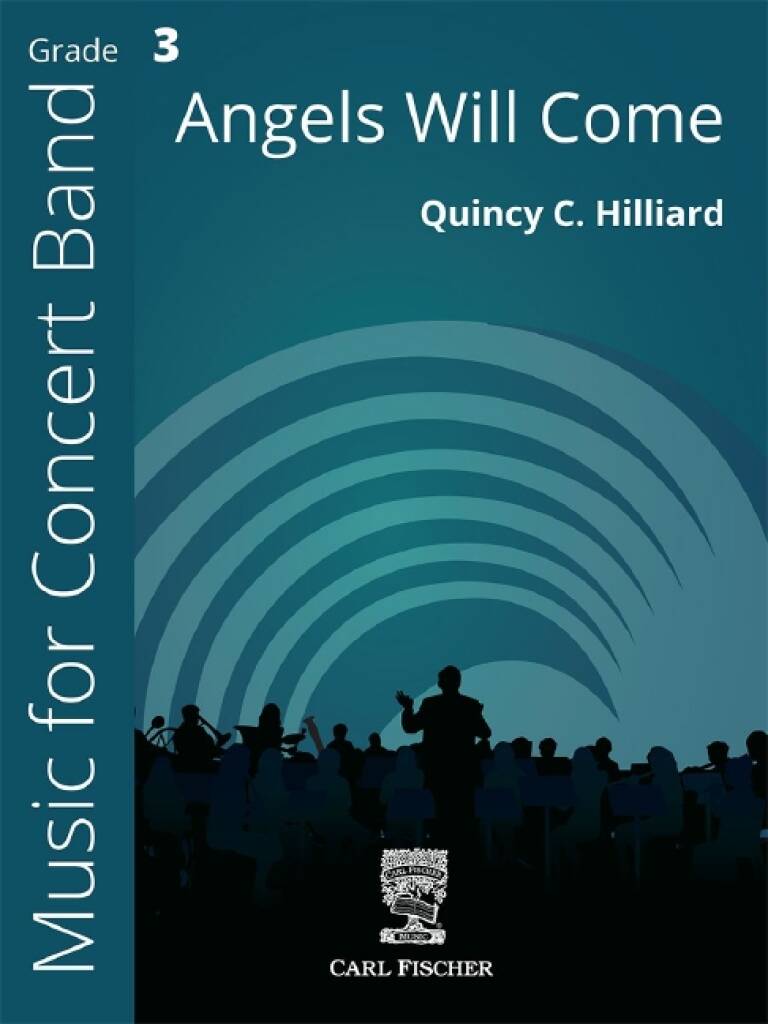
£149.40Grevling i taket - Øystein Dolmen og Gustav Lorentzen
This is an arrangement which has to be performed a bit humorous in the spirit of the original.It starts with a kazoo-like opening, played on the mouthpieces. At C, flutes and clarinets should stand up. Maybe the musicians can play it by heart?Two bars before D, the tempo increase. On E, the trumpet players should stand (and play by heart)?New, even higher tempo two bars before F. The trombonists should stand up in bar 103 to prepare for a terrific tempo. But G will be played like a laidback reggae-version. The saxophonists can stand up simultaneous with the glissando in bar 120.The tempo at H should be high and fresh and with several sections standing. In bar 158 should almost all players sit. At bar 160 everyone should stand up.In bar 162, all players should turn to the audience during the crescendo.
Estimated dispatch 7-14 working days
-
£95.995 Tantum Ergo - Anton Bruckner
Anton Bruckner (b. 4.9.1824, Ansfelden, d. 11.10.1896, Vienna) didn't have it easy. Throughout his life, the Austrian composer was plagued by self-doubt. Anton Bruckner came from a simple, rural background. After the death of his father, he was accepted as a choirboy at the monastery of Sankt Florian in 1837. After several years as a school assistant and his own organ and piano studies, he first worked as organist in St. Florian, then from 1855 as cathedral organist in Linz. Introduced to music theory and instrumentation by Simon Sechter and Otto Kitzler, he discovered Richard Wagner as an artistic role model, whom he admired throughout his life and also visited several times in Bayreuth.In 1868 Anton Bruckner became professor of basso continuo, counterpoint and organ at the Vienna Conservatory; ten years later court organist; and in 1891 finally honorary doctor of the University of Vienna. He was considered an important organ virtuoso of his era, but had to wait a long time for recognition as a composer. It was not until Symphony No.7 in E major, composed between 1881 and 1883, with the famous Adagio written under the effects of Wagner's death, that he achieved the recognition he had hoped for, even if he was reluctant to accept it given his inclination towards scepticism and self-criticism.Anton Bruckner was a loner who did not want to follow a particular school or doctrine. He composed numerous sacred vocal works, such as his three masses, the Missa Solemnis in B flat minor (1854), the Te Deum (1881-84) and numerous motets. As a symphonic composer, he wrote a total of nine symphonies and many symphonic studies from 1863 onwards, tending to revise completed versions several times over. Bruckner's orchestral works were long considered unplayable, but in fact were merely exceptionally bold for the tonal language of their time, uniting traditions from Beethoven through Wagner to folk music, on the threshold between late Romanticism and Modernism.Hymns for four-part mixed choir a cappella (1846, St. Florian)No. 1 in E flat major (WAB 41/3): Quite SlowNo. 2 in C major (WAB 41/4): AndanteNo. 3 in B flat major (WAB 41/1): SlowNo. 4 in A flat major (WAB 41/2): SlowHymn for five-part (2 S, A, T, B) mixed choir and organNo. 5 in D major: SolemnlyThey are simple works, completely subordinate to their liturgical use, which nevertheless already show numerous characteristics of personal expression. These small pieces were able to stand up to the harsh scrutiny of the mature master: in 1888, Bruckner subjected them to a revision in which he made only minor corrections.
Estimated dispatch 7-14 working days
-
£64.99The Immovable Do - Percy Aldridge Grainger
First published in 1940, this work became a highly respected and widely performed Percy Grainger work. It is unique in that it employs a high drone on the note C, which is sounded throughout the entire piece. Grades 4-5.
Estimated dispatch 7-14 working days
-
£66.95Comegys Creek - Brian Beck
Kick off your shoes, jump in, and ride down Comegys Creek. This North Texas creek is named after Dr. C. G. Comegys, a prominent family who lived in Mckinney, TX in the early 1900s. Composer and fellow Texan, Brian Beck captures the southern rowdiness of frolicking in the water with friends and family. Comegys Creek is a fun piece that will expand your student's harmonic vocabulary and is perfect for introducing and reinforcing accidentals that create interesting harmonies, all within a comfortable range. It also explores the many permutations of the 8th and 16th note combinations, as well as introduces and reinforces 7/8 time signature. Groups performing this piece will become "multi-meter masters" in no time! (2:24).
Estimated dispatch 7-14 working days
-
£60.99Set Me as a Seal - René Clausen
Here is a beautifully scored lyric work for winds based on the poignant and expressive chorale classic by Ren Clausen. Rich in textures and flowing lines, this is a wonderful addition to the repertoire for young bands. Recorded by the Duquesne University Wind Symphony - Dr. Robert C. Cameron, conductor. Dur: 2:35
Estimated dispatch 7-14 working days
-
£119.99Rotterdam 1945 - Johan de Meij
Rotterdam 1945 was written at the request of Maestro Arjan Tien, the chief conductor of the Marine Band of the Royal Netherlands Navy, to commemorate their 75th anniversary in 2020. 1945 also marked the end of World War II, the year that my home country Holland was liberated from Nazi Germany. My father was born in Rotterdam in 1910, so I have a special bond with this dynamic city. I have used the numbers 1-9-4-5 to create the main theme and translated it into a four-note motif: C - D'- F - G.
Estimated dispatch 7-14 working days
-
£168.5060 Warm-up Chorales for Concert Band
During his experience as a band conductor and teacher of wind orchestra conducting at university, Franco Cesarini has dealt with the topic of warm-ups very frequently. Throughout these long years of conducting he has had the opportunity to try many existing methods, evaluating their advantages and disadvantages.After a long time, he has decided to compile a collection of chorales for warm-ups, which are organized according to the criteria that he considers most effective.While working on his60 Warm-up Chorales for Concert Band, Franco Cesarini has always borne in mind that amateur musicians play for pleasure.He feels that it is extremely important that they have satisfaction at every moment of the rehearsal and not to start the rehearsal with needless "punishing" exercises. Nobody is really motivated to start playing with scales, long notes, or tricky rhythmical exercises. There is often a distinguished absentee in band rehearsals, namely music itself!Although this publication does not foresee a specific tempo for the chorales, they should often be performed rather slowly but without dragging.Dynamics are not indicated, so that the conductor has the opportunity to draw the attention of the musicians to his gestures and to make them react according to his indications.Timpani and bell parts have been added with the aim of not leaving the percussionists completely inactive during the warm-up phase, but can also be omitted.The chorales are written in four parts (SATB) and are also playable in smaller groups. The four voices can be played in different combinations of woodwinds or brass quartets or in mixed combinations.The collection includes ten chorales for the following keys: D flat major, A flat major, E flat major, B flat major, F major and C major.With his 60 Warm-up Chorales Franco Cesarini would like to convey the message to play the chorales in a musical way, thus raising the musicians' awareness of phrasing, the right interpretation of cadences, rubato and agogic.Above all, never do anything without putting the musical aspect in the foreground. 60 Warm-up Chorales for Concert Band: A perfect collection to warm-up and improve tuning of a concert band!
Estimated dispatch 7-14 working days
-
£72.99Nobles of the Mystic Shrine - John Philip Sousa
Sousa composed this march at the request of his nephew, who was sponsoring his uncle's entrance into the Ancient Arabic Order of Nobles of the Mystic Shrine in 1922. The following year, the march received its premiere in Washington D.C., under the largest band ever led by Sousa, comprised of no fewer than 6,200 Shriners. This medium-level arrangement by Charles L. Booker, Jr. makes this classic march more accessible to bands, with scoring for modern instrumental forces and transposition to an easier key.
Estimated dispatch 7-14 working days
-
£79.99Scalin' and Wailin' - Thomas C. Duffy
Scalin' and Wailin' is a flexible, fun piece written with a differentiated instruction model. Three different difficulty levels meet students where they're at in their development and allows space for each to grow. This piece is also ideal for educators and conductors looking for side by side programming - younger ensembles can all play within the easiest group and more advanced ensembles can play within the more difficult groups, all fitting together in one energetic piece. Celebrate BandQuest's 20th anniversary with this special release, and find what works for your ensemble! BandQuest, an exciting series of new music and accompanying curricula for band, is a program published by the American Composers Forum. The series was started as a response to feedback from music educators that there is a pressing need for new, fresh band music. The heart of this program is new works written by a diverse group of leading American composers who have created challenging pieces that are a true departure from standard middle school repertoire. Every BandQuest project includes a residency component in which the composer works collaboratively with a middle school as they create their new piece. Many BandQuest pieces are accompanied by an interdisciplinary curriculum designed to assist students as they learn the music and to integrate each piece with non-music studies. Visit www.bandquest.org to learn more about this innovative series, and email [email protected] to request a free downloadable audio catalog.
Estimated dispatch 7-14 working days
