
Results
-
 £239.20
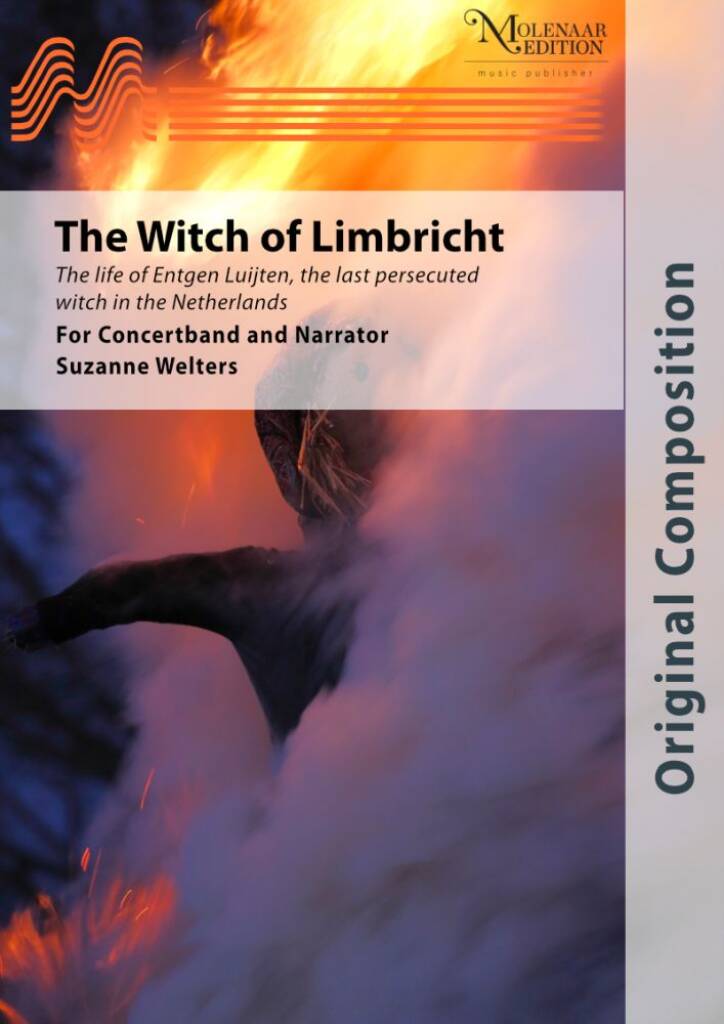
The Witch of Limbricht - Suzanne Welters
Limbricht, near Sittard, in the late 17th century. Throughout her life, Entgen Luijten is used to going her own way, in family matters, in business and in love. She is supported in this by a great knowledge of nature, which she also regularly uses to help her fellow villagers. But then, because of some unfortunate incidents, she is accused of witchcraft. The lord of the castle is eager for a confession, for which he uses every means made available to him by the Inquisition. But what if Entgen holds out against all odds?
Estimated dispatch 7-14 working days
-
 £149.40
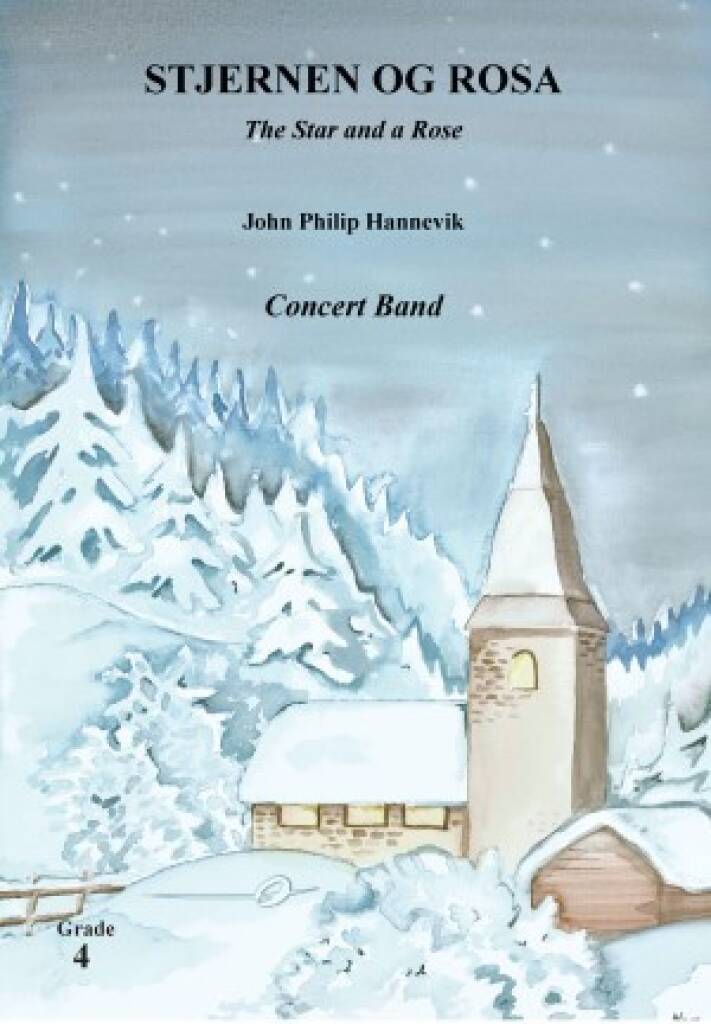
Stjernen og Rosa - John Philip Hannevik
The Star and a Rose is a big-scale Christmas piece for band, featuring four seasonal chorales.The first is a Gregorian-like chant Hodie Christus natus est.In this section of the piece, a soloist can be placed away from the band, maybe on a gallery. The soloist can be a tenor instrument, maybe trombone, or you can feature a vocal soloist.After this, the music leads us on to the old German Christmas chorale Lo, how a rose e'er blooming. This song is given a fairly rhythmical treatment, but make sure that the melody is presented in a cantabile style.An interlude follows, before the piece presents one of the most used and loved Scandinavian Christmas chorales, Mitt hjerte alltid vanker (My Heart will always wander), composed by the Danish bishop Hans Adolph Brorson around 1732. This song is building towards a climax, before the solo horn brings it all down to the Stable view described in the lyrics.Then comes a transition that brings us in to the final section of the piece, which presents the international Christmas Carol Adeste Fideles. As many will notice, I have borrowed a section from David Wilcocks majestic harmonization towards the end.The title of the piece has its background form the lyrics in My heart will always wander, where the text speaks about the stars in the sky. But also in the latin text for Adeste Fideles:Stella duce, Magi, Christum adorantesThe Rose is of course from the lyrics in the chorale Lo, how a Rose.
Estimated dispatch 7-14 working days
-
 £149.40
Norwegian Dance No. 1 - Alfred Evensen
Alfred Evensen (1883 - 1942) was born in Troms, but moved to Harstad 16 years old to start as a student at The Military School of Music. He was director and chief of the military band in 1918, and worked there for 12 years. In 1930 he was appointedto conductor of the military band in Bergen, and worked there until he was appointed to take over from Johannes Hanssen (Valdres march) as manager and conductor of the military band in Oslo in 1934.With this band he participated in a majorinternational military music collection in Paris in 1935 With a great success. In addition to his work in military music, he was a highly respected conductor of choir and composed, in additionto his compositions for bands, many songs for choir.He died in Oslo, after he was arrested because of his resistance against the German occupation. At his own request he was buried in Harstad, and there is also a statue of him.Norwegian Dance No. 1 and No. 2 dates from 1911 and 1912respectively. They are composed in the style of Grieg's Norwegian Dances, Op. 35, but, unlike Grieg, Evensen has used his own themes for the compositions.
Estimated dispatch 7-14 working days
-
 £57.50
Carrying You from "Laputa: Castle in the Sky" - Joe Hisaishi
New Sounds in Concert Band Series(NSB) for small band with 2-part choir Duration: approx.4'10" Arranged by Eiji Suzuki"Carrying You" was composed as a theme song to Castle in the Sky, an animated film produced by Studio Ghibli and directed by Hayao Miyazaki, released in 1986. The composer for Castle in the Sky was originally not Joe Hisaishi, but the director Miyazaki strongly requested him. The director told Hisaishi his vision for the film, and based on the world he imagined, Hisaishi made a collection of music called the Image Album. The melody that later becomes the basis for "Carrying You" was born from this album. However, the director Miyazaki was not planning on including a theme song in this film. Isao Takahata, the producer, proposed including a song, for the audience to think over the film at the end. He wanted the audience to think, "While the protagonists sought for the treasure, they didn't obtain any treasure. What did they obtain instead?" They thought, if they are going to create a theme song, it should be something organically connected with the entire film. Takahata requested the director Miyazaki to write the lyrics for the theme song. And to Hisaishi, he gave instructions to create a melody for the theme song using an instrumental piece called "Pazu and Sheeta" from the image album mentioned above. Director Miyazaki handed a piece of memo with lyrics to Takahata. "Carrying You" we hear now is this lyrics with some changes, set to Hisaishi's music. The melody is used at the opening of the film as well as the scene where Laputa is destroyed, and the song is used for the ending. Performance Advice from Arranger Suzuki: This is an extremely simple arrangement that can be performed by lower grade bands and singers. Of course, it can be played without singers and chorus, but the contents of the lyrics are very tasty so if possible, we recommend that you perform using the voices. Depending on your resources, the voice parts can be done as all solo, all female chorus, and so on.
Estimated dispatch 7-14 working days
-
 £87.99
A Festive Tribute - Johann Sebastian Bach
A Festive Tribute is an arrangement of a splendid chorus whichBach first used in the secular Cantata 207 of 1726, but is perhapsbetter known in its later version, which appears in Cantata 207a, thedescriptively titled Auf, schmetternde Tne der muntern Trompeten,which cannot be adequately translated but means something alongthe lines of 'let the trumpets sound'. While the lyrics are perhaps alittle obsequious, much of the music for this cantata is celebratoryand lushly scored for a large orchestra including trumpets, oboesd'amore and flutes, making it an ideal piece for a concert bandarrangement.
Estimated dispatch 7-14 working days
-
 £89.99
The Machine Awakes (for Band Plus Electronics) - Steven Bryant
The Machine Awakes is the sound of something not human (but of humans hands) - something not entirely organic, but most definitely alive - waking up for the first time. From the opening swirling textures, we sense the firsthesitant sparks of thought, attempting to find form and coherence. This new machine comes fully awake, possessed of emphatic self-determination and purpose. The Machine Awakesgives ensembles with a wide range of technical abilitythe opportunity to experience the meshed sound world of electronic sounds and acoustic instruments. The set comes with optional parts for more advanced players. Dur: 5:00
Estimated dispatch 7-14 working days
-
 £179.99
Spartacus - Jan Van der Roost
Spartacus is a "Symphonic Tone Poem" with 3 joints. Each section has its own melodical materials, however: in the final movement the main theme from the second section returns in a 'grandioso'-tutti. The last bar but one recaptures the 'oriental' atmosphere of the very beginning. The first section (= from the beginning till J) builds up a climax by repeating and accumulating some melodical and rhythmical stuctures. The oriental character of the melodical fragments refers to the origin of the Roman slaves. The second section evokes the love between Spartacus and his loveby giving a peaceful atmosphere. The mean theme (presented the first time at letter L) has a broad andwide character and refers slightly to filmmusic. In this part of the composition, a special attention is given to the orchestration. The final section is more agressive and martial and refers to the revolt of the slaves against the Roman oppressors. In the middle of this movement, an accumulation of the 12 tones symbolizes the crucifixion of the slaves: the english horn resumes partly the cadenza of the flute (at letter J), as if he wants to show again the eternal love between Spartacus and his love a very last time ... The theme at the third bar of letter T is actually based on the 2nd theme of this section (which starts at the fifth bar of letter R), but has been worked out rhytmically.
Estimated dispatch 7-14 working days
-
 £79.99
Spark! - Robert Buckley
The title says it all. This work for more advanced concert bands is nothing but electricity. Sweeping woodwind lines, fiery brass, driving percussion and biting rhythmical intensity!
Estimated dispatch 7-14 working days
-
 £102.99
The Fairy Tale King - Jacob de Haan
This work is inspired on the dramatic life story of Ludwig II, former king of Bavaria. He was given the nickname Fairy Tale King because of his eccentric lifestyle, his love for medieval sagas, and the building of extravagant fantasy palaces, such as the world famous Neuschwanstein Castle. Ludwig II grew up in a strict environment but found support through his friendships, love for romantic fairytales, and the music of the German 19th century composer Richard Wagner. After Ludwig's sudden accession to the throne followed a cancelled wedding and a tragic ending, after which he became a national icon of Bavaria. The music reflects his eventful life with fairy-tale-like, romantic and dramatic sounds. Two themes from Wagner's famous opera Lohengrin form a returning homage to his tragic life story.
Estimated dispatch 7-14 working days
-
 £53.50
A Watercolor Lullaby - Daniel Sault
Solo passages for several instruments make this work stand out from the norm. Nothing is technically difficult, but it requires a bit more sophistication and development from the students.
Estimated dispatch 7-14 working days
 View Music