
Results
-
 £141.99
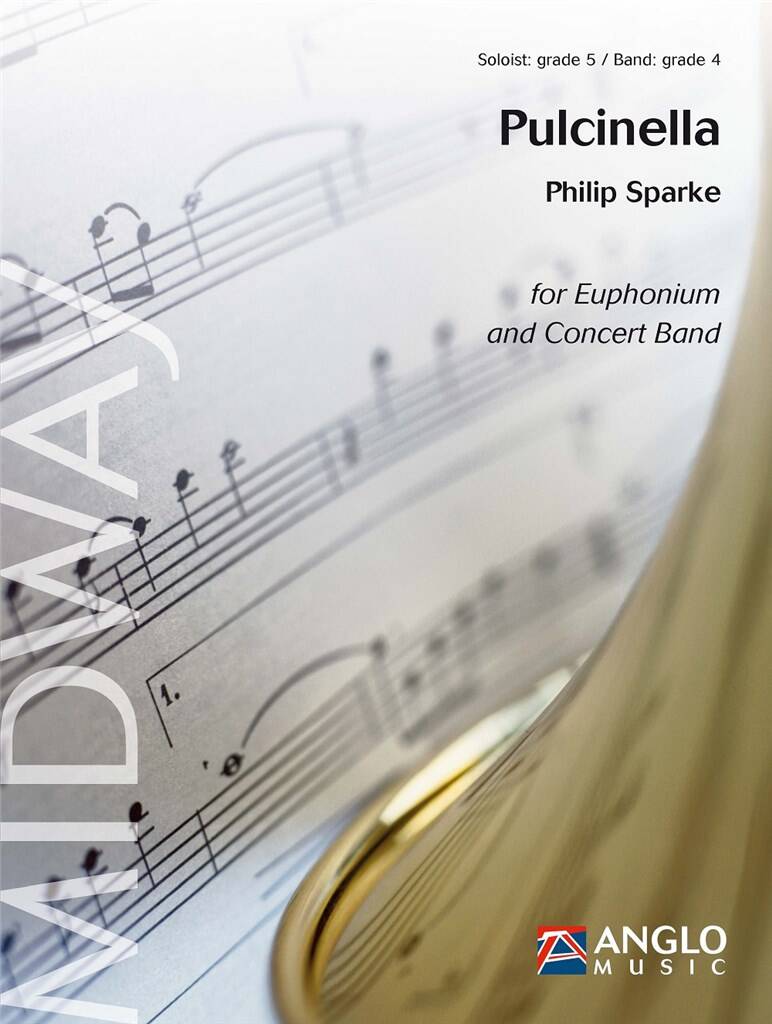
Pulcinella - Philip Sparke
Pulcinella was commissioned by the Taiwanese euphonium player Tzu-Hsiang Lin. Lin is a renowned soloist and teacher and a Besson Euphonium Artist. He teaches euphonium at Taipei National University of the Arts, National Taiwan University of Arts, Shih Chien University and National Kaohsiung Normal University. Lin gave the premiere of Pulcinella in both its concert band and brass band versions in January 2021. Pulcinella continues Sparke's series of euphonium solos named after characters of the Italian commedia dell'arte and opens with a long and expressive minor melody for the soloist over a brooding accompaniment. This is taken up briefly by the full band and is extended by the soloist after a change of key. A cadenza, accompanied by fragments of the main melody leads to a complete change of mood, tempo and tonality, introducing a Vivo section starting with a perky syncopated tune for the soloist. The band then uses elements of this new tune to introduce a change of key, where the soloist introduces a more lyrical second subject over a pulsing accompaniment. The band then takes this up and changes key to reintroduce the original Vivo melody, which leads to a short and acrobatic coda to bring the work to a spectacular close.
Estimated dispatch 7-14 working days
-
 £149.40
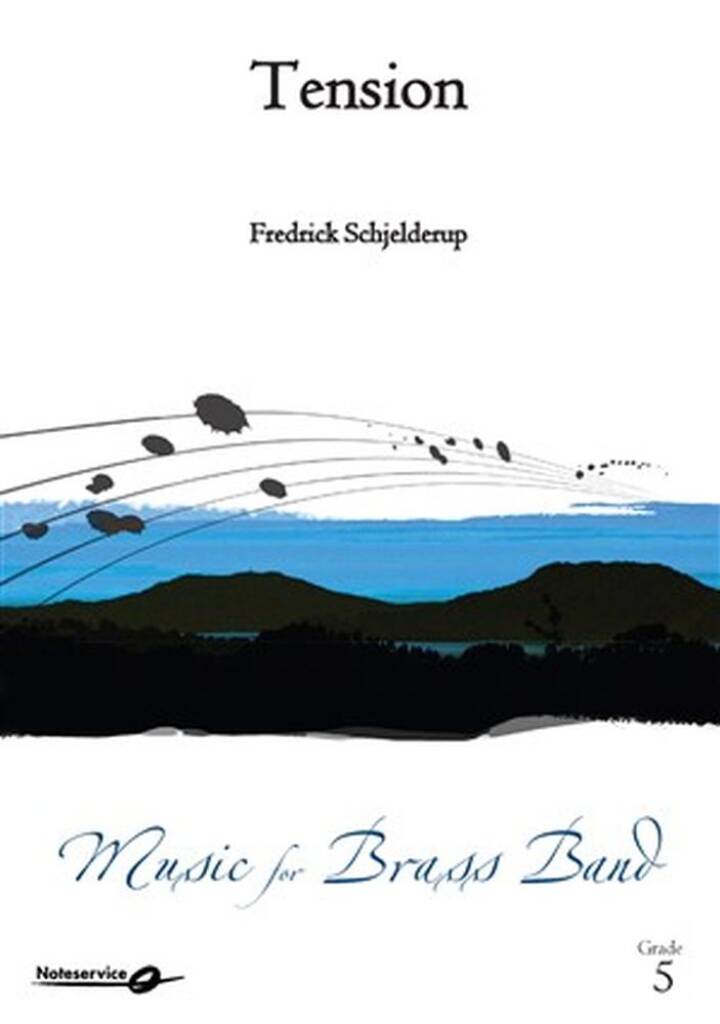
Tension - Fredrick Schjelderup
Tension is a thematic work for brass band, commissioned by Eikanger-Bjrsvik Musikklag for their Summer Band Camp (called Feriespel) in 2014. The theme is moved around in various groups in the band, surrounded by different rhythms, time signatures and cluster chords. The title describes the tonality and character of the piece, but can also illustrate a young musician or audience meeting of tight cluster tonality.
Estimated dispatch 7-14 working days
-
 £104.99
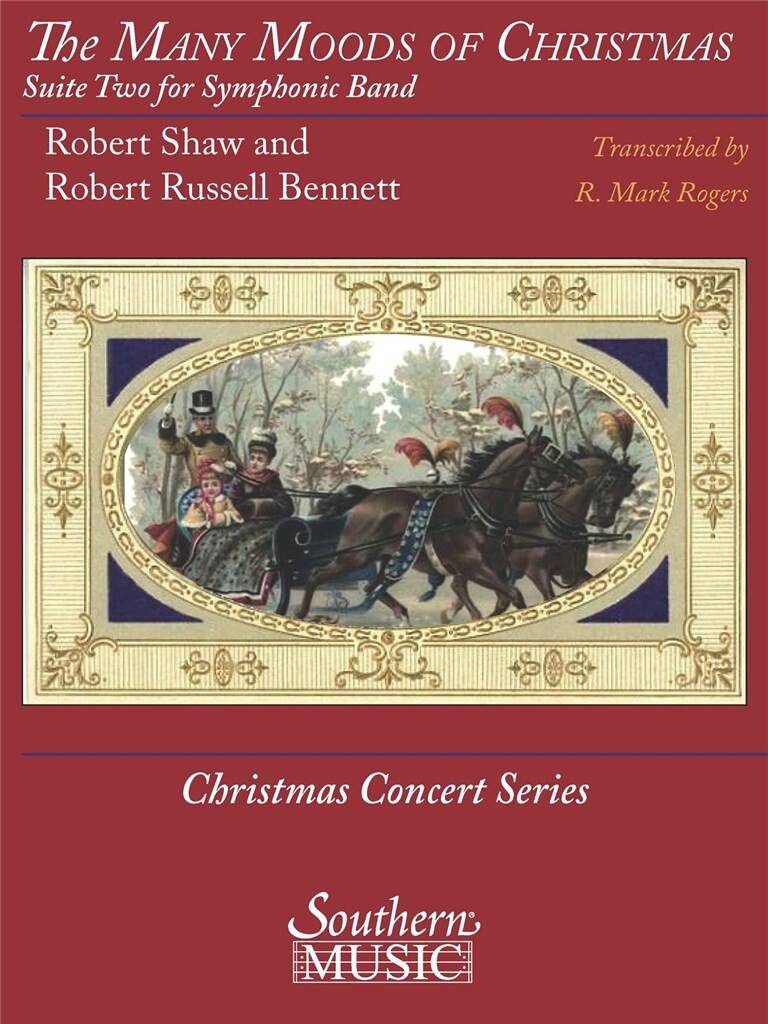
The Many Moods of Christmas: Suite No. 2 - Robert Russell Bennett
The extensive passages for orchestra alone in The Many Moods of Christmas suites represent some of Robert Russell Bennett's most brilliant and attractive writing based on familiar carols. This Mark Rogers Edition for wind band alone is the initial offering in an ongoing series which will bring all four of these suites to the repertory of band conductors in the coming years. Included are Joy to the Worls, with optional antiphonal Salvation Army brass band, the Pastoral Symphony from Handels Messiah, Away in a Manger, concluding with a rousing medley of The March of the Three Kings and Fum, Fum, Fum!
Estimated dispatch 7-14 working days
-
 £106.99
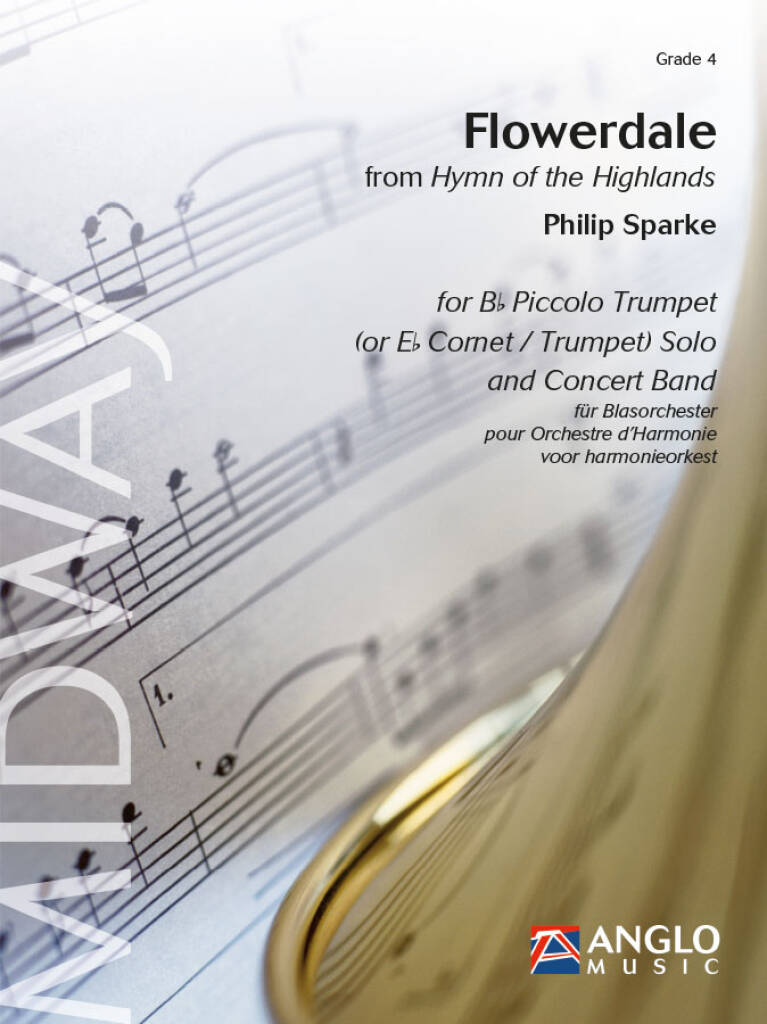
Flowerdale - Philip Sparke
The seven-movement suite for brass band, Hymn of the Highlands was commissioned by David King and the Yorkshire Building Society Band and provides a series of themed movements which can act as a half-concert featuring a band's soloists.Flowerdale is one of the solo movements. This solo is also available with piano accompaniment, edition no. AMP 285.
Estimated dispatch 7-14 working days
-
 £209.99
Diamond Concerto - Philip Sparke
Diamond Concerto was commissioned by Musikverein Mrschied from Germany - Dr. Eric Grandjean, conductor - for a special concert featuring Steven Mead as guest soloist. Together they gave the world premiere on 28th April 2012 in the town theatre of Idar-Oberstein.The commission is a highlight in the 30-year friendship between composer and soloist, which has included many mutual CD projects and concerts and, now, a concerto. Sparke had Steven Mead's special euphonium sound in his head throughout the composition process and made free use of the variety of styles which the world-renowned virtuoso has made his own during his highly successful solo career.The village ofMrschied lies to the west of Frankfurt am Main in the area known as the German Road of Precious Stones, which is famous for its thriving gem industry. Because of this it was decided to give the commission a local connection by choosing the title, Diamond Concerto. Each of the three movements is named after a famous diamond:1 EARTH STARis rather stern in mood, opening with a free fantasy for the soloist over a static chord from the band. This leads to an Allegro Moderato in minor mode where small motives are gradually repeated and developed by both band and soloist.2 OCEAN DREAMuses a varied quote from the composer's Music for Battle Creek, including a melting slow melody that was originally written with Steven Mead in mind.3 BLUE HEARTwas written, at Steven Mead's suggestion, in bebop style and takes the form of a jazz waltz. The quasi-improvisatory central section features a call-and-response passage for the soloist and upper woodwinds.Soloist: Difficulty 6Diamond Concerto is available for euphonium and piano (AMP 374-401) as well as for euphonium and brass band (AMP 354-030).
Estimated dispatch 7-14 working days
-
 £109.99
Homage - Jan Van der Roost
In the most literal sense: a piece for an occasion. The actual occasion was Jan de Haan's twentieth anniversary as a conductor of the top Dutch brass band, "Soli Deo Gloria" (Leeuwarden). To mark the occasion, the band commissioned the Belgian comopser Jan Van der Roost to create a surprise piece: without knowledge of the person being celebrated, a suitable source of inspiration was sought for. After some thought the chorale-theme from Camille Saint-Sans organ symphony was chosen, a piece with which Jan de Haan has a special bond.Apart from this chorale, Homage is also based on the names of notes taken from 'Jan de Haan' and 'Soli Deo Gloria', resulting in the tonerow: DEGAH. Both elements are combined together and form a grand climax towards the end of the piece when the whole band unites in the Saint Sans' theme.
Estimated dispatch 7-14 working days
-
 £154.60
Blackbird Special
"Blackbird Special" is a song by American band Dirty Dozen Brass Band.The song is an entertainment piece, a good concert opener or encore.When used as a concert opener one may let the different sections of the band enter the stage one by one playing in order of appearance.Percussion section may play their parts ad lib. The most important is the groove of the piece.
Estimated dispatch 7-14 working days
-
 £137.70
PANG Introduction No. 4 - Torstein Aagaard-Nilsen
"Pang" is an onimatopoeia that discribes the brutal forces unleashed from the very first bar. The stream of energy contiunes throughout the piece.The piece was comissioned by Bispehaugen Ungdomskorps (Bispehaugen Concert Band) in 1998. A version for brass band was written for Manger Musikklag and recorded by them on "Grafitti", Bjrn Sagstad conducting.
Estimated dispatch 7-14 working days
-
 £84.99
Columbus - Thierry Deleruyelle
Columbus is a brilliant and dynamic overture with a soft and melodious central passage. The composer was inspired by the European space laboratory Columbus that is part of the International Space Station. In this lab, hundreds of scientific experiments are carried out on a yearly basis. This work was commissioned by the Brass Band Bourgueillois, which was founded ten years ago and has since been a 'laboratory' of musical creativity. In response to the many positive reactions to this attractive work, the composer has now also produced a version for concert band.
Estimated dispatch 7-14 working days
-
 £73.60
Bella Ciao - Manu Pilas
Bella Ciao is an Italian battle song, which became popular in Italy during World War II among partisans resisting fascism and national socialism. The song became a global resistance song against oppressive powers. In 2018, the song became known again through the Spanish Netflix series La Casa de Papel, in which the song was used multiple times. Jan van Kraeydonck wrote a skillful arrangement for concert band, fanfare and brass band.
Estimated dispatch 7-14 working days
 View Music