
Results
-
 £119.00
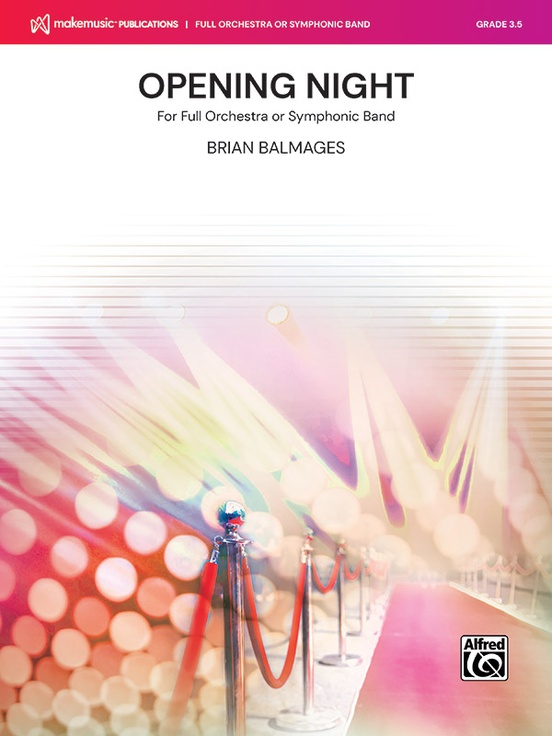
Opening Night (Full Orchestra or Concert Band with String Orchestra - Score and Parts) - Balmages, Brian
This original Broadway-style overture by Brian Balmages is full of energy and will transport audiences to the world of musical theatre. The curtain comes up, the spotlight turns on, and the magic begins as the show finally reaches its Opening Night. In addition, there are numerous instrumentation options. Perform the piece with traditional full orchestra, with symphonic band, or combine your band and string programs to bring the house down!Duration: 3.15
Estimated dispatch 7-14 working days
-
 £73.50
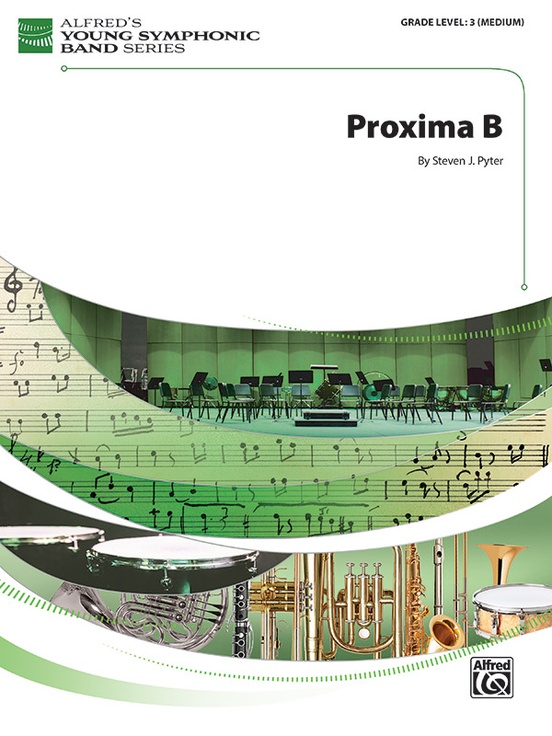
Proxima B (Concert Band - Score and Parts) - Pyter, Steven J.
Where in the galaxy, other than Earth, could human life survive? Proxima B may be the answer to this cosmic question. The planet orbits the red dwarf star Proxima Centauri, the closest star to our Sun. First discovered in 2016, NASA says, The exoplanet is at a distance from its star that allows temperatures mild enough for liquid water to pool on its surface. Journey over four light years to the twin star system of Alpha Centauri in Proxima B, by Steven J. Pyter. Hear and feel the excitement and danger of traveling beyond our solar system in this sci-fi-inspired, cinematic-style concert work that is sure to capture the imagination of performers and audiences! This piece was the 2022 winner of the National Band Association Young Band Composition Contest.Duration: 4.00
Estimated dispatch 7-14 working days
-
 £63.50
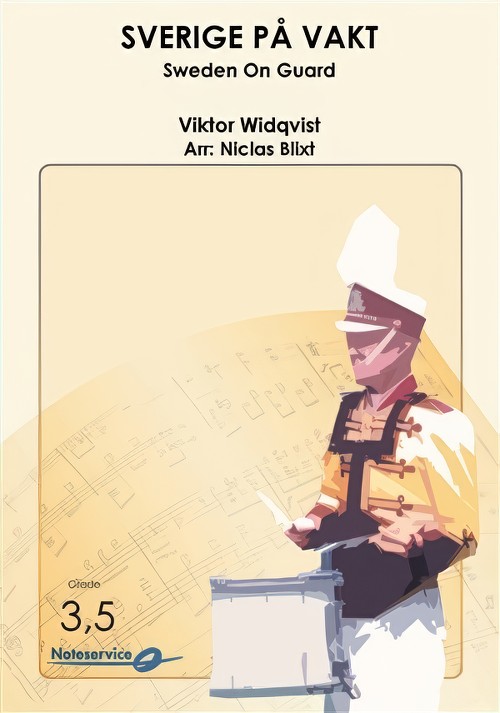
Sverige pa Vakt (Sweden on Guard) (Concert Band - Score and Parts) - Widqvist, Viktor - Blixt, Niclas
Sweden On Guard is part of Widkvist's earliest march production. It was composed around 1914 when he served in the engineering troops.It is worth noting that the march from the beginning was probably intended for a small sized brass band and was later rearranged for a full military band by the composer. When I searched in the Swedish War Archives many years ago, looking for more or less forgotten marches, this work, among others, appeared. I immediately became attached to the young Widkvist's catchy melodies and clear harmonic tonal language that express faith in the future and optimism.Sweden On Guard has never been published in print before, and the work of modernizing the setting without resorting to the elegance and resilience of the original has been a challenge.- Niclas BlixtDuration: 2.30
Estimated dispatch 7-14 working days
-
 £122.20
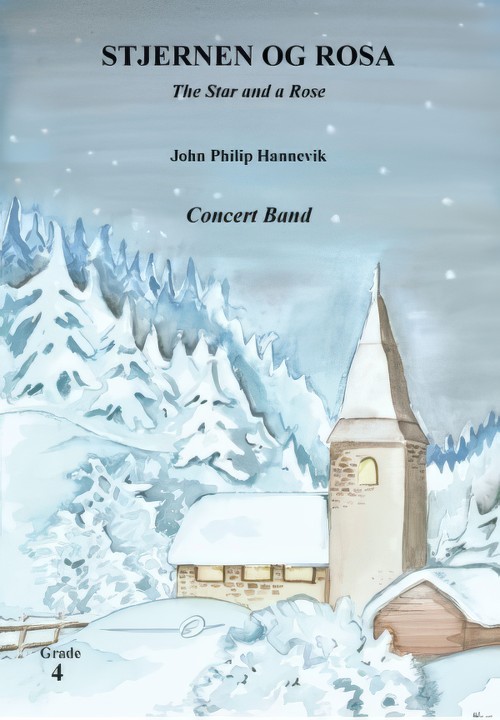
Stjernen og Rosa (The Star and a Rose) (Concert Band - Score and Parts) - Hannevik, John Philip
The Star and a Rose is a big-scale Christmas piece for band, featuring four seasonal chorales.The first is a Gregorian-like chant Hodie Christus natus est.In this section of the piece, a soloist can be placed away from the band, maybe on a gallery. The soloist can be a tenor instrument, maybe trombone, or you can feature a vocal soloist. After this, the music leads us on to the old German Christmas chorale Lo, how a rose e'er blooming. This song is given a fairly rhythmical treatment, but make sure that the melody is presented in a cantabile style. An interlude follows, before the piece presents one of the most used and loved Scandinavian Christmas chorales, Mitt hjerte alltid vanker (My Heart will always wander), composed by the Danish bishop Hans Adolph Brorson around 1732. This song is building towards a climax, before the solo horn brings it all down to the Stable view described in the lyrics. Then comes a transition that brings us in to the final section of the piece, which presents the international Christmas Carol Adeste Fideles. As many will notice, I have borrowed a section from David Wilcocks majestic harmonization towards the end.The title of the piece has its background form the lyrics in My heart will always wander, where the text speaks about the stars in the sky. But also in the Latin text for Adeste Fideles: Stella duce, Magi, Christum adorantes. The Rose is of course from the lyrics in the chorale Lo, how a Rose.Duration: 10.30
Estimated dispatch 7-14 working days
-
 £73.00
S.O.S. (Concert Band - Score and Parts) - Kjaernes, Bjorn Morten
When the publisher asked me to make an arrangement of an ABBA tune, S.O.S. was the first song I thought of. Its introduction and melody are well suited to play for Wind Band. Admittedly, the key had to be shifted to make it sound good for this instrumentation. To me, this is nostalgia, while for others, the Mamma Mia movie/show will be what they associate with this wonderful song. Apart from a few medleys, few of ABBA's songs are available to Wind Band. So, it was very fun to work on this classic.The arrangement is made quite simply to fit many sizes of bands. Technically, it is also relatively simple both in range and rhythm. As you can see, there are many ways to adjust this arrangement to your own ensemble. Bring out melody lines and the bassline, and a lot is done. If needed, simplify to make it sound nice.Get creative and have fun!- Bjorn Morten KjaernesDuration: 3.30
Estimated dispatch 7-14 working days
-
 £65.00
Hymnsong from Mannin Veen (Concert Band - Score and Parts) - Wood, Haydn - Longfield, Robert
Composed in 1933, Haydn Wood's classic work "Mannin Veen: A Manx Tone Poem" has remained a staple in the wind band repertoire. The opening segment of the work is based on the folk hymn "The Good Old Way." Robert Longfield has carefully adapted this stunning section as a stand-alone chorale scored for contemporary band instrumentation. Duration: 2.30
Estimated dispatch 7-14 working days
-
 £52.00
The Dreaded Devious Diabolical Dotted Dragon (Concert Band - Score and Parts) - Farrell, Nathan
From the creative mind of Nathan Farrell, The Dreaded Devious Diabolical Dotted Dragon will light your band room up with dragon fire! Knight your students with the armor of subdivision and attack the dreaded dotted quarter note! Protect the villagers with intriguing percussion colours and fun yet surprisingly simple melodic lines. Designed to engage each section of the band with intuitive rhythms that take the bite out of the "dot," your students will love this epic musical quest. Duration: 2.00
Estimated dispatch 7-14 working days
-
 £52.95
Lionheart (Concert Band - Score and Parts) - Story, Michael
Lionheart is a dramatic piece that will highlight your first or second year band students' abilities. Your band room and auditorium will light up with bold melodic statements and unexpected harmonic twists in this fantastic work by Michael Story! Duration: 2.00
Estimated dispatch 7-14 working days
-
 £62.00
Cantina Band (from Star Wars IV: A New Hope) (Concert Band - Score and Parts) - Williams, John - Kamuf, Michael
One of the most iconic movie melodies all of time is now available for your beginning band! Carefully crafted to ensure success with included teaching techniques, Michael Kamuf's arrangement is the perfect vehicle to teach your students swing style. This arrangement of John Williams' memorable tune will instantly become a favourite of your students and audiences! Duration: 1.40
Estimated dispatch 7-14 working days
-
 £124.99
Shamadan Dance (Euphonium Solo with Concert Band - Score and Parts) - Doss, Thomas
The Shamadan is an old oriental folk dance full of symbolism in which a female dancer, often on the occasion of a wedding, balances a candelabra on her head as a token of spiritual light. In this work, the euphonium takes up the role of the dancer. At the very beginning, the soloist already has the opportunity to shine in an unaccompanied recitative. Next, the soloist and band alternate, and in the course of the work the band also plays an important part with various technical highlights. More variation is created with a solo passage accompanied by percussion and hand claps, culminating beautifully in a grand tutti towards the end of the piece. Challenging music with much to enjoy! Duration: 8.30
Estimated dispatch 7-14 working days
 View Music