
Results
-
 £54.95
From the Yorkshire Coast
Here's a fantasia for beginning band based on the English folk song Scarborough Fair. This beautiful melody is passed around to all instruments in this contemporary and expressive setting that is certain to be a favorite for students and audiences. A musical adventure. (2:15)
Estimated dispatch 7-14 working days
-
 £52.95
Tango Argentina - Robert Sheldon
The tango originated in late 19th century Buenos Aires, and has become popular around the world due to its driving rhythms, distinctive sound, and the passionate dance steps it inspires. This piece allows even young bands to experience the style and attitude of this wonderful musical genre. (2:45)
Estimated dispatch 7-14 working days
-
 £84.99
Every Little Thing She Does Is Magic - Sting
The Police was one of the most prominent bands during the 80's, dominating the charts with numerous hits. The Norwegian Richard Johnsen has been around the block as an arranger in the pop and jazz band genre and is well known for making colourful orchestrations and arrangements that stay very close to the original song. Enjoy one of the biggest hits from The Police - Every Little Thing She Does Is Magic!
Estimated dispatch 7-14 working days
-
 £95.00
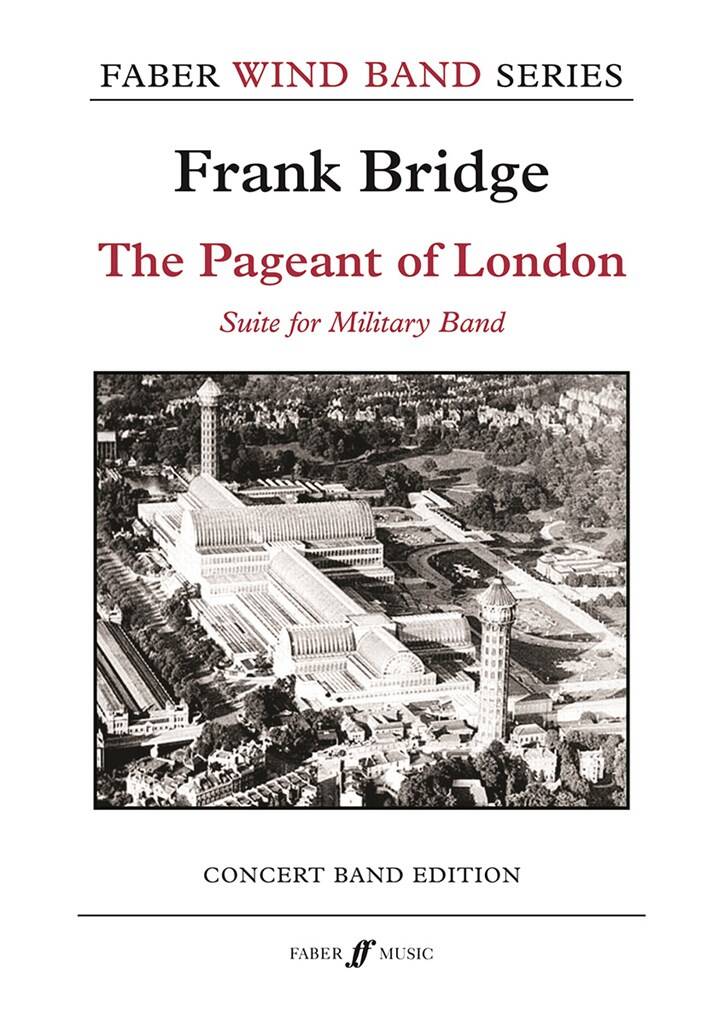
The Pageant of London - Frank Bridge
Frank Bridge was one of the finest English composers of the first half of the 20th century. The Pageant of London is his only work for wind band, comprising of two marches, one scored from Bridge's best known organ piece and including the chimes ofBig Ben, plus three short renaissance pastiche items, one arranged from Playford (later used by Peter Warlock in Capriol Suite). The music is tuneful, approachable and, in the words of wind band 'legend' Timothy Reynish makes a fine alternative toHolst's two suites, which were composed around the same time. Reynish has introduced this work to concert bands right across the world. It has been performed in USA and the Far East, recorded by the celebrated Kosei Wind Orchestra of Japan and alsoby the BBC National Orchestra of Wales in the Chandos edition of Bridge Orchestral Music.
Estimated dispatch 7-14 working days
-
 £104.99
Pisa - Jacob de Haan
The Tower of Pisa is beyond doubt the most famous and legendary tower in the world. The main motif symbolizes the three bells of the tower. The motif is transformed throughout the piece in which the spectacular effect of a downward motive playedagainst sustained chords, symbolizing the leaning tower, is used. The finale portrays a parade of all bands from around Pisa coming to town to celebrate, accompanied by the bells of the tower!
Estimated dispatch 7-14 working days
-
 £109.99
Soldaat van Oranje - de musical - Tom Harriman
Soldaat van Oranje (Soldier of Orange) is the most successful musical ever put on stage in the Netherlands. Since its premiere in October 2010, which was attended by the Dutch Royal Family, this theatre production has remained an enormous success. War and love have always been closely connected and the beautiful songs around these themes make this excellent musical an unforgettable project.
Estimated dispatch 7-14 working days
-
 £144.99
Legends of Gold in Green - Thomas Doss
This is the tale of the small Upper Austrian village of Neukirchen/Lambach. The beautiful landscape around the village is as green and golden as the linden leaf cross on the village coat of arms. For almost 1000 years, this community and its hardworking folk are known for being creative, ambitious and joyful. Above all, music plays an important role in their every day life.
Estimated dispatch 7-14 working days
-
 £271.60
Cerebral Vortex - Øyvind Moe
Cerebral Vortex was composed for Musikkforeningen Nidarholm for their participation in the 2009 World Music Contest in Kerkrade, The Netherlands. Tthe first performance was given at this contest conducted by Espen Andersen, with the composer in thesaxophone section.The title is meant to describe a from of writer's block caused not by lack of ideas, but rather a lack of ability to channel and form the madness swirling around inside the head of someone with a great desire to express something. In this respect,the piece can be said to be an exercise in keeping focus from the composer's side. A limited amount of material is repeated and treated to create a development that always has a solid anchor point. This is emphasized by the return to the openingtheme towards the end.
Estimated dispatch 7-14 working days
-
 £174.10
Graceful Ghost - William Bolcom
I came to know of this piece when hearing famous Norwegian ragtime pianist Morten Gunnar Larsen playing it at a concert with the Norwegian Navy Band Bergen.I was struck by its melancholic beauty and wanted to arrange it for band. Ragtimes are rarely in a minor key (which this one is) and when you first hear it, you might think it was written around the time when Scott Joplin was the main ragtime composer. But, if you listen more carefully, you notice that some of the harmoniesare more advanced than one might expect in traditional ragtime, giving the piece a slightly more contemporary feel. The composer William Bolcom wrote Graceful Ghost in 1970 to honour the memoryof his father and it is one of his mostpopular pieces.
Estimated dispatch 7-14 working days
-
 £137.70
The Super Heroes of the Band - Øystein Sjøvaag Heimdal
You'll find many kinds of super heroes around you. This is a suite presenting the super heroes of the band:1. Low Brass Man2. The Flute Phantom3. Trumpet Lady4. Sgt. Major Minor The short movements can beplayed individually or together as I suite.
Estimated dispatch 7-14 working days
 View Music