
Results
-
 £154.99
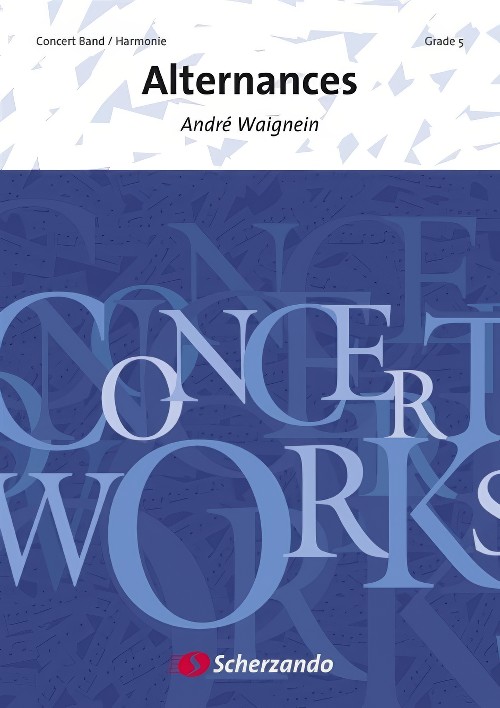
Alternances (Concert Band - Score and Parts) - Waignein, Andre
In 1984 the Corciano (Italy) Tourist Authority initiated a composition competition for wind band. For this event Andre Waignein composed "Alternances for Symphonic Band", a piece which won him the first prize in the competition. The opening of the work is based on a very tonal foundation. The English horn (or alto saxophone) introduces a rich and warm theme which is immediately taken up by the whole orchestra in a grandiose manner. The subsequent development shows off all the elements of the orchestra to the full. In the second movement, the English horn (or alto saxophone) comes to the fore again. A harmonic change gradually takes us back to the allegro of the first movement. The musical development is here dominated by exuberance, virtuosity and rhythm.Duration: 12:30
Estimated dispatch 7-14 working days
-
 £105.10
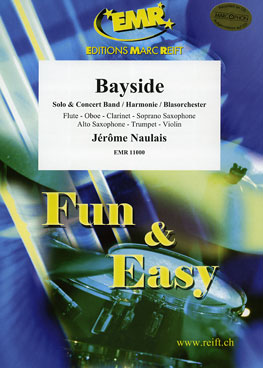
BAYSIDE (Flexible Solo with Intermediate Concert Band) - Naulais, Jerome
Solo for Flute, Oboe, Clarinet, Soprano Saxophone, Alto Saxophone , Trumpet or Violin. Particularaly superb with Alto Sax Solo. Duration: 3:45
Estimated dispatch 7-14 working days
-
 £174.95
RUNCORN BRIDGE (Professional Concert Band - Score and Parts) - Carpenter, Gary
The through-arch bridge that is visible for miles across the Cheshire Gap is one of two adjacent bridges that cross both the River Mersey and Manchester Ship Canal. Its formal name is the Silver Jubilee Bridge is more usually known as the Runcorn Bridge. Runcorn Bridge begins with a brief, quiet, introduction featuring an oboe solo. There follows a lively march at the end of which a reflective interlude (or bridge!) based upon the tune that occurs twice in the march leads to a lyrical, almost nocturnal section spotlighting the alto saxophone. A variant of the first interlude leads to a scherzo-like section kicked off by the euphonium with a 'trio' that contains a Latin-inflected version of the oboe melody first heard in the introduction. A third interlude variant heralds a return of the nocturnal melody firstly as a horn solo but subsequently returning to the alto saxophone. Previous melodic materials gradually combine as an extended crescendo leads to a majestic, but short, coda that in a gesture of symmetrical solidarity refers back to the march tune utilised in the earlier interludes. Duration: 10:30. Recorded on Polyphonic QPRM160D Bells Across the Atlantic.
Estimated dispatch 7-14 working days
-
£37.95
RUNCORN BRIDGE (Professional Concert Band - Score only) - Carpenter, Gary
The through-arch bridge that is visible for miles across the Cheshire Gap is one of two adjacent bridges that cross both the River Mersey and Manchester Ship Canal. Its formal name is the Silver Jubilee Bridge is more usually known as the Runcorn Bridge. Runcorn Bridge begins with a brief, quiet, introduction featuring an oboe solo. There follows a lively march at the end of which a reflective interlude (or bridge!) based upon the tune that occurs twice in the march leads to a lyrical, almost nocturnal section spotlighting the alto saxophone. A variant of the first interlude leads to a scherzo-like section kicked off by the euphonium with a 'trio' that contains a Latin-inflected version of the oboe melody first heard in the introduction. A third interlude variant heralds a return of the nocturnal melody firstly as a horn solo but subsequently returning to the alto saxophone. Previous melodic materials gradually combine as an extended crescendo leads to a majestic, but short, coda that in a gesture of symmetrical solidarity refers back to the march tune utilised in the earlier interludes. Duration: 10:30. Recorded on Polyphonic QPRM160D Bells Across the Atlantic.
Estimated dispatch 7-14 working days
-
 £39.60
Symphony No.1 Theme (Concert Band - Score and Parts)
The Johannes Brahms Symphony No. 1 Theme is designed to give your best players an opportunity to play a solo with band accompaniment. This solo is the same one that appears on page 36, book 1 of The Yamaha Advantage for oboe, bassoon, alto clarinet, tenor saxophone and horn. This arrangement also includes solo parts for Flute, Clarinet and Alto Saxophone. This piece can also be performed by band alone.
Estimated dispatch 7-14 working days
-
 £73.50
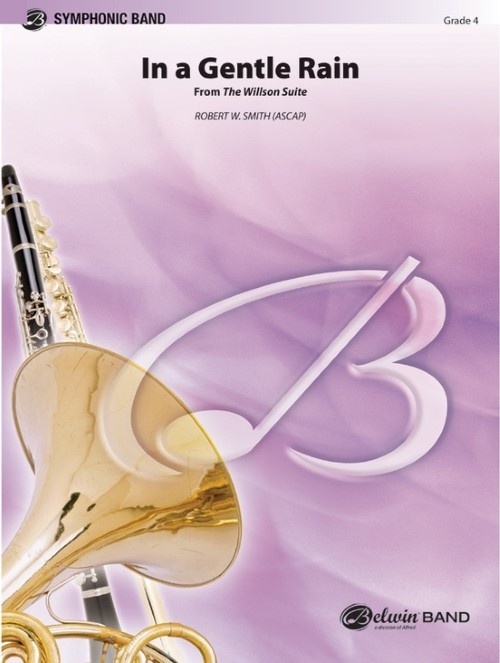
In a Gentle Rain (Flexible Solo with Concert Band - Score and Parts) - Smith, Robert W.
Solo for Flute, Oboe, Clarinet, Bassoon, Alto Saxophone, Tenor Saxophone, Baritone Saxophone, Trumpet, French Horn, Trombone, Euphonium or Tuba. This second movement of The Willson Suite has been restructured to accommodate virtually any wind instrument as the soloist. Serene by nature, the charismatic melody is accompanied by unique effects reminiscent of a gentle rain. The solo may be divided to permit multiple soloists to be featured. This creative approach is the perfect opportunity to feature outstanding soloists at your spring concert. An incredibly musical work. Your audience will be in awe. Duration: 3.45
Estimated dispatch 7-14 working days
-
 £115.00
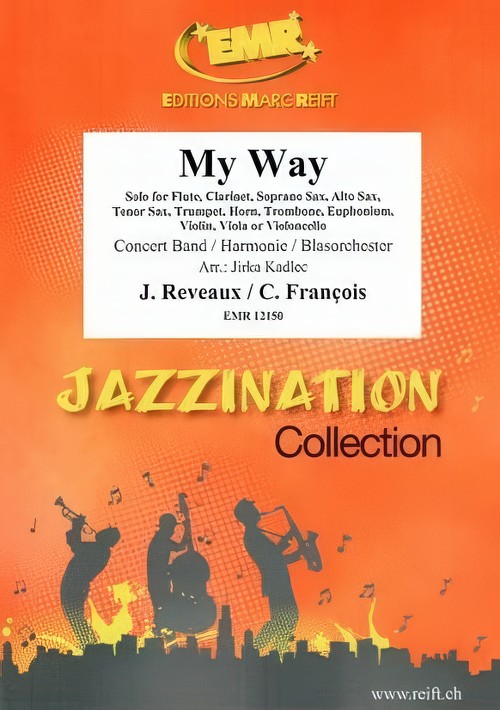
My Way (Flexible Solo with Concert Band - Score and Parts) - Francois & Revaux - Kadlec, Jirka
Solo for Flute, Clarinet, Soprano Saxophone, Alto Saxophone, Tenor Saxophone, Trumpet, Horn, Trombone, Euphonium, Violin, Viola or VioloncelloDuration: 3.45
Estimated dispatch 7-14 working days
-
 £115.00
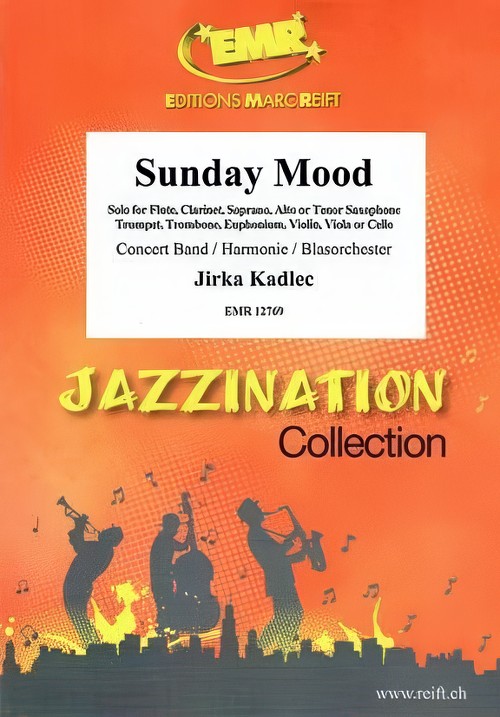
Sunday Mood (Flexible Solo with Concert Band - Score and Parts) - Kadlec, Jirka
Solo for Flute, Clarinet, Soprano Saxophone, Alto Saxophone, Tenor Saxophone, Trumpet, F Horn, Trombone, Euphonium, Violin, Viola or VioloncelloDuration: 2.50
Estimated dispatch 7-14 working days
-
 £37.95
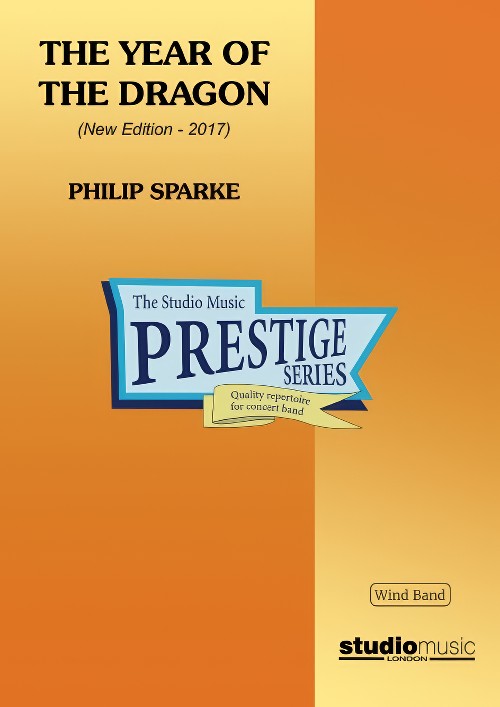
The Year of the Dragon (Prestige Concert Band - Score only) - Sparke, Philip
The 2017 version of The Year of the Dragon was commissioned by the Siena Wind Orchestra and given its world premiere on June 17th 2017 in Bunkyo Civic Hall, Tokyo, conducted by the composer.The original wind band arrangement of The Year of the Dragon was made in 1985, a year after the composer wrote the brass band version. At that time he was still learning the intricacies of writing for wind band (and still is!) and in the 32 years which have elapsed since then, his approach to scoring for the medium has developed and, hopefully, improved.Here are the main differences between the two versions:In the 1980's, the wind band movement was much less international than it is now. British wind bands were still to some extent based on the military band tradition of the time, which tended to use rather smaller instrumentation than the then-dominant American university model. The new version embraces a much more international instrumentation, including low woodwinds and string bass, as well as an expanded percussion section.In the original version there was a touch of naivety in the way the composer wrote for the woodwinds; much of their articulation was transferred too literally from the brass version, resulting in some unidiomatic writing, which he has tried to improve in the new version.In addition to the above, Philip's own compositional style has matured and developed in the intervening 32 years. There are some passages in the original which he simply would not write today - not because they are 'wrong', but because his way of writing has changed. The new version is perhaps how he would have written it today, rather than simply dressing the original version in new clothes.The work is in three movements:Toccata opens with an arresting side drum figure and snatches of themes from various sections of the band, which try to develop until a broad and powerful theme from the middle of the band asserts itself. A central dance-like section soon gives way to the return of this theme, which subsides until faint echoes of the opening material fade to a close.Interlude takes the form of a sad and languid solo for alto saxophone. A chorale for the whole band introduces a brief spell of optimism but the saxophone solo returns to close the movement quietly.Finale is a real tour-de-force for the band with a stream of rapid semi-quavers running throughout the movement. The main theme is heroic and march-like but this is interspersed with lighter, more playful episodes. A distant fanfare to the sound of bells is introduced and this eventually returns to bring the work to a stirring close.
Estimated dispatch 7-14 working days
-
£199.95
The Year of the Dragon (Prestige Concert Band - Score and Parts) - Sparke, Philip
The 2017 version of The Year of the Dragon was commissioned by the Siena Wind Orchestra and given its world premiere on June 17th 2017 in Bunkyo Civic Hall, Tokyo, conducted by the composer.The original wind band arrangement of The Year of the Dragon was made in 1985, a year after the composer wrote the brass band version. At that time he was still learning the intricacies of writing for wind band (and still is!) and in the 32 years which have elapsed since then, his approach to scoring for the medium has developed and, hopefully, improved.Here are the main differences between the two versions:In the 1980's, the wind band movement was much less international than it is now. British wind bands were still to some extent based on the military band tradition of the time, which tended to use rather smaller instrumentation than the then-dominant American university model. The new version embraces a much more international instrumentation, including low woodwinds and string bass, as well as an expanded percussion section.In the original version there was a touch of naivety in the way the composer wrote for the woodwinds; much of their articulation was transferred too literally from the brass version, resulting in some unidiomatic writing, which he has tried to improve in the new version.In addition to the above, Philip's own compositional style has matured and developed in the intervening 32 years. There are some passages in the original which he simply would not write today - not because they are 'wrong', but because his way of writing has changed. The new version is perhaps how he would have written it today, rather than simply dressing the original version in new clothes.The work is in three movements:Toccata opens with an arresting side drum figure and snatches of themes from various sections of the band, which try to develop until a broad and powerful theme from the middle of the band asserts itself. A central dance-like section soon gives way to the return of this theme, which subsides until faint echoes of the opening material fade to a close.Interlude takes the form of a sad and languid solo for alto saxophone. A chorale for the whole band introduces a brief spell of optimism but the saxophone solo returns to close the movement quietly.Finale is a real tour-de-force for the band with a stream of rapid semi-quavers running throughout the movement. The main theme is heroic and march-like but this is interspersed with lighter, more playful episodes. A distant fanfare to the sound of bells is introduced and this eventually returns to bring the work to a stirring close.
Estimated dispatch 7-14 working days
 View Music