
Results
-
 £106.99
The River Knows Your Name - Jacob de Haan
This work describes the way the German river Saar holds the names of all the people who once lived in the area and of those who live there now. The introduction depicts the river flowing toward its confluence with the Mosel. The first names revealed by the river, in a dance, are those of the Romans, who established their first settlement here. Then the beautiful Saar Cathedral is portrayed, where believers give voice to the names of the people they know. Next, a powerful passage resounds: a reflection of the entrepreneurial spirit in Dillingen that has taken shape through the famous metal industry. Via a short clarinet solo, the work flows toward its conclusion in an emotional, stirring fashion, from nostalgic strains to full-blown euphoria.
Estimated dispatch 7-14 working days
-
 £73.50
Kyiv, 2022 - Brian Balmages
Now in ColorFlex format for groups with limited instrumentation! Kyiv, 2022 was written as a powerful sequel to Moscow, 1941, one of Brian Balmages's most well-known pieces. This work changes the narrative, where the theme from Moscow now becomes the aggressor, and the heroic people of Ukraine are represented by the Ukrainian National Anthem and the powerful "Prayer for Ukraine." Certain to spark discussions about humanity, history, and culture. (4:30)About ColorFlexConductors no longer need to choose between function and texture! Ensembles with instrumentation challenges still have numerous options to cover all parts, yet orchestration is elevated significantly to be faithful to the composer's original intent. Musicians have more opportunities to rest, and timbre once again becomes a central element of each work. So go ahead and have the best of both worlds: flexible and colorful.
Estimated dispatch 7-14 working days
-
 £82.95
Forgotten Tales of the West - Adrian B. Sims
Now in ColorFlex format for groups with limited instrumentation! This powerful work pays tribute to the many battles fought between the Native Americans and Europeans. Forgotten Tales of the West moves between Native American-influenced themes and western harmonies before adapting into an amalgamation of the two. Incredible writing by Adrian B. Sims, who was a teenager when he composed this piece! (4:15)About ColorFlexConductors no longer need to choose between function and texture! Ensembles with instrumentation challenges still have numerous options to cover all parts, yet orchestration is elevated significantly to be faithful to the composer's original intent. Musicians have more opportunities to rest, and timbre once again becomes a central element of each work. So go ahead and have the best of both worlds: flexible and colorful.
Estimated dispatch 7-14 working days
-
 £79.50
The Country Club Stomp! - Jarod Hall
Now in ColorFlex format for groups with limited instrumentation !Experience a New Orleans vibe with this exciting, parade-inspired crowd-pleaser! The Country Club Stomp! is based on an infectious rhythmic groove and spirited melody. JaRod Hall uses elements of jazz as well as a strong reference to the West African circle dances from which this music evolved. Stellar writing that is fun, catchy, and informative! (3:00)About ColorFlexConductors no longer need to choose between function and texture! Ensembles with instrumentation challenges still have numerous options to cover all parts, yet orchestration is elevated significantly to be faithful to the composer's original intent. Musicians have more opportunities to rest, and timbre once again becomes a central element of each work. So go ahead and have the best of both worlds: flexible and colorful.
Estimated dispatch 7-14 working days
-
 £53.95
Modal Marauders - Nathan Farrell
Load up your musical instruments of ultimate destruction and prepare to plunder the high seas, the intergalactic expanse, or just the band room! Bring major tonality to its knees with Nathan Farrell's epic exploration of Dorian modality---Modal Marauders! Your beginning band students will love learning the ear-worm-inducing melody and fun bass lines as they rehearse and perform this epic work. Interesting percussion features and "battles" between the sections are easy to teach and engaging for all performers. It is an exciting piece that will be perfect for your young band. (2:00)
Estimated dispatch 7-14 working days
-
 £66.95
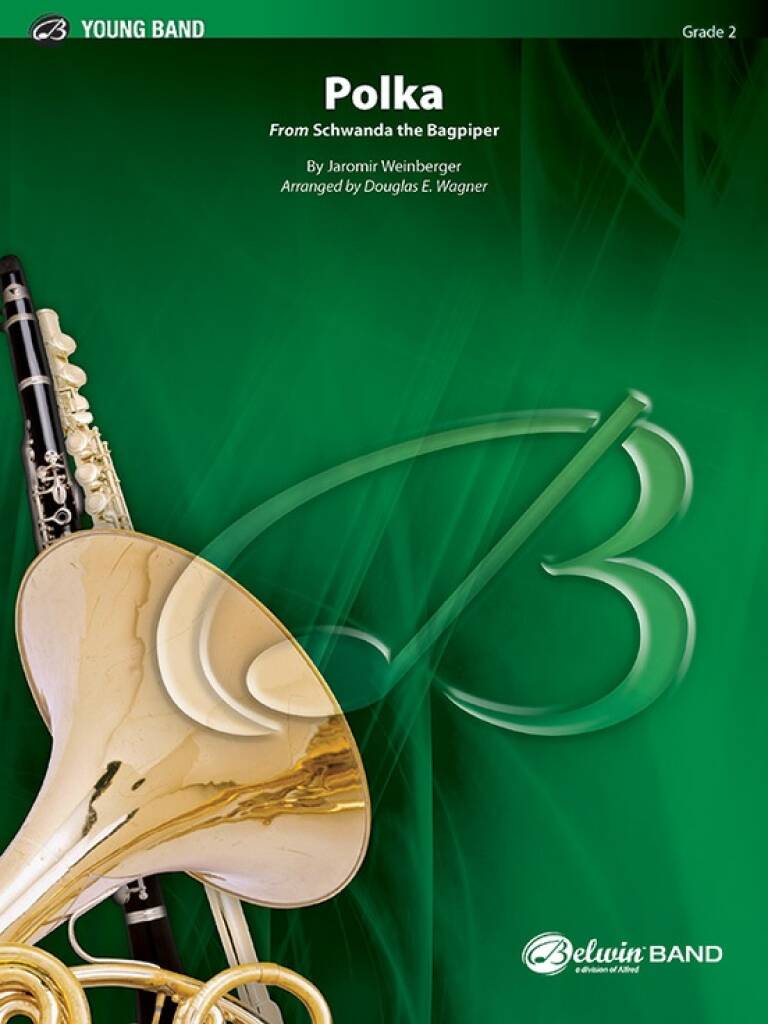
Polka: From Schwanda the Bagpiper - Douglas E. Wagner
A true classic of the concert band repertoire, the upper-end transcription of this excerpt from Czech composer Jaromr Weinberger's folk opera Schwanda the Bagpiper has appeared on countless concert programs and contest lists for the past nine decades. At long last, this cheerful work is available in a solid scoring for younger players, expanding its appeal to many more ensembles and audiences. Arranged from the original orchestral score, all parameters of this level have been observed for ease of preparation. (2:00)
Estimated dispatch 7-14 working days
-
 £66.95
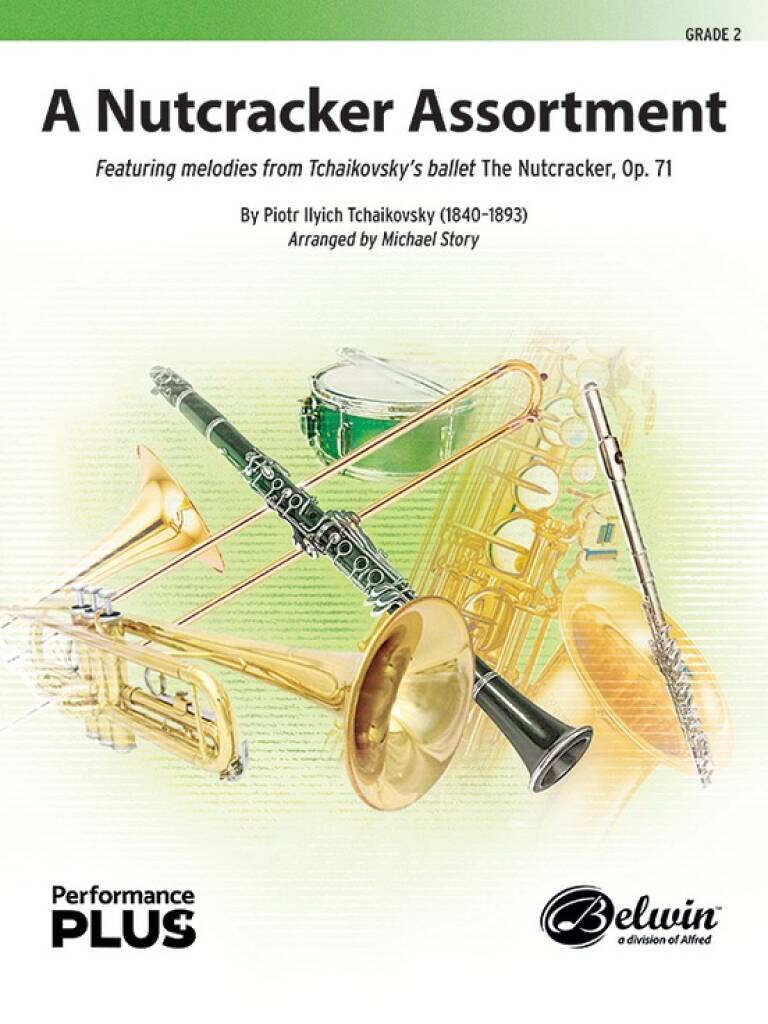
A Nutcracker Assortment
A Nutcracker Assortment, arranged by Michael Story, contains six memorable themes from one of Tchaikovsky's greatest works. "The March," "Dance of the Sugar Plum Fairy," "Waltz of the Flowers," "Dance of the Reed Flutes," "Arabian Dance," and "Trepak" are all presented here in rapid succession. This piece will be an audience favorite at your holiday concert and serve your students as a great introduction to some of the most memorable melodies from a significant composer. (2:35) The PerformancePlus+ series is an innovative addition to the ever-expanding MakeMusic Cloud interactive library. These engaging selections are presented with educational resources designed to enrich the rehearsal process and create outstanding performances. Including:Assignment, recording, and assessment tools within MakeMusic CloudPiece-specific exercises focused on skills and techniquesPrintable sheet music (with a standard MakeMusic Cloud subscription)Educational tips and suggestions to support learningAvailable in print and digital formats.
Estimated dispatch 7-14 working days
-
 £119.60
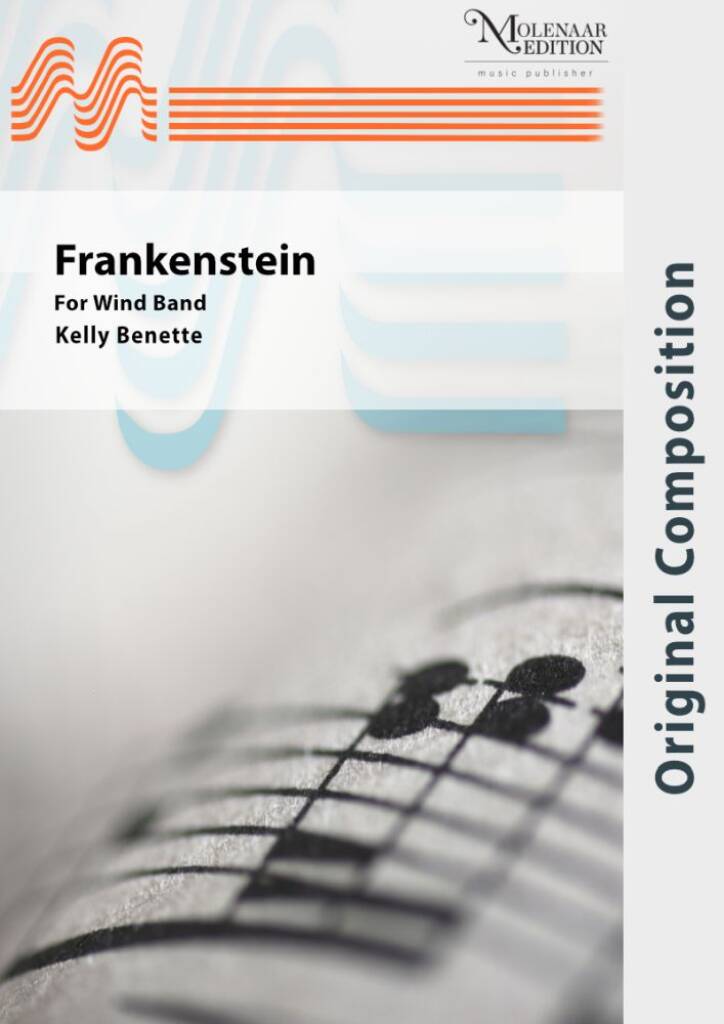
Frankenstein - Kelly Bennette
This tone poem entitled Frankenstein is based on the original novel by Mary Shelley (1797-1851). Victor Frankenstein creates life from pieces of many dead bodies. Soon, his monster comes to life. Though very intelligent, the monster has the maturity of a child. In a fit of rage, the monster kills William, Victor's younger brother. The monster finds Victor in The Alps and asks him to make him a mate. Victor makes him a mate, but kills her. The enraged monster tells Victor, "I will be with you on your wedding night." The monster forces his way into the wedding and kills Victor's fiance, Elizabeth. Victor chases the monster all the way to the Arctis where he dies of exhaustion. The monster finds Victor's body and realizes he has nothing to live for and goes away to die.
Estimated dispatch 7-14 working days
-
 £90.00
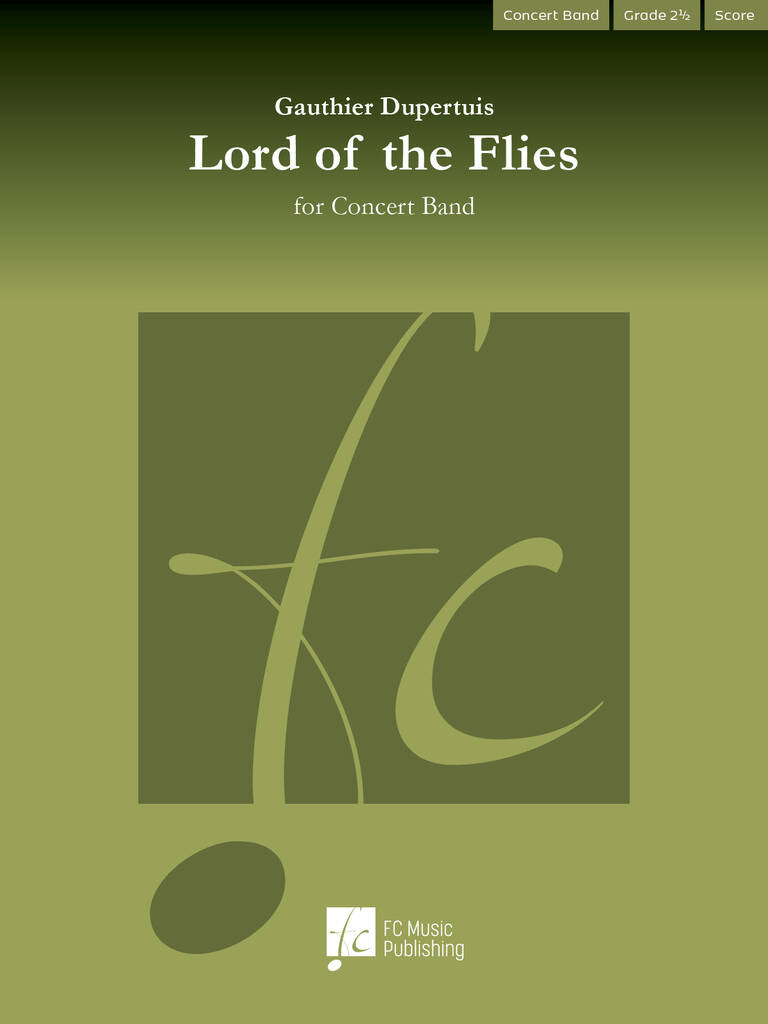
Lord of the Flies - Gauthier Dupertuis
The title of this work by Gauthier Dupertuis refers to the novel Lord of the Flies by William Golding, published in 1954. Lord of the Flies is intended to be a small symphonic poem describing different episodes of the book: the despair of the children stranded on the island, the use of the unifying conch and symbol of democracy, the adventures, and the formation of the camp and finally the savagery of the clan of Jack which undeniably leads to chaos. The finale is mysterious and half-tone, imbued with both the relief of having been rescued, and a deep sadness linked to the tragic events that have occurred on the island.All the main themes and elements developed in the work come from the idea "d-e-f", exposed from the first bars. The orchestration is intended to be variable in geometry and avoids the main technical difficulties related to the instruments. However, the composer wanted to find as many colors as possible and avoided confining himself to too "simple" harmonies.Lord of the Flies: a piece accessible to most concert bands.
Estimated dispatch 7-14 working days
-
 £123.20
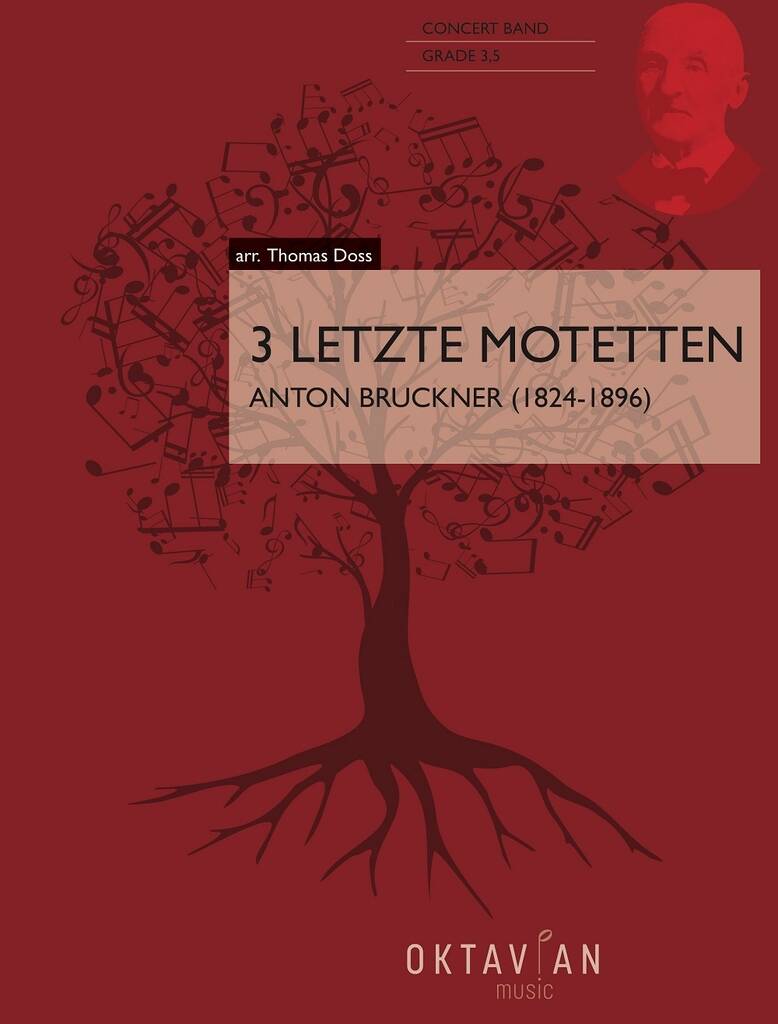
3 Letzte Motetten - Anton Bruckner
Anton Bruckner (b. 4.9.1824, Ansfelden, d. 11.10.1896, Vienna) didn't have it easy. Throughout his life, the Austrian composer was plagued by self-doubt. Anton Bruckner came from a simple, rural background. After the death of his father, he was accepted as a choirboy at the monastery of Sankt Florian in 1837. After several years as a school assistant and his own organ and piano studies, he first worked as organist in St. Florian, then from 1855 as cathedral organist in Linz. Introduced to music theory and instrumentation by Simon Sechter and Otto Kitzler, he discovered Richard Wagner as an artistic role model, whom he admired throughout his life and also visited several times in Bayreuth.In 1868 Anton Bruckner became professor of basso continuo, counterpoint and organ at the Vienna Conservatory; ten years later court organist; and in 1891 finally honorary doctor of the University of Vienna. He was considered an important organ virtuoso of his era, but had to wait a long time for recognition as a composer. It was not until Symphony No.7 in E major, composed between 1881 and 1883, with the famous Adagio written under the effects of Wagner's death, that he achieved the recognition he had hoped for, even if he was reluctant to accept it given his inclination towards scepticism and self-criticism.Anton Bruckner was a loner who did not want to follow a particular school or doctrine. He composed numerous sacred vocal works, such as his three masses, the Missa Solemnis in B flat minor (1854), the Te Deum (1881-84) and numerous motets. As a symphonic composer, he wrote a total of nine symphonies and many symphonic studies from 1863 onwards, tending to revise completed versions several times over. Bruckner's orchestral works were long considered unplayable, but in fact were merely exceptionally bold for the tonal language of their time, uniting traditions from Beethoven through Wagner to folk music, on the threshold between late Romanticism and Modernism.Anton Bruckner composed about 40 motets during his lifetime, the earliest a setting of Pange lingua around 1835, and the last, Vexilla regis, in 1892.Thomas Doss has compiled some of these motets in this volume for symphonic wind orchestra.These motets show many characteristics of personal expression, especially Bruckner's colourful harmony in the earlier works, which is in places aligned with Franz Schubert (changes between major and minor; and movements in thirds). Later works are characterised by many components which, in addition to the expanded stature of the movements, include above all a sense of the instrumentation as an outward phenomenon and the harmony as a compositional feature that works more internally. Some aspects of Bruckner's work are the result of his long period of study, which familiarised him not only with the tradition of his craft, but also gave him insights into the "modernity" of his time in such composers as Wagner, Liszt and Berlioz.From this developed his personal standpoint, which always pursues the connection between the old and the new.
Estimated dispatch 7-14 working days
 View Music