
Results
-
 £129.99
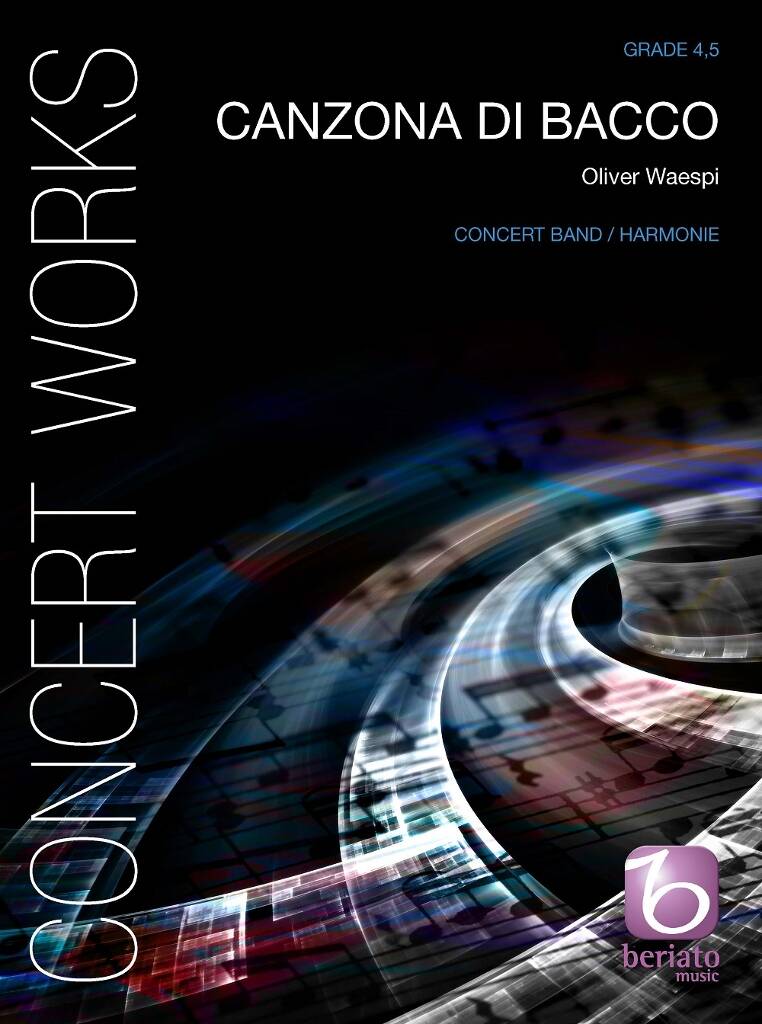
Canzona di Bacco - Oliver Waespi
This piece comprises a series of variations on the melody of "Ami, dans cette vie" ("Friend, in this life), an 18th century French song. Like the famous poem "Canzona di Bacco" by Lorenzo de' Medici, this song invites the listener to enjoy life, friendships, love and wine while there is still time to do so. The epicurean nature of this text contrasts with a deeply melancholic melody, a contradiction which is explored in the present work. After a somewhat turbulent first part, the original melody is revealed in a serene and pensive middle section which highlights several soloists. In the last movement, the atmosphere is transformed to become increasingly exuberant, like a Bacchus incantation. The piece concludes with a final dazzling statement of the original theme. Canzona di Bacco was commissioned by the Vesoul Municipal Wind Band, who premiered the work on 24 June 2022 at the Edwige Feuillre Theatre in Vesoul (France), under the direction of Mathieu Anguenot.
Estimated dispatch 7-14 working days
-
 £102.99
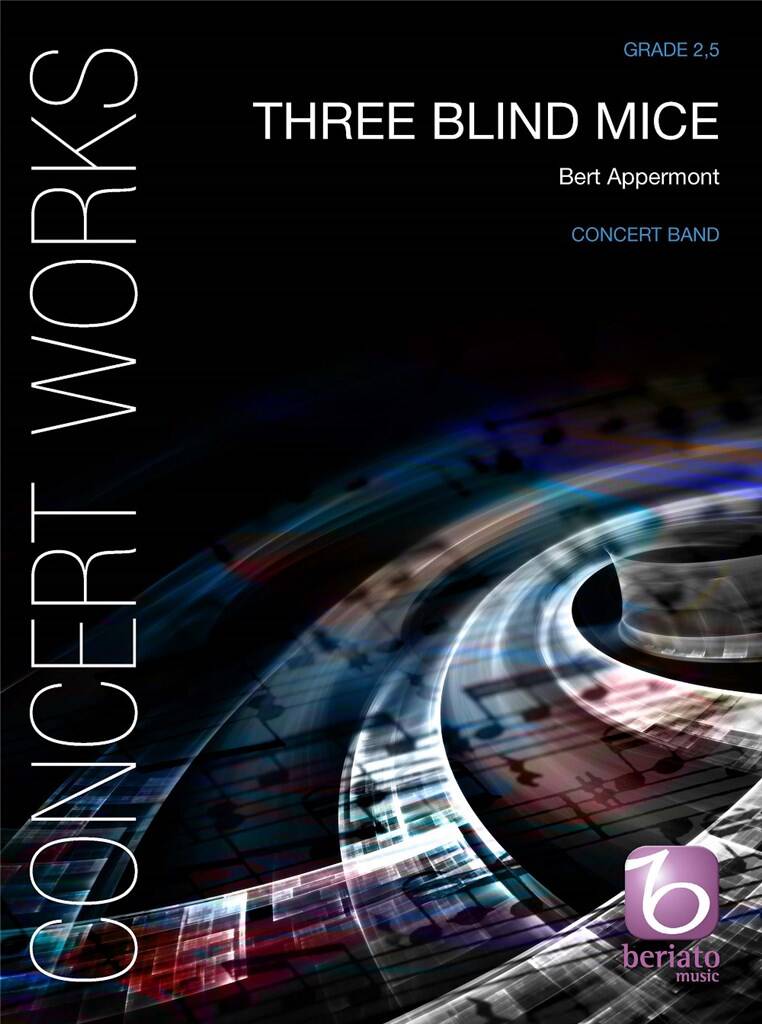
Three Blind Mice - Bert Appermont
This composition is based on the children's song 'Three Blind Mice', of which the melody is featured in a range of variations: in a canon, in inversion, in minor, transformed, with changing harmonisations and orchestrations, and in different times and tempi. The work consists of three continuous, contrasting movements: 1) Mouse March: The mice cheerfully set off while the original melody is presented as a march. - 2) Hymn: In a tuneful hymn, the wonderful praises of the life of mice are sung. - 3) Catch Me If You Can: In an animated chase, the farmer's wife is trying to catch the mice. Following a stirring acceleration, she cuts off their tails in accordance with the lyrics of the song. I hope this work, with its humorous touch, will be a welcome contribution to the expansion of interesting repertoire for the lower divisions. - Bert Appermont
Estimated dispatch 7-14 working days
-
 £109.99
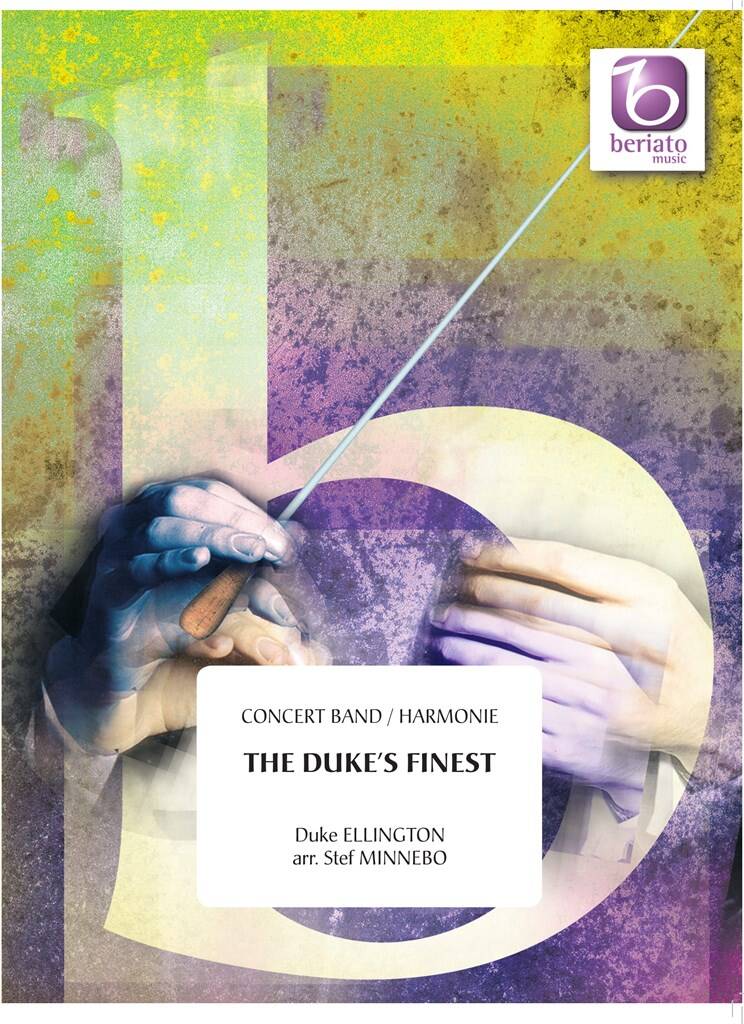
The Duke's Finest - Duke Ellington
Duke Ellington (1889- 1974) was a very successful American pianist, conductor, composer and arranger. His orchestra existed for decades and was able to survive thanks to the enormous hits that he and his collaborators wrote. Many of those songs now belong to the standard repertoire of jazz musicians.Billy Strayhorn (1915-1967) was arranger and composer with the orchestra from 1939, and also wrote Take the A-Train, which became the band's favourite song from 1941. Many recordings were made of it. Juan Tizol (1900-1984, valve trombone) played with Duke Ellington almost his entire career and composed Latin songs for the orchestra. He is co-composer of Caravan and Perdido.Just likein the original Duke Ellington concerts, the medley begins with Take the A-Train, followed by a number of classics from the repertoire of the legendary orchestra. In some songs there are soloists, notable a solo on kettledrums in C- Jam Blues. This solo can also be improvised.When rehearsing a lot of attention has to be paid to the drum and bass, which together form the rhythm section and drive the orchestra on. The other sections have to be tight and create a coherent swing effect. The swing shouldn't be too stiff, and can vary per song. For example in "In a Sentimental Mood", the melody can be played almost straight (classically), while the rhythm section continues swinging.
Estimated dispatch 7-14 working days
-
 £139.99
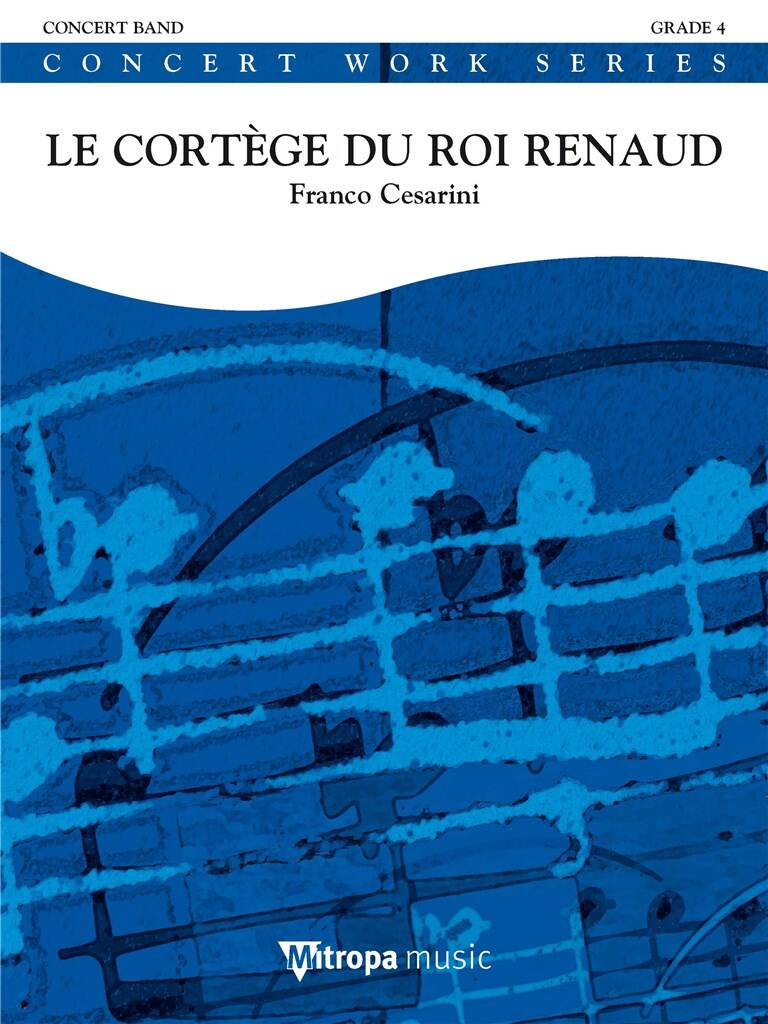
Le Cortge du Roi Renaud - Franco Cesarini
Le cortge du roi Renaud is a suite in five parts. It is based on tales that originated in southern European folk songs, dating back as far as the 16th century. A large portion of these songs are of the genre "Complaintes" songs in which the text gives a detailed description of events having a generally criminal or macabre character. The most familiar song to feature the tales of Roi Renaud is "Fualdes", consisting of 48 verses.The first part of the suite is based on the song "La Porcheronne" (The Swineherd). It telis the story of a young woman forced by her mother-in-law to tend pigs while her husband is away fighting in the war. She is freed only when her husband returns sevenyears later.The next part tells the story of "La mrquise Empoisonne" (The Poisoned Marquise). A marquise is coerced by her king to become his mistress. The jealous queen poisons her by means of a bouquet of deadly scented fiowers.Despite having the character of a merry dance, the third part, "La maumarie vengee" (The Avenged Wedding), expresses the touching story of Queen Clotilde, persecuted for her refusal to live according to the Aryan beliefs."La belle engloutie" (The Swallowed Beauty) relates the tale of the young wife of King Renaud. She cannot imagine a life without her husband, who was mortally wounded in the war, and begs the earth to open and swallow her up so thst she may rejoin her love.The gruesome content of the final part,"Le tueur de femmes" (The Wife Killer), bears a strong resembiance to the tale of Bluebeard. The story is about a young wife in danger of being drowned in a pond by her husband, which is what happened to her 13 predecessors. Thanks to her cunning, she manages to turn the tables and contrive her husband's demise.
Estimated dispatch 7-14 working days
-
£140.50
Lanigan's Ball - Ed Kiefer
Irish music is always interesting to composers and band musicians. It fits well with a concert band and is fun to play. Ed Kiefer starts with a solo clarinet on the jig Lanigan's Ball that builds and builds to a dramatic presentation of the folk song, before leading a section of repose based on the song Binnorie. The percussion is highlighted in a build-up to the climax where the tunes are combined for a dramatic conclusion.
Estimated dispatch 7-14 working days
-
 £91.90
The Hustle - Van McCoy
At the recording sessions for his album 'Disco Baby' (1975) Van McCoy had one extra hour of studio time left and so he wrote 'The Hustle' in a hurry, as a well-known New York disc jockey had told McCoy about a new dance rage. Contrary to McCoy's expectations, this song became a real hit and even a number one hit in the States. In 1976, the song was awarded a Grammy as Best Pop Instrumental Performance.
Estimated dispatch 7-14 working days
-
 £50.60
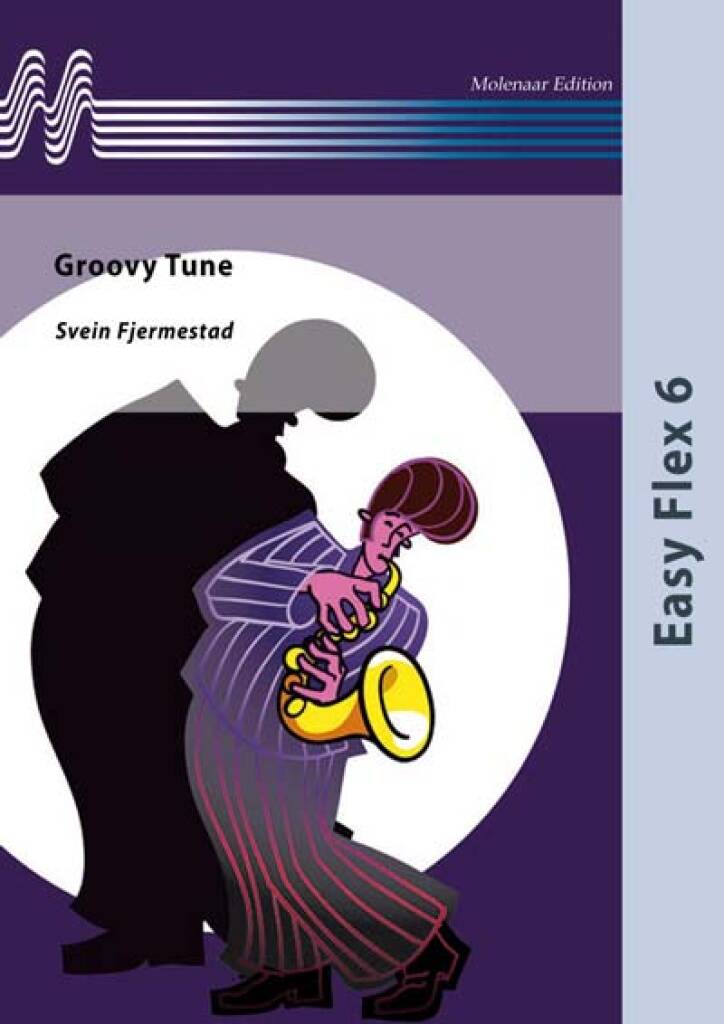
Groovy Tune - Svein Fjermestad
Groovy Tune is as the title suggests a tune with a heavy groove. An uptempo song for band who want to play funky music! It`s a short song based on a riff in the blues scale. The tempo is just a suggestion, as the tune might as well work both faster and slower! The middle part is thought of as a kind of dupstep break. Feel free to add many "ugly" effects which helps create the dupstep-style!
Estimated dispatch 7-14 working days
-
 £154.60
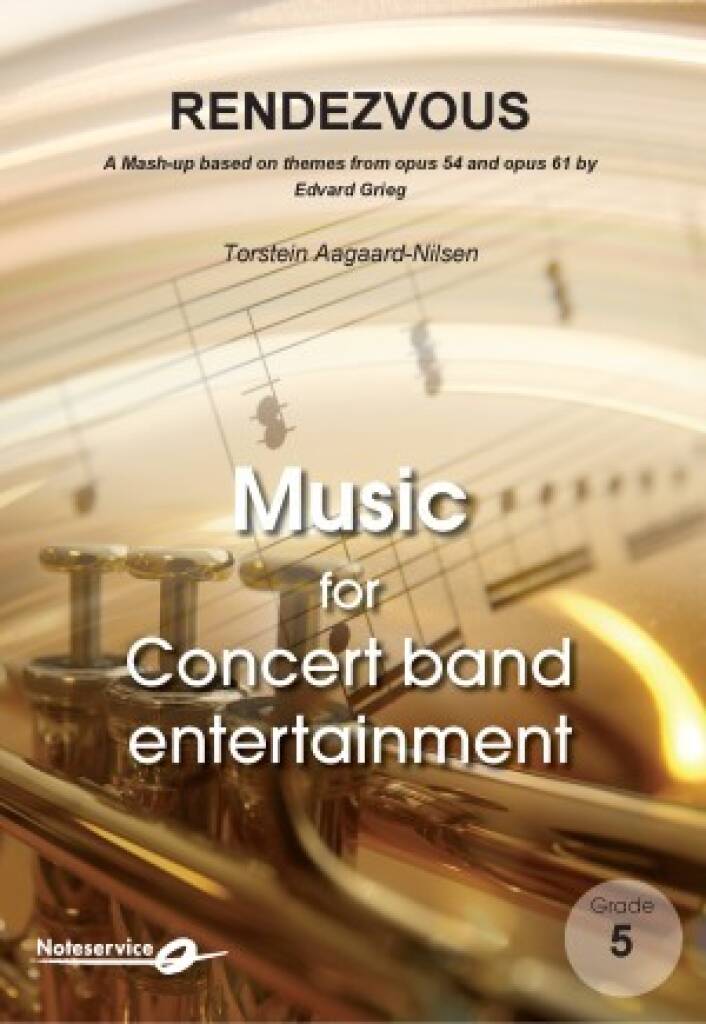
Rendezvous - Torstein Aagaard-Nilsen
Rendezvous was commissioned by Krohnengen Brass Band for their 50th Anniversary in 2019. This version for Concert Band was scored autumn 2020.Rendezvous is devided into three sections. Each section are referring to Edvard Grieg's own titles. but twisted, to make sure that everybody understand that this music is a mash-up of themes Edvard Grieg used in opus 54 (for piano) and opus 61 (songs for children).1. Trolltog med avsporing (March of the Trolls derailment)March of the Trolls is a famous part of Edvard Grieg lyric pieces, opus 54.2. Klokkeklang i feil sang (Bell ringing in wrong tune).Bell ringing show that Grieg was one of the first composers to write the way impressionists did. What happens if this beatiful piece is combined with several other themes from the same book? It somehow works in its own way.3. Pep talk til Blakken (Pep talk to Blakken)The riff used in the first part becomes an important part of the third part: a funky treat of the childrens song "Kveldssang for Blakken" (Evening song for Blakken).I felt that a rather tired old horse needed a pep talk more than a slow tune. So that is why you get this music(!) - and this is how my rendezvous with Grieg ends.Not sure what maestro Grieg would have thougt... But, I have read that the fiddlers that played the tunes Grieg used was not happy with the way Grieg used them.So there you go...Torstein Aagaard-Nilsen
Estimated dispatch 7-14 working days
-
 £186.20
Wald Sinfonie - Kees Vlak
It was during his stay at Freiburg, Germany, where he was attending a Music Festival, that Kees Vlak found his inspiration for this romantic work. At this festival he was awarded a prize for one of his compostitions, which was played by several bands from different countries. The composer was staying in the small village of Horben, hidden among pine woods on a mountain at the border of the Black Forest. From the balcony of his room he had a splendid view on the Schawinsland Valley, scarcely hidden by the tops of the huge pines. Each morning a blackbird singin in a huge pine next to his window woke him up. This bird song opens the composition.Whenever possible the composer and his wife went for a walk in the Black Rorest. The rediscovery of this wonderful area is expressed by the steadily increasing number of tone colours, used in the orchestration. Each village still boasts its own folk music and dances. More than one hundred bands were playing all around; the Black Forest seemed to be the scene of one huge festival. The image of the Black Forest is also linked to that of hunting scenes, so the next theme is being introduced by hunting horn themes. The second theme paints the lake "Titisee". At first the lake is very calm, but a stiff breeze sets both water and music alike in motion. The small town of Titisee is very popular with tourists and is famous for its woodcutting, its clockworks and musical boxes. It is a popular folk tune, played by a musical box that makes the link with the next theme. The joy and cheerfulness of the dancing village people is expressed by a movement which works out the initial theme.On leaving the little town, one can hear once more the hunting music from the wood as well as the song of the birds. The new theme is againg closely linke d to the hunt and played by the typical German helicon-like euphoniums.this theme interacts with the wecond theme and the word ends with a grnd finale meant as a musical hommage tot this wonderful area.
Estimated dispatch 7-14 working days
-
 £144.99
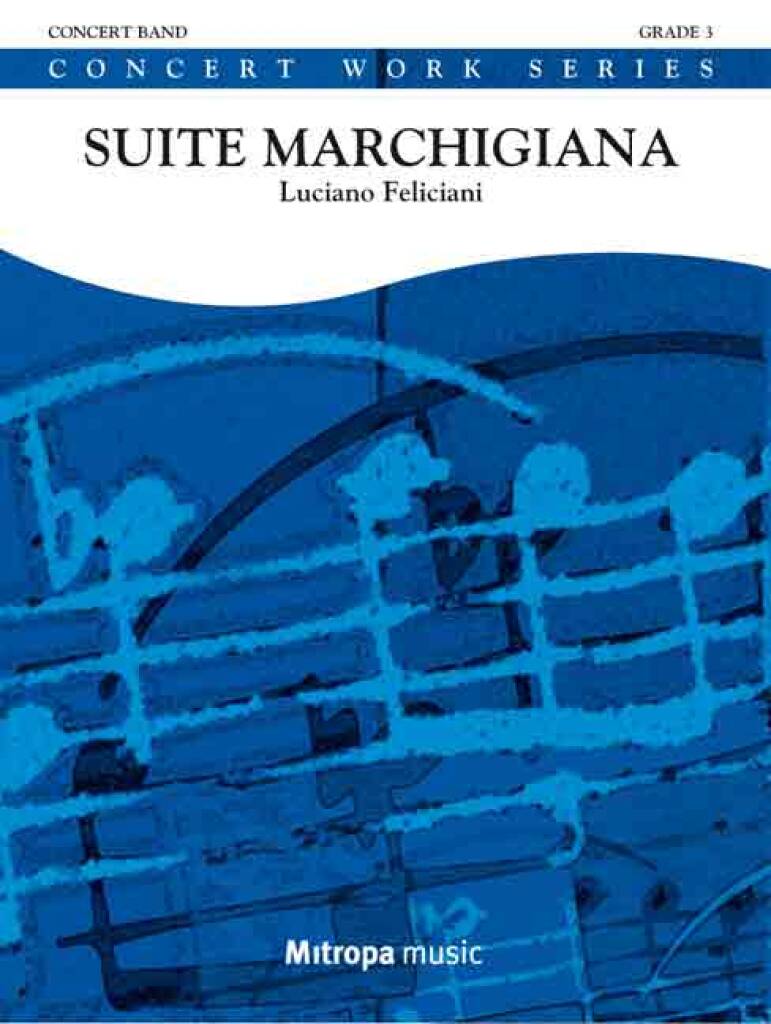
Suite Marchigiana - Luciano Feliciani
According to a famous statement by Herder, folk songs represent the archives of a nation's knowledge, the expression of its heart and theimage that reflects its history and identity. Suite Marchigiana is a three movement piece, inspired by folk songs from the Marche in central Italy, a region with a very ancient and rich folkloristic heritage. The first movement elaborates on the well-known Pasquella. The Pasquella comes from a traditional winter begging ritual where a group of musicians go from house to house singing verses, wishing their audience good health, wealth and abundance, in return for small amounts of money, food and wine. The second movementis an Andante Triste inspired by an old song called Sona la mezzanotte (The Clock Strikes Midnight), a melancholic song that reminds us of unhappy love stories, bereavement, and so on. Luciano Feliciani concludes the suite with the Saltarello Marchigiano, which is bright and sparkling, and therefore in complete contrast with the previous movement. Although unproven, the Saltarello is thought to have its origins in the 'saltatio' (a latin dance). While the choreae were group dances, circular in structure and with a rhythmic progression, the saltationes were more lively in character. The fast, frenetic and joyous saltarello was without any doubt the most famous musical expression of rural central Italy in the nineteenth century.
Estimated dispatch 7-14 working days
 View Music