
Results
-
 £105.50
Broad Stripes and Bright Stars - Robert Longfield
A dramatic and inspiring patriotic composition which contains fresh musical treatments of "Yankee Doodle", "Johnny Has Gone For A Soldier", "America" and a full symphonic treatment of "The Star-Spangled Banner". A great concert opener or closer, and is suitable for any patriotic or civic occasion. ("The Star-Spangled Banner" can be played alone, with or without audience participation.) Challenging, but amazingly playable for a piece that sounds so spectacular and impressive! All sections of the band get several chances to shine and it's a full-blown extravaganza that is perfect for a zillion programming situations. Very impressive!
Estimated dispatch 7-14 working days
-
 £78.99
Double Concerto - Antonio Vivaldi
This famous Allegro movement from a Vivaldi concerto for two trumpets is presented here in an arrangement loaded with flexibility as to choice of soloists and even the accompanying ensemble. May be performed as a solo or as a duet, and it includes solo/duet parts for Bb instruments: Trumpets or Clarinets; C Instruments: Flutes, Oboes, or Violins; Eb Instruments: Alto Saxophones; F Instruments: Horns; and Bass Clef instruments: Bassoons or Trombones. The accompaniment is cleverly scored so that it is playable by a full, traditional concert band; or by a "chamber wind ensemble" of woodwinds, horns, and timpani (ideal for accompanying upper woodwind soloists.) A great way to feature outstanding soloists from your band!
Estimated dispatch 7-14 working days
-
£80.99
Twilight Portrait - Ed Huckeby
Looking for something different? This stunningly beautiful ballad was inspired by a series of photographs depicting the twilight times of sunrise and sunset. With flowing melodic lines and soaring countermelodies, "Twilight Portrait" provides a magnificent opportunity for your ensemble to develop and showcase a legato playing style, while presenting a striking image of musical lyricism. A video slideshow, featuring the photographs which inspired the work, is available for download so the twilight images can be presented in concert with the music as a unique multimedia event.
Estimated dispatch 7-14 working days
-
£134.99
Tangle Wood Overture - Daisuke Shimizu
With this festive overture, which can also be played as a concert work, we introduce this young Japanese composer for the first time. He is already a real superstar in Japan, and with this piece, we get a little peek at why this is so. This piece is reminiscent of a flashy movie soundtrack with powerful and enthralling melodies and spectacular rhythmical sections. A very promising piece from a very promising composer.
Estimated dispatch 7-14 working days
-
 £164.99
Trumpet Concerto - Satoshi Yagisawa
Commissioned by Japan's Central Air Self Defense Force BandWhen I received this commission, I thought of a regular piece for wind band, but as my preparations continued I heard so much about the band's outstanding trumpeter Kenichi Kurisu that I ended up writing a concerto for him. The Self Defense Force audience includes those without much chance to otherwise hear live music. With that in mind I realized I also had the challenge of creating a melody that was compelling.Using the classical sonata as a model I made this song with simple movements and included a signature chorus in the middle section. Although this piece is performed with band, a version for piano accompaniment was created by pianist Orimo Manabu for the 20th Anniversary of "The Trumpet Concert."This edition of Trumpet Concerto was offered for an American Premier at the 2013 Midwest International Band and Orchestra Clinic, Robert Sullivan soloist with the Kagoshima Joho High School Wind Orchestra.(Satoshi Yagisawa)
Estimated dispatch 7-14 working days
-
£69.99
An Irish Lullaby - Stephen Bulla
What can be more charming than a comely Irish folk melody? This is music that allows the band to play in the rubato style, with much room for expression. Found in an old British publication and simply called "Irish Air," this endearing arrangement is a rhapsodic treatment that takes fragments of the melody and develops them into a large symphonic work. The freedom of tempi allows you to work with your band in a sensitively conducted way that only a beautiful piece like this will allow.There is always room on a concert program for at least one lush, melodic contrast piece. Perhaps this one is for you. It's so difficult to describe a thing of real beauty. Please listen tothe demo recording and hear it for yourself.
Estimated dispatch 7-14 working days
-
 £105.10
Postcard From Baghdad - Dirk Brossé
Sir Dirk Bross, music director at the Philadelphia Chamber Orchestra, is a versatile composer of orchestral and symphonic repertoire, chamber music, film & musical. His compositions are performed worldwide by the most prominent orchestras and soloists. About the new series of 10 "Musical Postcards" for wind band, Dirk says the following: "Composing is a commitment; it is my life's mission. For me composing means creating a vacuum around myself and allowing myself to be submerged by impressions. It is a continual struggle between fantasy and reality, between dream and reality. Out of chaos of sounds and emotions I try to order my thoughts by juggling shreds of melodies, original chords, striking sound colours and alternating rhythms. Melody, harmony, rhythm and sound colours are finally balanced to generate a harmonious universe. This series of ten 'Musical Postcards' are a reflection of my travels, thoughts, discoveries and musical career so far, which has brought me around the globe. I look forward to you joining me on this voyage of discovery..."
Estimated dispatch 7-14 working days
-
 £86.00
Postcard From Kampala - Dirk Brossé
Sir Dirk Bross, music director at the Philadelphia Chamber Orchestra, is a versatile composer of orchestral and symphonic repertoire, chamber music, film & musical. His compositions are performed worldwide by the most prominent orchestras and soloists. About the new series of 10 "Musical Postcards" for wind band, Dirk says the following: "Composing is a commitment; it is my life's mission. For me composing means creating a vacuum around myself and allowing myself to be submerged by impressions. It is a continual struggle between fantasy and reality, between dream and reality. Out of chaos of sounds and emotions I try to order my thoughts by juggling shreds of melodies, original chords, striking sound colours and alternating rhythms. Melody, harmony, rhythm and sound colours are finally balanced to generate a harmonious universe. This series of ten 'Musical Postcards' are a reflection of my travels, thoughts, discoveries and musical career so far, which has brought me around the globe. I look forward to you joining me on this voyage of discovery..."
Estimated dispatch 7-14 working days
-
 £76.40
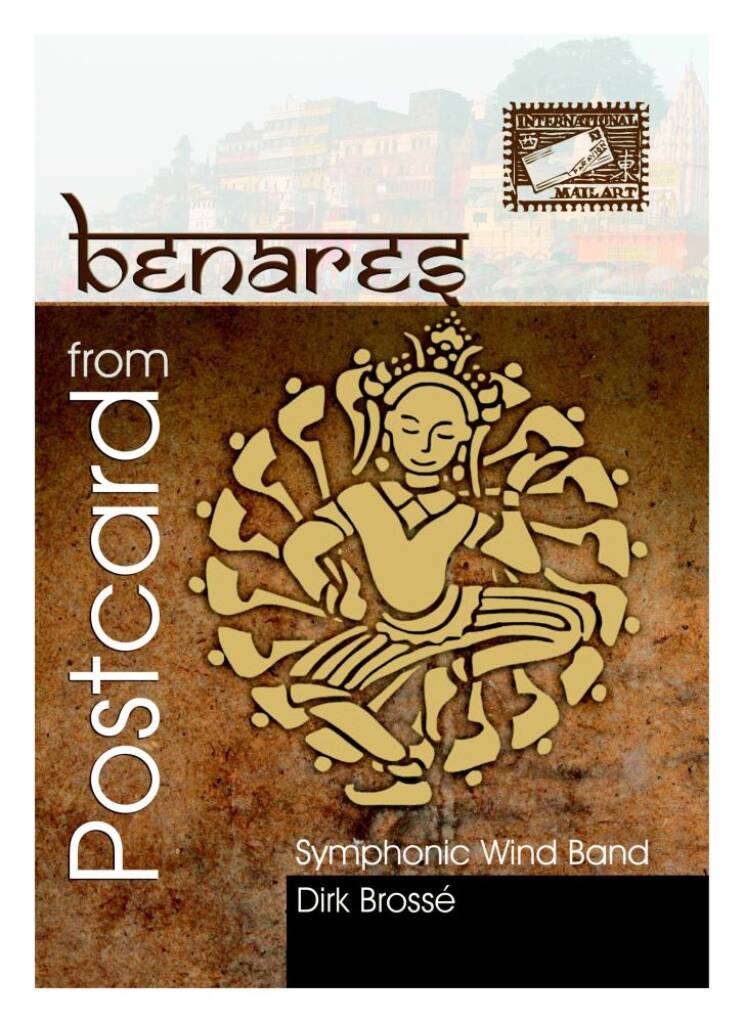
Postcard From Benares - Dirk Brossé
Sir Dirk Bross, music director at the Philadelphia Chamber Orchestra, is a versatile composer of orchestral and symphonic repertoire, chamber music, film & musical. His compositions are performed worldwide by the most prominent orchestras and soloists. About the new series of 10 "Musical Postcards" for wind band, Dirk says the following: "Composing is a commitment; it is my life's mission. For me composing means creating a vacuum around myself and allowing myself to be submerged by impressions. It is a continual struggle between fantasy and reality, between dream and reality. Out of chaos of sounds and emotions I try to order my thoughts by juggling shreds of melodies, original chords, striking sound colours and alternating rhythms. Melody, harmony, rhythm and sound colours are finally balanced to generate a harmonious universe. This series of ten 'Musical Postcards' are a reflection of my travels, thoughts, discoveries and musical career so far, which has brought me around the globe. I look forward to you joining me on this voyage of discovery..."
Estimated dispatch 7-14 working days
-
 £73.00
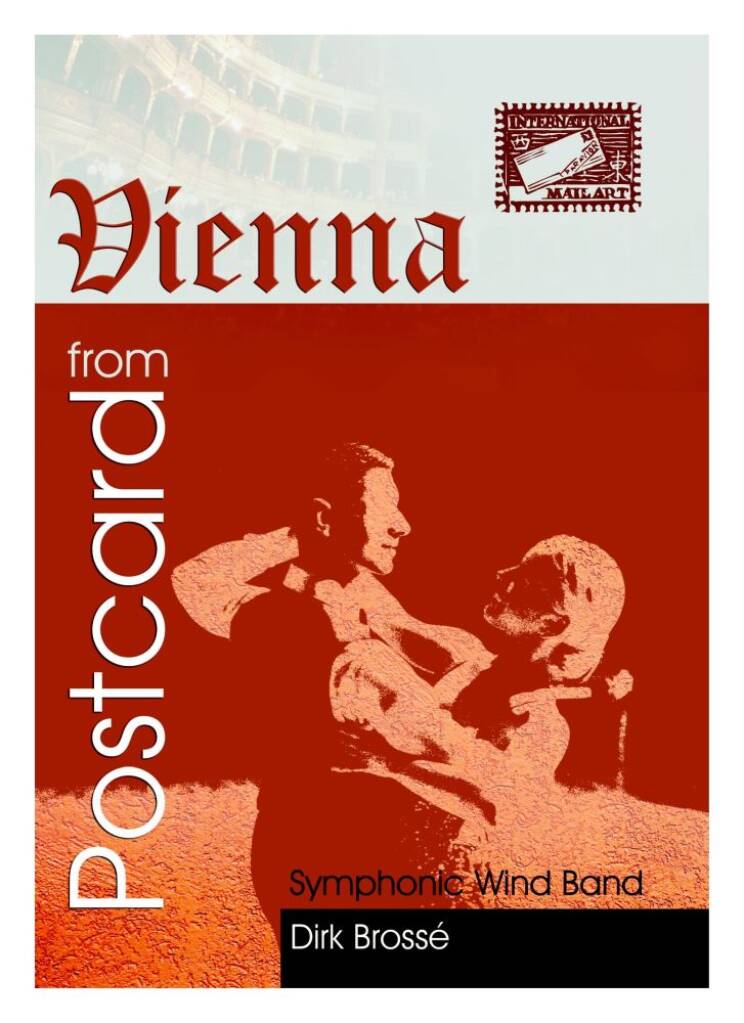
Postcard From Vienna - Dirk Brossé
Sir Dirk Bross, music director at the Philadelphia Chamber Orchestra, is a versatile composer of orchestral and symphonic repertoire, chamber music, film & musical. His compositions are performed worldwide by the most prominent orchestras and soloists. About the new series of 10 "Musical Postcards" for wind band, Dirk says the following: "Composing is a commitment; it is my life's mission. For me composing means creating a vacuum around myself and allowing myself to be submerged by impressions. It is a continual struggle between fantasy and reality, between dream and reality. Out of chaos of sounds and emotions I try to order my thoughts by juggling shreds of melodies, original chords, striking sound colours and alternating rhythms. Melody, harmony, rhythm and sound colours are finally balanced to generate a harmonious universe. This series of ten 'Musical Postcards' are a reflection of my travels, thoughts, discoveries and musical career so far, which has brought me around the globe. I look forward to you joining me on this voyage of discovery..."
Estimated dispatch 7-14 working days
 View Music