
Results
-
 £137.70
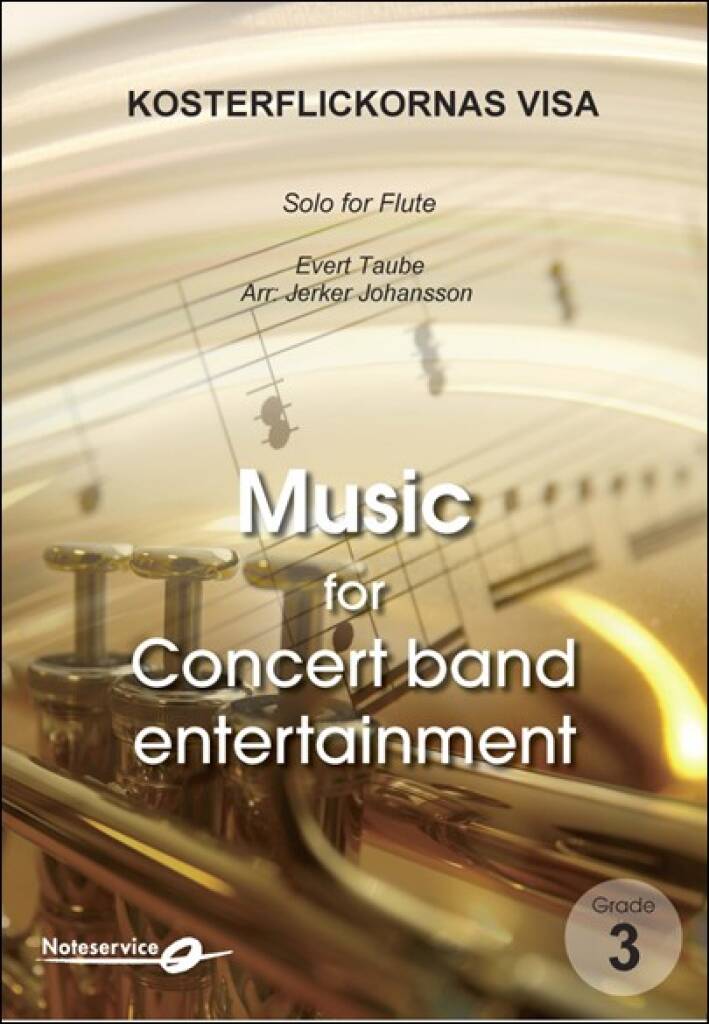
Song of the Koster Girls - Evert Taube
The author of Kosterflickornas visa "the Song of the Koster Girls" is Evert Taube (1890-1976). It is one of the 200 popular and beloved songs he wrote and which have made him one of Sweden's "national poets". His popularity and greatness is madeevident since he is honoured to be on the new 50 Kronor banknote which will be issued during 2015. The Koster islands are the most westerly inhabited part of Sweden. The islands are situated in the northern part of the county Bohusln, not far fromthe Norwegian border. The song text goes:Here is the sea that embraces our Bohusln islandsand carries our father and brother in a rocking boat.Come to the beach, come with me, come singby my sideout over Skagerack inthe calm summer night.The arrangement for flute and wind band is written by Jerker Johansson (born 1967), who is conductor of the Gteborg Wind Orchestra, which has made a CD-recording of the song with Evert Taube's son Sven-Bertilinterpreting his father's work.
Estimated dispatch 7-14 working days
-
£209.99
Turandot - Giacomo Puccini
In 2006 the Saitama Sakae H.S. Wind Orchestra and the Kanazawa Technical H.S. Wind Ensemble both performed this piece for the All Japan Band Contest, drawing attention and interest from thousands of concert band fans. Declared by Band Journal to be "More dramatic than the original!", it is beautifully scored and highly descriptive of leading scenes from the Opera. It is possible to perform selected movements, as was done at the AJBC. (Yo Goto)
Estimated dispatch 7-14 working days
-
 £164.99
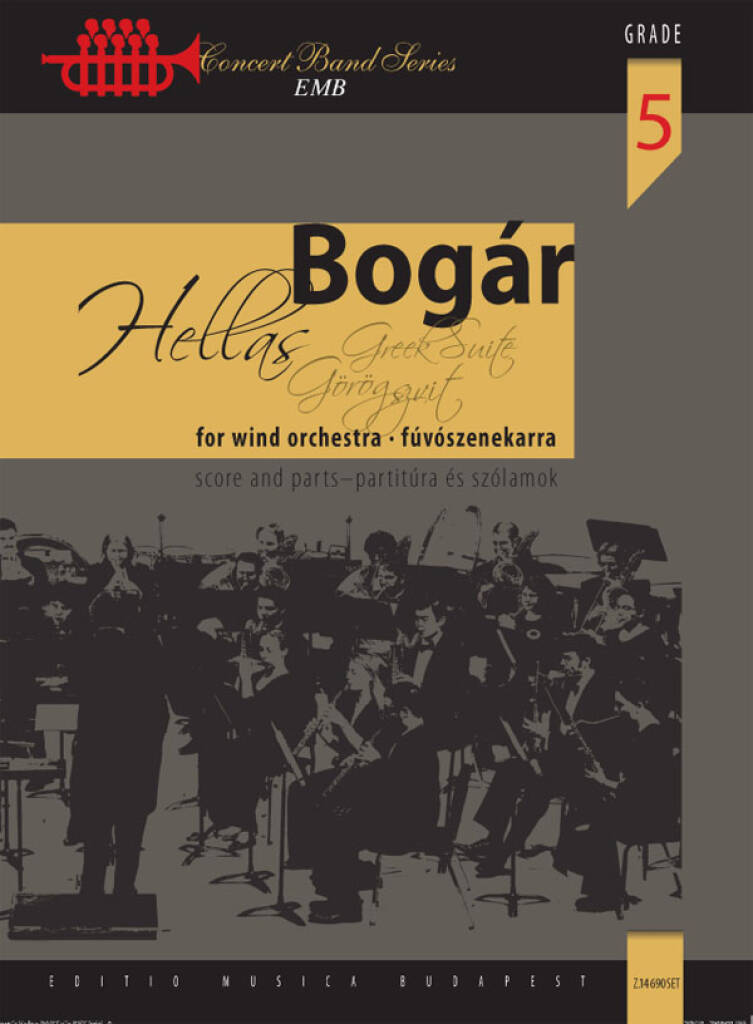
Hellas - Greek Suite - Istvan Bogar
This splendidly instrumented work successfully combines 20th-century musical language with the antique elements deriving from its theme - for example, in the first movement we immediately find an ancient Greek asymmetrical rhythm. The second movement takes us on an adventurous journey to those astonishing geological wonders, the Meteoras; the third movement presents a picture of the Delphic dancers, in its title the fourth movement indicates the form used in it, which preserves the unity between the thousands-of-years-old building and its contrasting environment, echoing to the music of the bouzouki. In the suite the composer expertly exploits the possibilities of instrumentation offered by the wind orchestra, this extremely effective work can be a rewarding concert piece for any ensemble. (Recorded by Mirasound on CD 'Salute from Hungary' wwm 500.009 for World Wind Music label - www.worldwindmusic.nl ).
Estimated dispatch 7-14 working days
-
 £97.99
Music from Carmina Burana - Carl Orff
This arrangement of the world hit 'O Fortuna' is meant for youth wind orchestra and amateur ensembles, enabling amateur orchestras to impressively perform Orff's masterpiece. To this end, only common wind instruments, apart from double-bass and percussion, are used and all instruments only use easily playable registers. The scoring of the set of parts follows the usual instrumentation.
Estimated dispatch 7-14 working days
-
 £104.99
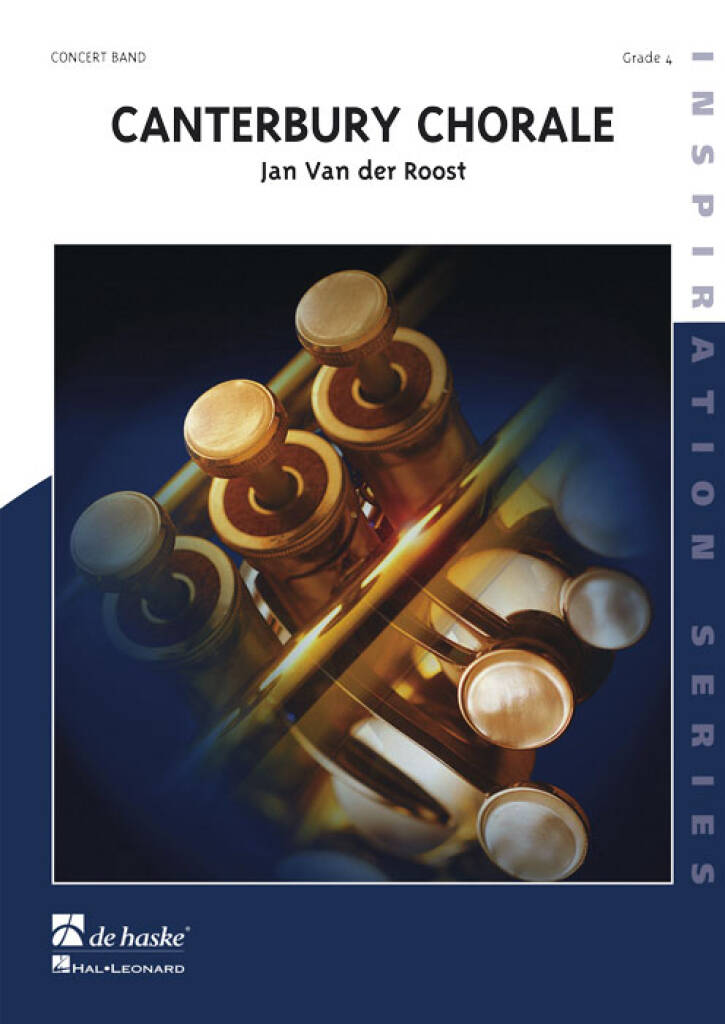
Canterbury Chorale - Jan Van der Roost
This quiet piece with its broad tones was originally written for brass band on request of Robert Leveugle, chairman of the composers own band: Brass Band Midden Brabant (Belgium). The direct cause was a visit to the beautiful cathedral of theEnglish city Canterbury, in which so many fine compositions sounded throughout the centuries. Later on, Jan Van der Roost rescored this piece for symphonic wind band, exploring the full richness of colours of this formation. Besides solo phrases forseveral instruments, there are some massive tutti passages making the wind orchestra sound like a majestic organ. By the way: an "ad libitum" organ part adds an extra richness, colour and power to this piece, making it sound even more broad andgrand.
Estimated dispatch 7-14 working days
-
 £70.00
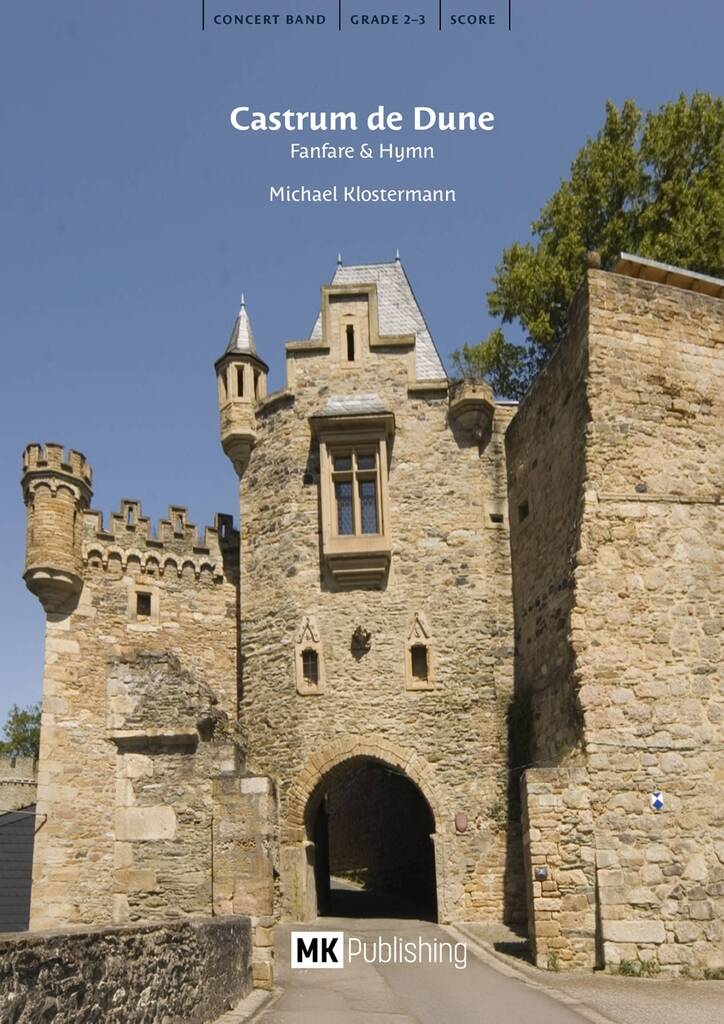
Castrum de Dune - Michael Klostermann
"Castrum de Dune" is an impressive work composed in 2021 to mark the acquisition of Dhaun Castle (Rhineland-Pfalz). Originally created as a fanfare and hymn for this ceremonial opening and premiered in a reduced instrumentation, the piece enjoyed considerable success. This inspired Michael Klostermann to orchestrate the composition for symphonic wind orchestra. The powerful fanfare opens the piece with striking, historically inspired sounds that musically reflect the Roman origins of the region. This is followed by a majestic hymn that vividly depicts the flight of an eagle soaring over the castle landscape in rich musical language.With the eagle's return, the fanfare resounds once more - familiar yet newly interpreted - leading the work to a harmonically complete and impressive finale."Castrum de Dune" combines historical elements with modern orchestral arrangements, creating a compelling musical experience that takes listeners on a brief journey through history and the majestic beauty of nature.
Estimated dispatch 7-14 working days
-
 £204.00
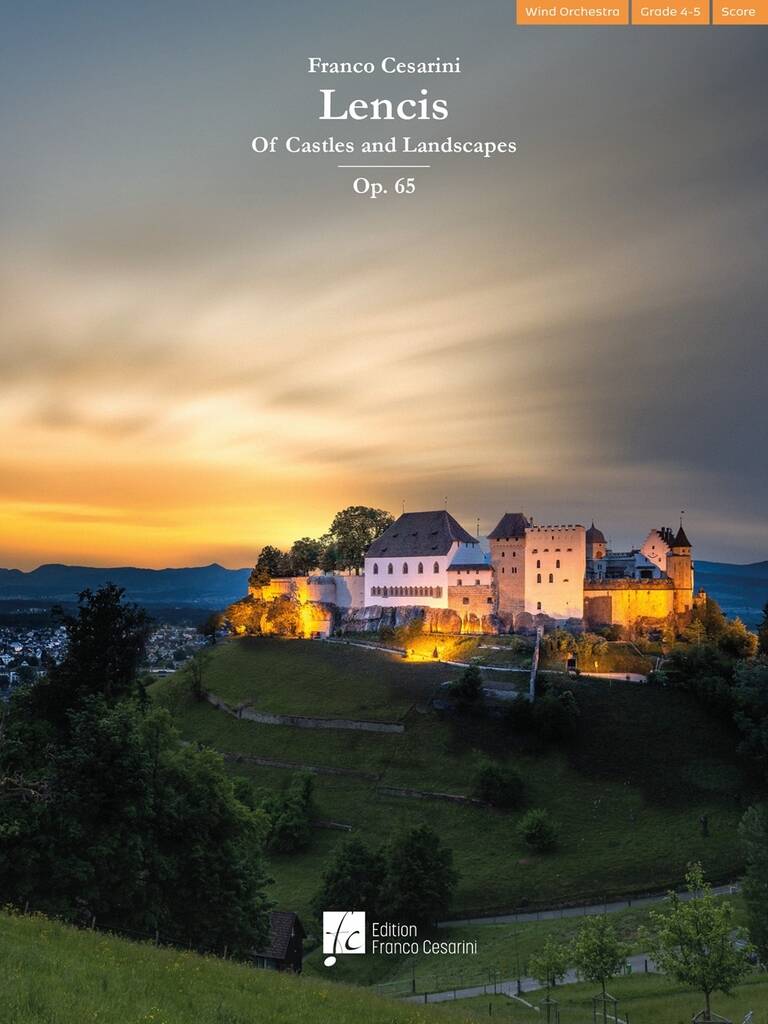
Lencis - Franco Cesarini
Inspired by the ancient name of Lenzburg,Lencis byFranco Cesarini takes listeners back to the medieval origins of this historic Swiss town, whose majestic castle still overlooks the Aare valley. In three captivating movements - Castles and Fortresses, Where Waters Merge, Rise of the Modern Age - the work blends landscape, history, and sonic memory into a vivid and cinematic experience. From the monumental grandeur of castles and fortresses, through the poetic confluence of rivers at the "Wasserschloss", to the driving energy of industrial modernity,Lencisunfolds as a symphonic fresco of transformation and continuity. Commissioned to celebrate the 30th anniversary of musiXmaX - the Wind Orchestra of Mittelaargau (Niederlenz, Switzerland) - this composition by Franco Cesarini is a tribute to heritage, nature, and progress, brought to life through powerful orchestration and evocative soundscapes. Lencis: A powerful musical journey through time.
Estimated dispatch 7-14 working days
-
 £140.00
Elegy & Scherzo - Johan de Meij
Elegy & Scherzo was written at the request of cellist Yuki Ito, to commemorate the 150th birthyear in 2023 of Russian composer Sergei Rachmaninoff (1873 - 1943). Composer Johan de Meij used some hints and quotes from Rachmaninoff's 2nd Symphony (opus 27) and the Symphonic Dances (opus 45), to embrace the sound world of the Russian master. Elegy & Scherzo was premiered on October 27, 2023, in the Cankarjev Dom in Ljubljana, Slovenia by the Band of the Slovenian Armed Forces, with Yuki Ito as the cello soloist. Soon after the premiere, the work was adapted for solo euphonium and wind orchestra. It received its premiere during the ITEC, the International Tuba- and Euphonium Conference 2025 in Valencia, Spain, with Shoichiro Hokazono as the soloist, and the composer conducting.
Estimated dispatch 7-14 working days
-
 £244.00
Anemoia - Gauthier Dupertuis
Gauthier Dupertuis wrote Anemoia as part of his master's thesis at the Lausanne University of Music. It is dedicated to the most significant figure in his musical life: his teacher Jean-Claude Kolly.Anemoia is the name given to the feeling of nostalgia that one feels for a time that has never known. This emotion often translates into the uneasy sensation of having lost something important or of not living at the right place or time. Fascinated by this concept, Gauthier Dupertuis tried to translate it into music oscillating between exaltation, anguish and nostalgia.The piece is formed by two movements: (Un)desired sorrow and Behind the glass of time. The first movement initially evokes the feeling of unease one feels when suddenly struck by anemoia. It then evolves into majestic atmospheres, marking our admiration for times gone by. The second movement treats anemoia in a more melancholic way.The premiere took place on 6th December 2024, during Jean-Claude Kolly's last concert as a conductor of the Concordia de Fribourg, marking thirty years spent conducting this wind orchestra.
Estimated dispatch 7-14 working days
-
 £84.99
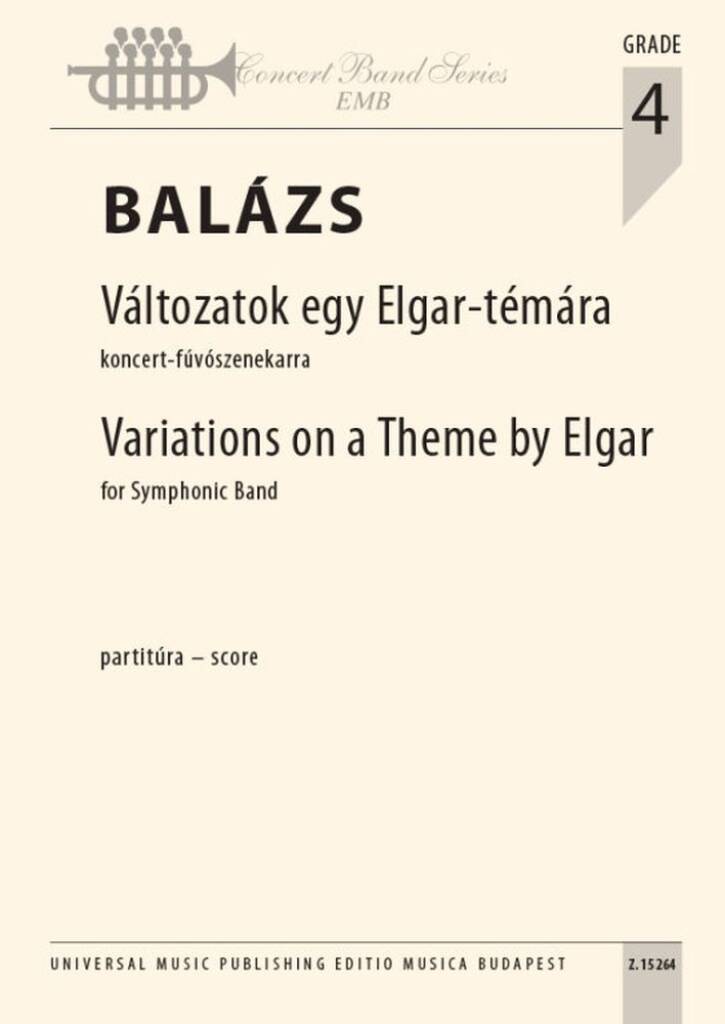
Variations on a Theme by Elgar - Árpád Balázs
In rpd Balzs's diverse and varied oeuvre, works for wind orchestra play a prominent role alongside choral music. He composed the Elgar Variations in 2022 on the theme of one of Edward Elgar's (1857-1934) short early works (Love's Greetings, 1888). As rpd Balzs writes ''The theme I used as the starting point for my work may already be considered a variation, since I 'peeled off' the dense ornamentation and the tonicisations from it, and what remained was the melody, beautiful in its own place. What come back from time to time from the theme in the variations are: the arched structure, the double peak point, and mostly the major sixth leaping downwards, then upwards. The modest, transparent orchestration, which then is amplified at the repetition of the theme is also a defining feature. There is a personal family secret hidden in the third variation: a late compliment to a loyal spouse for the past half century... The closing variation is calm and quiet - similarly to the chorale-like slow movement in Bla Bartk's 3rd Piano Concerto. It is like a message from an old composer to the Future.'' The Elgar Variations together with the Concertino (1992, Z. 14909) and the Rhapsody (2015-2021, Z. 15167) form an ambitious, emotionally wide-range trilogy for a concert band.
Estimated dispatch 7-14 working days
 View Music