
Results
-
 £60.50
The Ash Grove - Sandy Feldstein
Designed to give your best Trumpet, Trombone, Euphonium, or Tuba player an opportunity to play a solo with Band accompaniment. It should serve as the culmination of study for the soloist upon completion of "The Yamaha Advantage" Book 1, or any comparable method. The piece has all of the solo material cued in the Band, so if a soloist is not available, the piece can be performed with Band alone.
Estimated dispatch 7-14 working days
-
 £102.99
Agosto - Jacob de Haan
The main theme of this composition was created on a clear, starry night on the 10th of August. While writing it, the Italian composer Angela Ciampani was inspired by her son Lorenzo and the sight of stars over the green hills of Umbria. Initially, it was a short solo for trumpet and piano: subsequently, Jacob de Haan extended and rewrote the composition for euphonium solo and band. This arrangement was created for the celebration of the 170th and 20th anniversaries, respectively, of the concert bands of Monteleone d'Orvieto and Citt della Pieve.
Estimated dispatch 7-14 working days
-
 £228.70
Prelude Festivo - John Brakstad
Prelude Festivo is intended to be performed in concerts and in competitions as well. The work includes solo passages for most instrument groups. Duration 7 minutes. Form: Fast slow fast. The piece is built around two themes. Theme 1 (Allegro con spirito) is the first one presented as a clarinet solo after a fanfare-like opening. Theme 2 is hinted at in the opening bars, but presented fully in the slow (Andante) section (bar 141). This theme is developed and also appears as melodic and rhytmic fragments throughout the composition. In the concluding section (bar 196) both themes are played in conjunction before the piece concludes with the fanfare theme from theopening bars. The solos for cornet and euphonium may be played by saxophone soli cued in at bars 114 and 128. Parts that are marked piu mosso ed leggiero should be played in a cheerful light staccato style in contrast to Andante cantabile.
Estimated dispatch 7-14 working days
-
 £59.80
Sempre Unita - Michael Geisler
The concert march Sempre Unita, which means Always United is a musical tribute to a united Europe. The composition is in a traditional form and is characterized by a grandiose tuba solo, a euphonium/oboe solo in the Trio, and closes in a big tutti Finale.
Estimated dispatch 7-14 working days
-
£94.99
Prayer - Charles Gounod
Gounod's Prayer (O, Divine Redeemer!), originally a solo for Mezzo-soprano, chorus, and orchestra, comes from his oratorio La Redemption, and here is presented as a beautiful lyrical solo for Euphonium and Piano accompaniment.
Estimated dispatch 7-14 working days
-
 £87.70
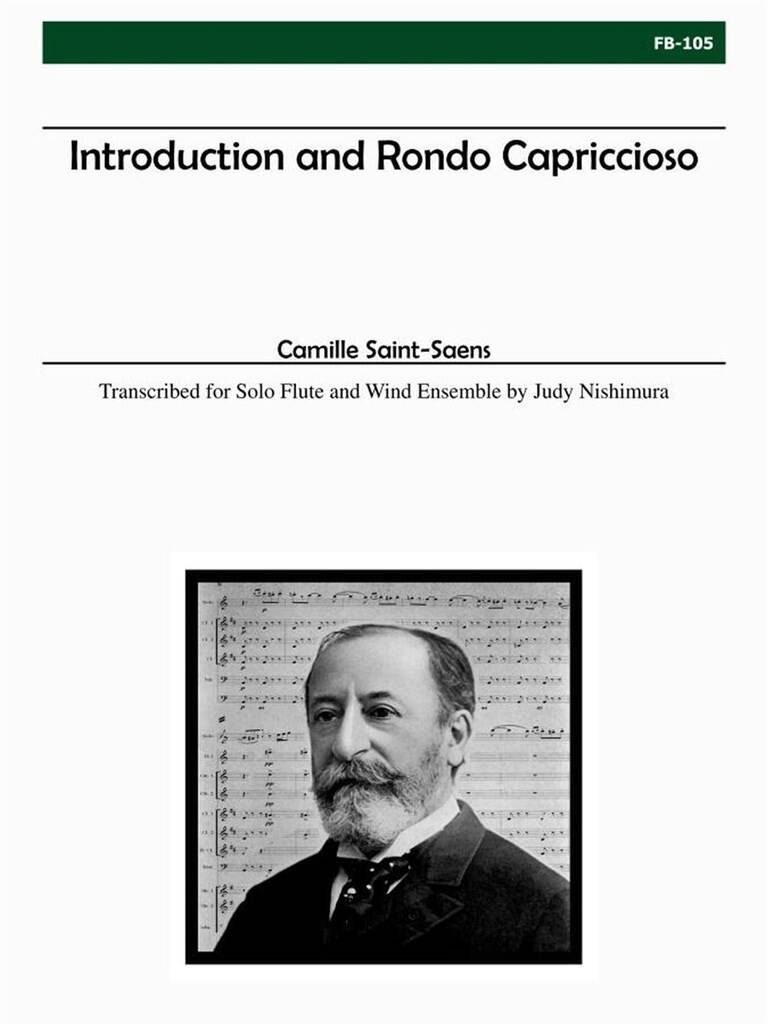
Introduction and Rondo Capriccioso - Camille Saint-Saëns
A brilliant transcription of this very famous violin solo, utilizing a more chamber-like wind ensemble scoring in order to maintain the delicate balance between the soloist and ensemble. Instrumentation: Solo Flute, C Flute 1, C Flute 2, Oboe 1, Oboe 2, Clarinet 1, Clarinet 2, Bass Clarinet, Bassoon, Horn 1, Horn 2, Trumpet 1, Trumpet 2, Euphonium (T.C. and B.C.), Tuba, Timpani
Estimated dispatch 7-14 working days
-
 £61.70
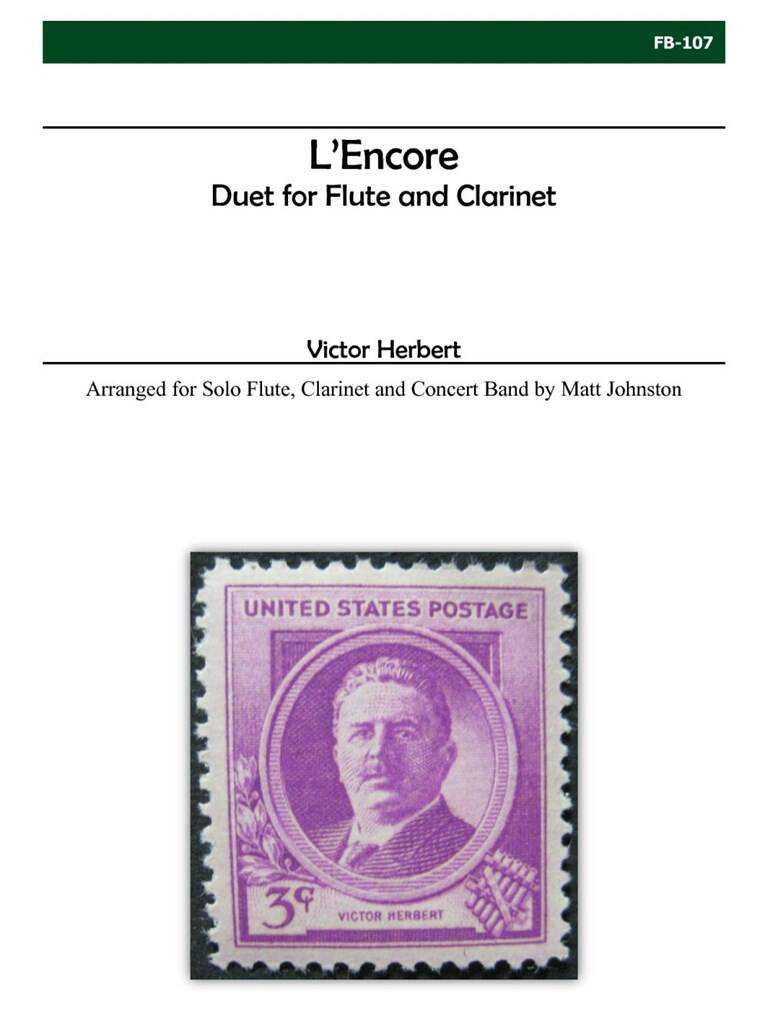
LEncore For Flute, Clarinet and Concert Band - Victor Herbert
Instrumentation: Solo Flute, Solo Clarinet, Flute, Oboe, Clarinet 1, Clarinet 2, Bass Clarinet, Alto Saxophone, Tenor Saxophone, Baritone Saxophone, Bassoons, Horn 1, Horn 2, Trumpet 1, Trumpet 2, Trombone, Euphonium, Tuba, Timpani, Triangle, Cymbal
Estimated dispatch 7-14 working days
-
£69.99
Mondo Glissando - Mike Hannickel
Slip-slidin' trombone smears in this rip-snortin' ragtime setting are sure to tickle your ears and put some tap in your toes. The trombone glissando is the happiest sound around! Dedicated to, and premiered by, the Westchester Middle School Band of Westchester, Illinois, Mr. Jason Kluge, director, MONDO GLISSANDO targets that most critical of wind sections. When was the last time you featured your trombones? When was the last time they felt like STARS? Section feature pieces are one of the most important techniques available for keeping a section strong and well represented. MONDO GLISSANDO can even be used as a trombone SOLO piece, by having the non-solo trombones play from thetechnically simpler euphonium part.Either way, section or solo, there's nothing like an exposed part on an upcoming performance to reinvigorate a musician's interest and encourage that all-important PRACTICE!
Estimated dispatch 7-14 working days
-
 £96.40
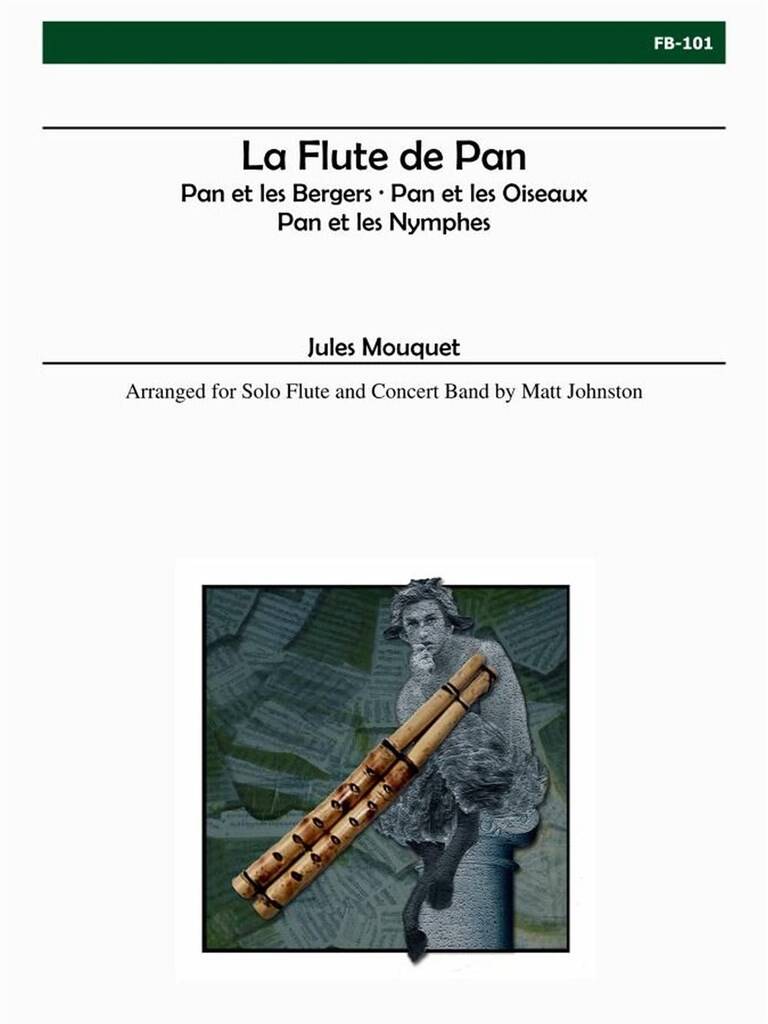
La Flute De Pan - Jules Mouquet
This arrangement features a colorful, yet light accompaniment to this delightful flute solo. A great piece to feature your first chair flute player. The first movement is appropriate for bands of all ages, while the latter two movements are a most likely appropriate for high school groups and up. Instrumentation: Solo Flute, Flute 1/2, Oboe, Bassoon, Clarinet 1/2, Bass Clarinet, Alto Saxophone 1/2, Tenor Saxophone, Baritone Saxophone, Trumpet 1/2, Horn 1/2, Trombone, Euphonium (BC and TC), Tuba, Snare Drum/Bass Drum, Triangle/Suspended Cymbal, Bells
Estimated dispatch 7-14 working days
-
 £275.99
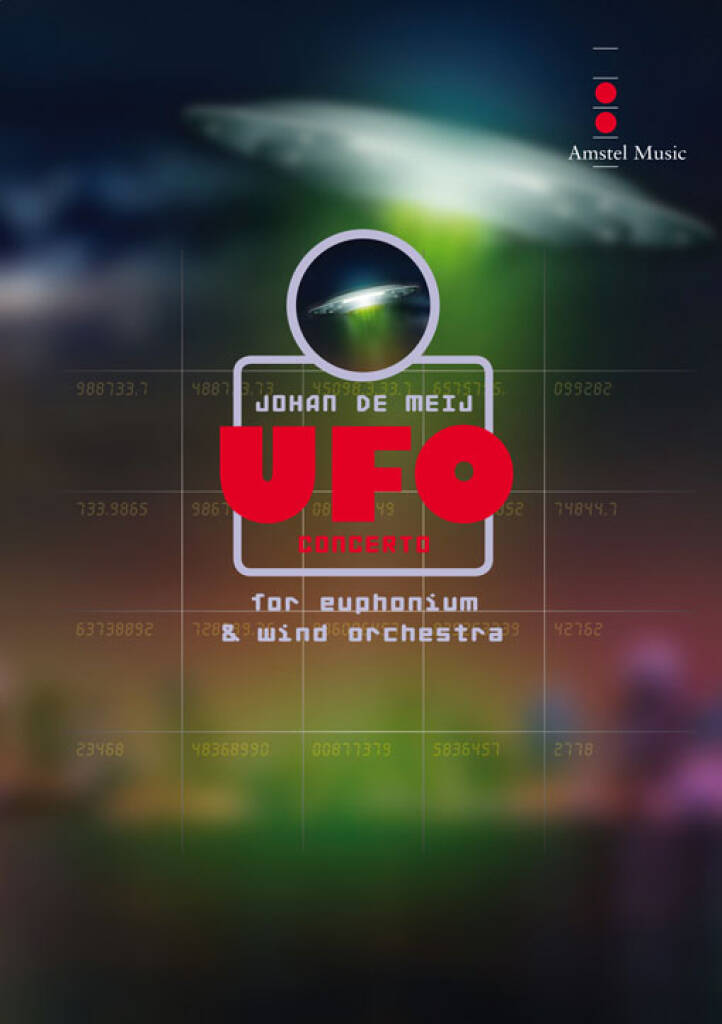
UFO Concerto - Johan de Meij
Ufo Concerto, the first solo work by Johan de Meij for euphonium solo, is not a traditional concert work in the classical sense. It is comprised of five movements that are thematically interconnected: Andante - Con moto , Giocoso - Vivo, Andante cantabile, Vivace, and Alla Marcia - Vivace.
Estimated dispatch 7-14 working days
 View Music