
Results
-
 £174.99
Et in terra Pax - Jan Van der Roost
This piece was commissioned by the 'Concert Band Vlamertinge' and is a plea for peace: the title translates as 'Peace on Earth'. This is expressed by means of the vocal contribution expected from the performers. In various places of the piece you can recognize, the words 'Et In Terra Pax' - an appeal for peace - at first jumbled together but later more rhythmically structured, developing into synchronized massed voices.The work starts with a pentatonic theme based on the notes D, E, G, A and C (taken from 'ConCErtbAnD VlAmErtinGE' and the name of the conductor, NiCk VAnDEnDriessChe). A somewhat sad melody is developed during an orchestral climax which leads to the firstexplosion of sound (measure 62 onwards). Suddenly the opening measures are recaptured, albeit with a differently colored sound: the words 'Et In Terra Pax' bring the first movement to a close. A restless Allegro follows which abruptly stops and is replaced by a calming cho-rale-like passage. A narrator reads aloud the poem 'Sonnet' by the young poet Charles Hamilton Sorley, who was killed during World War I. This poem fittingly puts into words the cruelty and senselessness of war. After the expanded recapitulation of the allegro, the broad, almost infinite atmosphere of the beginning returns. Clarinet and English horn play the pentatonic opening theme once more, this time broadly, while the words 'Et In Terra... Pax' are repeated again and again by the rest of the orchestra.The composer has purposely avoided all forms of aggression and bombastic sounds regularly used in works about war. Fear of violence and destruction can be heard and felt during the allegro passages. The charged opening makes way in the end for hope: May peacefulness replace cruelty in everyday life, too.
Estimated dispatch 7-14 working days
-
 £149.99
Colditz Castle - Rob Goorhuis
Written as a commission by the Stichting de Inrichting foundation of Wijk bij Duurstede (the Netherlands), Rob Goorhuis Requiem voor de mens (Requiem for Man) on lyrics by Andr van Zwieten was composed in the year 2001. This work for choir andwind-band greatly impressed the audience, whilst its composer remained obsessed by its war theme. When he subsequently heard that the Rundfunk Blasorchester from the German town of Leipzig -a place not far from Colditz - was to dedicate a CDto his work, Rob Goorhuis got the idea to process some of the themes from his Requiem for Man into an instrumental composition about the famous Colditz castle. a place still bearing the scars of war. From 1933 to 1934, the castle was aSchutzhaftlager. During the Second World War, it was used as a prison for senior officers. From this prison, many escapes were undertaken, which even resulted in the castle being nicknamed The Escape School. In the seventies, a television-seriesabout this period made the castle very well-known with the public at large.The despondent tone of the opening theme underscores the sadness caused by wars and violence. Nevertheless the works ending is hopeful and triumphant. Peace iscelebrated, but with the hope for a lasting peace sadly remaining a topical issue to the present moment.
Estimated dispatch 7-14 working days
-
 £225.99
Los Libros Olvidados - Johan de Meij
1. Barcelona 19452. Los Libros Olvidados - El Cementerio3. Las Ramblas - Els Quatre Gats4. Coubert - El Hombre sin Rostro5. Bea (Beatriz)6. El Inspector Fumero7. La Ciudad de las SombrasThis is a story wrapped within a story that unfolds in Barcelona 1945, following World War II. The protagonist, Daniel Sempere, is the teenage son of an antiquarian book dealer, who one day takes him to the Cemetery of Forgotten Books, a mysterious place with labyrinthine corridors where rare and banned books are stacked in massive dusty piles. His father tells Daniel to select a book, but it will be his responsibility to protect it. Daniel picks La Sombra del Viento (The Shadow of the Wind), a novel by a forgotten author Julin Carax. Daniel immediately starts reading the book, and the story unwinds itself into a compelling and complicated plot. As he reads, Daniel finds himself and his own life merging into the story's plot. It transpires that there is a mysterious man named Lan Coubert ('the man without a face') who is determined to destroy all copies of Carax's books. Daniel is threatened by Coubert and is determined to find out what happened to Carax, who fled to Paris and subsequently disappeared. Daniel finds that his own life has much in common with the author's. The book mixes magic realism, page-turning mystery, and Daniel's own real life. Daniel's once ordinary teenage existence is now filled with larger-than-life colorful and at times, terrifying characters. Among them are Fermn Romero de Torres, a beggar who Daniel and his father befriend and employ in the family bookstore; the evil police inspector Javier Fumero, who could be compared to Scarpia in Puccini's opera Tosca or Javert in Les Misrables. The corrupt Fumero uses the war as an excuse to practice his sadism and is widely feared in Barcelona. He is represented in the music by a fascist military march. The city of Barcelona becomes a character in the book and in the music. The Ramblas, the boulevard running through Barcelona's Gothic Quarter and the famous caf Els Quatre Gats (the four cats) come alive in the score through a Cobla, the traditional wind ensemble playing a sardana, typical Catalan folk music. Two parallel love stories turn up the heat: Julin Carax's passionate, forbidden love for Penlope, and Daniel's equally passionate and forbidden love for Beatriz (Bea). Bea's sultry love theme is based on the first three letters of her name, with the ascending intervals B-E-A. Johan de Meij New York, October 17th, 2023
Estimated dispatch 7-14 working days
-
 £194.99
The Year 1941 - Serge Prokofieff
The Year 1941 was composed during the second World War. Prokofiev, along with other composers, was evacuated to the Caucasus when Germany started attacking the Soviet Union in 1941. It was under such circumstances that Prokofiev began work on this symphonic suite. He was working on his epic opera War and Peace and the String Quartet No. 2 at the same time. It is an orchestral suite in three movements, a poignant and evocative musical depiction of a tumultuous period in history. The composer described these three movements as follows: I. In Battle - "a scene of heated battle, heard by the audience sometimes as though far away and sometimes as though on the actual battlefield."II. At Night - "a poetic night scene, disturbed by the tension of impending conflict. III. For the Brotherhood of Man - "a triumphant lyrical hymn to victory and the brotherhood of peoples."
Estimated dispatch 7-14 working days
-
 £87.99
Commonwealth - Robert Sheldon
Located in the Commonwealth of Virginia, Fairfax County has quite an interesting story to tell, from the times of the Revolutionary War to the Civil War, to its prominent position as one of the premiere suburbs of our nation's capital, and most populous jurisdiction in Virginia. This piece serves to acknowledge the history of this region while representing its vibrancy and character. The opening patriotic soundscape offers a backdrop to the energetic piece that follows. A juxtaposition of those themes brings the piece to a close.
Estimated dispatch 7-14 working days
-
 £87.50
Ambush - Dakota Pederson
Ambush by Dakota Pederson is a work that describes the fight of war and recounts a flanking ambush set out by soldiers as they close in on a victory. A fiery chord opens the work and is followed by a relentless melody, which is expressed through precise articulation. The work challenges performers to focus on articulation and expression, while giving the percussion section a driving rhythm to maintain the energy. Strong harmonies in the brass and bold melodies throughout make this piece a fierce statement of war and victory. (4:12)
Estimated dispatch 7-14 working days
-
 £183.99
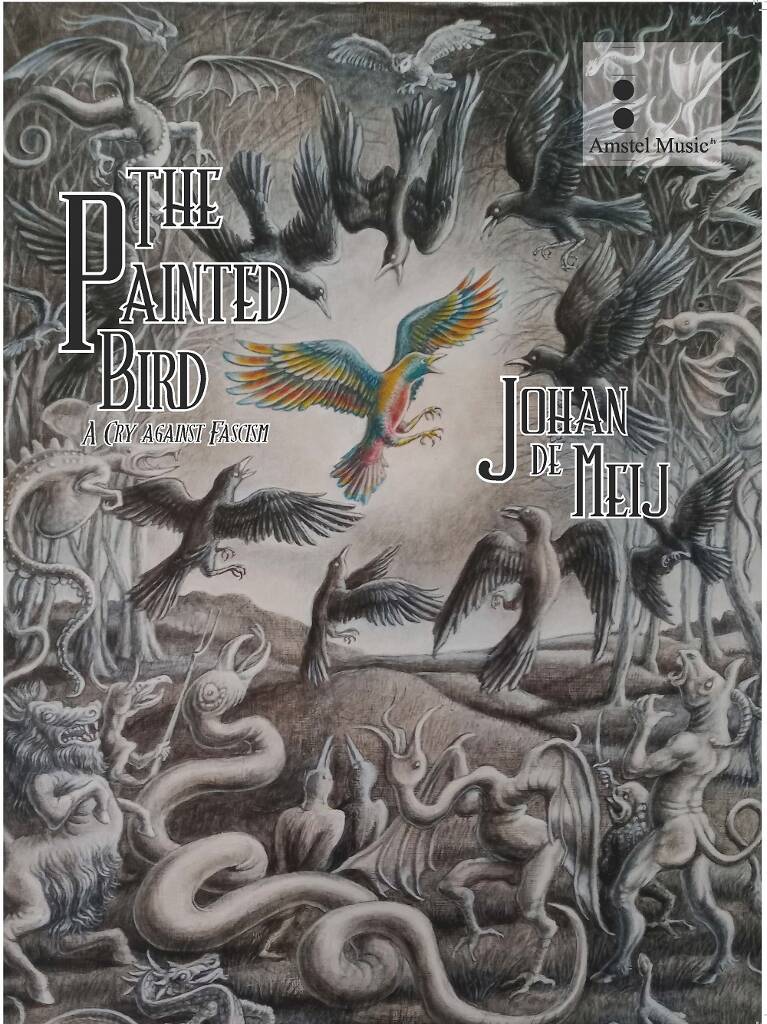
The Painted Bird - Johan de Meij
The Painted Bird, the controversial novel by Jerzy Kosinski (1933-1991), tells the story of a Jewish boy during World War II. For his safety, the child was sent to the Polish countryside by his parents. The title refers to a barbaric tradition among Polish farmers. The wings of a captured bird were painted in bright colors, after which the animal was released. Almost immediately, the bird was attacked and pecked to death by its peers. The boy underwent the same fate. Wherever he wandered, the local rural people cruelly mistreated him because of his distinctly different appearance. However, he survives the horrors and is reunited with his parents after the war. To escape the yoke of the Soviet occupation in his country, the Polish-Jewish Kosinski emigrated with counterfeit papers to the United States in 1957, where he became an American citizen in 1965. His landmark novel The Painted Bird was translated into thirty languages and sold millions of copies. Plagued by illness and accusations of betraying his country and plagiarism the writer ended his life in 1991.
Estimated dispatch 7-14 working days
-
 £72.99
Frederick's Black Devils - Paul Murtha
During World War II, Winston Churchill initiated the formation of Special Force Commando Units that would prove so effective as to change the course of the war. The First Special Service Force, led by their intrepid colonel,Robert T. Frederick, was perhaps the most famous of these units. Due to their ferocious nature and blackened faces for night raids, the fearful Germans gave them the nickname The Black Devils. In 2015 they were awarded theCongressional Gold Medal, the highest honor the U.S. government can bestow. Frederick's Black Devils is a stirring concert march that pays tribute to this legendary unit.
Estimated dispatch 7-14 working days
-
 £60.99
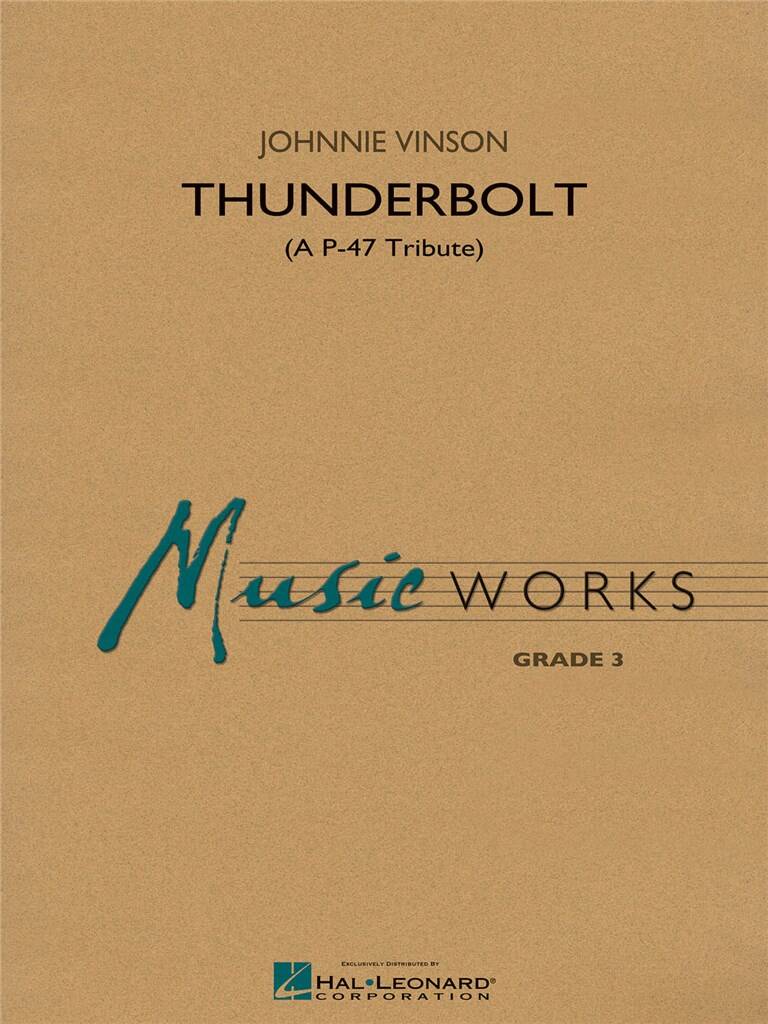
Thunderbolt (A P-47 Tribute) - Johnnie Vinson
The P-47 Thunderbolt was one of the workhouse airplanes of World War II, becoming the most produced, and also largest single piston engine fighter plane in history. This dramatic overture for band musically tells the story of thislegendary plane. (The composer's father piloted a P-47 during the war in 1944). The opening heroic strain is contrasted with a slow, reflective middle section before returning to the fast theme and exciting conclusion. Aterrific-sounding and expertly scored overture, this will make a perfect choice for contest or festival. Dur: 4:40
Estimated dispatch 7-14 working days
-
 £139.99
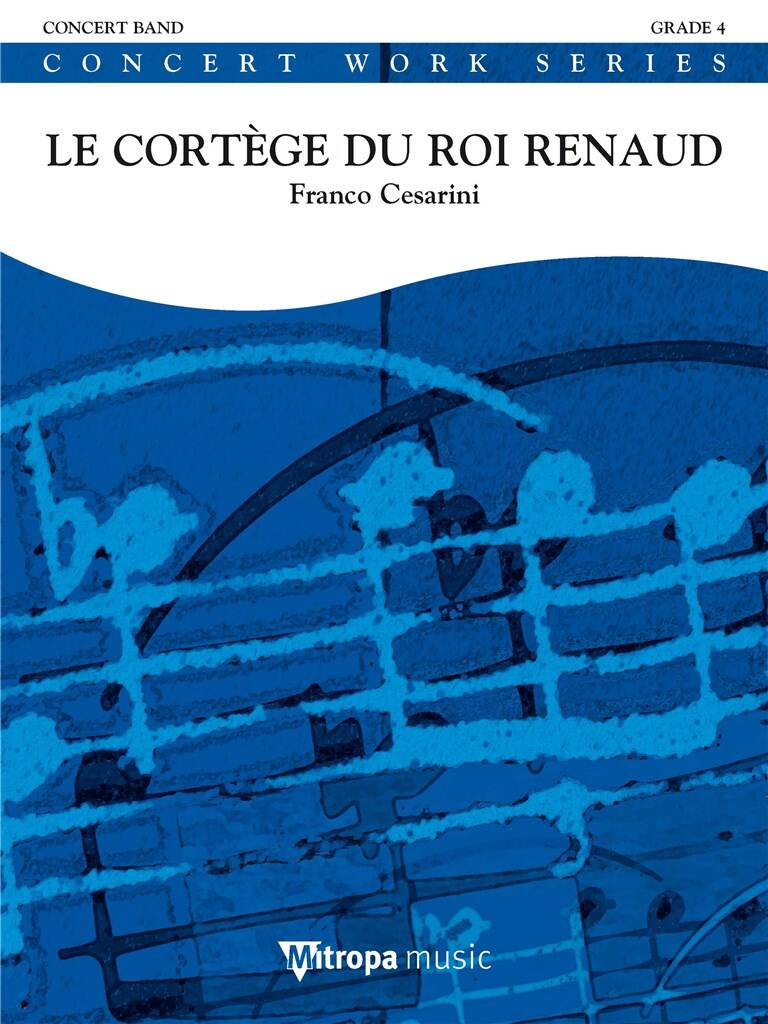
Le Cortge du Roi Renaud - Franco Cesarini
Le cortge du roi Renaud is a suite in five parts. It is based on tales that originated in southern European folk songs, dating back as far as the 16th century. A large portion of these songs are of the genre "Complaintes" songs in which the text gives a detailed description of events having a generally criminal or macabre character. The most familiar song to feature the tales of Roi Renaud is "Fualdes", consisting of 48 verses.The first part of the suite is based on the song "La Porcheronne" (The Swineherd). It telis the story of a young woman forced by her mother-in-law to tend pigs while her husband is away fighting in the war. She is freed only when her husband returns sevenyears later.The next part tells the story of "La mrquise Empoisonne" (The Poisoned Marquise). A marquise is coerced by her king to become his mistress. The jealous queen poisons her by means of a bouquet of deadly scented fiowers.Despite having the character of a merry dance, the third part, "La maumarie vengee" (The Avenged Wedding), expresses the touching story of Queen Clotilde, persecuted for her refusal to live according to the Aryan beliefs."La belle engloutie" (The Swallowed Beauty) relates the tale of the young wife of King Renaud. She cannot imagine a life without her husband, who was mortally wounded in the war, and begs the earth to open and swallow her up so thst she may rejoin her love.The gruesome content of the final part,"Le tueur de femmes" (The Wife Killer), bears a strong resembiance to the tale of Bluebeard. The story is about a young wife in danger of being drowned in a pond by her husband, which is what happened to her 13 predecessors. Thanks to her cunning, she manages to turn the tables and contrive her husband's demise.
Estimated dispatch 7-14 working days
 View Music