
Results
-
 £40.00
Scramble! (Concert Band - Score and Parts) - Hess, Nigel
Commissioned in 1994 by the Royal Air Force, 'Scramble!' Is a concert overture for symphonic wind band inspired by images of the RAF's airfields during the Battle of Britain, immortalised for ever in such films as Reach for the Skies.The pastoral opening depicts the lull before the storm: the young pilots sitting in wicker chairs outside their barracks on a sunlit morning. The peace is, of course, deceptive, suddenly amid siren sounds, there is a shout of 'Scramble!', and a rush to the waiting planes. In no time at all the squadron is airborne, heading for a skirmish over the English Channel and beyond. A lyrical central section featuring a solo cornet depicts the stillness many pilots described as they flew to engage the enemy, before the battle breaks out once more. For those who returned, it would be only a short while before, once again, they would hear the familiar shout of 'Scramble!'Duration: 7.00
Estimated dispatch 7-14 working days
-
 £44.00
Serengeti Sunrise (Concert Band - Score and Parts) - Wasson, John
"Serengeti Sunrise" was conceived as a musical portrait of an early morning safari across the Serengeti in Africa. Beginning with a bold fanfare, a low ominous ostinato pattern supports a graceful melody, signifying a traveling caravan. In the middle of the work a brief interlude appears which combines various percussion sounds with the woodwinds playing a musical effect of a flowing stream. A recap of the earlier section ends the work with a large ensemble sound.
Estimated dispatch 7-14 working days
-
 £18.95
THEIR FINEST HOUR (Prestige Concert Band Extra Score) - Clarke, Nigel
Extra Score. This portrait overture was written for the 70th Anniversary of the Battle of Britain and was originally commissioned by Wing Commander Duncan Stubbs and the Royal Air Force Central Band. It starts with Scramble, an alarm sounds for the pilots to scramble to their planes. The next short section This Was Their Finest Hour is nostalgic and lyrical in nature followed by Bandits at One O'clock, a short battle sequence. Soon the aerial skirmish subsides and is replaced by Victory and Flypast, which builds on the patriotic melody hear earlier, and brings the piece to a triumphant close. Recorded on Polyphonic QPRM157D Spirit of the Dance. Duration 5'00"
Estimated dispatch 7-14 working days
-
£94.95
THEIR FINEST HOUR (Prestige Concert Band Set) - Clarke, Nigel
Score and Parts. This portrait overture was written for the 70th Anniversary of the Battle of Britain and was originally commissioned by Wing Commander Duncan Stubbs and the Royal Air Force Central Band. It starts with Scramble, an alarm sounds for the pilots to scramble to their planes. The next short section This Was Their Finest Hour is nostalgic and lyrical in nature followed by Bandits at One O'clock, a short battle sequence. Soon the aerial skirmish subsides and is replaced by Victory and Flypast, which builds on the patriotic melody hear earlier, and brings the piece to a triumphant close. Recorded on Polyphonic QPRM157D Spirit of the Dance. Duration 5'00"
Estimated dispatch 7-14 working days
-
£47.52
Three Ring Circus
This sparkling march from the pen of Len Orcino brings all the thrilling sights, sounds and scents of the wonderful world of the circus. Modest technical demands make this bright march well within reach of developing young bands. Step right up, ladies and gentlemen, children of all ages, to the "Three Ring Circus!"
Estimated dispatch 7-14 working days
-
£154.99
Trimbeka Wind Band Set (Score & Parts)
Trimbeka can be translated as "three streams," and refers to the streams that once flowed around a market town in Holland called Georredijk. Opening with the sinister sounds of the moorland on the edge of the town, we then hear the hustle and bustle of the market itself. A slower middle section is an ode to the beautiful surrounding scenery. 09:30
Estimated dispatch 7-14 working days
-
 £39.60
Two Amigos (Concert Band - Score and Parts)
Another wonderful traditional march for young band from the composer of "Pride and Glory March", "Field of Victory March", "Shooting Star March", and many others. If you wish to teach your students the traditional march style, you just can't beat a Ken Harris march and the fresh yet accessible sounds of "Desert Storm" make it one of his best yet!
Estimated dispatch 7-14 working days
-
 £62.95
Bahumba (Concert Band - Score and Parts) - Sciaino, Peter
Bahumba is a nonsense word but a no-nonsense selection for concert band. The word stems from a sound composer Peter Sciaino heard coming from an idling car. The engine, clearly having issues, had an "uneven" gate or pulse. He mindlessly heard the word "Bahumba" within the sounds emerging from the struggling motor. Just like an engine, an ensemble can attain a smooth groove even if "uneven" in terms of pulse. While the percussionists are often asked to provide this groove under the melodic lines, they ultimately break out with a feature that essentially places a percussion ensemble within the context of a concert band piece. Duration: 2.45
Estimated dispatch 7-14 working days
-
 £60.00
We Gather Together (Flexible Ensemble - Score and Parts) - Kremser, Eduard - Stanton, Scott
The famous Dutch hymn "We Gather Together" is scored for small bands with limited instrumentation, but will sound great with bands of all sizes! Dedicated to the Frontline Responders and Essential Workers who keep us safe, this is the perfect "welcome back" piece for both the band and your returning audience. With "Build-A-Band scoring, you get to create unique sounds using the strengths of your instrumentation, and by following the suggested flexible interplay between sections. This beautiful arrangement includes optional vocal parts for performers and/or audience. Piano, bass, guitar and percussion can strengthen your sound as well. Flexible works wonders, and it's perfect for distance learning situations! Duration: 3.30
Estimated dispatch 7-14 working days
-
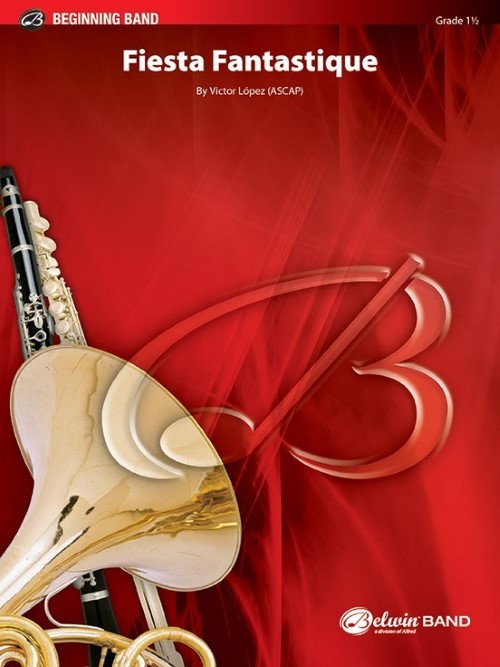 £52.95
Fiesta Fantastique (Concert Band - Score and Parts) - Lopez, Victor
Let your audience travel south of the border and experience these Caribbean sounds without having to leave home. Accentuating articulations and dynamic contrasts will enhance the authenticity of this piece. A vibrant Latin gem! Duration: 2:00
Estimated dispatch 7-14 working days
 View Music