
Results
-
£435.40Goldberg 2012 - Svein H. Giske
The first time I heard Bach's Goldberg Variations was in the movie Silence of the lambs, in the early 1990s. I noticed the beautiful background music in one of the scenes, but at that time I didn't know what it was. A few years later, when I was studiying at the Grieg Academy, I got to know the entire piece. For me, this is a piece of music which I can listen to countless times. I think it sounds as fresh today as it did more than 15 years ago and it never ceases to inspire me. Both Bach's composition and Glenn Gould's famous 1955 recording (which was the first one I heard) still makes a great impression on me. Before Gould recorded it at age 22, it wasn't a highly ranked piece amongst pianists and Bach was by many viewed as a bit old-fashioned. The young Canadian turned all this around. He managed to portray Bach in a reformed way, producing fine nuances in phrasing and making the many layers in Bach's music more transparent than anyone before him. Thus he plunged both himself and Bach (back) onto the international music scene. When The Norwegian Band Federation (NMF) asked me to write the test piece for NM in 2012, it was only natural for me to use the Goldberg Variations as a starting point and inspiration for my work. Since I was a teenager at NMF's summer courses in the mid eighties I've always listened to many different styles of music. Growing up in Sunnmre with the Brazz Brothers as teachers and mentors, jazz-, pop/rock- and folk music were early on a natural part of my musical background. I also have my classical education from the Grieg Academy on trumpet. As the title of my piece implies, I've wanted to bring Bach to the present and put his music into various modern musical landscapes. I think you can bring about a special kind of energy when music from different genres are mixed and I've tried to do this by mixing Bach with artists and musical styles from the present. In Goldberg 2012, the music is often constructed by several layers, which in a way are living parallel musical lives. They are seemingly moving or floating freely, almost unaware of each other, but bound together by the same basic pulse. The rythms, however, are often notated on a different rythmic subdivision level than the usual 8th- or 16th note levels. By doing this, I hope to achieve transparent sounds that rythmically are perceived as more free and detached from each other. In large sections of the piece, pop/jazz is fusioned with elements from Bach. I guess you could have this little scene as a synopsis for the piece: picture a group of musicians meeting: some are classical performers, some are jazz. They start to improvise together, each in their own voice or musical dialect and I'm sort of in the middle, trying to write down what they are playing. This is what I feel much of Goldberg 2012 is about. The foundation of the piece, in addition to Bach and references from pop/jazz music, lies also in my own material. This material, basically two chords, is heard in it's purest form in the 1st movement. I use these chords to create scales, new chords and different motifs which contribute to blend together the different moods of the piece. It has not been my intention to copy Bach's form (theme and 30 variations), but rather to use the bits and pieces that I like the most as an inspiration for my own variations. The 1st movement, Aria 2, is for my 3rd son, Olav, who was born on the 21st of April 2011, and the 5th movement, From long ago, is dedicated to the memory of my father, Svein J. Giske, who passed away on the 6th of June 2011. -Svein H. Giske, January 2012-
Estimated dispatch 7-14 working days
-

£154.99
Leviathan - Franco Cesarini
The leviathan, a demoniacal sea monster that appears as a dragon or serpent, is considered in the Old Testament to be the embodiment of evil. The defeat of the demon is prophesied in Isaiah 27:1: "On that day the Lord will punish with his cruel sword, his mighty and powerful sword Leviathan that primeval sea-serpent, that writhing serpent Leviathan, and slay the monster of the deep ."The composer's main goal is to create an atmosphere thick with agitation, tumult and extreme tension rather than express specific events musically. The monstrous form of the leviathan slowly emerges from the abyss of primordial sounds at the start of the piece, recalling the eternal conflict betweengood and evil.
Estimated dispatch 7-14 working days
-
£100.00Crossing Parallels - Kathryn Salfelder
Following the success of Kathryn Salfelder's Cathedrals (2009), the American Bandmasters Association commissioned her to create this new work for band. Premiered at the 2010 ABA National Convention, Crossing Parallels offers a creative tapestry of engaging sounds and textures as it combines elements of Renaissance and Baroque musical gestures with contemporary notions of set theory and harmony. The seemingly contradictory nature of the title is reflected in the overlapping and intertwining of thematic ideas vying for attention.
Estimated dispatch 7-14 working days
-
£60.99Christmas Colours - Bruce Fraser
'Christmas Colours' is a palette consisting of several Christmas songs. Bruce Fraser has mainly used the colours green (the colour of holly) and white (the colour of snow). This composition begins with the chiming of festive bells - if you listen well, however, you can already hear short fragments from 'The Holly and the Ivy', whose entire melody is finally played, alternated with 'The Sussex Carol'. After this, the pace slows down and the stately 'See amid the Winter Snow' sounds, but parts from 'Jingle Bells' and 'Silent Night' can also be heard. Then, after walking under 'The Holly and the Ivy' once again, the celebration of Christmas may begin!
Estimated dispatch 7-14 working days
-
£98.20Space Lab - Giuseppe Ratti
A long pedal-note of evanescent chords, based on empty parallel fifths, announces the theme;flutes and reed instruments exploit some almost imperceptible micro-fragments, supported by muted trumpets, creating what is an almost surreal and spatial atmosphere. This was Giuseppe Ratti's starting point for his "Space Lab", a laboratory of sounds and, later (when the main theme is taken up once more), of rhythms. Although it may sound complicated, this piece is ultimately based on a single motif: the descending fourth played on the second beat by the woodwinds. In this piece, Giuseppe Ratti, with his usual pallet of clear, transparent colours at hand, appropriate for the general public, together with simple, effective themes, has sought to experiment with new atmospheres and rhythms. First of all we hear the entire theme in the Allegro. Then the rhythm changes in a simple but at the same time complex manner: almost a genetic mutation. The part leading up to the final Lento flows smoothly for the listener but requires great skill and experience on the part of those performing it. In the final lento the main theme reappears in all its simplicity and sincerity, purified of all contrasts. A metaphor for a life that leads us towards unimaginable frontiers but which, in the end, always brings us back to the point from where we started.
Estimated dispatch 7-14 working days
-
£109.50Three London Sketches - David Campo
London is one of my favorite cities in the world, and in 2016 I was invited there to serve as an adjudicator for the London New Year's Day Parade and Gala Concerts. While I was there, I was fortunate to meet and spend time with The Lord Mayor of Westminster Councillor Steve Summers. While his title sounds formidable and intimidating, I found Steve to one of the nicest, most easygoing people I've ever met. And boy, does he love London! He was fond of saying that he had "the best job in the greatest city in the world." He spoke passionately about London and his favorite places in the city, and his enthusiasm was contagious. Some of his favorite places became some of my favorite places, and the inspiration for this piece. I hope that this work not only conveys the beauty and history of these iconic places, but Steve's deep and abiding love for them as well. I. Tower Bridge - The Tower Bridge was built over 120 years ago to ease road traffic while maintaining river access to the busy Pool of London docks. Its giant moveable roadways lift up for passing ships, making it a true engineering marvel. It is also one of the most iconic sites in London, and was used to display the Olympic Rings during the 2012 Olympics. II. St. Paul's (The Whispering Gallery) - The history of St. Paul's Cathedral goes back well over a thousand years, but construction on the current St. Paul's began in 1669 after a fire destroyed the earlier structure. The dome of St. Paul's Cathedral is a whispering gallery; you can whisper against the wall on the inside of the dome and it can be clearly heard on the other side of the dome over 100 ft. away. Imagine the secrets that have passed there... III. Trafalgar Square - The name commemorates the 1805 naval Battle of Trafalgar and is marked by Nelson's Column, a monument to Admiral Horatio Nelson, the hero of the Battle of Trafalgar. It is the heart of London; full of life and constant energy and home to iconic buildings including the National Gallery, St. Martin-in-the-Fields, Canada House and South Africa House. Londoners say that all roads in London lead to Trafalgar Square.
Estimated dispatch 7-14 working days
-
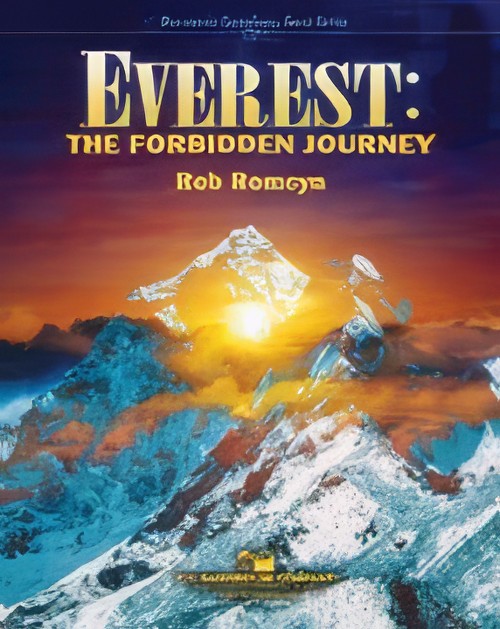
£110.00Mount Everest - Kees Vlak
This composition basically consists of three fragments and an epilogue (conclusion):1) Plateaux, 2) Sherpas, 3) Climb. The piece starts with a musical depiction of the deserted plateauxs and mountain peaks of the Himalayas. The mysteriousness of theTibetan country was caused by its inaccessibility to other nations. One even believed that there was a paradise behind the huge mountains; the land of Shangra La. 1) After the sound of a gong, the Asian-like theme arises extremely softly from thedecay of the percussion. In bars 4 and 5 the syllables of Hi-ma-la-ya echo. Then a second theme appears; it symbolises the enchantment of the mountaineers by seeing the Mount Everest. 2) Eastern percussion, very evenly without emotion, sound from thedeserted village of the sherpas. The phrasing is prescribed by the number 'three'. From measure 56 Tibetian monks sing a chant, also with the religious background of the number 'three'. 3) The third part starts of with the sight of the giant MountEverest with an entirely new theme, that is played impressively by the strong low brass instruments of the band, immediately followed by the excited big climbing. The many surprises are depicted by the changing time signatures. Two themes are inconstant battle; the binary Himalaya theme and the ternary Mount Everest theme. Only once there is a steely composure. The registers in which the piece is played increase. The tension rises...Then the peak is reached. A long pause follows before onerealises that one is on top of the world. Slowly the emotions of joy grow and lead to an enormous climax. The first enchanted theme sounds again in total glory.
Estimated dispatch 7-14 working days
-
£82.50Close Encounter at Loch Ness - John Prescott
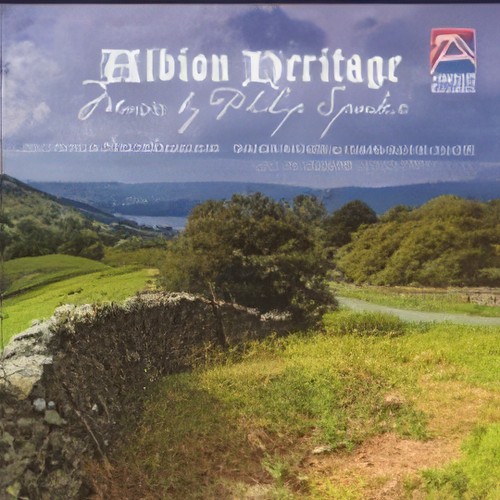
One of the most intriguing mysteries of all times surrounds this fabled body of water in a land rich in legend and lore. Imagine being on the shores of Loch Ness, part of a large group of peasants having a party, dancing while accompanied by the tuneful sounds of bagpipes and flutes. At the height of the revelries, the huge, shadowy shape of the Loch Ness monster rises out of the water, causing everyone to flee in a panic. After gathering at another location, still on the shore of the loch, the dance begins again. Another chapter added to the legend as everyone wonders: will they be left in peace or will the monster return?
Estimated dispatch 7-14 working days
-
£169.99subTERRA - Daniel Weinberger
subTERRA tells the story of a miner who miraculously survives the collapse of a mine shaft. The work consists of five movements:1. The Dream: A horrible nightmare plagues the miner. Dissonances and unusual sounds foreshadow the imminent disaster.2. The Work: The rhythmic second part describes the daily grind of a miner, from driving into the mine shaft to working deep underground.3. The Accident: Suddenly a piercing alarm is heard. Everyone tries to escape the mine amidst the ensuing chaos as the mine shaft collapses, trapping the unfortunate miner.4. Hope: Buried under rubble and debris, the miner regains consciousness. A prayer can be heard.5. The Rescue: A powerfulmaestoso symbolizes the successful rescue and survival of the trapped miner.
Estimated dispatch 7-14 working days
-
£289.99Divertimento - Oliver Waespi
This grand work contains four contrasting movements. The first movement, Prelude, takes the form of an overture: it raises the curtains and marks the beginning of the piece. The brilliant motifs of the opening are contrasted by a calmer and more lyrical central section, after which the triumphant opening returns for the movement's end. The second movement, Meditation, explores the intimate sounds of the oboe, as well as those of the flute and French horn, backed by a rich orchestral accompaniment. The third movement presents a more upbeat Procession, but not a Procession of the Nobles, as written by Rimsky-Korsakov. Quite the opposite, Procession resembles a "second line"procession from New Orleans, whose up-beat rhythms invite everyone to dance in the streets rather than the measured pacing of a march. Divertimento ends with a Hoedown, the tradition American folk dance idiom, when the band has the opportunity for both vivacity and virtuosity and may play as fast as it can. It is important to play all four movements with precision, clarity and, most importantly, enthusiasm.
Estimated dispatch 7-14 working days
