
Results
-
 £102.99
Dancing Ebony - Carl Wittrock
Dancing Ebony is a challenging work for solo clarinet, showcasing a virtuoso soloist in an expressive Celtic style. The piece opens with the lyrical sound of the clarinet telling a beautiful tale, before the entire concert band joins in to provide spirited support!The Clarinet Solo is grade 5.
Estimated dispatch 7-14 working days
-
 £53.50
Celebrating My Three Best Friends - Richard L. Saucedo
The mission of United Sound, Inc. is to provide musical performance experiences for students with special needs. In this program, each student is mentored by three general education students already in a band or orchestra. Celebrating My Three Best Friends pays tribute to this special relationship and bond between students. Written in a modified rondo form and a fast 3/4 tempo throughout, this is an uplifting and rewarding piece for young players. Dur: 2:10
Estimated dispatch 7-14 working days
-
 £42.50
Ain't no Mountain High Enough - Nickolas Ashford
The best of the Motown sound comes through in this familiar hit originally recorded in the '60s. Here is a very playable and solid arrangement for beginning groups.
Estimated dispatch 7-14 working days
-
 £193.20
CASTRVM - Lionel Beltrán-Cecilia
CASTRVM is a symphonic episode inspired by four of the main civilizations that have coexisted over time in Ulldecona's Castle. With its melodies and sound effects, the composer tries to transport the listener through a trip to four uninterrupted movements, from the beginnings of this small settlement, creating a natural atmosphere recreated by the voice and the singing of birds to take us into the history with the first inhabitants, the Iberians, giving strength to the introduction of the composition, to move on to the time of the Andalusians, which with a melody in the form of a dance marked by percussion will transport us to take a walk in the surroundings of its circular tower. Next, and with strength, we arrive at the medieval and Christian period, marked in the score by the brass instruments, in this fragment we find moments that take us into the church of "Santa Mara de los ngeles", with melodies that evoke resonance and pomposity, continuing until we find the immense square tower, symbol of the fortress and homage, finally used as a prison and arsenal of those times. Then, there is a small slow march that will move us to some measures of strong stridency to finish with the whole section of low brass having its great moment of prominence, down to we reach the last part, Qna, a name that is recited during the musical piece and one of the names given in the past to the area that could be seen from the castle, where the change of location of the new town is recreated leaving the castle site, but always looking at it with respect and admiration as at the beginning of what is now the current Ulldecona, in this part, the composer plays a bit with a very well-known and significant melody for the inhabitants of Ulldecona, the "Jota Vieja", first making a reflex effect of all its melody and then only with the first six notes of this one, which builds a bridge until reaching the march and, later, the grand finale of this symphonic episode. The work was commissioned by Ulldecona Town Council and the Ulldecona Music Band, led by its conductor Joan Nadal i Girona, to commemorate the 800th anniversary of the donation of the Town Charter of Ulldecona "the old" (1222-2022), as part of the PATRIMONIUM 20.22 programme, "La Banda (Sonora) del Castell" (The soundtrack of the Castle).CASTRVM consists of: I.Iberians: stone and ironII.AndalusiansIII.The square tower: fortress and homageIV.Qna
Estimated dispatch 7-14 working days
-
 £99.99
Hidden Light - Kevin Houben
Hidden Light - Loyalty Among Friends, was composed on the occasion of the 75 year membership of Mr Leo Knoben at the Royal Brass Band 'Eendracht Waubach'. (NL)From pride and admiration for this exceptional jubilee , but also out of gratitude for his many years of commitment as musician and member of the board, the association chose to have a memorable work written.That assignment resulted in the wonderful choral Hidden Light, for which composer Kevin Houben based himself on the following emotions and oppositions: small vs majestic, submissive vs royal and simplicity vs glory.The work starts in a very modest, dark atmosphere, after which the composition develops into a grand and lofty sound with broad melodies, exploring the full richness and colors of the 'symphonic' wind band.The interesting variety in orchestration - the small , intimate setting at the beginning and the following broad, majestic tutti passages - makes the work very varied, grateful to perform and to listen to.With Hidden Light Kevin Houben has again created an expressive and powerful composition that is highly reflective in nature. This emotional work is a tribute to an exceptional man who has been there for 'his' orchestra all his life, with a warm heart for 'his' musicians. Each musician will recognize the connection and the passion for music in this piece.
Estimated dispatch 7-14 working days
-
 £92.00
Mythorama - Spyros Prosoparis
"MYTHORAMA" Return to the Homeric Scheria. Composed in 2017 for the youth Band of the Corfu Philharmonic Society, is the 3rd Movement of the suite "In the mythical land of the Phaeacians". This piece brings the listener to Corfu in the time of Homer and describes the life of the Phaeacians, their love for music and the serenity of their island. The colorful range of the winds and the use of a wide variety of percussion instruments offers a sound that could well be used as a film score.
Estimated dispatch 7-14 working days
-
 £114.99
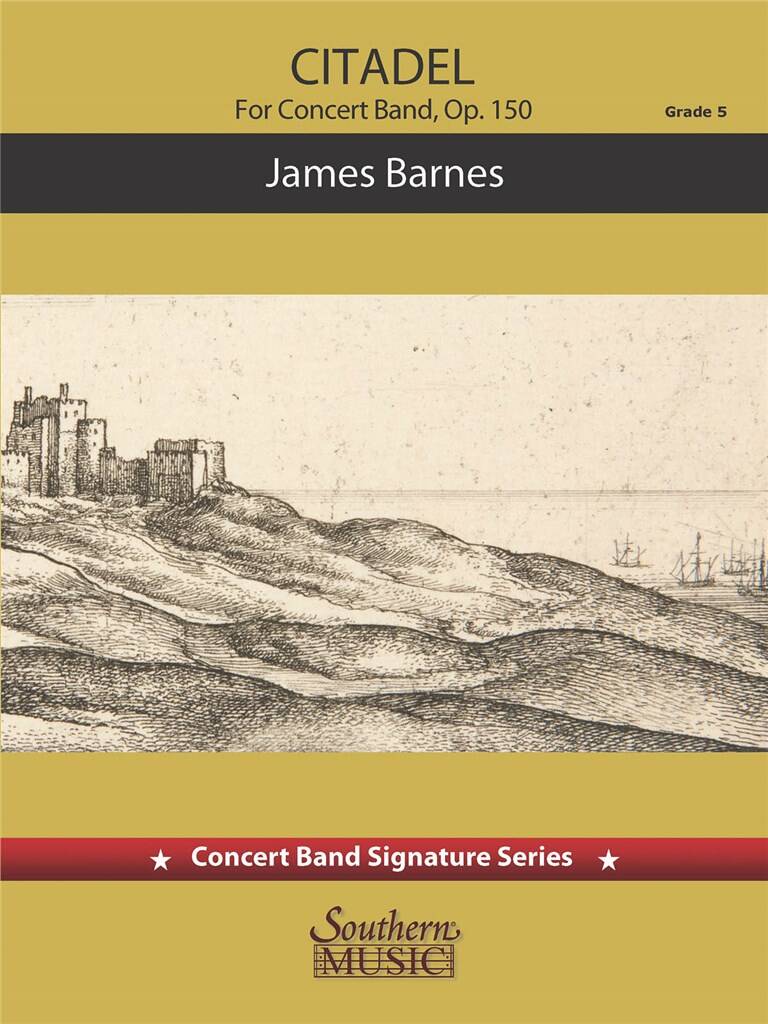
Citadel - James Barnes
Citadel was composed to commemorate the 150th anniversary of The University of Kansas (1865 to 2015.) It begins with optional offstage chimes (one or two sets [opt.]) to depict the daily ringing of the bells in KU's World War II Memorial Campanile. Trumpets introduce a fanfare-like figure that quickly evolves into the opening theme of the work. As the music settles and becomes softer, a saxophone choir introduces a slower, more pensive middle theme intended to describe the university's academic nature. A quiet moment at the end of this section hints at the famous Rock Chalk Chant in solo horn before the chimes and fanfare return to end the work in a final, dramatic outburst of sound and color.
Estimated dispatch 7-14 working days
-
 £101.50
Ginger Marmalade - Warren Benson
Originally written as part of the Commissioned Works for School Bands sponsored by Carl Fischer on the occasion of the one hundredth anniversary of the firm, Ginger Marmalade has become one of the best known of serious twentieth-century works for school band. A humorous program number that plays with the listener's expectations, it is technically simple, but uses unusual sound resources (clapping hands, rapping heels, novel percussion sounds) o produce a work that delights the ear and challenges the mind. Often cited as a cornerstone of the young band repertoire (it is on both the UIL - Texas and NYSSMA required music lists), we are pleased to issue this delightful pieceas part of our Carl Fischer Classic Band Edition.
Estimated dispatch 7-14 working days
-
£233.99
Transfiguration - James Curnow
James Curnow explores many domains of sound with this wonderful piece. Four extensive variations, based on the melody of the hymn All Praise to You, Oh Lord, together form a beautiful piece of music for use in church services. The composer has a fresh view of the theme in the various fragments of the melody, from ethereal reflections to passionate joy. The last variation starts softly but energetically, and keeps developing using the last phrase of the melody - until the majestic highlight of this glorious hymn begins.
Estimated dispatch 7-14 working days
-
 £209.99
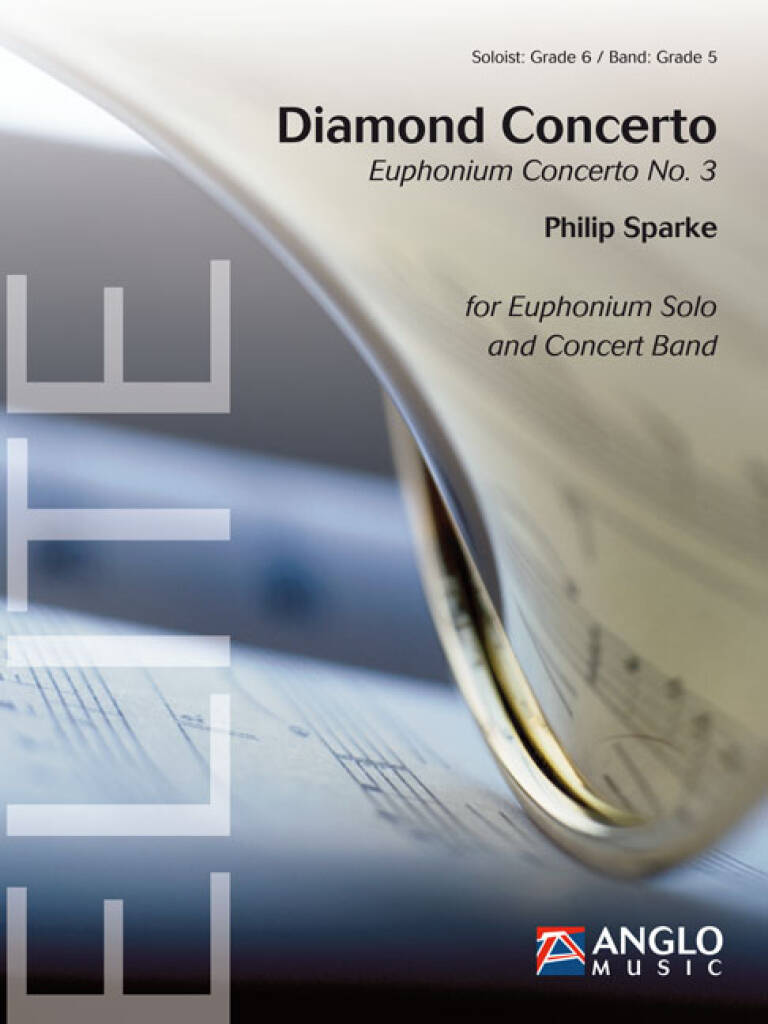
Diamond Concerto - Philip Sparke
Diamond Concerto was commissioned by Musikverein Mrschied from Germany - Dr. Eric Grandjean, conductor - for a special concert featuring Steven Mead as guest soloist. Together they gave the world premiere on 28th April 2012 in the town theatre of Idar-Oberstein.The commission is a highlight in the 30-year friendship between composer and soloist, which has included many mutual CD projects and concerts and, now, a concerto. Sparke had Steven Mead's special euphonium sound in his head throughout the composition process and made free use of the variety of styles which the world-renowned virtuoso has made his own during his highly successful solo career.The village ofMrschied lies to the west of Frankfurt am Main in the area known as the German Road of Precious Stones, which is famous for its thriving gem industry. Because of this it was decided to give the commission a local connection by choosing the title, Diamond Concerto. Each of the three movements is named after a famous diamond:1 EARTH STARis rather stern in mood, opening with a free fantasy for the soloist over a static chord from the band. This leads to an Allegro Moderato in minor mode where small motives are gradually repeated and developed by both band and soloist.2 OCEAN DREAMuses a varied quote from the composer's Music for Battle Creek, including a melting slow melody that was originally written with Steven Mead in mind.3 BLUE HEARTwas written, at Steven Mead's suggestion, in bebop style and takes the form of a jazz waltz. The quasi-improvisatory central section features a call-and-response passage for the soloist and upper woodwinds.Soloist: Difficulty 6Diamond Concerto is available for euphonium and piano (AMP 374-401) as well as for euphonium and brass band (AMP 354-030).
Estimated dispatch 7-14 working days
 View Music