
Results
-
 £20.95
Four Temperaments For Tuba (Concert Band - Score Only) - Brand, Michael
Written to be playable by a professional soloist and a decent high school level ensemble, this theme of variations for tuba and band takes the listener on a journey through four extremely contrasting styles (or Temperaments) - neo-classical, swing, chorale and scherzo - with plenty of opportunity for the soloist to shine and show off his or her double-tonguing chops.
Estimated dispatch 7-14 working days
-
 £76.99
Four Old Dances (Flexible Ensemble - Score and Parts) - Van der Roost, Jan
These four dances are written in a kind of neo renaissance style. Because of the fact that little technical demands are required from its performing artists, these dances are mainly meant for beginning groups, youth ensembles and also for bands in all kinds of small strengths. Jan Van der Roost originally had pedagogical intentions with this piece.Duration: 5:45
Estimated dispatch 7-14 working days
-
 £75.00
Four Cornish Dances (Concert Band - Score and Parts) - Arnold, Malcolm - Farr, Ray
Ray Farr's arrangement of Malcolm Arnold's Four Cornish Dances suite brilliantly retains the atmosphere of the orchestral original with its evocation of Cornish sea-farers, of deserted tin mines, of marching bands, Methodism, May Days and Moody and Sankey hymns. Duration: 10 minutes
Estimated dispatch 7-14 working days
-
 £156.00
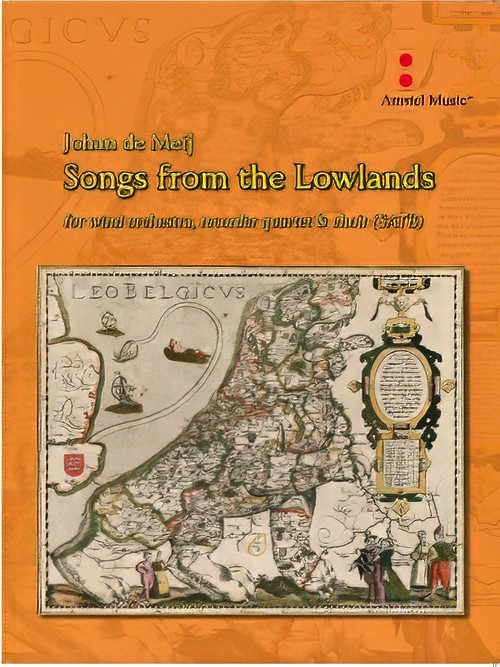
Songs from the Lowlands (Recorder Quartet and Optional Choir with Concert Band - Score and Parts) - De Meij, Johan
Songs from the Lowlands is a collection of songs from the 16th and 17th centuries from my native country The Netherlands, formerly known as The Low Countries. They are, by turns, patriotic songs by Adriaen Valerius from the time when our country was occupied by Spain, naughty love songs and a drinking song, Peeckel-Haringh. Songs from the Lowlands was written for the farewell concert of my dear friend Jim Yarnell, who has been the director of bands at The American School of The Hague for four decades. Jim conducted the premire at his final concert, April 8, 2022, and now enjoys a well-deserved retirement.Duration: 12.00Songs from the Lowlands can be performed instrumental or with SATB choir (choral parts available separately).
Estimated dispatch 7-14 working days
-
 £28.99
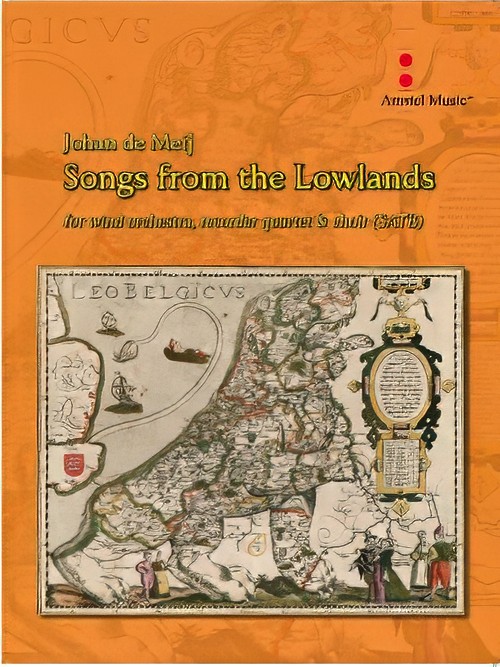
Songs from the Lowlands (SATB Choir - 25 Pack) - De Meij, Johan
Songs from the Lowlands is a collection of songs from the 16th and 17th centuries from my native country The Netherlands, formerly known as The Low Countries. They are, by turns, patriotic songs by Adriaen Valerius from the time when our country was occupied by Spain, naughty love songs and a drinking song, Peeckel-Haringh. Songs from the Lowlands was written for the farewell concert of my dear friend Jim Yarnell, who has been the director of bands at The American School of The Hague for four decades. Jim conducted the premiere at his final concert, April 8, 2022, and now enjoys a well-deserved retirement.Duration: 12.00
Estimated dispatch 7-14 working days
-
 £122.20
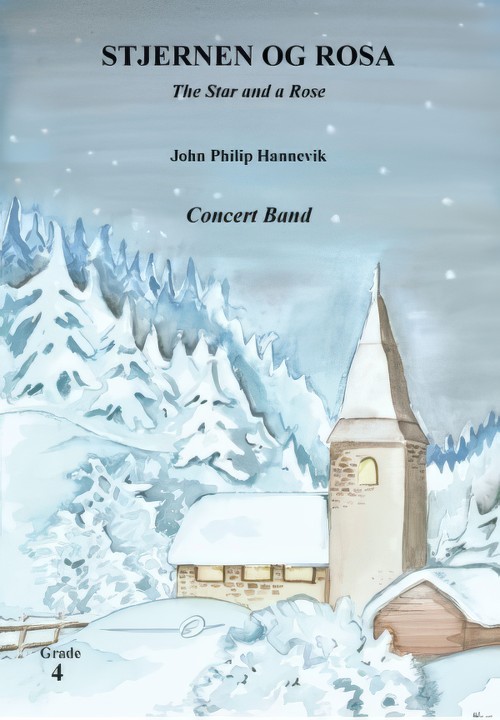
Stjernen og Rosa (The Star and a Rose) (Concert Band - Score and Parts) - Hannevik, John Philip
The Star and a Rose is a big-scale Christmas piece for band, featuring four seasonal chorales.The first is a Gregorian-like chant Hodie Christus natus est.In this section of the piece, a soloist can be placed away from the band, maybe on a gallery. The soloist can be a tenor instrument, maybe trombone, or you can feature a vocal soloist. After this, the music leads us on to the old German Christmas chorale Lo, how a rose e'er blooming. This song is given a fairly rhythmical treatment, but make sure that the melody is presented in a cantabile style. An interlude follows, before the piece presents one of the most used and loved Scandinavian Christmas chorales, Mitt hjerte alltid vanker (My Heart will always wander), composed by the Danish bishop Hans Adolph Brorson around 1732. This song is building towards a climax, before the solo horn brings it all down to the Stable view described in the lyrics. Then comes a transition that brings us in to the final section of the piece, which presents the international Christmas Carol Adeste Fideles. As many will notice, I have borrowed a section from David Wilcocks majestic harmonization towards the end.The title of the piece has its background form the lyrics in My heart will always wander, where the text speaks about the stars in the sky. But also in the Latin text for Adeste Fideles: Stella duce, Magi, Christum adorantes. The Rose is of course from the lyrics in the chorale Lo, how a Rose.Duration: 10.30
Estimated dispatch 7-14 working days
-
 £134.99
Compostela (The Way of St. James) (Concert Band - Score and Parts) - Deleruyelle, Thierry
Four roads lead to Santiago, so begins the Book of the Pilgrim. Written in the 12th century, the Codex Calixtinus opened the way for pilgrimage from most cities in Europe and North Africa to Santiago de Compostela, in Spain. Compostela - The Way of St James describes the pilgrims' journey. After a slow introduction, a brilliant theme announces the start of the journey. The arrival in Spain is indicated by incantatory chants and majestic chords. Finally, the music softens as the pilgrims venerate St James.Duration: 11.30
Estimated dispatch 7-14 working days
-
 £134.99
The Secret of Mercury (Concert Band - Score and Parts) - De Haan, Jan
This work was commissioned by the concert band Da Capo Leeuwarden from the Netherlands, which was linked with the Dutch postal service PTT up until 1995. Mercury happens to be the messenger of the gods, a kind of mailman, one could say. Yet the composer did not choose the god but the planet Mercury as his source of inspiration for this work in four uninterrupted movements. He created a multifaceted work in which the mysterious celestial body is represented, as well as a number of space missions exploring it. This interesting subject matter guarantees a composition that fascinates from start to finish. Duration: 12.15
Estimated dispatch 7-14 working days
-
 £56.50
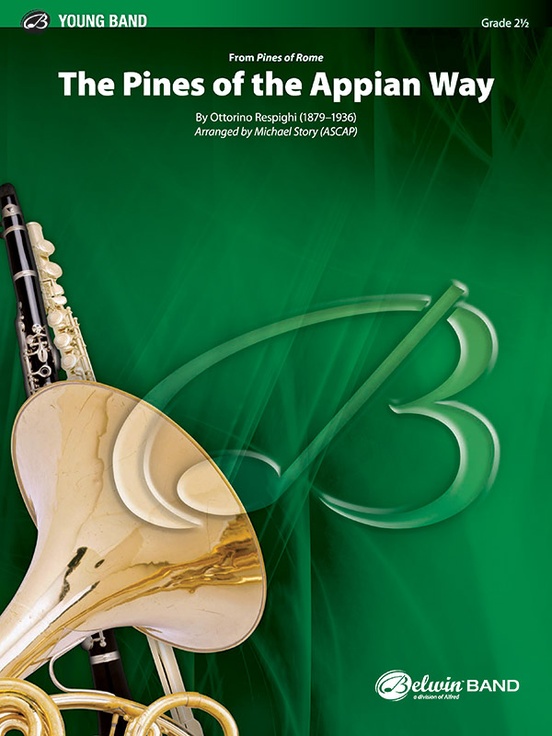
The Pines of the Appian Way (from Pines of Rome) (Concert Band - Score and Parts) - Respighi, Ottorino - Story, Michael
Completed in 1924 Respighi's masterwork consists of four contrasting movements. The final movement, The Pines of the Appian Way, depicts the advancement of the Roman Legion as it gradually marches towards the listener. It is one of the most glorious and stunning orchestral crescendos in all of classical music. Perfectly arranged for young band by Michael Story! Duration: 2.30
Estimated dispatch 7-14 working days
-
 £191.30
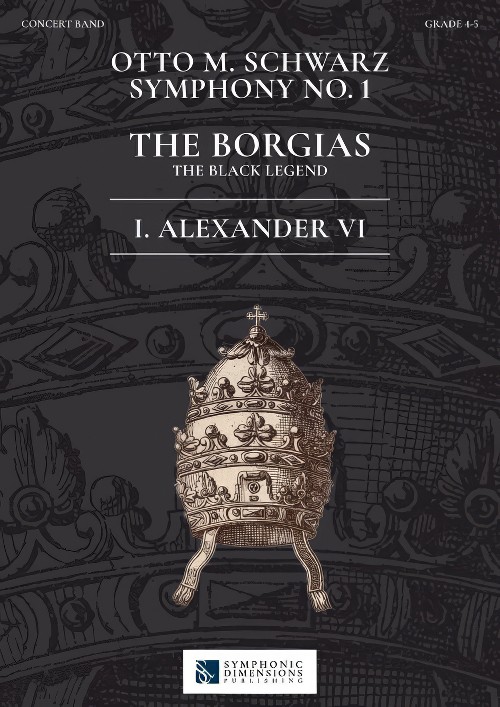
Alexander VI (Movement I from Symphony No.1, The Borgias) (Concert Band - Score and Parts) - Schwarz, Otto M.
The Borgia family is the subject of a so-called black legend, a pejorative term that has been used since the Middle Ages to refer to Spain and Spaniards. The Borgias' black legend is one of corruption, abuse of power, orgies, sex and murder. These rumours spread especially during the reign of Pope Alexander VI, a member of the family. Alexander was even referred to as the Antichrist. According to eyewitnesses, when he died Satan prowled the death chamber and a black dog, an envoy of the Devil, ran up and down the aisles of the Vatican. The brutal rule of Pope Alexander and his family led to a kind of demonization of the Borgia family. But it is precisely the lack of scruples, the brewing of poisons, the incest and various cruelties that continue to hold a certain fascination for us.Alexander VI: Rodrigo Borgia was born in 1431 near Valencia. He studied law in Bologna and, through his uncle Pope Calixtus III, he rose through the church hierarchy. As vice-chancellor of the Holy Roman Catholic church, he became one of the richest men in Europe. As a cardinal he fathered four children who he later legitimised when he became pope. His election to the papacy was funded by the sale of offices, extortion and bribes of all kinds. Through an alliance with Ascanio Sforza he was elected pope on August 11 1492 and named himself from then on Alexander VI, an allusion to Alexander the Great.Duration: 9.30
Estimated dispatch 7-14 working days
 View Music