
Results
-
 £289.99
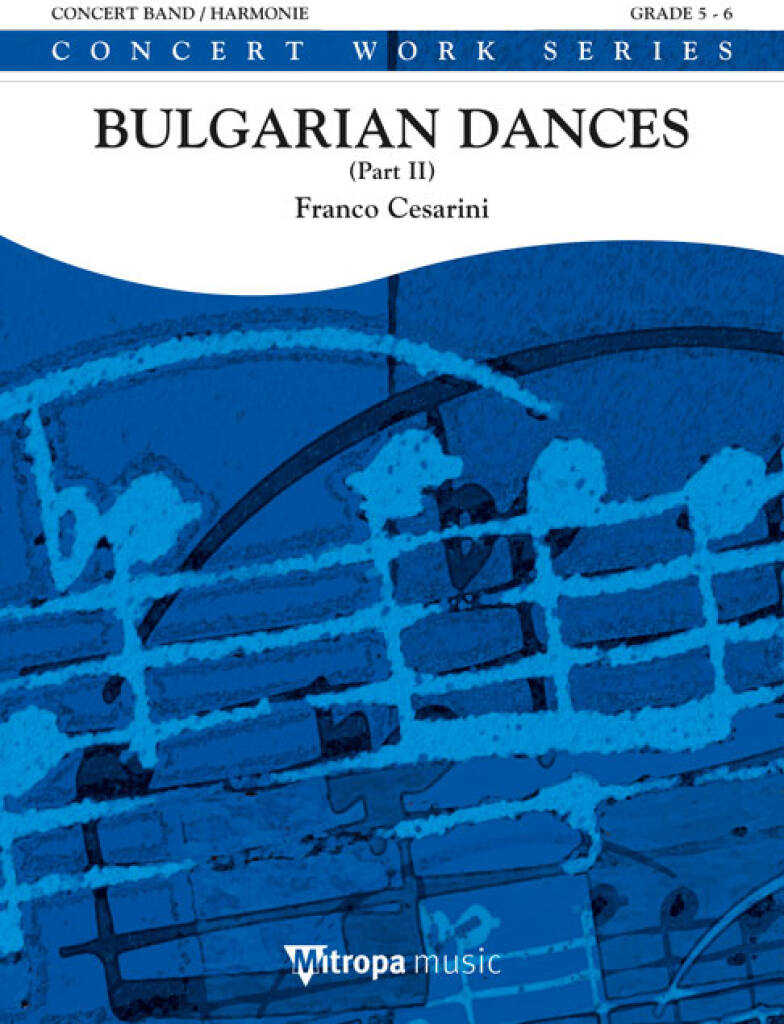
Bulgarian Dances (part II) - Franco Cesarini
Bulgarian folk music has a long tradition and numerous typical characteristics, such as particular dissonances and complex, irregular rhythms. In Bulgarian Dances (Part II) (which can be performed together with the previously published title Bulgarian Dances) Franco Cesarini has preserved the original spirit of Bulgarian folk music, yet has imbued it with a symphonic character and brought it into the concert hall. The three different movements give us a meditative, moving folksong and a lively dance, before a distinctly symphonic part leads to a glittering finale.
Estimated dispatch 7-14 working days
-
 £82.95
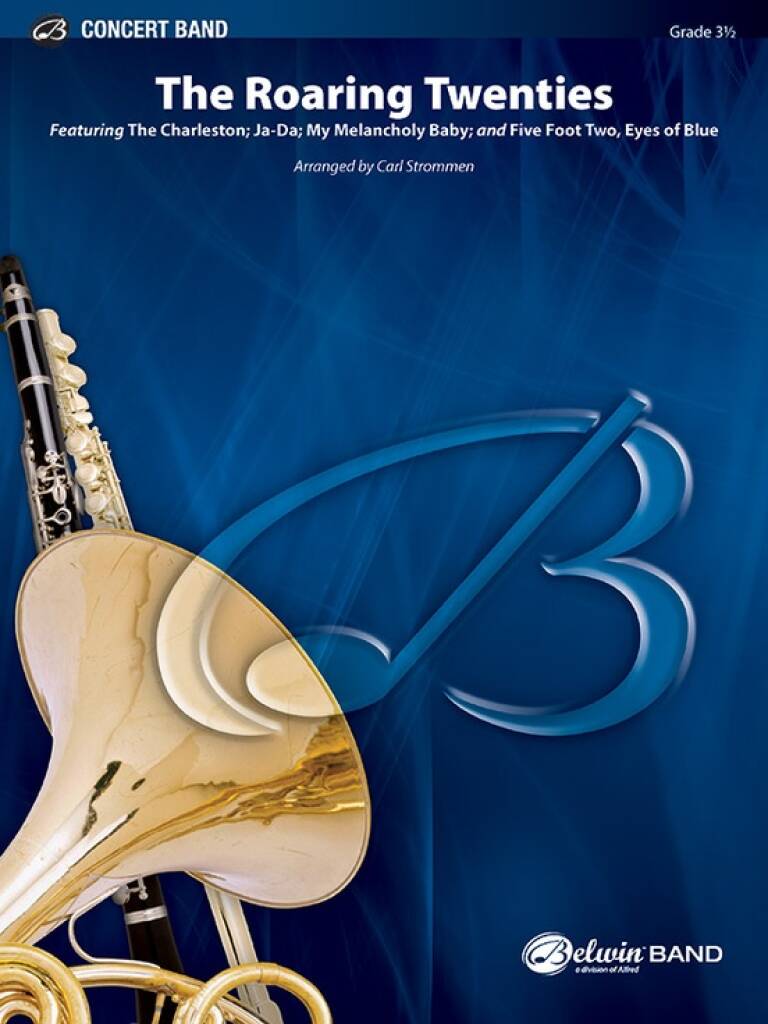
The Roaring Twenties
The Roaring Twentiesby veteran arranger Carl Strommen features popular songs of the 1920s. The spirit of optimism is exemplified by upbeat tunes like "The Charleston," "Ja-Da," and "Five Foot Two, Eyes of Blue," while the soulful ballad "My Melancholy Baby" provides a beautiful contrast. Your students will love learning about the music of this era and performing this swinging chart!
Estimated dispatch 7-14 working days
-
£454.99
The Big Apple (Complete Edition) - Johan de Meij
An ode to New York. The Big Apple is a musical representation of the spirit, the glamour and the unfriendliness of one of the most fascinating cities in the world. Listening to this symphony is as exciting as a visit to Manhattan. The listener is never allowed a moment's peace, even the tranquil slow passages are accompanied by an ostinato rumbling in the background. As in the City there is never a quiet moment.
Estimated dispatch 7-14 working days
-
 £134.99
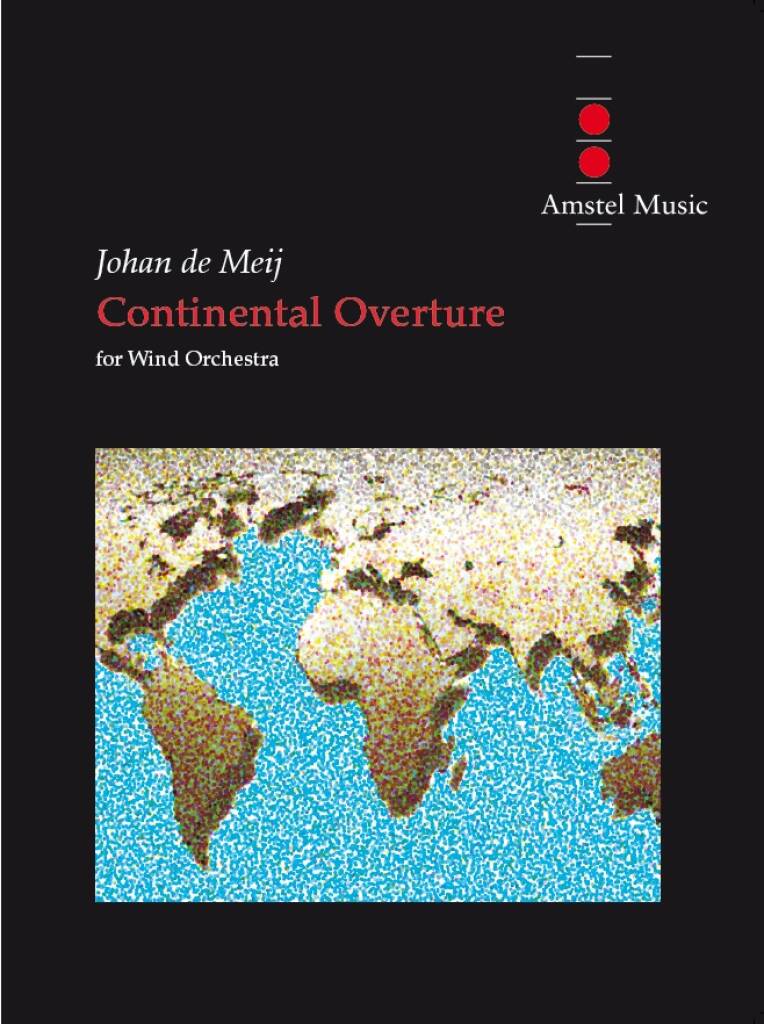
Continental Overture - Johan de Meij
The Continental Overture was commissioned by the California Band Directors Association [CBDA] and was premiered on February 23rd 1997 at the 40th annual CBDA Conference in Bakersfield [CA] by the California All State Symphonic Band, conducted by the composer. It is a short, dynamic work full of energy and spirit, with a melodic middle section and a spectacular ending. The composer does not try to hide his continental roots: several influences by some of the great European composers can be recognised.
Estimated dispatch 7-14 working days
-
 £249.99
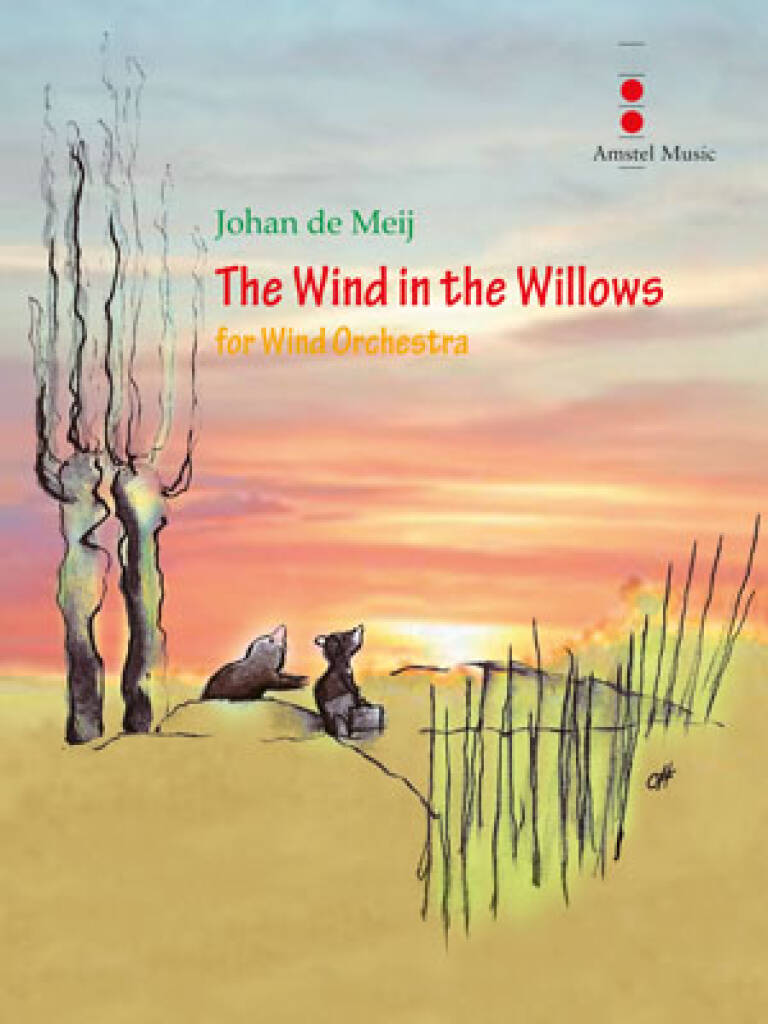
The Wind in the Willows - Johan de Meij
"A book for those who keep the spirit of youth alive in them; of life, sunshine, running water, woodlands, dusty roads, winter firesides" said author Kenneth Grahame (1859-1932) about his children's book The Wind in the Willows. Initially, he wrote the stories about Ratty, Mole, Badger and Toad to read to his visually handicapped son Alistair, but after the publication in book form in 1908, it became a worldwide success. It was later also turned into a film and a television series. What appealed ti the composer most is the friendly, very cosy atmosphere that Grahame has managed to create with his optimistic narrative style full of high spirits, an atmosphere that reminds thecomposer of his own carefree youth. It was therefore a great pleasure to set this book to music! The four movements successively describe:I) The River- The river, which flows through the habitat of the animals like a lifeline, regularly is the scene of pleasant boat trips and picnics. The animals lead their untroubled lives here. The four-tone main motif [A-C-D-C] is extensively presented by the brass section, and returns in the following movements as a countermelody. II) Ratty and Mole -The bright, energetic Rat and the melancholy doubter Mole are inseparable friends and have many adventures. Their opposite characters are illustrated by separate musical themes. III) Mister Toad - The wilful, haughty Mister Toad is indeed a unique case: time after time, he runs into tricky situations, and with his indomitable passion for fast - preferably stolen - cars he causes quite a lot of damage...IV) The Return of UlyssesAfter Toad Hall, the majestic residence of Mister Toad, is recovered from the weasels and stoats of the Wild Wood, who had captured the estate in a cowardly way, our friends get ready for a banquet. They celebrate the victory with a triumphant parade, and so both the book and the music conclude with a happy ending.
Estimated dispatch 7-14 working days
-
 £129.99
Windy City Overture - Johan de Meij
Chicago, America's third largest city, is characterised by its modernskyline with dazzling architecture, fabulous restaurants and swingingjazz clubs. It is also, however, famous for its bitterly cold wind whichblows in from Lake Michigan and gives the city its nickname "TheWindy City". With Windy City Overture, Johan de Meij has produced ashort, rich energetic work, which represents the spirit and the powerof this exciting city.
Estimated dispatch 7-14 working days
-
 £267.99
Sinfonietta No 3 - Philip Sparke
In each of the four movements of this major work for concert band, the composer has tried to capture in music something of the spirit of this beautiful Swiss town of Rheinfelden, which lies on the banks of the Rhein. The opening movement, Promenade, sees woodwind and brass alternating short melodic fragments leading to a noble melody from the horns. The dreamy Ballad features a saxophone solo and chorale-like melody. This leads, via a four bar Interlude, to the Scherzo which takes the form of a moto perpetuo.
Estimated dispatch 7-14 working days
-
 £141.99
Postcard from Singapore - Philip Sparke
This new three movement work by the world renowned composer Philip Sparke is based on traditional folk songs, in particular popular children's songs, from Singapore.The first movement is based on Gelang Sipaku Gelang, a well-loved folksong which has become associated with the Geylang area and is a song about community spirit and people living together in harmony. The slower second movement uses Di-Tanjung Katong, a song which is popular with childrens' choirs and third the movement uses two traditional melodies - Lenggang Kangkung which tells of the graceful swaying of watercress in the rice paddy fields and Munnaeru Vaalibaa.Why not bring as little part of the orient to yourconcert with this exotic new work.
Estimated dispatch 7-14 working days
-
 £76.99
The Gift of Christmas
There is no greater gift around the holiday season than the wonderful joy of traditional Christmas carols. All three of these popular selections capture the spirit and true meaning of what Christmas is all about during this very special time of the year. Band directors will discover how accessible the music is to prepare, while students will simply enjoy the fun that it takes to perform this exciting work. Merry Christmas!
Estimated dispatch 7-14 working days
-
 £80.99
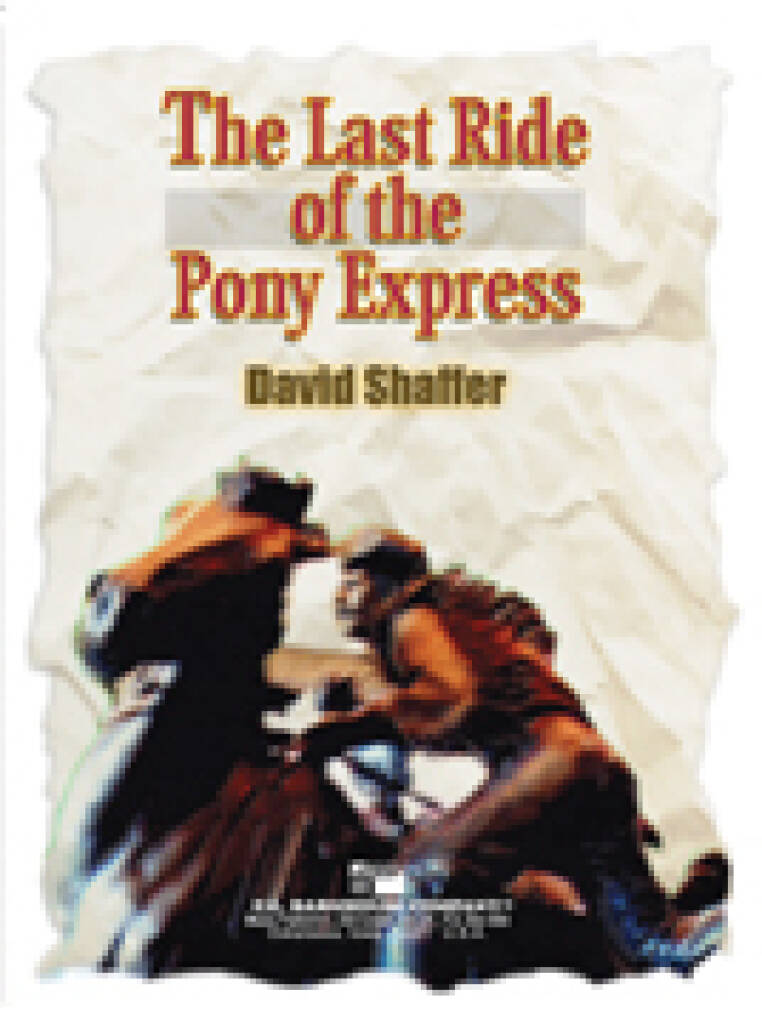
Last Ride Of The Pony Express - David Shaffer
From April 1860 to October 1861, the Pony Express was the fastest way to get a message across the Western half of the US. Now David Shaffer's exciting composition may well be the fastest way you can get your band excited about their next concert or contest performance! It's a colorful and invigorating work which captures the spirit of these great pioneers and all sections of the band get a chance to lead the way. Includes exciting percussion parts which are all quite playable and yet give the music character and energy! EXTREMELY NICE!
Estimated dispatch 7-14 working days
 View Music