Searching for Brass Band Music? Visit the Brass Band Music Shop
We've found 83 matches for your search

Results

  • £110.00

    English Dance Suite - III. Hornpipe (Concert Band - Score and Parts) - Gardner, John - Noble, Paul

    Arranged for the modern Concert/Wind Band, scored for three trumpets, reasonable doubling of parts where the original musical effect is not altered so that players can have a more responsible and enjoyable experience, more legible parts with less doubling on one staff, etc. The piece is offered either as a complete suite of seven movements, and also as seven individual movements which may be purchased independently. The English Dance Suite was originally composed by John Gardner for Wind Band, and has been re-set for the modern Concert Band instrumentation. Both the original version, edited and type-set by Paul Noble, and this arrangement are first editions now available for purchase to bands around the world. The set of seven Renaissance dances depict John Gardner's love of Scottish music, the Renaissance heritage, and some of his own mischievous approach to music. The first movement, Chacony on a Golden Theme, reminiscent of the Allegro movement of Purcell's Golden Sonata, is much used as a vehicle for variation on a repeated short harmonic progression, often involving a fairly short repetitive bass-line which offered a compositional outline for variation, decoration, figuration and melodic invention. In this it closely resembles the passacaglia. The Alman originated in the 16th century as a duple metere dance of moderate tempo, already considered very old, with a characteristic double-knocking upbeat of one or occasionally three sixteenth notes. It appears to have derived from a German dance but no identifiable dance and no German dance instructions from this era survive. The Hornpipe, usually in 3/2 dance rhythm, is an Irish, Scottish and English dance. It is done in hard shoes, which are used to help keep track of how the dancer keeps in time. There are two variations of the hornpipe dance: fast and slow. Usually, more experienced dancers will do the slow hornpipe but younger dancers will start out with the fast hornpipe and then switch in later years. The Corranto is a 16th-century court dance characterized by short advances and retreats, in quick triple time. The Volta (Italian: the turn or turning) is an anglicised name from the later Renaissance. Its main figure consisted of a turn and lift in a sort of closed position. The Pavan is a slow processional dance common in Europe during the 16th century. The Reel, indigenous to Scotland, consists largely of quaver (eighth note) movement with an accent on the first and third beats of the bar.

    Estimated dispatch 7-14 working days

     PDF View Music

  • £95.00

    English Dance Suite - IV. Corranto (Concert Band - Score and Parts) - Gardner, John - Noble, Paul

    Arranged for the modern Concert/Wind Band, scored for three trumpets, reasonable doubling of parts where the original musical effect is not altered so that players can have a more responsible and enjoyable experience, more legible parts with less doubling on one staff, etc. The piece is offered either as a complete suite of seven movements, and also as seven individual movements which may be purchased independently. The English Dance Suite was originally composed by John Gardner for Wind Band, and has been re-set for the modern Concert Band instrumentation. Both the original version, edited and type-set by Paul Noble, and this arrangement are first editions now available for purchase to bands around the world. The set of seven Renaissance dances depict John Gardner's love of Scottish music, the Renaissance heritage, and some of his own mischievous approach to music. The first movement, Chacony on a Golden Theme, reminiscent of the Allegro movement of Purcell's Golden Sonata, is much used as a vehicle for variation on a repeated short harmonic progression, often involving a fairly short repetitive bass-line which offered a compositional outline for variation, decoration, figuration and melodic invention. In this it closely resembles the passacaglia. The Alman originated in the 16th century as a duple metere dance of moderate tempo, already considered very old, with a characteristic double-knocking upbeat of one or occasionally three sixteenth notes. It appears to have derived from a German dance but no identifiable dance and no German dance instructions from this era survive. The Hornpipe, usually in 3/2 dance rhythm, is an Irish, Scottish and English dance. It is done in hard shoes, which are used to help keep track of how the dancer keeps in time. There are two variations of the hornpipe dance: fast and slow. Usually, more experienced dancers will do the slow hornpipe but younger dancers will start out with the fast hornpipe and then switch in later years. The Corranto is a 16th-century court dance characterized by short advances and retreats, in quick triple time. The Volta (Italian: the turn or turning) is an anglicised name from the later Renaissance. Its main figure consisted of a turn and lift in a sort of closed position. The Pavan is a slow processional dance common in Europe during the 16th century. The Reel, indigenous to Scotland, consists largely of quaver (eighth note) movement with an accent on the first and third beats of the bar.

    Estimated dispatch 7-14 working days

     PDF View Music

  • £75.00

    English Dance Suite - V. Volta (Concert Band - Score and Parts) - Gardner, John - Noble, Paul

    Arranged for the modern Concert/Wind Band, scored for three trumpets, reasonable doubling of parts where the original musical effect is not altered so that players can have a more responsible and enjoyable experience, more legible parts with less doubling on one staff, etc. The piece is offered either as a complete suite of seven movements, and also as seven individual movements which may be purchased independently. The English Dance Suite was originally composed by John Gardner for Wind Band, and has been re-set for the modern Concert Band instrumentation. Both the original version, edited and type-set by Paul Noble, and this arrangement are first editions now available for purchase to bands around the world. The set of seven Renaissance dances depict John Gardner's love of Scottish music, the Renaissance heritage, and some of his own mischievous approach to music. The first movement, Chacony on a Golden Theme, reminiscent of the Allegro movement of Purcell's Golden Sonata, is much used as a vehicle for variation on a repeated short harmonic progression, often involving a fairly short repetitive bass-line which offered a compositional outline for variation, decoration, figuration and melodic invention. In this it closely resembles the passacaglia. The Alman originated in the 16th century as a duple metere dance of moderate tempo, already considered very old, with a characteristic double-knocking upbeat of one or occasionally three sixteenth notes. It appears to have derived from a German dance but no identifiable dance and no German dance instructions from this era survive. The Hornpipe, usually in 3/2 dance rhythm, is an Irish, Scottish and English dance. It is done in hard shoes, which are used to help keep track of how the dancer keeps in time. There are two variations of the hornpipe dance: fast and slow. Usually, more experienced dancers will do the slow hornpipe but younger dancers will start out with the fast hornpipe and then switch in later years. The Corranto is a 16th-century court dance characterized by short advances and retreats, in quick triple time. The Volta (Italian: the turn or turning) is an anglicised name from the later Renaissance. Its main figure consisted of a turn and lift in a sort of closed position. The Pavan is a slow processional dance common in Europe during the 16th century. The Reel, indigenous to Scotland, consists largely of quaver (eighth note) movement with an accent on the first and third beats of the bar.

    Estimated dispatch 7-14 working days

     PDF View Music

  • £75.00

    English Dance Suite - VI. Pavan (Concert Band - Score and Parts) - Gardner, John - Noble, Paul

    Arranged for the modern Concert/Wind Band, scored for three trumpets, reasonable doubling of parts where the original musical effect is not altered so that players can have a more responsible and enjoyable experience, more legible parts with less doubling on one staff, etc. The piece is offered either as a complete suite of seven movements, and also as seven individual movements which may be purchased independently. The English Dance Suite was originally composed by John Gardner for Wind Band, and has been re-set for the modern Concert Band instrumentation. Both the original version, edited and type-set by Paul Noble, and this arrangement are first editions now available for purchase to bands around the world. The set of seven Renaissance dances depict John Gardner's love of Scottish music, the Renaissance heritage, and some of his own mischievous approach to music. The first movement, Chacony on a Golden Theme, reminiscent of the Allegro movement of Purcell's Golden Sonata, is much used as a vehicle for variation on a repeated short harmonic progression, often involving a fairly short repetitive bass-line which offered a compositional outline for variation, decoration, figuration and melodic invention. In this it closely resembles the passacaglia. The Alman originated in the 16th century as a duple metere dance of moderate tempo, already considered very old, with a characteristic double-knocking upbeat of one or occasionally three sixteenth notes. It appears to have derived from a German dance but no identifiable dance and no German dance instructions from this era survive. The Hornpipe, usually in 3/2 dance rhythm, is an Irish, Scottish and English dance. It is done in hard shoes, which are used to help keep track of how the dancer keeps in time. There are two variations of the hornpipe dance: fast and slow. Usually, more experienced dancers will do the slow hornpipe but younger dancers will start out with the fast hornpipe and then switch in later years. The Corranto is a 16th-century court dance characterized by short advances and retreats, in quick triple time. The Volta (Italian: the turn or turning) is an anglicised name from the later Renaissance. Its main figure consisted of a turn and lift in a sort of closed position. The Pavan is a slow processional dance common in Europe during the 16th century. The Reel, indigenous to Scotland, consists largely of quaver (eighth note) movement with an accent on the first and third beats of the bar.

    Estimated dispatch 7-14 working days

     PDF View Music

  • £125.00

    English Dance Suite - VII. Reel (Concert Band - Score and Parts) - Gardner, John - Noble, Paul

    Arranged for the modern Concert/Wind Band, scored for three trumpets, reasonable doubling of parts where the original musical effect is not altered so that players can have a more responsible and enjoyable experience, more legible parts with less doubling on one staff, etc. The piece is offered either as a complete suite of seven movements, and also as seven individual movements which may be purchased independently. The English Dance Suite was originally composed by John Gardner for Wind Band, and has been re-set for the modern Concert Band instrumentation. Both the original version, edited and type-set by Paul Noble, and this arrangement are first editions now available for purchase to bands around the world. The set of seven Renaissance dances depict John Gardner's love of Scottish music, the Renaissance heritage, and some of his own mischievous approach to music. The first movement, Chacony on a Golden Theme, reminiscent of the Allegro movement of Purcell's Golden Sonata, is much used as a vehicle for variation on a repeated short harmonic progression, often involving a fairly short repetitive bass-line which offered a compositional outline for variation, decoration, figuration and melodic invention. In this it closely resembles the passacaglia. The Alman originated in the 16th century as a duple metere dance of moderate tempo, already considered very old, with a characteristic double-knocking upbeat of one or occasionally three sixteenth notes. It appears to have derived from a German dance but no identifiable dance and no German dance instructions from this era survive. The Hornpipe, usually in 3/2 dance rhythm, is an Irish, Scottish and English dance. It is done in hard shoes, which are used to help keep track of how the dancer keeps in time. There are two variations of the hornpipe dance: fast and slow. Usually, more experienced dancers will do the slow hornpipe but younger dancers will start out with the fast hornpipe and then switch in later years. The Corranto is a 16th-century court dance characterized by short advances and retreats, in quick triple time. The Volta (Italian: the turn or turning) is an anglicised name from the later Renaissance. Its main figure consisted of a turn and lift in a sort of closed position. The Pavan is a slow processional dance common in Europe during the 16th century. The Reel, indigenous to Scotland, consists largely of quaver (eighth note) movement with an accent on the first and third beats of the bar.

    Estimated dispatch 7-14 working days

     PDF View Music

  • £294.99

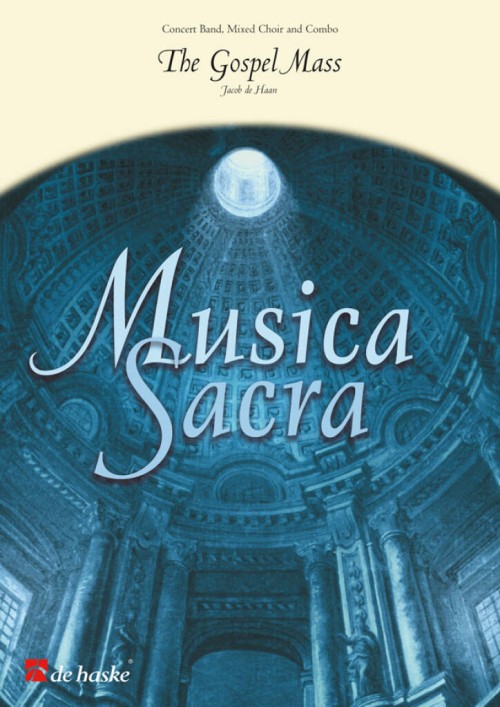
    The Gospel Mass (Concert Band - Score and Parts) - De Haan, Jacob

    The Gospel Mass -a mass for mixed choir, combo and concert band-is based on the gospel music that has spread throughout the world since its creation in America. The movements of the mass ordinary as we know it have now been composed in various pop styles that have their origin in the gospel music. We hear, then, not only the classic American gospel style (including the characteristic clapping and swing rhythms), but also freer gospel styles that have developed over the course of time. As far as we know, The Gospel Mass is the only true gospel mass. Choral parts available separately.

    Estimated dispatch 7-14 working days

     PDF View Music

  • £60.50

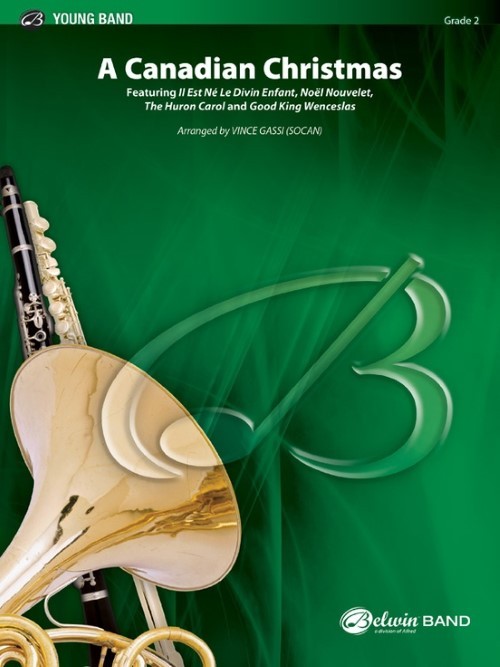
    A Canadian Christmas (Concert Band - Score and Parts) - Gassi, Vince

    Get ready for an abundance of merriment! This work features carols that have been traditionally sung in Canada for many years and will help to create a spirit of mirth in no time. It opens with the joyous strains of "Il Est N? Le Divin Enfant (He is Born, The Divine Child)" and continues with the plaintive and modal "No?l Nouvelet (Sing We Now of Christmas)." "The Huron Carol ('Twas In the Moon of Wintertime)" is then presented with remnants of "No?l Nouvelet" cleverly woven in. The dramatic conclusion develops brief dialogue between "Good King Wenceslas" and "Il Est N? Le Divin Enfant" that brings the work to an exuberant and powerful close. Juxtaposing the lyrical and expressive with the joyous and cheerful in this masterful arrangement will add a little touch of Canada to your next holiday concert. Duration: 4.00

    Estimated dispatch 7-14 working days

     PDF View Music

  • £54.99

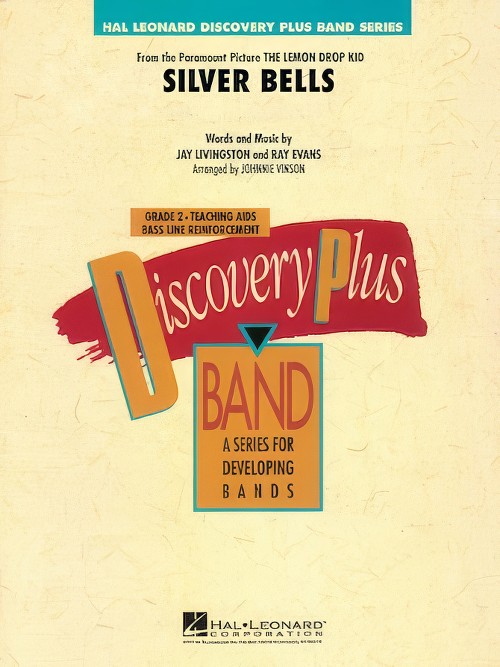
    Silver Bells (Concert Band - Score and Parts) - Evans & Livingston - Vinson, Johnnie

    One of the best-known festive tunes is now available in this easy to play version that will sound great with limited rehearsals. The melody skilfully moves around to various sections starting with the woodwinds, then brass, and finally a solid finish for the entire ensemble. Even more advanced players will enjoy playing this beautifully scored arrangement.

    Estimated dispatch 7-14 working days
  • £99.99

    Meditation (Saxophone Section Feature with Concert Band - Score and Parts) - Hassler, Hans Leo - Sparke, Philip

    This timeless melody by Hans Leo Hassler (1564-1612) is now chiefly remembered because of its inclusion in J.S. Bach's St. Matthew Passion (hence its title), where it is treated to a variety of rich harmonisations. This setting features alto and tenor saxophones, who first play a lyrical descant to the famous hymn tune and then the melody itself, against a Bach-like obbligato in the upper woodwinds. This fabulous new arrangement presents a wonderful opportunity to feature your saxophones.Duration: 4:15

    Estimated dispatch 7-14 working days

     PDF View Music

  • £45.95

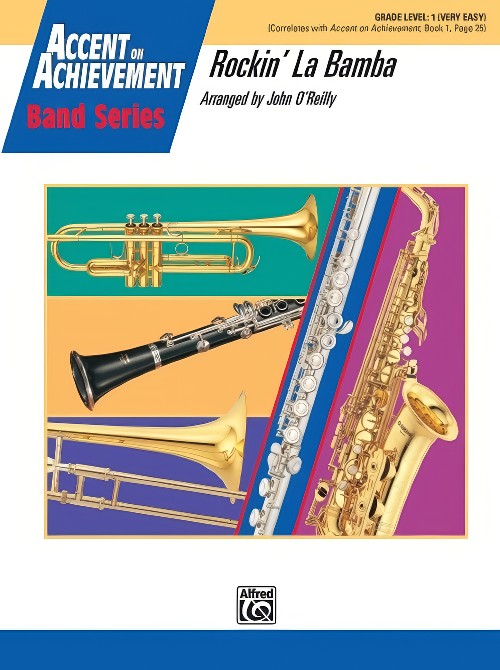
    Rockin' La Bamba (Concert Band - Score and Parts) - O'Reilly, John

    Almost everyone is familiar with this tune made popular by Ritchie Valens and then by Los Lobos. Now your young band can play this tune expertly arranged by John O'Reilly. This is a great piece for teaching easy syncopations and pop style, while every section gets a chance to shine as they handle the famous melody. A great selection for the end of year concert. Duration: 1.45

    Estimated dispatch 7-14 working days

     PDF View Music