
Results
-
 £45.95
MAJESTICA (Concert Band) - Gazlay, Gary
The title of Majestica is taken from the word "majestic" which means "having or displaying great dignity or nobility" and was inspired by Psalm 8:9. It was composed for the 8th grade band members of the Madison County Central School Band 2006-2007 as an expression of my appreciation for their encouragement and positive impact in my life. It is my hope that Majestica will provide students with a song that they will enjoy learning to play and provide other music educators with a teaching tool that can be used in helping to motivate and encourage their students
Estimated dispatch 7-14 working days
-
 £79.95
Variations on 'Was Lebet' (Concert Band - Score and Parts) - Wainwright, Andrew
Variations on 'Was Lebet' is based on the German chorale of the same name, the first line of which translates as 'O worship the Lord in the beauty of holiness!' The opening fanfare figure in the Trumpets should be supported by bold, organ-like sostenuto chords in the lower band. Ensure that the fanfare in the Trumpets and Trombones from bars 25 to 28 is given equal articulation and volume in the antiphonal parts. After this majestic introductory section, the first of five contrasting variations is presented, although the tune is never realised in full form until the final variation, with fragments gradually being revealed as the piece progresses.Variation I is somewhat classical in approach, with its energy coming from a regular contrast between cantabile references to the theme, set against lively staccato figures. Ensuring a lightness of touch will be important here; the music should be poised and never sound frantic. As a result, careful attention should be paid to the tempo marking, being no quicker than 136 beats per minute. Snippets of the chorale come and go, with the last phrase of the hymn completing the movement. This final statement, at bar 95, should be an immediate change in tempo and a separate statement to the music that comes before.Variation II is plaintive in mood, giving the listener the chance to reflect on the following words, which form part of the second verse: 'Comfort thy sorrows and answer thy prayerfulness, Guiding thy steps as may best for thee be.' There is opportunity for rubato in this movement, at the discretion of the conductor.Variation III is somewhat quirky and volatile in nature, and takes its inspiration from the 3rd and 4th verses which describe the fearful times in life that we must entrust to the Lord. Driven by the Percussion section in particular, there are references here to Variation I with its chorale-like figures and hurtling scalic figures, and there is a feeling of a lack of resolution. A somewhat abrupt ending suggests that our sense of completeness in Christ is yet to be resolved. It is important that clarity and tempo are maintained in the bass line between sections L and M. Aim for consistency of line in the bass parts, particularly with the trade-offs between players here.There is a French romantic feel to the waltz in Variation IV, with the opportunity for various soloists to display their musicianship. A sense of ironic humour pervades throughout. The Clarinet and Bassoon duet from section U should be playful and display a lightness of touch, with that sense of style continued throughout the movement.Variation V is fugal in nature, with each section of the band being handed the theme at various points. Again it is important that a steady tempo is set at Y in order to maintain control. The sense of momentum gradually increases to a grandiose presentation of the full theme, beginning at section CC, affirming our completeness in the Lord, with the words of the first and last verses reiterated: O worship the Lord in the beauty of holiness! Bow down before him, his glory proclaim; With gold of obedience and incense of lowliness, Kneel and adore him, the Lord is his name.Duration: 11.45
Estimated dispatch 7-14 working days
-
 £15.95
Variations on 'Was Lebet' (Concert Band - Score only) - Wainwright, Andrew
Variations on 'Was Lebet' is based on the German chorale of the same name, the first line of which translates as 'O worship the Lord in the beauty of holiness!' The opening fanfare figure in the Trumpets should be supported by bold, organ-like sostenuto chords in the lower band. Ensure that the fanfare in the Trumpets and Trombones from bars 25 to 28 is given equal articulation and volume in the antiphonal parts. After this majestic introductory section, the first of five contrasting variations is presented, although the tune is never realised in full form until the final variation, with fragments gradually being revealed as the piece progresses.Variation I is somewhat classical in approach, with its energy coming from a regular contrast between cantabile references to the theme, set against lively staccato figures. Ensuring a lightness of touch will be important here; the music should be poised and never sound frantic. As a result, careful attention should be paid to the tempo marking, being no quicker than 136 beats per minute. Snippets of the chorale come and go, with the last phrase of the hymn completing the movement. This final statement, at bar 95, should be an immediate change in tempo and a separate statement to the music that comes before.Variation II is plaintive in mood, giving the listener the chance to reflect on the following words, which form part of the second verse: 'Comfort thy sorrows and answer thy prayerfulness, Guiding thy steps as may best for thee be.' There is opportunity for rubato in this movement, at the discretion of the conductor.Variation III is somewhat quirky and volatile in nature, and takes its inspiration from the 3rd and 4th verses which describe the fearful times in life that we must entrust to the Lord. Driven by the Percussion section in particular, there are references here to Variation I with its chorale-like figures and hurtling scalic figures, and there is a feeling of a lack of resolution. A somewhat abrupt ending suggests that our sense of completeness in Christ is yet to be resolved. It is important that clarity and tempo are maintained in the bass line between sections L and M. Aim for consistency of line in the bass parts, particularly with the trade-offs between players here.There is a French romantic feel to the waltz in Variation IV, with the opportunity for various soloists to display their musicianship. A sense of ironic humour pervades throughout. The Clarinet and Bassoon duet from section U should be playful and display a lightness of touch, with that sense of style continued throughout the movement.Variation V is fugal in nature, with each section of the band being handed the theme at various points. Again it is important that a steady tempo is set at Y in order to maintain control. The sense of momentum gradually increases to a grandiose presentation of the full theme, beginning at section CC, affirming our completeness in the Lord, with the words of the first and last verses reiterated: O worship the Lord in the beauty of holiness! Bow down before him, his glory proclaim; With gold of obedience and incense of lowliness, Kneel and adore him, the Lord is his name.Duration: 11.45
Estimated dispatch 7-14 working days
-
 £140.00
Capriccio (Concert Band - Score and Parts) - Holst, Gustav - Noble, Paul
The following notes have been excerpted by the arranger from those presented in the Introduction by Imogen Holst, daughter of Gustav Holst: Holst wrote this work in the spring of 1932, while he was guest Lecturer in Composition at Harvard University. He had been asked by Nathaniel Shilkret to write 'a short radio piece, not longer than five or six minutes.' for a composers' series on folk music themes. Holst wrote to me on 13 May 1932, saying: 'On May 1 I started sketching a piece for Shilkret's Radio jazz band in New York. I finished the sketch on the 4th and the full score on the 8th... Shilkret wanted something on American airs but I've left them out because I prefer my own so he may reject the thing.' Shilkret was enthusiastic about the piece, but he was unable to use it for his series. 'I hate to give it up,' he told the composer, 'but I cannot play it because it is not based on a definite English or American folk theme.' Holst never revised his hurriedly-written work, probably because he had too many other things to write during the remaining two years of his life, when he was having to spend a good deal of his time in hospital. The autograph manuscript of his original full score is in the British Library, MS Add.47833. The work had no name: Holst referred to it either as his 'Jazz band piece' or as 'Mr. Shilkret's Maggot.' The score needed editing. There were gaps and patches, with incomplete dynamics and phrase marks. I made the version for orchestra and named it 'Capriccio' in spite of the viola's (now saxophone's) expressive opening, because from the moment of the marimba's first animated remark there can be no doubt about the mood of the music. - Imogen Holst (1968)
Estimated dispatch 7-14 working days
-
 £53.50
Legend of Old Abe (Concert Band - Score and Parts) - Curnow, James
Named after President Lincoln, Old Abe was a famous bald eagle who served as mascot for the 8th Wisconsin Volunteer Infantry Regiment during the Civil War. Legend of Old Abe ;is a marvellously descriptive work for young bands that takes the listener on a journey of Old Abe's exploits. From a peaceful and serene opening the work progresses through the sounds of conflict and battle. The mood turns reflective and then triumphant as the music celebrates this amazing true story. A wonderful cross-curricular opportunity for your band room as you bring history to life through music.Duration: 3:50
Estimated dispatch 7-14 working days
-
 £250.00
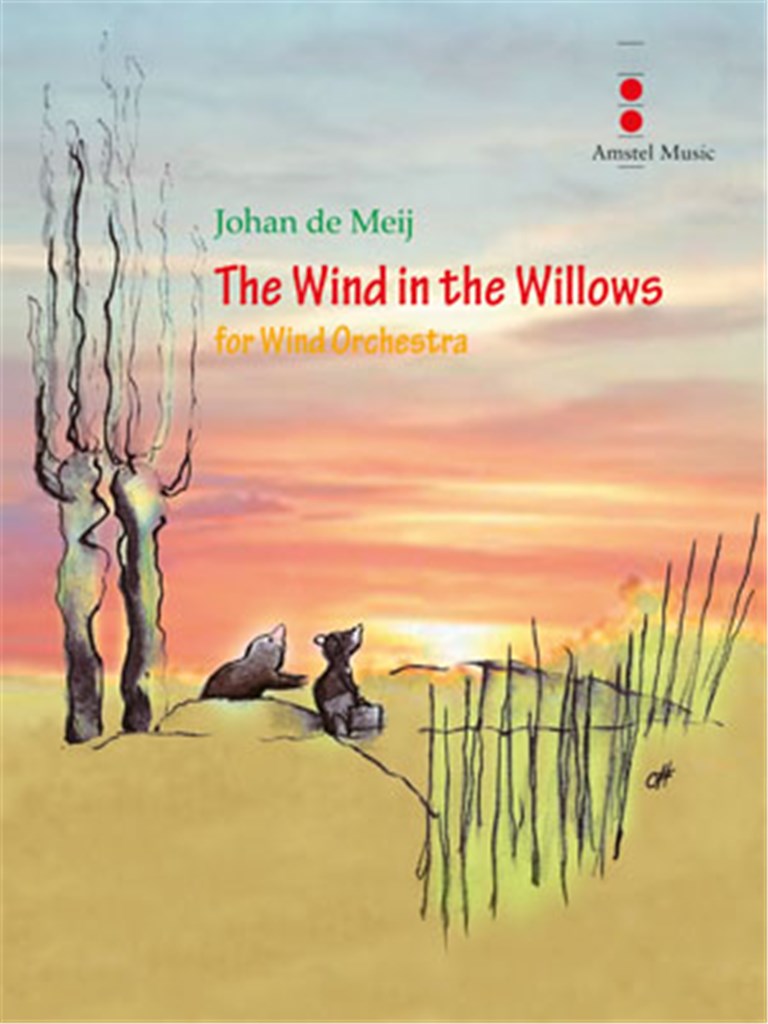
The Wind in the Willows (Concert Band - Score and Parts) - De Meij, Johan
A book for those who keep the spirit of youth alive in them; of life, sunshine, running water, woodlands, dusty roads, winter firesides, said author Kenneth Grahame (1859-1932) about his children's book The Wind in the Willows. Initially, he wrote the stories about Ratty, Mole, Badger and Toad to read to his visually handicapped son Alistair, but after the publication in book form in 1908, it became a worldwide success. It was later also turned into a film and a television series. What appealed ti the composer most is the friendly, very cosy atmosphere that Grahame has managed to create with his optimistic narrative style full of high spirits, an atmosphere that reminds thecomposer of his own carefree youth. It was therefore a great pleasure to set this book to music! The four movements successively describe: I) The River- The river, which flows through the habitat of the animals like a lifeline, regularly is the scene of pleasant boat trips and picnics. The animals lead their untroubled lives here. The four-tone main motif [A-C-D-C] is extensively presented by the brass section, and returns in the following movements as a countermelody. II) Ratty and Mole -The bright, energetic Rat and the melancholy doubter Mole are inseparable friends and have many adventures. Their opposite characters are illustrated by separate musical themes. III) Mister Toad - The wilful, haughty Mister Toad is indeed a unique case: time after time, he runs into tricky situations, and with his indomitable passion for fast, preferably stolen, cars he causes quite a lot of damage... IV) The Return of Ulysses - After Toad Hall, the majestic residence of Mister Toad, is recovered from the weasels and stoats of the Wild Wood, who had captured the estate in a cowardly way, our friends get ready for a banquet. They celebrate the victory with a triumphant parade, and so both the book and the music conclude with a happy ending. Duration: 17.00
Estimated dispatch 7-14 working days
-
 £67.50
The Young Amadeus (Concert Band - Score and Parts) - Mozart, Wolfgang Amadeus - Parker, Tom
Melody is the very essence of music. - W.A. Mozart (1786)Mozart confirmed this view on melody by writing the Ave Verum Corpus near the end of his short life. Originally written for chorus, strings, and organ, this work stands among the most beautiful musical expressions of all time. Timothy Johnson has skilfully made Mozart's wondrous achievement available to concert bands. It's perfect for worship services and the sostenuto style, with careful attention to dynamics, makes it a great choice for that middle spot at festival or for the more serious moment at any performance. Given the opportunity, young bands Love to play truly great music, and it just doesn't get much better than the mastery of Mozart.Duration: 3.30
Estimated dispatch 7-14 working days
-
 £75.24
Atlantis: The Lost Continent
The mysterious lost civilization of Atlantis has captured the imagination for generations, and this powerful programmatic work from the pen of Rob Romeyn brings that mystical world to life in music. Beautiful melodies, stark musical contrasts and bold drama all describe this stunning programmatic piece depicting the island nation that existed over 11,000 years ago in the midst of the Atlantic Ocean. The music begins calmly, depicting a beautiful sunrise over the city. It develops as the fateful day ensues, reaching a stunning climax as Atlantis, its people and its humanity were swallowed by the sea. A variety of tonal colors, textures, and contrasting styles will make this wonderful piece a mainstay for concert and festival use. Solid scoring and cued solos will make this work for many performance situations. This is truly an outstanding contemporary work. Don't miss this one!!
Estimated dispatch 7-14 working days
-
£144.99
Festa Paesana Wind Band Set (Score & Parts)
Lunteren, a village on the Veluwe (a wooded region in the Netherlands), sets the scene annually for a village festival dominated by folklore. Festa Paesana (Italian for village festival) is set to music by several folkloric sketches. The theme in Festa Paesana is partly based on a Dutch anthem (Wien Neerlands bloed); when other lyrics are used it is also known as the Lunteren anthem.The work begins with a festive introduction, completed by chimes and drums, in which pieces of the Lunteren anthem are heard. The music then transitions to represent a horse auction. We hear horses run their first rounds in the auction ring while being whipped. The following theme is partly based on the anthem. The tension of the traditional auction is amplified by an ever-increasing cadence, reaching its climax when the word ?Sold!? is shouted. The night ends with a majestic variation on the Lunteren anthem.The next morning, when the tower clock hits seven times, the village is awaked by the reveille of the heralds. In a fugatic version of the anthem, we can hear the village slowly come to life. This evolves with the chiming of all towers in the village; the celebration can begin. Carriages drawn by horses rumble through the village and thus, it is easy to hear when a horse hesitates or runs amuck. A traditional folk dance group then dances a whirling waltz while the audience shares their pleasure. Musicians march along the scene and take over the waltz theme in their march. Until deep in the night, the musicians are still heard playing in the streets. Meanwhile, we hear the anthem theme being played in a choral variation (in minor). The first time it is played quietly, as a preparation for Sunday. Then it is played in a celebrating way, enabling the devout village residents to remember the past pleasant celebration with satisfaction. 0:08:10
Estimated dispatch 7-14 working days
-
 £84.99
To a Friend (Concert Band - Score and Parts) - De Haan, Jacob
When you have been playing in a band for a long time, you will know that music belongs to the most beautiful moments in life, but also to the roughest times. Making music together can give you strength when things are difficult. To a Friend is a wonderfully comforting work for anyone going through a dark time. Jacob de Haan composed the work for his father in law, Gerard Bosch, a musician to the core. The piece received its first performance just weeks before his passing. On a sun-kissed evening, his friends, the musicians of his two music societies, Oefening Baart Kunst (Practice Makes Perfect) Otterlo, and the Re?nie Orkest Artillerie Trompetterkorps (Reunion Band Artillery Trumpet Corps), played the work for Gerard, an unknowing yet beautiful goodbye. Duration: 3.45
Estimated dispatch 7-14 working days
 View Music