
Results
-
 £74.00
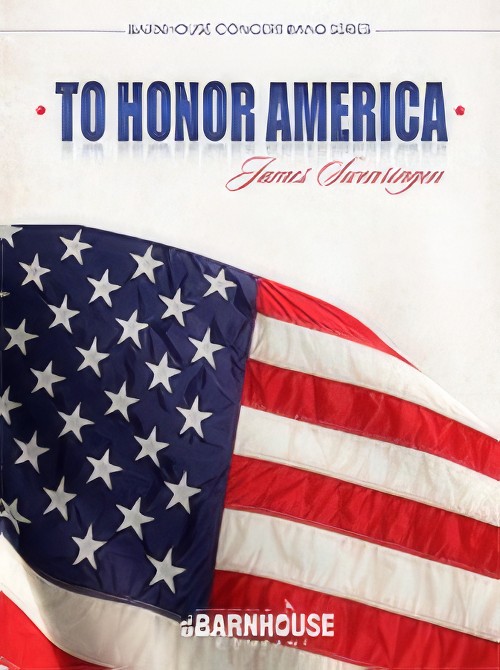
To Honor America (Concert Band - Score and Parts) - Swearingen, James
To Honor America presents an invaluable collection of patriotic songs, sure to become a staple for bands to perform whenever there's an occasion to highlight the accomplishments of our courageous military soldiers, both past and present. Deeply moving, and an all-around "feel good" piece are qualities that best describe the overwhelming sense of pride that you'll gain from hearing this music performed. It is simply spectacular in every sense of the word. Duration: 4.00
Estimated dispatch 7-14 working days
-
 £52.95
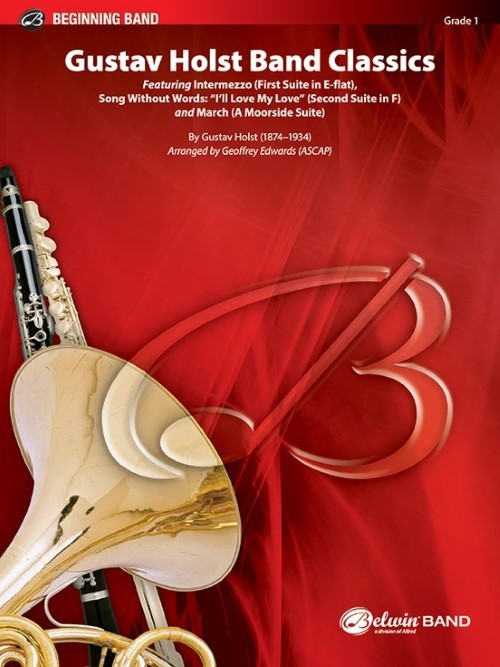
Gustav Holst Band Classics (Concert Band - Score and Parts) - Holst, Gustav - Edwards, Geoffrey
The rich Holst concert band heritage is presented for your beginners with three cherished themes from both his military band suites and the march from A Moorside Suite. Enhanced with teaching opportunities to reinforce articulations and shifting tempo, as well as a stunning through-played setting.Duration: 2:15
Estimated dispatch 7-14 working days
-
 £49.00
Our American Heroes (Concert Band - Score and Parts) - Swearingen, James
The inspiration that motivates composers to create music often originates from a multitude of different sources. Numerous band director friends have suggested the creation of a patriotic selection that honors military personnel, both past and present. They also requested that lyrics be included so as to allow their choir colleagues to join in creating a spectacular grand finale. I sincerely hope that your audiences, both young and old, will enjoy this musical salute to America's lasting heroes. A real crowd-pleaser! Duration: 1.30
Estimated dispatch 7-14 working days
-
 £244.99
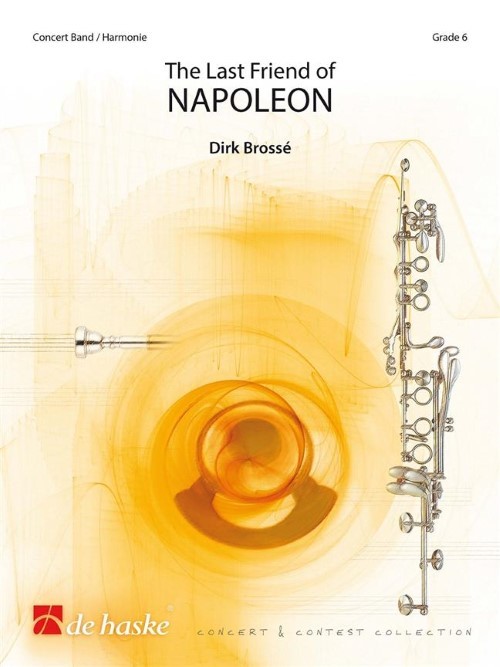
The Last Friend of Napoleon (Concert Band - Score and Parts) - Brosse, Dirk
The Last Friend of Napoleon is based on a true piece of Dutch history. In October 1813, when Napoleon was beaten after his unsuccessful Russian campaign, the French withdrew from the Netherlands. At the beginning of 1814, the whole country had been liberated except for the town of Delfzijl, still occupied by French troops. This programmatic work is about political and military stubbornness, chasing dreams, and about love always following its own unequalled way. Being one of the most acknowledged composers of today, Dirk Brosse has created an epic work that depicts a dramatic story, using the full range of the symphonic band resulting in challenging brass passages, a wide range of percussion and a lot of strong, beautiful and melodic material.Duration: 20.00
Estimated dispatch 7-14 working days
-
 £57.50
Fireman's Quickstep (Concert Band - Score and Parts) - Brown & Woolpert
Although titled as "quickstep" march, this appealing number from the Civil War era features a moderate tempo and distinctively spirited military style. Scored with plenty of variety in textures and dynamics, this is a wonderfully unique introduction to our musical heritage and critical period in our nation's history.
Estimated dispatch 7-14 working days
-
 £85.00
Hymns from the Rig Veda (Windependence Concert Band - Score and Parts) - Holst, Gustav - Mitchell, Jon
A century ago, James Causley Windram, then band director of the 5th Northumberland Fusiliers (and later the Coldstream Guards) asked Gustav Holst if he would transcribe some of the composer's Hymns from the Rig Veda for military band. Always a band advocate, Holst readily agreed. In this thoroughly characteristic suite, two of Windram's settings (Hymn of the Travellers and Battle Hymn) have been edited for modern instrumentation, while a third (Hymn to Manas) has been arranged by Jon Ceander Mitchell from Holst's original choral setting.
Estimated dispatch 7-14 working days
-
 £37.95
The Year of the Dragon (Prestige Concert Band - Score only) - Sparke, Philip
The 2017 version of The Year of the Dragon was commissioned by the Siena Wind Orchestra and given its world premiere on June 17th 2017 in Bunkyo Civic Hall, Tokyo, conducted by the composer.The original wind band arrangement of The Year of the Dragon was made in 1985, a year after the composer wrote the brass band version. At that time he was still learning the intricacies of writing for wind band (and still is!) and in the 32 years which have elapsed since then, his approach to scoring for the medium has developed and, hopefully, improved.Here are the main differences between the two versions:In the 1980's, the wind band movement was much less international than it is now. British wind bands were still to some extent based on the military band tradition of the time, which tended to use rather smaller instrumentation than the then-dominant American university model. The new version embraces a much more international instrumentation, including low woodwinds and string bass, as well as an expanded percussion section.In the original version there was a touch of naivety in the way the composer wrote for the woodwinds; much of their articulation was transferred too literally from the brass version, resulting in some unidiomatic writing, which he has tried to improve in the new version.In addition to the above, Philip's own compositional style has matured and developed in the intervening 32 years. There are some passages in the original which he simply would not write today - not because they are 'wrong', but because his way of writing has changed. The new version is perhaps how he would have written it today, rather than simply dressing the original version in new clothes.The work is in three movements:Toccata opens with an arresting side drum figure and snatches of themes from various sections of the band, which try to develop until a broad and powerful theme from the middle of the band asserts itself. A central dance-like section soon gives way to the return of this theme, which subsides until faint echoes of the opening material fade to a close.Interlude takes the form of a sad and languid solo for alto saxophone. A chorale for the whole band introduces a brief spell of optimism but the saxophone solo returns to close the movement quietly.Finale is a real tour-de-force for the band with a stream of rapid semi-quavers running throughout the movement. The main theme is heroic and march-like but this is interspersed with lighter, more playful episodes. A distant fanfare to the sound of bells is introduced and this eventually returns to bring the work to a stirring close.
Estimated dispatch 7-14 working days
-
£199.95
The Year of the Dragon (Prestige Concert Band - Score and Parts) - Sparke, Philip
The 2017 version of The Year of the Dragon was commissioned by the Siena Wind Orchestra and given its world premiere on June 17th 2017 in Bunkyo Civic Hall, Tokyo, conducted by the composer.The original wind band arrangement of The Year of the Dragon was made in 1985, a year after the composer wrote the brass band version. At that time he was still learning the intricacies of writing for wind band (and still is!) and in the 32 years which have elapsed since then, his approach to scoring for the medium has developed and, hopefully, improved.Here are the main differences between the two versions:In the 1980's, the wind band movement was much less international than it is now. British wind bands were still to some extent based on the military band tradition of the time, which tended to use rather smaller instrumentation than the then-dominant American university model. The new version embraces a much more international instrumentation, including low woodwinds and string bass, as well as an expanded percussion section.In the original version there was a touch of naivety in the way the composer wrote for the woodwinds; much of their articulation was transferred too literally from the brass version, resulting in some unidiomatic writing, which he has tried to improve in the new version.In addition to the above, Philip's own compositional style has matured and developed in the intervening 32 years. There are some passages in the original which he simply would not write today - not because they are 'wrong', but because his way of writing has changed. The new version is perhaps how he would have written it today, rather than simply dressing the original version in new clothes.The work is in three movements:Toccata opens with an arresting side drum figure and snatches of themes from various sections of the band, which try to develop until a broad and powerful theme from the middle of the band asserts itself. A central dance-like section soon gives way to the return of this theme, which subsides until faint echoes of the opening material fade to a close.Interlude takes the form of a sad and languid solo for alto saxophone. A chorale for the whole band introduces a brief spell of optimism but the saxophone solo returns to close the movement quietly.Finale is a real tour-de-force for the band with a stream of rapid semi-quavers running throughout the movement. The main theme is heroic and march-like but this is interspersed with lighter, more playful episodes. A distant fanfare to the sound of bells is introduced and this eventually returns to bring the work to a stirring close.
Estimated dispatch 7-14 working days
-
 £60.00
Intermezzo (from First Suite in Eb) (Flexible Ensemble - Score and Parts) - Holst, Gustav - Stanton, Scott
Gustav Holst's "First Suite in Eb For Military Band" is universally considered a band masterwork. This "Build-A-Band" edition places it within reach of those bands with severely limited or awkward instrumentation, making it the perfect selection for your small band with good players to sound great! This fast middle movement from the suite teaches young musicians to articulate contrasting staccato and legato passages. Optional parts for guitar, piano, bass and percussion can fill some missing holes in the band. Duration: 3.00
Estimated dispatch 7-14 working days
-
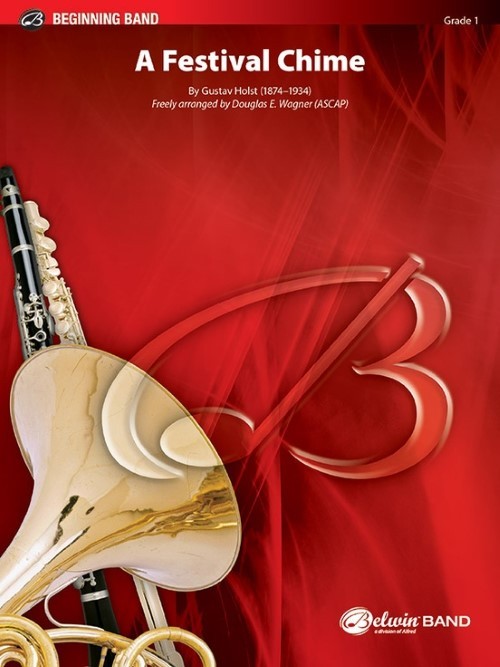 £51.50
A Festival Chime (Concert Band - Score and Parts) - Holst, Gustav - Wagner, Douglas E.
The third movement of Opus 34 (Three Festival Choruses), which Gustav Holst penned in 1916, was originally scored for chorus with piano, orchestra, or military band. The easily recognized melody is a nineteenth century Welsh ballad, known to most as the hymn tune "St. Denio," set to the words of English poet, Clifford Bax. In 3/4, this characteristically delightful Holst theme has been freely arranged to incorporate elements of his original score with additional material included to heighten musical interest for contemporary concert bands and audiences alike. As the title implies, chimes are an integral part of this arrangement; however, there are alternate options provided in the program notes if a suitable instrument is unavailable. This musical setting is complete with a variety of teaching and performance opportunities and a perfect fit for beginning concert bands. Duration: 2.00
Estimated dispatch 7-14 working days
 View Music