
Results
-
 £209.99
Dunamis (Concert Band - Score and Parts) - Waignein, Andre
Major Yvon Ducene wanted a new lush and colourful composition for his Guides military band, with Andr Waignein as its composer. Early in 1979 the composer began his assignment and in October of the same year, the finished full score was on the music stands of this prestigious military band of the Belgian Army.The introduction (Grave) mirrors an atmosphere full of serenity in which the theme, played by the oboes and the English horn is predominant and immediately holds the listener spell-bound. It is taken up again as central element of the slow movement.The Allegro breaks away from the quiet passion of the introduction. Here, the band can really show its capabilities to the full. Based on a very precise rhythm, an idiom of sudden desperation and adversity develops which, fused with a crushing aggression, culminates in a kind of eruption, soon calmed down by a Lento : peace and quiet has returned thanks to a melody by the horns and soon taken over by the clarinets. In the meantime, the saxophone - an instrument full of human emotion - express the main spatial dimension in contemporary psyche. Following a harmonic transition the brass-players take up the theme again in forte whilst the basses and the woodwinds intertwine in technical arabesques.The movings of the mind and the heart get an audible and almost touchable shape in the ensuing Allegro, a movement characterised by a rhythmic dialogue in which the whole orchestra participates and where the exposition contains a wealth of sound and technical contrasts. The Lento finally uses the central theme of the slow movement again, with some occasional references to the two allegros. The last page is of unprecedented grandeur. All the instruments display their most beautiful sound which were named by Jacques Ferschotte, when speaking about Honneger, "harmonies d'intensits" harmonies of the unmeasurable.Duration: 14:30
Estimated dispatch 7-14 working days
-
 £109.99
Little Suite for Peace (Concert Band - Score and Parts)
This dazzling suite portrays the side of the armed forces that is oftenoverlooked - the vital role they play as peacekeepers throughout theworld. Each of the four movements shows an aspect of military life- the precision of a military parade, the splendour of the officers ball,the sadness of remembering those who have lost their lives and thehope that someday there will be peace throughout the world. This trulycompelling work will make a great addition to any concert. 10:00
Estimated dispatch 7-14 working days
-
£64.95
WHEREVER YOU ARE (Concert Band) - Mealor, Paul - Stubbs, Duncan
Commissioned by Gareth Malone for Series Four of BBC TV's 'The Choir' and first performed by Malone and The Military Wives Choir as part of The Royal British Legion's Festival of Remembrance at the Royal Albert Hall on 12 November 2011, in the presence of Her Majesty The Queen. The text is taken from poems, letters and prayers written by the Military Wives, selected and adapted by Paul Mealor, and a passage from the Book of John. Selling a staggering 556,000 copies in the week leading up to Christmas, more than the rest of the Top 12 combined, Wherever You Are became the UK's Official Christmas No. 1 of 2011. A brass band version is also available. A contribution from the sales of the sheet music will be donated to the two nominated charities: The Royal British Legion and SSAFA Forces Help.
Estimated dispatch 7-14 working days
-
 £28.99
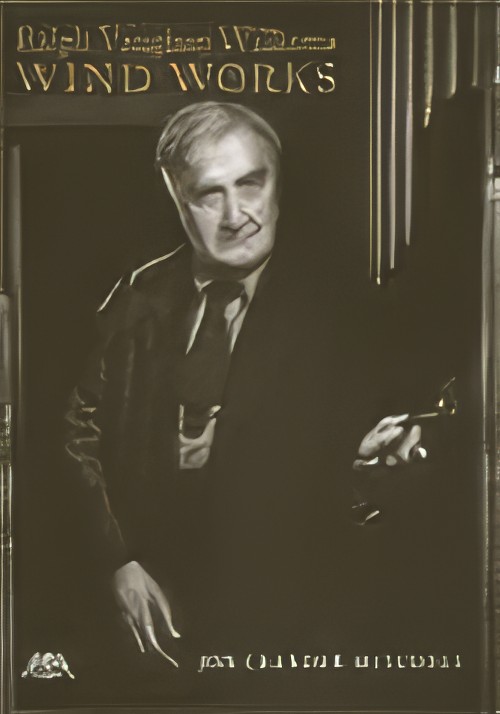
WIND WORKS (Ralph Vaughan Williams) - Mitchell, Jon Ceander
This exciting new work by one of today's most highly regarding music scholars, brings new light to the more than two dozen works by Ralph Vaughan Williams for military band, brass band and wind ensemble. Vaughan Williams' unique relationship with fellow composer Gustav Holst is examined as well as his relationships with personnel at the Royal Military School of Music, the BBC and the Salvation Army. There's much more to this hard-to-put-down volume for conductors, performers, students and aficionados! Soft cover. 176 pages.
Estimated dispatch 7-14 working days
-
 £32.95
Bones in the Stores (Trombone Section feature with Concert Band - Score and Parts) - Wiffin, Rob
This arrangement for trombone section and band combines two well-known wartime songs The Quartermaster's Store and Bless 'em all to give the trombone section a thorough workout as well as a lot of fun. The Quartermaster's Store is a traditional song from England. The origins of both tune and words are uncertain and may actually date back as far as the English Civil War. The origins of Bless 'em All are also unclear. The words have been credited to Fred Godfrey in 1917 set to music composed by Robert Kewley but earlier versions of the song may have been in existence among British military personnel in the 1880s in India. It was first recorded by George Formby Jr in 1940 and became a patriotic song.Duration: 2.45
Estimated dispatch 7-14 working days
-
 £64.99
Kingdom Dance (from Tangled) (Concert Band - Score and Parts) - Menken, Alan - Longfield, Robert
One of the best-known video game themes of all time, Battlefield 1942 Theme features a driving military pulse and a memorable soaring melody. Paul Murtha's powerful version stays true to the original and brings all of the heart-pounding excitement to the concert stage.
Estimated dispatch 7-14 working days
-
 £64.99
Battlefield 1942 Theme (Concert Band - Score and Parts) - Eriksson, Joel - Murtha, Paul
One of the best-known video game themes of all time, Battlefield 1942 Theme features a driving military pulse and a memorable soaring melody. Paul Murtha's powerful version stays true to the original and brings all of the heart-pounding excitement to the concert stage.
Estimated dispatch 7-14 working days
-
 £179.90
Schola Vitae (Concert Band - Score and Parts) - Sadeler, Georges
Schola Vitae, dedicated to the former director of UGDA Music School in Luxembourg, Paul Scholer, describes in an 8-minute piece that learning and playing music is a school for life. Starting with popular scales that ascend and descend through various keys, an essential tool familiar to every musician appears: the metronome. It sets the tempo, and musicians practice their themes together or against each other, register by register. In music, however, it's not just about technique and precision, but also about emotions. Music connects people, fosters friendships, and accompanies them through the highs and lows of life. The sense of togetherness in music becomes increasingly audible. Everyone works together and pulls in the same direction to ultimately achieve something great.Georges Sadeler, born in 1988 is a Luxembourgish composer and saxophonist with the Grand Ducal Military Band of Luxembourg. His father kindled his interest in composing and arranging at an early age, a study he later continued under his two teachers Marco Ptz and Claude Lenners, both of whom taught at the Conservatoire of Music, Luxembourg. He gradually began to establish his own style, combining the enormous range of possibilities of contemporary music and classical music and, in the years that followed, he won six first prizes at various national and international composition competitions. His works have since been performed all over Europe.Duration: 8.00
Estimated dispatch 7-14 working days
-
 £63.50
Sverige pa Vakt (Sweden on Guard) (Concert Band - Score and Parts) - Widqvist, Viktor - Blixt, Niclas
Sweden On Guard is part of Widkvist's earliest march production. It was composed around 1914 when he served in the engineering troops.It is worth noting that the march from the beginning was probably intended for a small sized brass band and was later rearranged for a full military band by the composer. When I searched in the Swedish War Archives many years ago, looking for more or less forgotten marches, this work, among others, appeared. I immediately became attached to the young Widkvist's catchy melodies and clear harmonic tonal language that express faith in the future and optimism.Sweden On Guard has never been published in print before, and the work of modernizing the setting without resorting to the elegance and resilience of the original has been a challenge.- Niclas BlixtDuration: 2.30
Estimated dispatch 7-14 working days
-
 £91.00
Regimentsmarsj fra Forde i Sunnfjord (Regimental March from Forde in Sunnfjord) (Concert Band - Score and Parts) - Olsen, Ole - Andersen, Espen
In 1917, Ole Olsen (1850 - 1927) invited all who might have access to Norwegian folk music, to send him a copy. Olsens goal was to compose a march with local association to all regiments around the country. The result was published in 1922, as a collection of three books with 23 marches. The printing was financed by the Department of Defence and distributed to all military bands in the country. In the first book, we find "Regimental March from F?rde in Sunnfjord", which Olsen arranged after motifs sent to him by Music Instructor J. Woldsdal in Bergen. Duration: 3.30
Estimated dispatch 7-14 working days
 View Music