
Results
-
£84.50
Jubilant Festival - Bill Calhoun
Jubilant Festival is a joyous piece that begins with a fanfare-like gesture and then leads to an uplifting melody in the woodwinds. This is followed by excellent counter-melodies melody in the woodwinds. This is followed by excellent counter-melodies in the middle voices and well-scored lyrical lines. A showcase piece for the young band that can be used at contest or festival performance, Jubilant Festival will impress the judges for sure!
Estimated dispatch 7-14 working days
-
£36.95
Funiculi-Funicula
Here's a rousing arrangement of a well-known melody in 6/8 time that your students will want to play again and again. It's filled with driving rhythms, 'oom-pa-pa' bass lines, strong accents, and a vigorous ending. A few trombone glissandos are included for some good-natured fun as well. Your students will be humming this unforgettable melody for hours after rehearsal! (Grade 1)
Estimated dispatch 7-14 working days
-
 £53.50
Ahrirang
(Korean Folksong). This familiar Oriental folk melody is arranged here as a percussion feature with band. The pentatonic melody is passed around through all the sections of the band and there are optional vocal parts for an added unique effect. The flexible percussion feature section allows you to customize the arrangement and add as many instruments as you like.
Estimated dispatch 7-14 working days
-
 £69.00
Music to Watch Girls by - Sid Ramin
Music to Watch Girls By was the first top 40 hit from Bob Crewe with his band, The Bob Crewe Generation. He had heard the melody (composed by Sidney Ramin) in a commercial for Pepsi Light. The original instrumental version featured the trumpet and saxophone, but later Andy Williams turned it into a vocal number. This piece is a great concert closer, which will have your audience singing all the way home with this pretty melody ringing in their ears.
Estimated dispatch 7-14 working days
-
£82.95
Loudoun Praises - Brian Balmages
This riveting new celebration pulls out all the stops, including dynamic brass fanfares, woodwind flourishes, and an exciting multimetered melody with a dancelike quality. The piece explores an ever-changing palette of colors and eventually has the original melody and multimetered sections collide in a dramatic conclusion. Exactly the kind of music you've come to expect from Brian Balmages! (6:00)
Estimated dispatch 7-14 working days
-
 £94.99
O Christmas Tree
The tradition of the Christmas tree in Western Europe dates back to a time long before any Christianization had taken place. During the severely cold winter nights, so it was believed, evil spirits tried to 'kill' nature. Needle-leaved trees were the only ones which kept their green colour throughout the year, and therefore became symbols of immortality. These 'living' trees, said to be the work of benign spirits, were brought into people's houses to ward off evil, life-threatening powers. In the 14th century people first started to decorate Christmas trees. It was a pagan custom, originated by the inhabitants of Alsace. This custom was taken over by the Church inthe course of the 15th and 16th century. At first the decoration consisted mainly of edibles, such as apples and wafers, but later small presents were added. Legend has it that the reformer Martin Luther was the first person to decorate a Christmas tree with candles. The flickering candle flames were meant to create the image of a starry sky in which Christ's apparition could be recognized. The German organ-player Ernst Anschtz from Leipzig was the first person to notate the song 'O Tannenbaum', the melody being a well-known folk song. Next to 'Stille Nacht' 'O Tannenbaum' is the most famous German Christmas song, now known throughout the world. In the United States of America the melody of 'O Tannenbaum' has even been used in four States (among which the State of Maryland) for their State song. In David Well's arrangement the song is first heard as many of us know it. After this introduction, however, it is transformed into a solid rock version, and the beat has been changed. In the second part the familiar three-four time is back, but here the rhythm is different from the original. After the richly ornamented rock beat the basic theme can be heard once again and the composition is concluded in a festive manner.
Estimated dispatch 7-14 working days
-
 £84.99
There is a land of pure delight
Isaac Watts (1674-1748) wrote the lyrics of "There is a land of pure delight" and is known as the "Father of English Hymnody". Watts was for the English hymn as Ambrose was for the medieval Latin hymn and what Martin Luther was for the German chorale. He wrote about 750 songs, and some of them survide the ravahes of time. (Joy To The World, When I survey the wondrous cross, I sing the Mighty Power of God) "There is a Land of Pure Delight" is usually in English-speaking areas sung on Luther Orlando Emerson's melody ('Ascription'). Here is used a traditional English melody ('Mendip'). There is a land of pure delight Wheresaints immortal Reign. Infinite day excludes the night, And pleasures banish pain ..
Estimated dispatch 7-14 working days
-
 £218.30
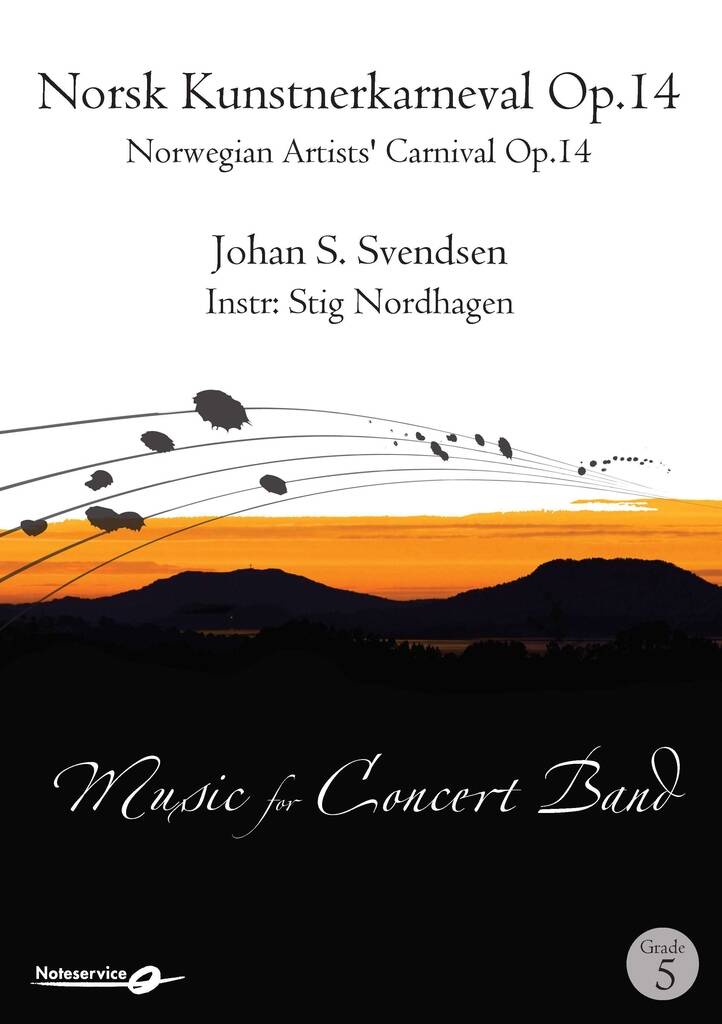
Norsk Kunstnerkarneval Op.14 - Johan S. Svendsen
This well-known work was composed in Christiania in 1874 for a burlesque Carnival in "Kunstnerforeningen".An early title for the work was "Bryllup paa Dovre". The manuscript score and parts at The National Library in Oslo of the early version with this title have much more music than the version printed by C.F. Peters, Leipzig in 1881. The form in this first version was ABA with an additional trio part that later were discarded. In the trio Svendsen used the melody Sterreisen (Os har gjort kva gjeras skulle) from Lindeman's collection of Norwegian Folk Tunes. (Vol. I/115). In the A-part a wedding tune (Bruraslaatten) from Sogn is used (Lindeman Vol. I/476). The Carnival's literary theme was the connection between the cold north and the warm south. Musically the south is represented in Svendsen's music by Raffaele Sacoo's melody from 1835 "Te voglio bene assai".I believe that if Norwegian quality music from this period is going to be performed, it must at least be available. There must be editions for modern instrumentations with full scores. I do this as my contribution to expand and enrich the repertoire for Concert Bands.- Stig Nordhagen -
Estimated dispatch 7-14 working days
-
 £174.10
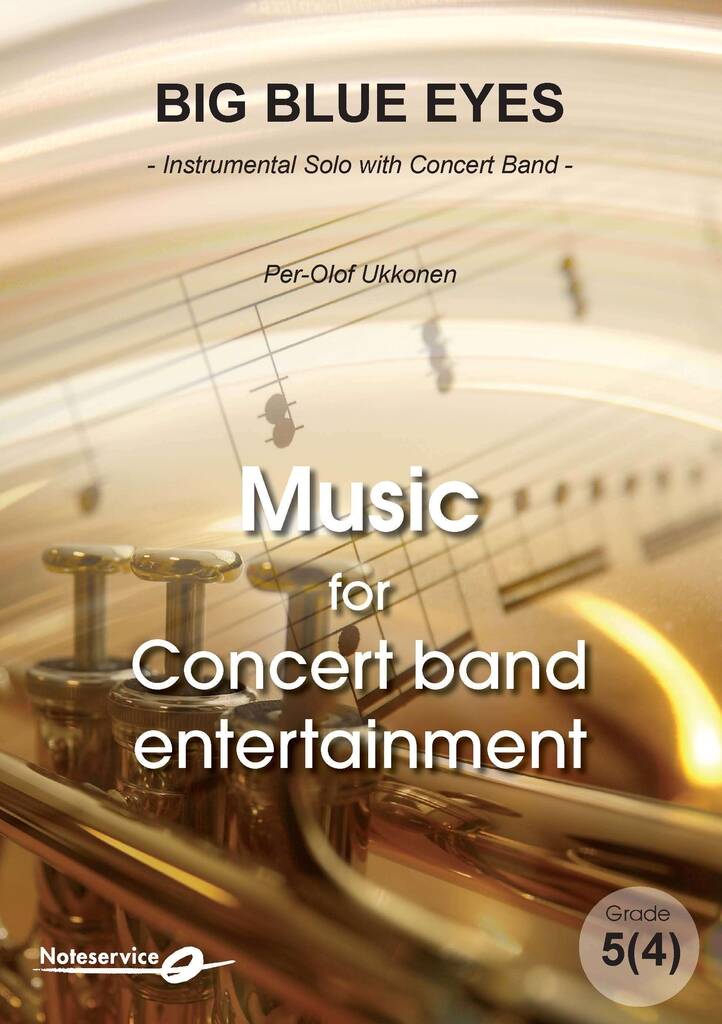
Big Blue Eyes - Per-Olof Ukkonen
"Big Blue Eyes" is jolly Latin pop piece for soloist and Concert Band. Originally written for Flugelhorn and band but it can be played on any instrument.Solo parts are written in many keys.The soloist may start playing (ad lib.) before falling into the melody and then the rest of the band will follow.Perhaps you can introduce a guest star to play while walking in to the stage (from the audience?). You may also just start from the melody.Solo Options: C Instruments (both TC and BC), Bb Instruments, Eb-Instruments and F-instruments.
Estimated dispatch 7-14 working days
-
 £149.40
Tenn Lys - Eyvind Skeie
"Candles in Advent" is a beautiful melody with great lyrics. It was originally written for an Norwegian Advent TV-series in 1985.In this arrangement, the oboe has some solo passages (cue notes in flute). I Have tried to vary the instrumentation without going beyond the beautiful Christmas mood.The harmonization is simple and functional. Let the soloists "speak" with good phrasing and focus also on harmony in the unison melody lines. Good balance and intonation in the accompaniment can make the performance a little gem on the Christmas concert.- Reid Gilje -
Estimated dispatch 7-14 working days
 View Music