
Results
-
 £61.00
Clarinet Samba - Rodney Parker
It's Carnival Time for the Clarinets! Let your whole clarinet section enjoy this rhythmic Samba. The accompaniment does not need to be too heavy so maybe some of the band could play extra Latin American percussion instruments such as Claves, Cabasa and Conga Drums. You may even get some members of the audience to help!The clarinets are written in their best registers and should be the dominant part at all times particularly in the legato section after Bar 20. Have fun!
Estimated dispatch 7-14 working days
-
 £116.40
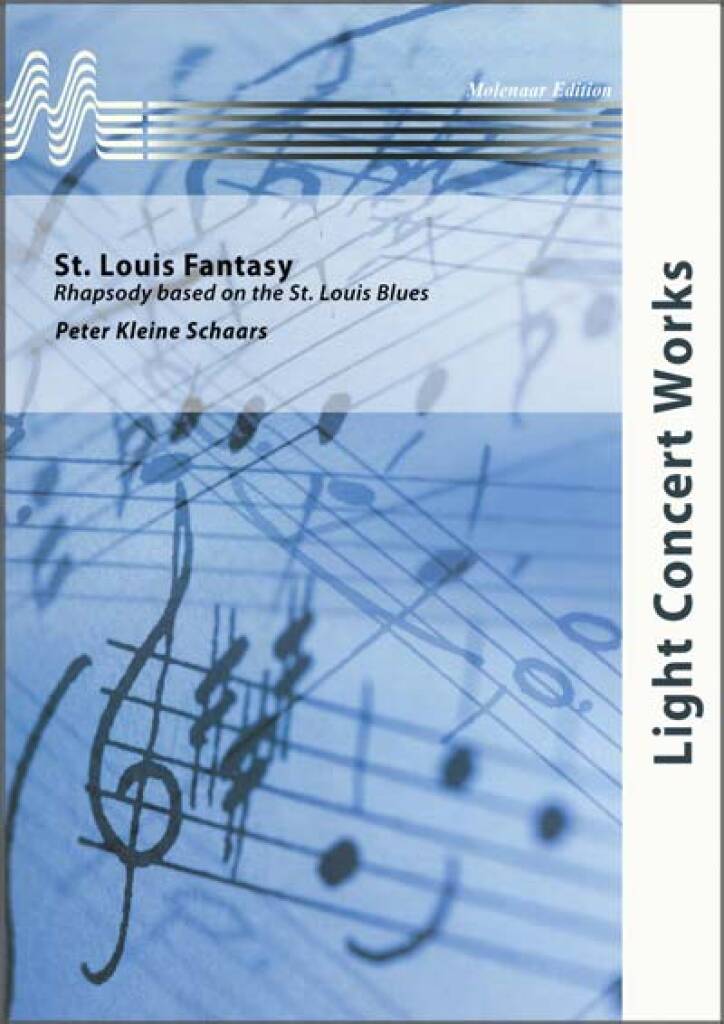
St. Louis Fantasie - Peter Kleine Schaars
In this fantasy, the band develops itself starting from a flute cadenza and an oboe solo and then develops through a slow blues in the woodwinds, a big band passage and a tango into a sparkling swing band. The score contains a solo passage for a Dixieland band noted in all parts. Some obbligato improvisations help the splendid orchestration to make a thrilling experience of this piece.
Estimated dispatch 7-14 working days
-
 £89.95
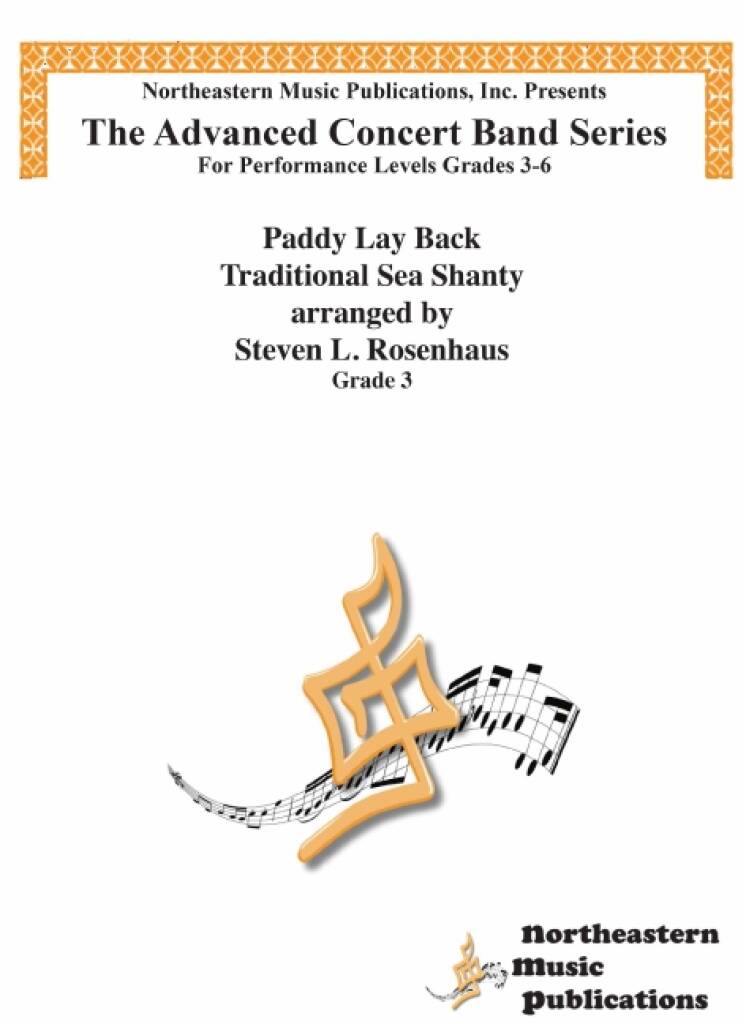
Paddy Lay Back
Sea shanties (or chanties) are songs sung by sailors to keep them synchronized (and mentally interested) while doing the hard labor of sailing. "Paddy Lay Back" is a capstan shanty, a capstan being a vertically-axled rotating machine used to raise and lower a ship's anchor. Sailors would rotate the capstan by pushing poles radiating from it, with three or four men working a pole. The song would help them keep momentum; if not, something could slip. Not only would the anchor drop uncontrolled, but the capstan would spin quickly and the poles could throw and harm the sailors. 1st trumpet's highest note is G. 1st & 2nd clarinets cross the break
Estimated dispatch 7-14 working days
-
 £149.40
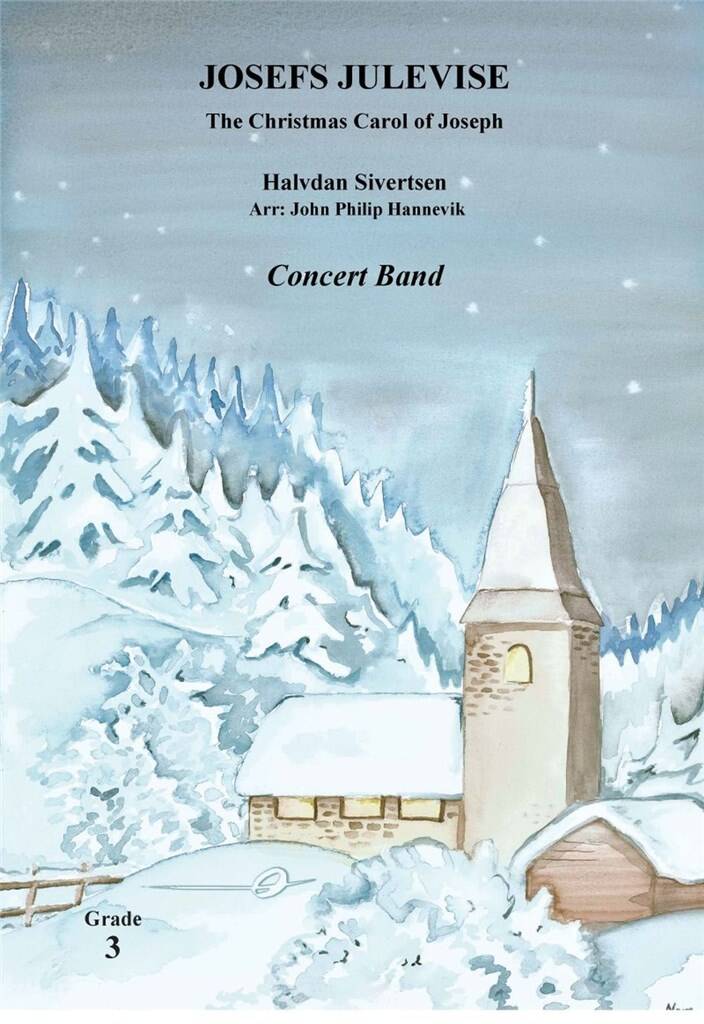
Josefs Julevise - Halvdan Sivertsen
Halvdan Sivertsen (born 1950) is one of the most popular singer/ songwriters in Norway. He is well know as a first-class storyteller, and he has a strong melodic line in all his music. This Christmas song was first recorded in 1991 and it has become a Norwegian classic. The lyrics tell the story of a couple travelling through time to find a city with bright lights, where they hear people sing about the couple who are about to have their first baby. But still this couple can not find anybody willing to help them, and they are forced to go back 2000 years, to find the stable where they find some shelter. Maybe they should have travelled further ahead in time in the firstplace, to find people willing to open their door to the poor and needing?
Estimated dispatch 7-14 working days
-
 £228.70
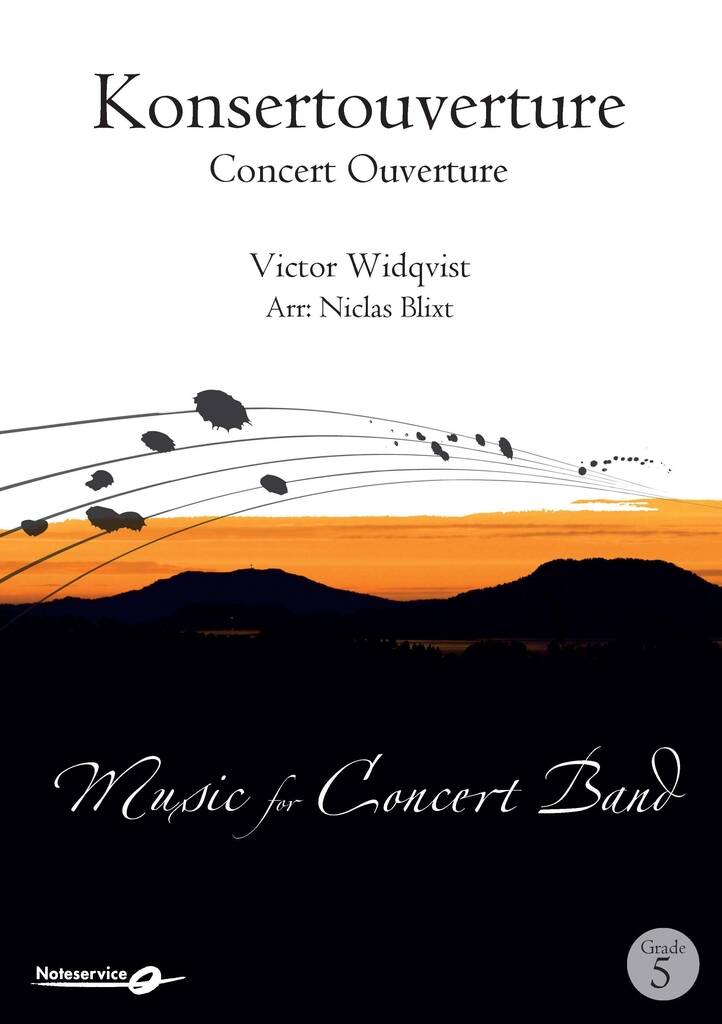
Konsertouverture - Viktor Widqvist
This piece was composed in 1937 in the composer's later part of life. Here, Widqvist shows his broad competence as a composer by using both classic marching and late-romantic thematic elements with exciting harmonic twists. In addition, you can find a perfect fugue where the composer shows that he masters this advanced composition technique. One can imagine that Widqvist wanted to show off his entire repertoire of knowledge to take the lead in the unspoken competition with colleague and friend Sam Rydberg. Rydberg had several years earlier composed a concert overture with a similar form. However, this piece is simpler in its design and lacks the technical brilliance that Widqvist shows in his contrapuntal treatment and harmonious diversity.The concert overture was re-orchestrated in 1939 by the composer for symphony orchestra, and it is this version and the original score for a large military orchestra that form the basis for this edition. My aim has been to keep all of Widqvist's original intentions, but still make use of all the possibilities of the modern symphonic wind orchestra. The composer's own arrangements for symphony orchestra have been of great help in this work.- Niclas Blixt -
Estimated dispatch 7-14 working days
-
 £98.20
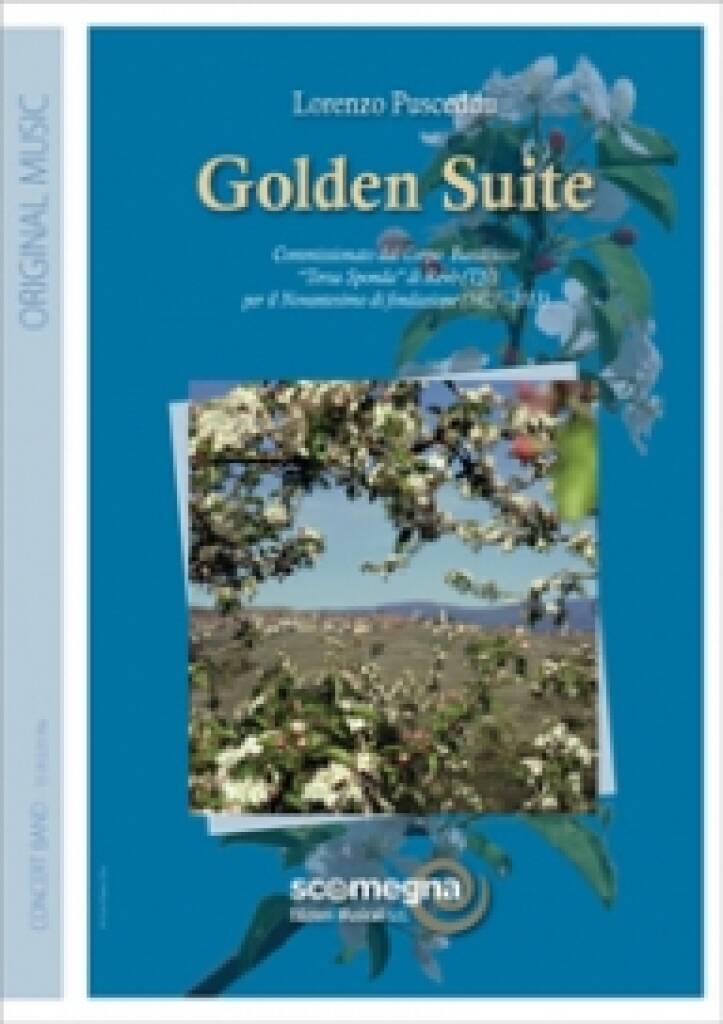
Golden suite - Lorenzo Pusceddu
In the Non Valley, during spring when the water of Lake Santa Giustina starts lowering, the old main traffic system and the steep terrain with the Groppello vineyards resurface. The majestic and uncompromising Mount Ozolo dominates this landscape and acts like a guard of the fertile valley. The people who had to walk along the Regiai road to leave their village in search of fortune keep those memories very alive. Their trip started by descending the valley along the Regiai road, walking through the luxuriant vineyards that were supported by dry stone walls, downright mosaics of stones built to help the growth of the vineyard. Those who left and casted a glance at their village for one last time could catch sight of the Ozolo, the mountain of the primordial man, of hunting and friendship. They also had to cross a bold stone bridge that still exists and is jealously safeguarded by the lake water, which has also sunken together with the bridge hectares of vineyards of Groppello, the vine of the traditional and vigorous wine produced in the Non Valley. Its name is said to come from the typical structure of the grapes, which are compact and resemble a thick tangle ("groppo" in local dialect), almost a defense against the shifting temperatures of the fall that gives the grapes a bright color and a honey-like sweetness. The production at the end of the nineteenth century was of circa fifty thousand hectoliters of wine, but today it has reduced to only five hundred hectoliters produced by about thirty courageous farmers who want to preserve an authentic patrimony of taste and flavor. These wine makers have the will to safeguard a vineyard that is at risk of extinction and work the land as they used to do many years ago: with hoe, shovel, and a lot of sweat! The Groppello vineyard extended to the bottom of Mount Ozolo, but on the higher slopes the more rigid temperatures allowed only for the growth of pines, spruces, larches, broad-leaved trees, and pastures. In the course of the years, this typical vegetation of the mountain has provided the population with the raw material to build houses, to keep warm during the winter, and to feed the animals. Mount Ozolo has also been since ancient times the "sacred" mountain of the valley, and today it has become a game preserve and a site of socialization for young people who know how to love and respect nature.
Estimated dispatch 7-14 working days
-
 £179.95
Faces (1. From Celestial Dancers) - Eric Ewazen
Ewazen seemingly takes inspiration from an endless array of sights, environments, and events. It would be impossible for him to be exposed to the wonder of Angkor Wat and to not distill his impressions into music. In fact, he created four distinct impressions for wind ensemble. Performance notes are included, which help to describe the settings and the thoughts behind them.
Estimated dispatch 7-14 working days
-
 £347.95
Trees (2. From Celestial Dancers) - Eric Ewazen
Ewazen seemingly takes inspiration from an endless array of sights, environments, and events. It would be impossible for him to be exposed to the wonder of Angkor Wat and to not distill his impressions into music. In fact, he created four distinct impressions for wind ensemble. Performance notes are included, which help to describe the settings and the thoughts behind them.
Estimated dispatch 7-14 working days
-
 £179.95
Artisans (3. From Celestial Dancers) - Eric Ewazen
Ewazen seemingly takes inspiration from an endless array of sights, environments, and events. It would be impossible for him to be exposed to the wonder of Angkor Wat and to not distill his impressions into music. In fact, he created four distinct impressions for wind ensemble. Performance notes are included, which help to describe the settings and the thoughts behind them.
Estimated dispatch 7-14 working days
-
 £179.95
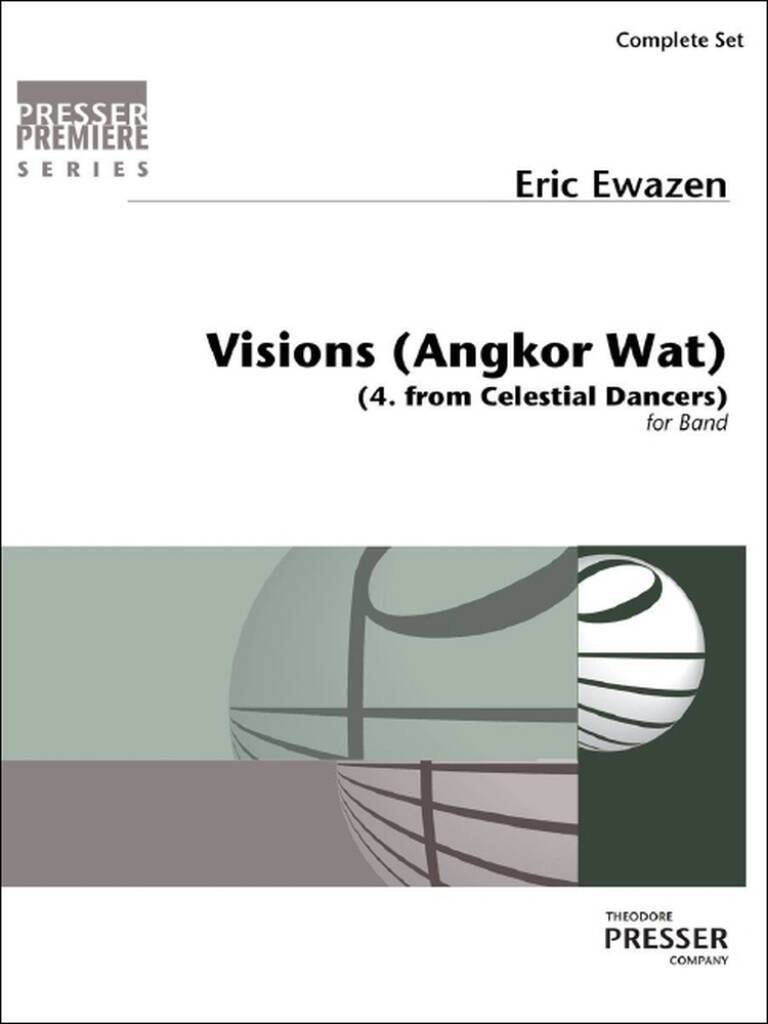
Visions (4. From Celestial Dancers) - Eric Ewazen
Ewazen seemingly takes inspiration from an endless array of sights, environments, and events. It would be impossible for him to be exposed to the wonder of Angkor Wat and to not distill his impressions into music. In fact, he created four distinct impressions for wind ensemble. Performance notes are included, which help to describe the settings and the thoughts behind them.
Estimated dispatch 7-14 working days
 View Music