
Results
-
 £11.80
Suzuki Violin School, Volume 4: Violin Book - Shinichi Suzuki
Teach violin with the popular . The Suzuki Method of Talent Education is based on Shinichi Suzuki's view that every child is born with ability, and that people are the product of their environment. According to Shinichi Suzuki, a world-renowned violinist and teacher, the greatest joy an adult can know comes from developing a child's potential so he/she can express all that is harmonious and best in human beings. Students are taught using the "mother-tongue" approach. Each series of books for a particular instrument in the Suzuki Method is considered a Suzuki music school, such as the Suzuki Violin School. Suzuki lessons are generally given in a private studio setting with additional group lessons. The student listens to the recordings and works with their Suzuki violin teacher to develop their potential as a musician and as a person. This Suzuki book is integral for Suzuki Violin Lessons. This revised edition of the Suzuki Violin School, Volume 4 features: * Revised editing of pieces, including bowings and fingerings * Additional exercises, some from Shinichi Suzuki, plus additional insight and suggestions for teachers * Text in English, French, German, and Spanish * Musical notation guide * Fingerboard position. Titles: Lullaby (Tonalization) (Schubert) * Lullaby (Tonalization) (Brahms) * Concerto No. 2 in G Major, Op. 13, 3rd Movement (Seitz) * Concerto No. 5 in D Major, Op. 22, 1st Movement (Seitz) * Concerto No. 5 in D Major, Op. 22, 3rd Movement (Seitz) * Concerto in A Minor, 1st Movement, Op. 3, No. 6 (Vivaldi/Nachez) * Concerto in A Minor, 3rd Movement, Op. 3, No. 6 (Vivaldi/Nachez) * Perpetual Motion, "Little Suite No. 6" (Bohm) * Concerto for Two Violins in D Minor, BWV 1043, 1st Movement, Violin II (Bach). For a complete list of the most recent printings by AMPV number, go to alfred.com/suzuki. This title is available in MakeMusic Cloud. The International editions include an updated title page that designates the book as the International Edition. A Federation Festivals 2020-2024 selection.
Estimated dispatch 3-5 working days
-
 £11.80
Suzuki Cello School, Volume 2: Cello Book
Teach cello with the popular . The Suzuki Method of Talent Education is based on Shinichi Suzuki's view that every child is born with ability, and that people are the product of their environment. According to Shinichi Suzuki, a world-renowned violinist and teacher, the greatest joy an adult can know comes from developing a child's potential so he/she can express all that is harmonious and best in human beings. Students are taught using the "mother-tongue" approach. Each series of books for a particular instrument in the Suzuki Method is considered a Suzuki music school, such as the Suzuki Cello School. Suzuki lessons are generally given in a private studio setting with additional group lessons. The student listens to the recordings and works with their Suzuki cello teacher to develop their potential as a musician and as a person. This Suzuki Book is integral for Suzuki cello lessons. Titles: Long, Long Ago (T. H. Bayly) * May Time, Komm Lieber Mai (Longing for Spring) from , K. 96 (W. A. Mozart) * Minuet No. 1, Minuett III from , BWV 822 (J. S. Bach) * Minuet No. 3, Minuet in C, BWV Anh. II (J. S. Bach) * Chorus from (G. F. Handel) * Hunters' Chorus from 3rd Act of the Opera (C. M. von Weber) * Musette in G, Gavotte II or the Musette from , BWV 808 (J. S. Bach) * March in G (J. S. Bach) * Theme from (N. Paganini) * Tonalization: The Moon over the Ruined Castle (R. Taki) * The Two Grenadiers, Die Beiden Grenadier, Op. 49, No. 1 for Voice and Piano (R. Schumann) * Gavotte (F. J. Gossec) * Bourre from , HHA IV/18, No. 8-EZ (G. F. Handel). This title is available in MakeMusic Cloud. For a complete list of the most recent printings by AMPV number, go to alfred.com/suzuki. The International editions include an updated title page that designates the book as the International Edition. A Federation Festivals 2020-2024 selection.
Estimated dispatch 3-5 working days
-
 £11.80
Suzuki Cello School, Volume 3: Cello Book
Teach Cello with the popular . The Suzuki Method of Talent Education is based on Shinichi Suzuki's view that every child is born with ability, and that people are the product of their environment. According to Shinichi Suzuki, a world-renowned violinist and teacher, the greatest joy an adult can know comes from developing a child's potential so he/she can express all that is harmonious and best in human beings. Students are taught using the "mother-tongue" approach. Each series of books for a particular instrument in the Suzuki Method is considered a Suzuki music school, such as the Suzuki Cello School. Suzuki lessons are generally given in a private studio setting with additional group lessons. The student listens to the recordings and works with their Suzuki cello teacher to develop their potential as a musician and as a person. This Suzuki Book is integral for Suzuki cello lessons. Titles: Berceuse, Wiegenlied or Lullaby, Op. 98, No. 2 (F. Schubert) * Tonalization: The Moon over the Ruined Castle (Taki) * Gavotte (Lully) * Minuet from No. 11, Op. 11, No. 5 in E Major (Boccherini) * Tonalization: The Moon over the Ruined Castle (Taki) * Scherzo (Webster) * Minuet in G, Wo0 10, No. 7 for Piano (Beethoven) * Gavotte in C Minor, Gavotte en Rondeau from , BWV 822 (Bach) * Minuet No. 3, BWV Anh. II 114/Anh. III 183/Anh. II, 115 (Bach) * Humoresque, Op. 101, No. 7 for Piano (Dvork) * La Cinquantaine (Gabriel-Marie) * Allegro Moderato from (Bach). For a complete list of the most recent printings by AMPV number, go to alfred.com/suzuki. This title is available in MakeMusic Cloud. The International editions include an updated title page that designates the book as the International Edition. A Federation Festivals 2020-2024 selection.
Estimated dispatch 3-5 working days
-
Fire in the Sky - Peter Meechan
Fire in the Sky takes its inspiration from the stunning town of Montreux in Switzerland. I was commissioned to write the work 5 days before I visited this Montreux and was at work forming ideas for the piece as I arrived on the shore of Lake Geneva and its amazing views of the Alps.Whilst the scenery is without doubt some of the most incredible views I have ever witnessed, it was the history of the town that set Fire in the Sky in motion. Whilst there, it occurred to me that many of my musical heroes had lived or performed there, and three of them in particular had a strong connection with the town. Miles Davis, Igor Stravinsky and Freddie Mercury graced Montreux - the large convention centre, where the famous summer jazz festival is held, named its two halls after Davis and Stravinsky, and there is a quite breathtaking statue of Mercury in the town too.Each musician also commemorates an anniversary in 2011, the year of the premiere of Fire in the Sky; it is 40 years since the death of Stravinsky and both Miles Davis and Freddie Mercury died in 1991, making it 20 years since their deaths. So it seemed fitting to write a piece that in some way acknowledges them, and is a kind of personal "thanks" for all they have given, and continue to give, me.The title comes from the famous Deep Purple song, Smoke on the Water - whose second line is "Fire in the Sky" and is a reference to the night the town's casino was set alight by a Frank Zappa fan. The piece tries to recreate the atmosphere of that night, paint a picture of fire in the sky (and smoke on the water) and also uses small "nuggets" of the music of my three greatest musical heroes, Miles Davis, Freddie Mercury and Igor Stravinsky.
Estimated dispatch 5-14 working days
-
The Legend of King Arthur - Peter Meechan
King Arthur is the subject of many tales, stories, myths and legends - from his ascension to the throne by pulling the sword from the stone, his courageous battles with his fellow Knights of the Round Table, to his ultimately tragic love for Guinevere.The Legend of King Arthur is a musical portrayal of some of the most important moments in the legend.The opening of the work - a rock inspired overture - is a reference to Arthur's final resting place (at least, so some legends have it!), the modern day Glastonbury (Avalon in the legend), and it is in this opening that we hear for Arthur's theme.This high octane opening gives way to a mysterious section - as Merlin (the mystical wizard) places in a stone a sword, upon which was inscribed "Whoso pulleth out this sword of this stone is the rightwise born king of all England". The music describes the mystical surroundings as each of the contenders for the throne take their turn - to no avail - and with a return to the original theme, we hear Arthur pull the sword from the stone, to become King of England.Next we hear a depiction of Arthur's greatest victory in battle - The Battle of Mount Badon. He finally defeated the Saxon invaders of Britain - over 900 Saxons perished - and the victory brought about an extended period of peace. Arthur is portrayed as brave, bold and confident as he and his Knights end years of invasion.The penultimate section of the work tells the tale of Arthur's tragic love for Guinevere - his traitorous wife, who through her infidelity with Sir Lancelot (Arthur's most trusted Knight), ultimately leads Arthur in to his final battle with his nephew, Mordred.We hear the final bitter battle, which eventually ends with only Arthur and Mordred fighting. Arthur is wounded, fatally, by his nephew -at which point we hear with a sudden and dramatic sounding of Arthur's theme - and is taken to Avalon to die.
Estimated dispatch 5-14 working days
-
£80.00
Celebrare Celeberrime - Carl Vine
Celebrare Celeberrime means "to celebrate to the full and with greatest speed". The title of this joyous 5-minute work, arranged here for symphonic wind band by Philip Littlemore, appealed to Carl Vine as 'a general philosophy of living one's life to the fullest'. A perfect concert opener.
In stock: Estimated delivery 1-3 days
-
 £129.99
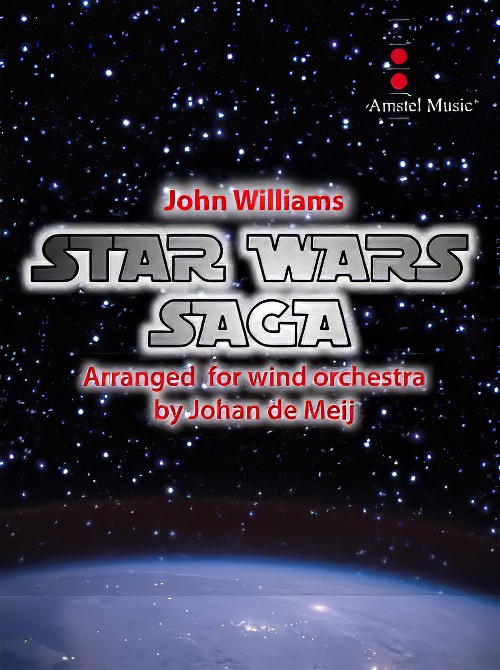
Star Wars Saga (Concert Band - Score and Parts) - Williams, John - De Meij, Johan
John Williams (February 8, 1932) has composed some of the most popular, recognisable and critically acclaimed film scores in cinema history. Williams has won 25 Grammy Awards, five Academy Awards, seven British Academy Film Awards, and four Golden Globe Awards. With 53 Academy Award nominations, he is the second most-nominated individual, after Walt Disney. His compositions are considered the epitome of film music, and he is considered among the greatest composers in the history of cinema. His work has influenced many other composers of film, popular, and contemporary classical music. In 2005, the American Film Institute selected Williams's score to 1977's Star Wars as the greatest film score of all time. In this newly revised arrangement from 1986, arranger Johan de Meij has used themes from Star Wars: A New Hope and The Empire Strikes Back.
Estimated dispatch 7-14 working days
-
 £112.50
To juletonar frao Hardanger (Two Christmas Tunes from Hardanger) (Concert Band - Score and Parts) - Tveitt, Geirr - Eriksen, Christian A.
Two Christmas Tunes from Hardanger by Geirr Tveitt (1908-1981) was commissioned by The Norwegian Radio Orchestra, and their conductor Oivind Bergh. It is, like Tveitt?s main work A Hundred Hardanger Tunes, based on Norwegian traditional music from western Norway, and used modal harmony and bitonality. Geirr Tveitt was in the period 1947 and untill his death, one of the greatest Norwegian concert pianists and composers, and regurlarly toured Europe?s greatest orchestras with his own music. In addition to his famous Hardanger Tunes suite, he wrote ballets, operas and other large scale orchestral works. Duration: 3.00
Estimated dispatch 7-14 working days
-
 £520.99
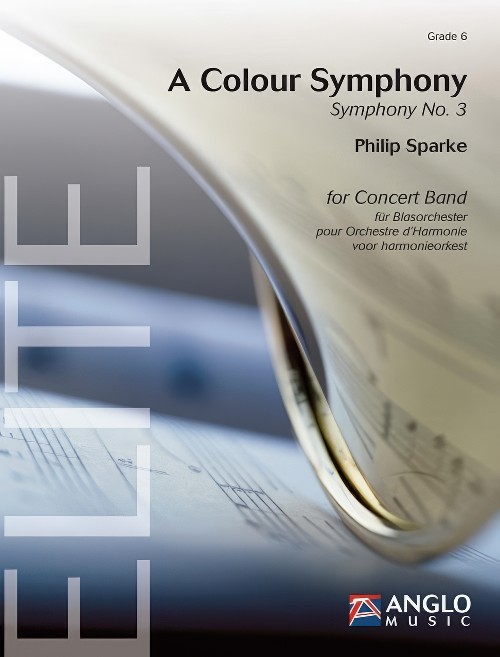
A Colour Symphony (Concert Band - Score and Parts) - Sparke, Philip
Philip Sparke's third symphony, A Colour Symphony, was commissioned by "sinfonischen blasorchester wehdel" conducted by Thomas Ratzek. In the four movements (white, yellow, blue and red) the composer creates links between the instrumentation and harmonic elements and the actual colour of the spectrum the movement stands for. In order to create the greatest richness possible, Philip Sparke used a very large instrumentation including low woodwinds, harp, piano and celli. A Colour Symphony is an impressive and iconic addition to the standard repertoire for large symphonic bands. Philip Sparke's third symphony, A Colour Symphony, was commissioned by "sinfonischen blasorchester wehdel" conducted by Thomas Ratzek. In the five movements (white, yellow, blue, red and green) the composer creates links between the instrumentation and harmonic elements and the actual colour of the spectrum the movement stands for. In order to create the greatest richness possible, Philip Sparke used a very large instrumentation including low woodwinds, harp, piano and celli. A Colour Symphony is an impressive and iconic addition to the standard repertoire for large symphonic bands.Duration: 26:00
Estimated dispatch 7-14 working days
-
 £84.99
Charming Salzburg Wind Band Set (Score & Parts)
Salzburg, birthplace of Wolfgang Amadeus Mozart, inspired Dutch composer Henk Hogestein to write this musical tribute. Mozart was born in this charming Austrian town in January 1756. He was a musical prodigy - at the age of four he began receiving lessons from his father Leopold and at the age of six he was composing smart minuets and other short pieces. The composition Charming Salzburg is based on a theme from Mozart's opera Die Zauberfl?te, which he completed in 1791. The greatest composer of his day - the greatest of all time according to some - the brilliant Mozart wrote some of the world's best operas with Die Zauberfl?te was his last. 0:03:00
Estimated dispatch 7-14 working days
 View Music
