
Results
-
 £194.99
Euphonium Concerto II - Philip Sparke
The original concept for this work was a suite of short movements, each with its own character, but by the time the first movement was complete it was clear that a conventional three-movement format was going to work out better. The opening movement contains much syncopation and is almost rag-like in style. The slower second movement explores the unsurpassable ability of the euphonium to play lyrically, with a theme that is later taken up by the band whilst the soloist weaves a filigree descant. This leads straight into the third movement, which is almost bebop in style and shows off the jazzier capabilities of the euphonium. The concerto was composed for the virtuoso soloist,Steven Mead. A version for euphonium and piano is also available.
Estimated dispatch 7-14 working days
-
 £209.99
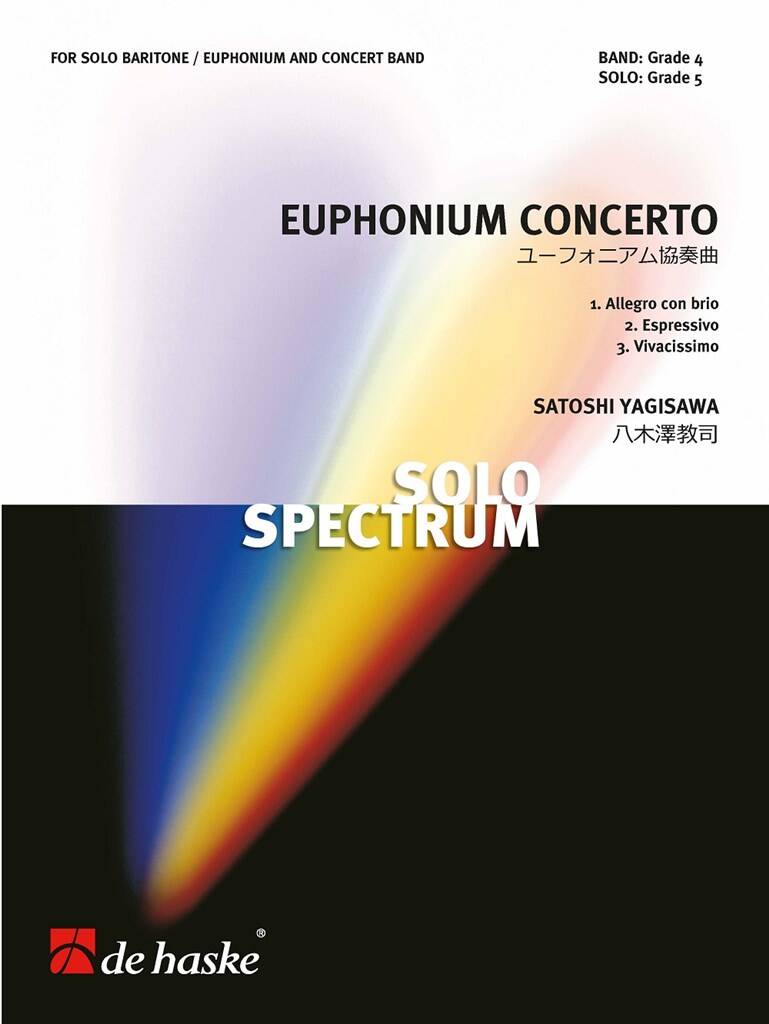
Euphonium Concerto - Satoshi Yagisawa
This three-movement concerto (Allegro con brio, Espressivo and Vivacissimo) was commissioned by the famous Japanese euphonium player Tamao Araki. It demands a high level of instrumental proficiency from the soloist, while the accompaniment is less demanding and accessible for a band of an average level. Yagisawa's clever use of the euphonium's colourful sound palette with its beautiful melodic lines makes this composition a rare jewel.
Estimated dispatch 7-14 working days
-
 £104.50
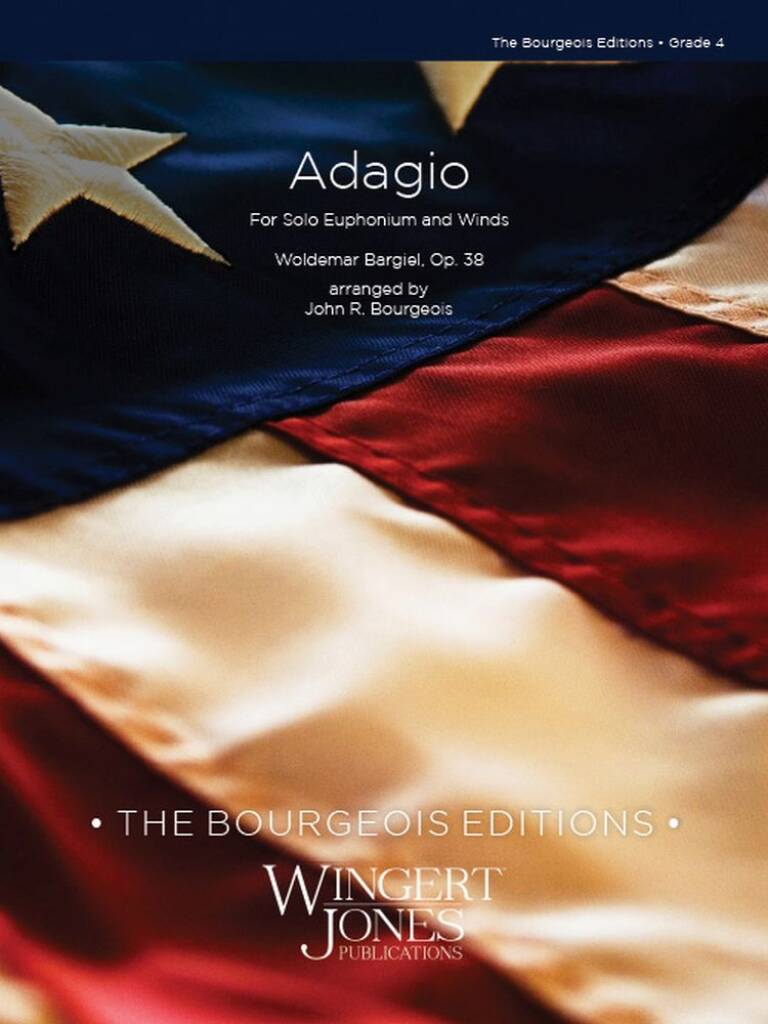
Adagio Solo Euphonium and Winds - Woldemar Bargiel
The German composer Woldemar Bargiel was the half-brother of Clara Schumann and composed a significant amount of chamber music. He was supported by fellow composers Robert Schumann and Johannes Brahms. His Adagio, opus 38 for cello and orchestra is an eloquently beautiful solo work and makes a very attractive solo feature for euphonium with wind accompaniment. This setting was premiered with euphonium soloist Misa Meade accompanied by the Loyola University Concert Band.
Estimated dispatch 7-14 working days
-
£244.99
Cantiphonia - Concerto For Euphonium - Bert Appermont
This spectacular three-part concerto (Contrasti, Romanza and Fugato) for euphonium and grand brass-band orchestra by Bert Appermont was composed upon request by the Swiss euphonium virtuoso Ueli Kipfer who created it in November 2004 with the Schweizer Armee Spiel conducted by Jan Cober. The composer was inspired more by its mood than the analysis of works by Mahler and Rachmaninov. This concerto, which is quite demanding for the soloist and a challenge for the orchestra, is probably one of the most innovative works by Bert Appermont to date. The composer also wrote an easier version of the solo part. More information can be found on our website.
Estimated dispatch 7-14 working days
-
 £114.99
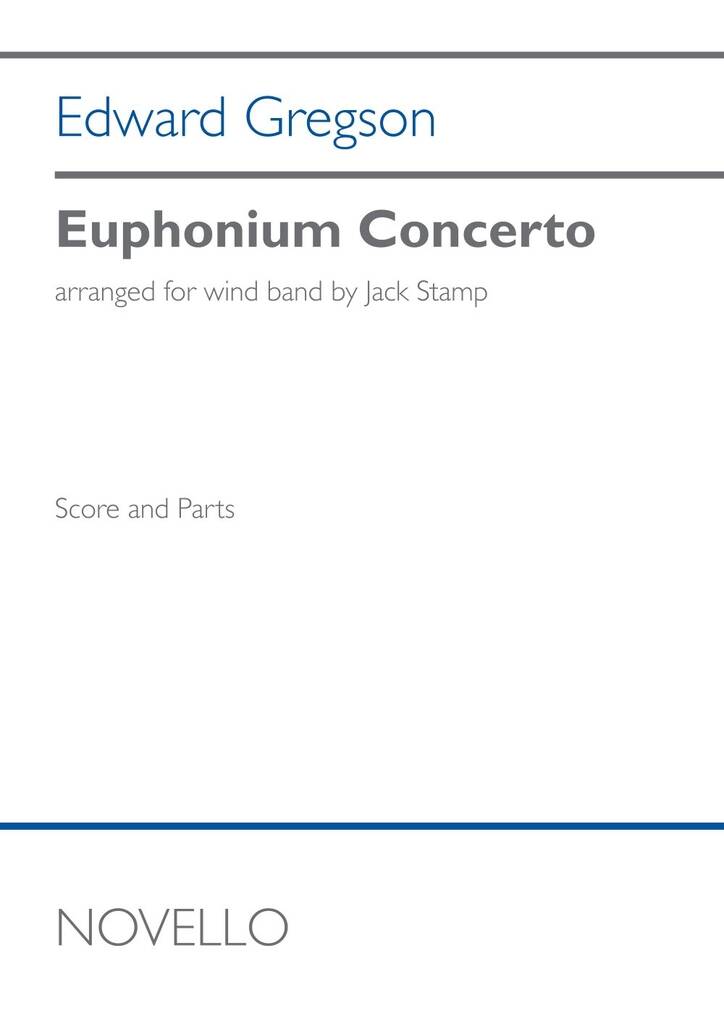
Euphonium Concerto - Edward Gregson
Skilfully arranged by acclaimed wind band expert Jack Stamp, this version of Edward Gregson's Euphonium Concerto for wind band was recorded by David Childs and the North Texas Wind Symphony and released in 2023.
Estimated dispatch 7-14 working days
-
£137.70
Daydream - Solo for Euphonium - Frode Thingnæs
Daydream is a melodic and virtuos peace for Euphonium and concert band.
Estimated dispatch 7-14 working days
-
 £118.99
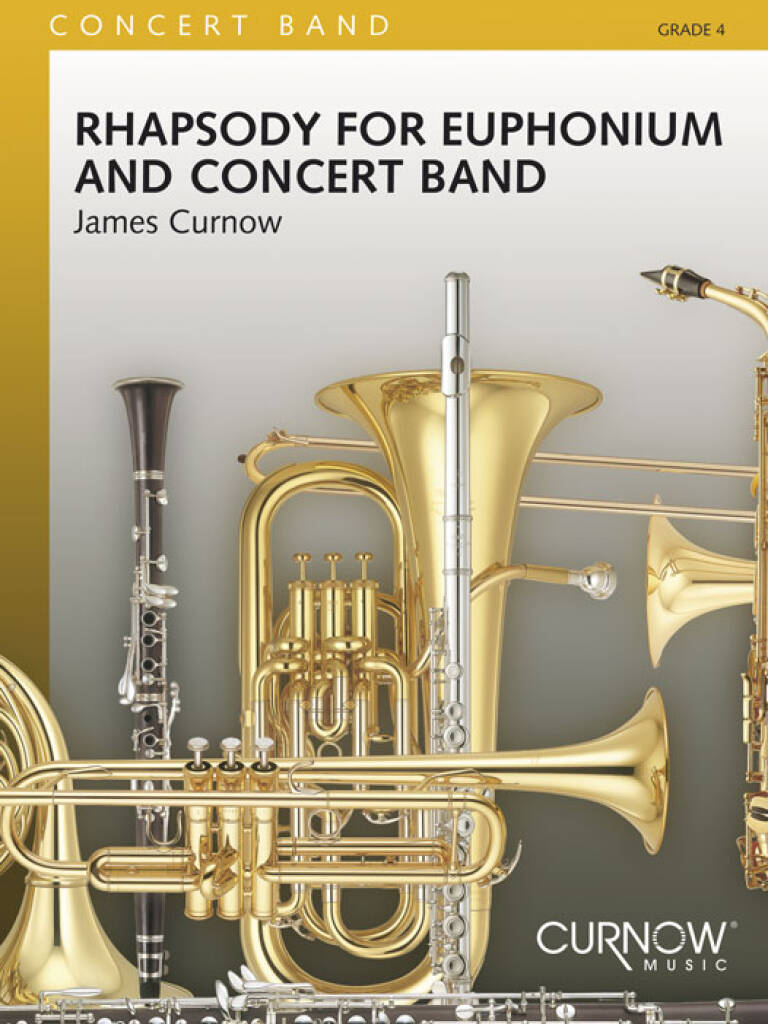
Rhapsody for Euphonium - James Curnow
Beginning with a beautiful, modal soliloquy, the euphonium soloist establishes the molto espressivo style of the opening section of the composition. This is followed by an exciting scherzo which gives way to a brilliant finale. Nicely done!
Estimated dispatch 7-14 working days
-
 £90.00
Euphonium Music - Brian Bowen
Something of a classic in its brass band and piano versions! We are delighted, at last, to make this work available ith wind band accompaniment by the composer. Written in 1978, the work is constructed in three movements and is virtually a concerto for euphonium and band. The first movement begins with an unaccompanied motto theme, which uses all twelve notes of the scale but with a tonal feel. The slow second movement is based on an original song melody by the composer - 'The Eyes of God' - and affords lyrical and richly expressive playing that is typically euphonium. Movement three follows without a break - a capricious movement which ends triumphantly. Now available in versions for piano, brass band, wind band, and orchestra, Euphonium Music can be seen as a major contribution to the literature for the instrument. Duration: 15 minutes USA Grade 5 An orchestral version is available on hire.
Estimated dispatch 7-14 working days
-
 £63.04
Caprice (Euphonium Solo with Concert Band) Andrew Batterham
VIEW SCORE PDF Caprice was written for Matthew van Emmerik, to showcase his virtuosity in an engaging piece of concert music. The work is in theme and variation form, with the primary material being the theme from the last of Paganini's Ventiquattro Capricci per violino solo, a collection of 24 caprices for solo violin. This theme has been the inspiration for similar works by many composers since it was first published, including Liszt, Brahms, Rachmaninov, Benny Goodman and Andrew Lloyd Webber. In this work, the famous theme is treated to a more contemporary approach. The first variation, Capricious, relies on motor rhythms and jagged dialogues between the soloist and the band. It is couched in an organic scale reminiscent of the Phrygian mode. The second variation, Sad, is in direct contrast, acting as a traditional ballad and allowing the soloist to explore the expressive side of the instrument. The third variation, Energetic, is a micro set of variations in itself, designed to display the soloist's innovative technique and stamina. Each section is more challenging than the last, until the work concludes with a whirlwind dance at breakneck speed. Like all of Batterham's recent work, the musical language of Caprice draws upon classical, jazz, funk and ska elements to create a unique sound where anything can happen, and probably will. This arrangement was made possible through Matt's instigation and generosity. To view a video of Matthew van Emmerik performing the version with brass band please visit www.youtube.com/watch?v=D0hsvux_a5o To view a video of Fletcher Mitchell performing the version with piano please visit www.youtube.com/watch?v=NOZ6KRldDVo Sheet music available from : UK: www.wind-band-music.co.uk USA: www.solidbrassmusic.com Instrumentation: Euphonium Soloist Piccolo Flute 1-2 Oboe Bassoon Clarinet in Eb Clarinet in Bb 1-3 Bass Clarinet in Bb Alto Saxophone 1-2 Tenor Saxophone Baritone Saxophone Trumpet in Bb 1-3 Horn in F 1-4 Trombone 1-2 Bass Trombone Euphonium Tuba String Bass Percussion 1-3
In stock: Estimated dispatch 1-3 days
-
 £164.95
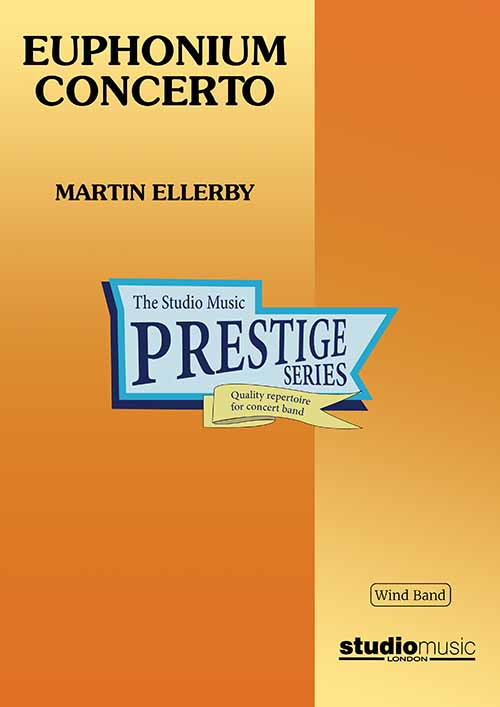
Euphonium Concerto (Concert Band - Score and Parts) - Ellerby, Martin
This Euphonium Concerto was written between late 1994 and early 1995 in response to a commission from Steven Mead to whom the work is dedicated. It is cast in four movements and lasts a little over 22 mins:I. Fantasy: After the briefest of introductions, the solo euphonium enters with the key melodic phrase of the movement in a fast 'Tempo I'. This idea is developed up to the point where a slower 'Tempo II' breaks the argument - here the mood is reflective but it is only to be a brief interruption as 'Tempo I' returns very quickly. The opening material is then subjected to further transformation with 'Tempo II' making occasional returns en route, the distances between the contrasting tempi becoming ever closer, and the movement closes in a rather soft though definite manner.II. Capriccio: This relatively short presto movement forms a bridge between the first movement and the work's slow movement. The majority of the band parts are bright and muted with the percussion players enhancing the texture with contributions from xylophone, glockenspiel and vibraphone. Again the initial solo euphonium phrase provides the basis for almost all the movement's material. This is extremely virtuosic for the soloist and band alike and makes great play of the rhythmic possibilities of combining simple and compound music either in close proximity or together.III. Rhapsody (for Luis): A Lento movement, sitting between two different but essentially rapid ones, this provides the work's emotional core exploiting the soloist's cantabile qualities in an almost seamless fashion. Again, as will all the work's movements, the initial idea paves the way for subsequent development, eventually culminating in a passionate climax; thereafter it winds down with an affectionate backward glance towards the close of the the slow movement of the Euphonium Concerto of Joseph Horovitz, whose mark had been made indelibly on the euphonium repertoire. This movement is dedicated to Luis Maldonado who set the full score of the brass version before his untimely death.IV. Diversions: The work's variation finale is cast in 3/4 throughout though the barline is often a guideline and was seen by the composer as a challenge of metrical restraint! There is an obvious jazz feel to this movement (both rhythmically and harmonically) with a swaggering ritornello theme first announced by the solo euphonium. Thereafter follows a series of interludes and 'adjusted' returns of the main theme. A lyrical idea is allowed to enter but the underlying momentum is ever present. The band also contributes to the interludes and eventually the tempo increases towards a 'wild' and absolute conclusion.Duration: 22.30Recorded on QPRM143D Dreamscapes, Royal Northern College of Music Wind Orchestra
Estimated dispatch 7-14 working days
 View Music