
Results
-
 £74.00
Galop - Amilcare Ponchielli
La Gioconda, with a libretto by Arrigo Boito, is the most successful theatrical work by Amilcare Ponchielli (1844-1886). In this work there are two dance pieces: the Furlana at the conclusion of the 1st act and the Danza delle ore in the 3rd act. The Dance of the Hours has a precise choreographic outline: it is a masked ball which includes the "hours" of dawn, day, evening and night successively, and ends with a wild finale of galop. The latter is a sort of fast polka, in binary rhythm and unbridled pace. A French variant of it is the can-can. The finale in galop time of the Dance of the Hours recalls certain playful dances by the composer Jacques Offenbach, such as the famous Can-can that concludes the overture of the operetta Orphe au enfers.
Estimated dispatch 7-14 working days
-
 £174.99
The Graces of Love - Oliver Waespi
"The Graces of Love" (Le Gratie d'Amore) is the title of a book published in 1602 by Cesare Negri, the famous dance master of the Milanese court in the Renaissance. It contains numerous dance tunes and precise descriptions of courtly dances. It also includes the tune 'Il bianco fior' (The White Flower) on which the first movement of Oliver Waespi's piece is based. A vigorous dance in three-four, it leads to an acceleration and a sudden shift to an even meter towards the end. The second movement, calm and contemplative in character, features the tune 'Vaghe bellezze ...' (Veiled Beauty ...). Widely spaced melodic parts surround two solos during which the tune is varied anddeveloped. Finally, the third movement contains a Saltarello based on a tune by Vincenzo Galilei, the father of the famous astronomer, Galileo Galilei. It brings the work to a close with a hypnotic rhythm which is noble and virtuosic at the same time.
Estimated dispatch 7-14 working days
-
 £85.00
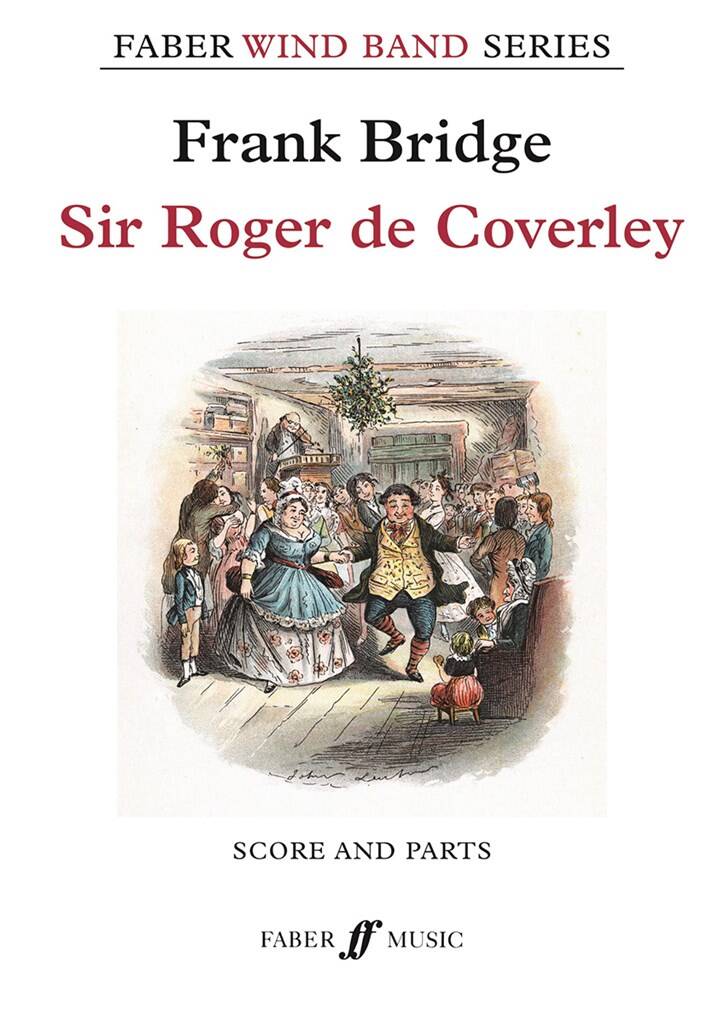
Sir Roger de Coverley - Frank Bridge
Frank Bridge (1879 - 1941) was one of the leading English composers of his time. In October 1922 he adapted his popular string quartet Sir Roger de Coverley for full symphony orchestra and Sir Henry Wood agreed, at the last minute, to include it in the last night of the Queen's Hall Promenade Concerts at the end of that month.This elaborate and colourful orchestral version has never been widely performed, but has now been brilliantly transcribed by Alastair Wheeler to provide a miniature dance poem for grade 5 level concert band.Bridge's lively treatment of one of England's most famous traditional dance melodies willmake a fitting end to any concert, with the strains of Auld Lang Syne introduced by Bridge as a nod towards Sir Roger de Coverley's traditional function as the final dance of a Christmas Ball, as it was in Old Mr. Fezziwig's party in Dickens' A Christmas Carol.
Estimated dispatch 7-14 working days
-
 £149.40
The Battle of the Hats - Øystein Sjøvaag Heimdal
The word svimesltt, which is the title of this piece in Norwegian, has two meanings. One meaning is "knocked out", whilst the other, "sltt", means a folk melody/dance.Svimesltt is one of several folk dances, all of them with humorous titles, originally written by ystein Olsen Vadsten. Norwegian culture is the basis for these dances, both rhythmically and melodically. The accompaniment has brought this funpiece into the 21st Century.When it comes to Svimesltt, it is the traditional dance "halling" that is the inspiration. Halling is a rather wild dance, where the man tries to win the heart of a lady by attempting to kick a hat off a stick,held up in the air. This iswhere "The Battle of the Hats" gets its distinctive name A truly Norwegian tradition.The composer wanted to write a "crazy" melody, which highlights how "knocked out" a man can be by love, as he tries to win the chosen ones heart.
Estimated dispatch 7-14 working days
-
 £179.99
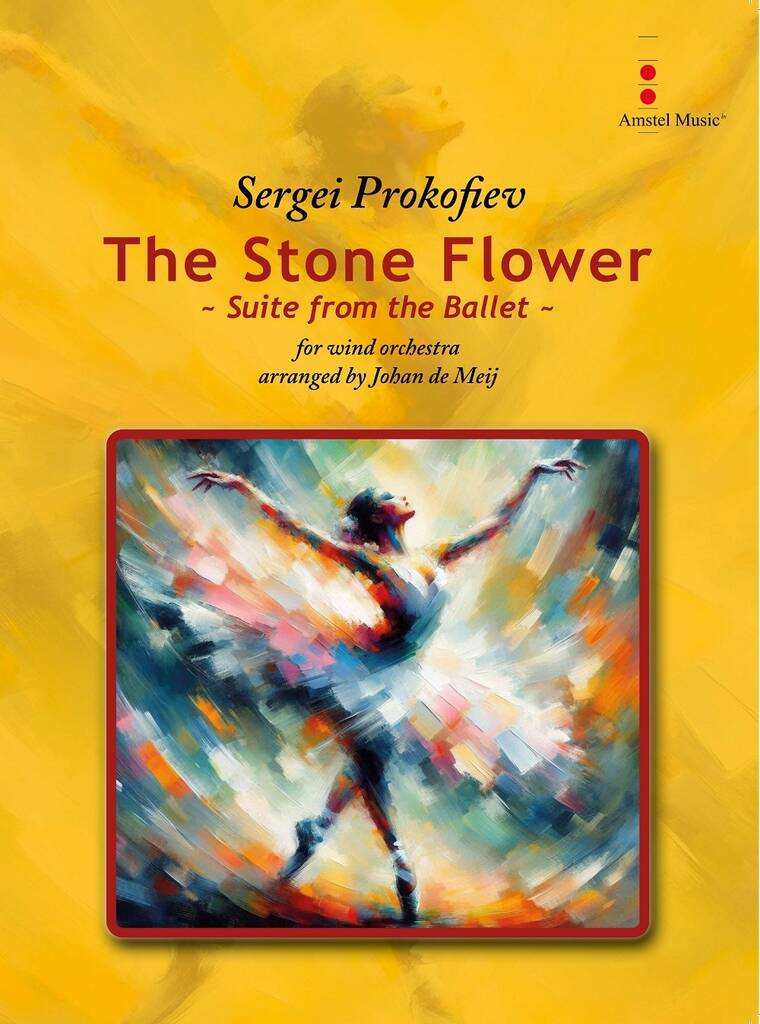
The Stone Flower - Sergei Prokofiev
Sergei Prokofiev's The Stone Flower (opus 118) is his eighth and last ballet, composed between 1948 and 1950. His most famous ballets are Romeo and Juliet, Cinderella and Le Pas d'Acier.The Stone Flower is based on a Russian folk tale from the Ural Mountains. The premiere of the work took place in 1954, one year- after the dead of the composer. The ballet's storyline, rich with myth and legend, is set against the backdrop of the mystical Ural Mountains and centers on themes of love, artistry, and the conflict between material wealth and spiritual fulfillment.In 1951, Prokofiev arranged five movements from the ballet which were later published as the Wedding Suite (opus 126). The movements are:I. Amorous DanceII. Dance of the fiance's girlfriendsIII. Maiden's DanceIV. Ceremonial DanceV. Wedding Dance
Estimated dispatch 7-14 working days
-
 £150.70
Knut Liten og Sylvelin
Ballad is a type of Norwegian folk song that originally means "dance song" from the Latin word ballare ("to dance").This arrangement is heavily inspired by the version of the Norwegian folk-rock band Gte, which has achieved great success with the song both on record and stage.This arrangement features shorter soloistic passages on several instruments and expanded use of percussion. Energetic music that is perfect for any entertainment concert!
Estimated dispatch 7-14 working days
-
 £69.00
Walking the Dog - George Gershwin
Walking the Dog is one of the many songs George Gershwin wrote for the film "Shall We Dance." George Gershwin at the height of his powers. Instead of the bustling, complex symphonic scores he was now accustomed to writing, it is a simple, elegant little walk, as the title suggests.In the 1937 film, it accompanies a scene of (you guessed it) walking a little dog, aboard the luxurious deck of a cruise ship. Since it was heard in the film, however, the tune has taken on a life of its own and has become a popular piece for clarinetists around the world. In 1960, the song was published as "Promenade." Interestingly, it is also the only part of the film score of "Shall We Dance" that remains - the rest of the film's music unfortunately remains unpublished there are not even any recordings.
Estimated dispatch 7-14 working days
-
 £64.99
Siciliano and Tarantella
This distinctive work by Michael Oare is based on two Italian dance forms dating back to the Baroque period. Siciliano opens with a delicate 6/8 melody in the flutes which is developed and passed around to various sections of the band. In contrast, Tarantella is a brash and uptempo dance featuring a rhythmic pulse accompanying the flowing melodic lines. Quite a nice pairing of tunes with historical importance.
Estimated dispatch 7-14 working days
-
 £84.99
Yakolo - Gerald Oswald
Yakolo is originally a dance song from Africa. It reflects the people of Africa's zest for life, following the maxim 'Come and join us!'. In this work, the 'call and response' principle is featured as a trademark element of traditional African music. The rhythmic melodies invite listeners to sing and dance along and thus give shape to the African art of celebrating together. The repeating themes will be sure to put a smile on everyone's face!
Estimated dispatch 7-14 working days
-
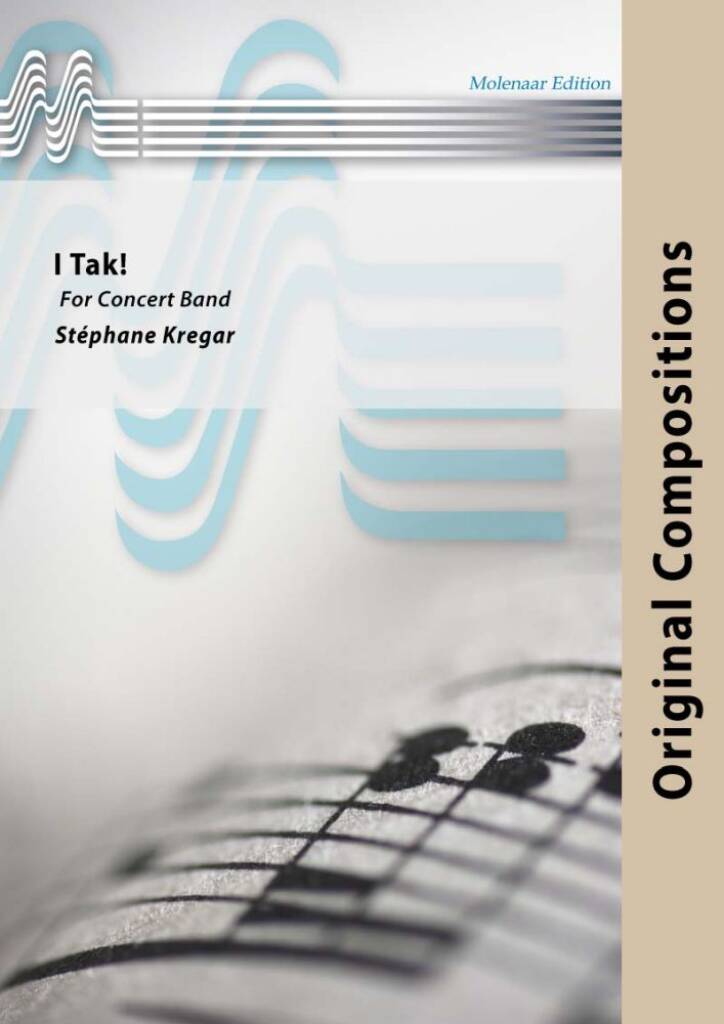 £92.00
I Tak - Stephane Kregar
I Tak: And yes! It is in Tczew in Poland that this very festive piece draws its inspiration. Spirit of dance, celebration and friendship, these are the impressions described in this very lively music. The introduction is darker and nostalgic, like after a trip but the joy and the party are stronger! Odd measures inevitably bring to mind the spirit of the Slavic festivals where it is good to laugh, sing and dance ...
Estimated dispatch 7-14 working days
 View Music