
Results
-
 £42.50
Island Getaway - Brian Monroe
A Latin-feel means you can use a lot of percussion players, all playing within grade level. Single parts for all instruments afford confidence and solidity to students. There are only a few divisi notes in clarinet, alto saxophone, and trumpet.
Estimated dispatch 7-14 working days
-
 £106.99
The River Knows Your Name - Jacob de Haan
This work describes the way the German river Saar holds the names of all the people who once lived in the area and of those who live there now. The introduction depicts the river flowing toward its confluence with the Mosel. The first names revealed by the river, in a dance, are those of the Romans, who established their first settlement here. Then the beautiful Saar Cathedral is portrayed, where believers give voice to the names of the people they know. Next, a powerful passage resounds: a reflection of the entrepreneurial spirit in Dillingen that has taken shape through the famous metal industry. Via a short clarinet solo, the work flows toward its conclusion in an emotional, stirring fashion, from nostalgic strains to full-blown euphoria.
Estimated dispatch 7-14 working days
-
 £82.95
The Ascent from Darkness - Rossano Galante
The Ascent from Darkness, by Rossano Galante, pays homage to the human race that endured the pandemic. He creates a musical landscape that depicts strength, tenacity, and compassion. The main theme, which is broad and lyrical, is stated by horns and winds. As the piece develops, the theme is played by full, chordal brass accompanied by rhythmic woodwind lines. The B section is lightly orchestrated with a solo oboe accompanied by the clarinet section, slowly growing to a tutti statement. The piece recapitulates with bold brass chords. The work ends as it begins, quietly incorporating the first motive. (4:00)
Estimated dispatch 7-14 working days
-
 £64.99
Fanfare and Homage - Richard L. Saucedo
Written for the Kuching Wind Symphony in Malaysia, Fanfare and Homage is a tribute to the work of music educators around the globe. The dynamic opening fanfare section features bold brass statements, short percussion break and a lyric solo for trumpet. A tender and emotional middle section includes short solos for flute, oboe (opt. tenor sax), and clarinet, with expanded harmonies and a beautiful building section. The vibrant fanfare theme returns to cap off this well-crafted work for young players. (This publication includes an optional DroneMap rehearsal aid created by Michael Pote) Dur: ca. 3:50
Estimated dispatch 7-14 working days
-
 £53.50
Czech Folk Dance: Tancuj - Gene Milford
A sparkling rendition of a traditional folk dance that provides an excellent opportunity to teach syncopation, this arrangement is perfect for a late first- or early second-year concert. Percussion demands are minimal and the second clarinet part does not cross the break.
Estimated dispatch 7-14 working days
-
 £79.99
Variations on a Theme by Glinka - Nicolai Rimsky-Korsakov
Nikolai Rimsky-Korsakov's VARIATIONS ON A THEME BY GLINKA was written for solo oboe accompanied by wind band. The theme of the Variations is in a fact a folksong melody which is still occasionally heard in Russia. This edition of VARIATIONS ON A THEME BY GLINKA is based on the full score published by the Russian state publishers and a number of editions of the same piece for solo oboe and piano. Adapted for the present day wind band, the corno basso accompaniment has been rescored for bass clarinet reinforced by optional string bass. Saxophones have been added to the instrumentation in tutti sections, along with rehearsal numbers throughout the meticulously edited full score.
Estimated dispatch 7-14 working days
-
 £57.50
Triumphal March from Aida - Giuseppe Verdi
This abridged and simplified arrangement can fill several slots in your programming needs, including a recessional march for any occasion. Third clarinet and trumpet parts are optional and may be omitted if your instrumentation has insufficient numbers to cover three parts.
Estimated dispatch 7-14 working days
-
 £122.00
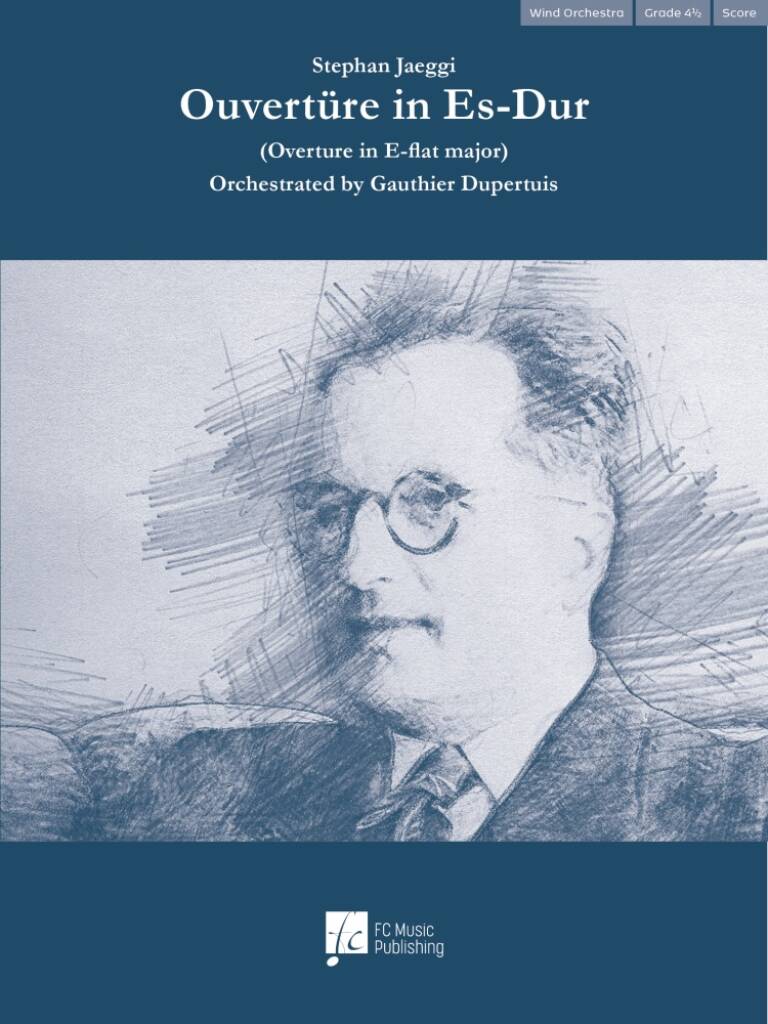
Ouvertre in Es-Dur - Stephan Jaeggi
As part of the year 2023, dedicated to Swiss composers, the Swiss Wind Band Association has commissioned Gauthier Dupertuis to write a new orchestration of the Overture in E-flat major by Stephan Jaeggi. Indeed, an update of the instrumentation was necessary for the interpretation of this work with modern orchestras.Therefore, the orchestration that Gauthier Dupertuis proposes and which he wanted to be faithful to the original while meeting current standards, will allow today's orchestras to performthis piece of classical-romantic inspiration.Stephan Jaeggi was a Swiss composer and conductor who was born into a large family in Fulenbach (Canton of Solothurn) in 1903. He began playing the clarinet at the age of 13, then studied music at the Basel Conservatory and attended his military training with the Swiss Army Band. Thereafter, he became the conductor of several wind orchestras. In this role, and also that of a composer, Stephan Jaeggi went on to achieve great success. His early death in 1957 put a premature end to Stephan Jaeggi's creative life. All the more reason why his work lives on with unbroken power to this day.
Estimated dispatch 7-14 working days
-
 £183.20
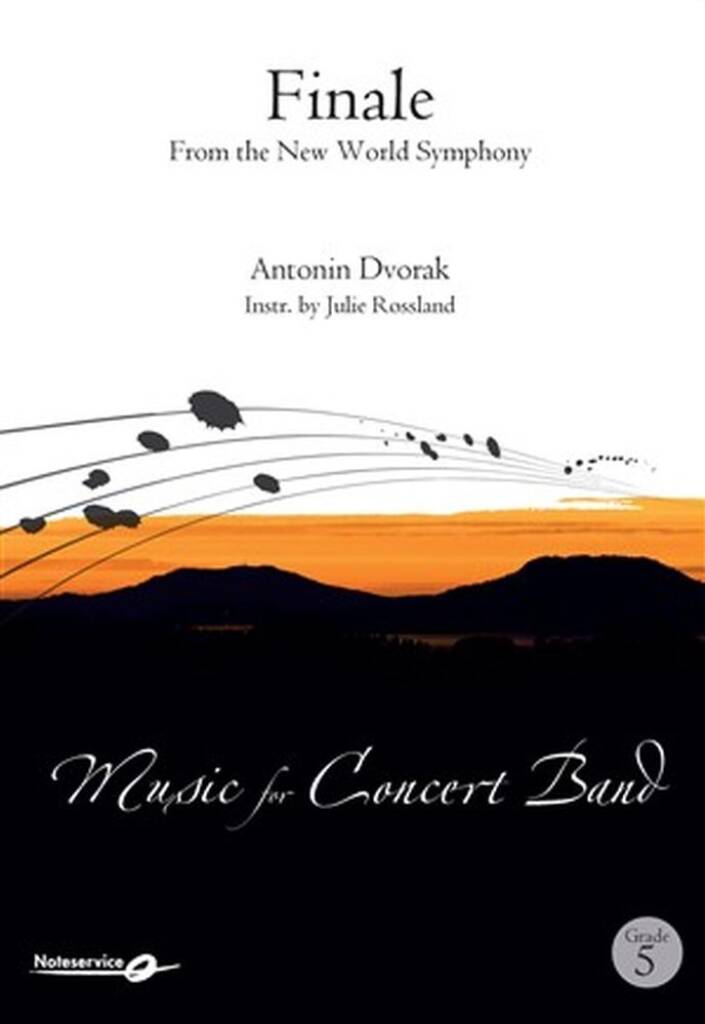
Finale from The New World Symphony - Antonin Dvorak
This arrangement was written for Norwegian School Band Madlamark Skolekorps to their participation at the Norwegian Championships 2023.The arrangement will work excellent also for a wind ensemble (one player to each part), but the clarinet parts should always be doubled.Euphonium II is optional, but it's recommended to use also this when there are two players or more on this instrument. Concerning percussion, timpani is the most important part, but it's recommended to also cover cymbals and mallet percussion.The articulation and dynamics are kept as close as possible to the original version by Dvorak. However, some changes has been made to make it more suitable for a wind instrumentation. The timpani part is identical to the original version except for some places when the trumpet signals are doubled in the timpani part.Staccato notation should not be played short here, but rather separated. At faster passages, the music should be played endurant or legato if possible.This arrangement is a good opportunity to perform music of highest quality where musicality, phrasing, balance and intonation are very important, and, where each musician and part are deeply involved in the music making.
Estimated dispatch 7-14 working days
-
 £39.95
Music for Junior Wind Band - Vol. 5 - More Carols - Adrian Taylor
The arrangements and compositions in these books were written by Adrian Taylor for various beginner or school bands that he has conducted over the years. Children joined these bands on the 2nd parts, usually having only been playing for a year and they then progressed to the 1st parts the following year.The 2nd parts are written without key signatures in treble clef, in B flat major for bass clef trombone and euphonium and in E flat major for bass clef tuba. 1st parts are written with the appropriate key signatures for each piece, reflecting the greater understanding and skills of the players on these parts. Most of the pieces can be played with only a few parts being covered, the addition of the other parts usually enhancing the arrangement rather than simply doubling existing musical lines. The essential parts are the two Trumpet (and Clarinet or Cornet) parts, the two Trombone/Euphonium parts and preferably also the 1st Horn part. A piano part helps to fill out the harmonies where other parts are missing. The brass parts in the wind band versions are identical to those in the brass versions.
Estimated dispatch 7-14 working days
 View Music